
Adenium, Backyard Gardening, Cactus & Succulent, Family & Kids' Gardening, Flower Seeds, Garden Planning & Design, Herb Seeds, Homesteading & Self-Reliance, Sensory & Wellness Gardening, Style, Sustainable & Regenerative Living, The Horticulturist’s Lab, Urban & Small-Space Gardening, Vegetables
How to Grow a Thriving Indoor Herb Garden from Seed This Winter
Oct
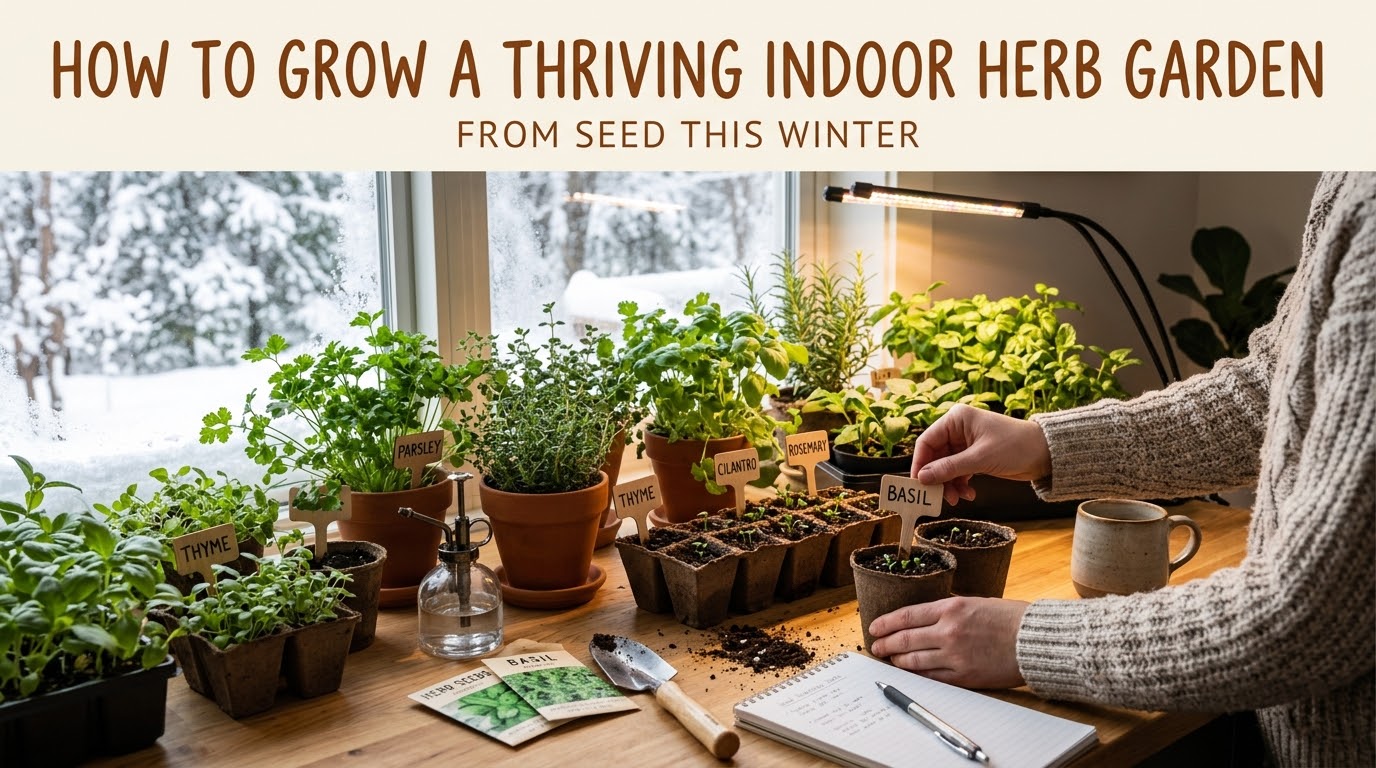
As the October frost sets in and outdoor basil plants turn black, it is easy to resign yourself to a long winter of flavorless, dried herbs from the grocery store. But your harvest doesn’t have to end with the autumn freeze. By bringing your gardening efforts onto the kitchen counter, you can cultivate a steady supply of fresh, aromatic greens all winter long.
While some gardeners try to dig up their outdoor herb plants and bring them inside, this often results in severe transplant shock and introduces outdoor pests (like aphids and spider mites) into the home. The cleanest, most cost-effective, and most rewarding way to start a winter kitchen garden is to grow your herbs entirely from seed.
Indoor herbs grown from seed adapt immediately to the temperature and humidity of your home, resulting in healthier, more resilient plants that will keep your winter soups and roasts bursting with fresh flavor.
1. The Best Herb Seeds for Indoor Winter Growing
Not all herbs thrive inside. Sun-worshipping giants like rosemary and sage can struggle without massive amounts of light. For the highest success rate in a winter kitchen, stick to these top performers:
- Basil: The ultimate kitchen staple. While it loves warmth, basil germinates incredibly fast from seed and will happily produce a continuous harvest of tender leaves if kept in a bright, warm window.
- Chives: An absolute powerhouse for indoor growing. Chive seeds sprout easily and the plants tolerate the lower light levels and cooler temperatures of a winter kitchen perfectly.
- Parsley (Flat-Leaf or Curly): A slow germinator but an incredibly resilient indoor plant. Once established, parsley is a heavy producer that doesn’t mind the dry air of heated winter homes.
- Cilantro: Known for “bolting” (going to seed) quickly in the hot summer sun, cilantro actually prefers the cooler, controlled temperatures of a winter house. Sow a few seeds every three weeks for a continuous supply.
- Thyme: This low-growing, woody herb looks beautiful cascading over the edge of an indoor pot. It requires excellent drainage but is highly forgiving of indoor conditions once the seeds take root.
2. Indoor Herb Seed Quick-Reference Guide
| Herb Variety | Germination Time | Light Requirement | Watering Needs | Best Culinary Use |
|---|---|---|---|---|
| Basil | 5–10 Days | Very High (South Window) | Keep evenly moist | Pesto, pastas, pizzas |
| Chives | 10–14 Days | Moderate to High | Allow top inch to dry | Baked potatoes, soups |
| Parsley | 14–21 Days | Moderate | Keep evenly moist | Garnishes, stews, roasts |
| Cilantro | 7–10 Days | Moderate | Keep evenly moist | Salsas, curries, tacos |
| Thyme | 14–21 Days | High | Let dry between waterings | Roasted meats, root veg |
3. Step-by-Step Guide to Your Winter Kitchen Garden
Step 1: Choose the Right Containers and Soil
Proper drainage is the difference between a thriving indoor garden and a rotting one. Choose pots with prominent drainage holes at the bottom. Never use outdoor garden soil, as it is too heavy and contains weed seeds and pests. Instead, fill your pots with a high-quality, lightweight indoor potting mix or seed-starting mix.
Step 2: Sowing the Seeds
Moisten your potting mix thoroughly before planting so you don’t wash the tiny seeds away.
- For tiny seeds (like Thyme and Basil), simply sprinkle them on the surface of the soil and press them lightly into the dirt. They need light to germinate.
- For larger seeds (like Cilantro and Parsley), plant them about 1/4 inch deep.
Cover the pots with a plastic dome or a piece of clear plastic wrap to trap humidity until you see the first green sprouts emerge.
Step 3: Master the Lighting
The biggest challenge of winter gardening is the lack of sunlight. Even a South-facing window might not provide enough light during the short, gray days of December. If your seedlings look tall, pale, and “leggy” (stretching and leaning toward the glass), they are starving for light. To guarantee bushy, healthy herbs, place a small, inexpensive LED grow light a few inches above your pots and leave it on for 12 to 14 hours a day.
Step 4: Watering and Airflow
Indoor plants do not dry out as quickly as outdoor plants. The number one killer of indoor herbs is overwatering. Always use the “finger test”—stick your finger one inch into the soil. If it feels dry, water thoroughly until it drains out the bottom. If it feels damp, wait another day. Finally, ensure your pots have good airflow and are not pushed flush against freezing windowpanes.
Bring Your Garden Inside This Season
There is nothing quite like snipping fresh, fragrant herbs from your own windowsill while snow falls outside. Secure your seeds now and turn your kitchen into a year-round culinary oasis.
👉 Shop our Premium Culinary Herb Seed Collection at Urban Garden Seed to start your indoor garden today!
