
Adenium, Backyard Gardening, Cactus & Succulent, Family & Kids' Gardening, Flower Seeds, Garden Planning & Design, Herb Seeds, Homesteading & Self-Reliance, Sensory & Wellness Gardening, Sustainable & Regenerative Living, The Horticulturist’s Lab, Urban & Small-Space Gardening, Vegetables
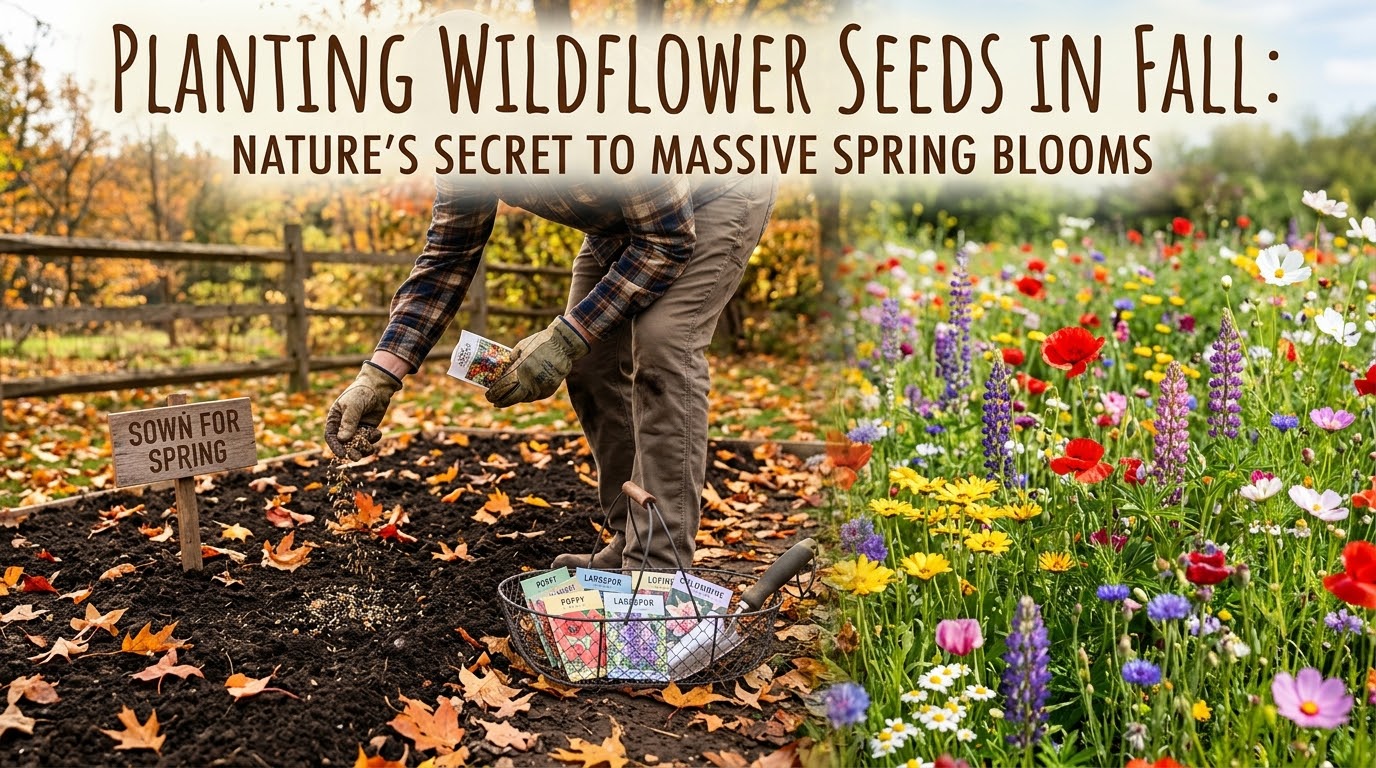
Planting Wildflower Seeds in Fall: Nature’s Secret to Massive Spring Blooms
Oct
If you ask the average gardener when to plant flower seeds, they will almost always say “spring.” But if you look at how nature actually operates, a very different story unfolds. In the wild, flowers bloom in the summer, dry out in the late summer heat, and drop their seeds to the ground in the autumn.
Those seeds sit securely in the soil, experiencing the freezing snows and thawing rains of winter, before bursting to life at the first sign of spring warmth.
If you want a breathtaking, low-maintenance meadow or a thriving pollinator patch next year, the secret is to mimic nature. Fall is actually the optimal time to plant native wildflower seeds. By scattering your seeds in October or November before the ground freezes solid, you are setting the stage for earlier blooms, stronger root systems, and significantly higher germination rates.
1. Why Fall Sowing Beats Spring Sowing
Planting in the fall offers several massive biological advantages for perennial and native seeds over spring planting:
- Natural Cold Stratification: Many native seeds (like Milkweed and Coneflower) have a tough outer shell that requires a long period of freezing, wet conditions to break down. Fall sowing does this naturally, eliminating the need to artificially cold-stratify seeds in your refrigerator.
- Earlier Blooms: Fall-sown seeds wake up exactly when the soil temperature and moisture levels are perfect for their specific genetics. They establish roots weeks before you could even work a muddy spring garden, resulting in much earlier summer blooms.
- Less Watering: Spring-sown seeds require constant irrigation to survive the incoming summer heat. Fall-sown seeds utilize the natural moisture from winter snowmelt and early spring showers to establish deep, drought-resistant taproots.
2. The Best Wildflowers for Fall Planting
While tender annuals (like Zinnias or Marigolds) will die if sown in the fall, hardy annuals, biennials, and perennials thrive. Here are the top performers for an autumn planting:
| Seed Variety | Plant Type | Bloom Time | Pollinator Benefit |
|---|---|---|---|
| California Poppy | Hardy Annual | Early to Mid-Summer | Attracts early bees and hoverflies |
| Purple Coneflower | Perennial | Mid-Summer to Fall | Feeds butterflies; birds eat winter seed heads |
| Common Milkweed | Perennial | Mid-Summer | Essential host plant for Monarch caterpillars |
| Black-Eyed Susan | Biennial / Short Perennial | Late Summer to Fall | High nectar output for native bees |
| Wild Lupine | Perennial | Late Spring to Early Summer | Supports the endangered Karner Blue butterfly |
3. Step-by-Step Guide to Sowing Wildflowers in Autumn
Step 1: Clear the Ground
Wildflower seeds will not grow if you simply throw them into dense lawn grass or an established weed patch. You must expose the bare soil. Remove existing vegetation, rake away dead leaves, and lightly scratch the top inch of the soil with a hard metal rake.
Step 2: Mix Seeds with Sand
Wildflower seeds are notoriously tiny and difficult to spread evenly. To avoid dumping all your seeds in one spot, mix your seed packet with plain, dry playground sand at a ratio of 1 part seed to 4 parts sand. The light-colored sand also helps you see exactly where you have already thrown your seeds.
Step 3: Broadcast Evenly
Walk back and forth across your prepared area, scattering the sand-and-seed mixture as evenly as possible. Once you have covered the area going north-to-south, do a second pass going east-to-west to ensure total coverage.
Step 4: Compress—Do Not Bury!
This is the most common mistake gardeners make. Most wildflower seeds require sunlight to germinate. Do not rake soil over the seeds or bury them. Instead, they just need good “seed-to-soil contact.” Simply walk over the planted area, pressing the seeds into the dirt with your boots, or use a piece of cardboard to press them flat.
Step 5: Let Nature Take Over
You do not need to water your seeds unless your region is experiencing a severe, unseasonal autumn drought. The incoming winter snows and spring rains will provide everything these resilient seeds need to wake up when the time is right.
Prepare Your Spring Meadow Today
Don’t wait until the spring rush to start planning your pollinator garden. By taking advantage of the crisp autumn weather now, you can lock in a vibrant, effortless display of color for next year.
👉 Shop our Premium Native Wildflower Seed Blends at Urban Garden Seed to plant your autumn meadow today!
