
Cactus & Succulent, Family & Kids' Gardening, Flower Seeds, Herb Seeds, Sensory & Wellness Gardening, Sustainable & Regenerative Living, The Horticulturist’s Lab, Urban & Small-Space Gardening, Vegetables
Edible Landscaping from Seed: How to Grow a Beautiful Yard You Can Eat
May
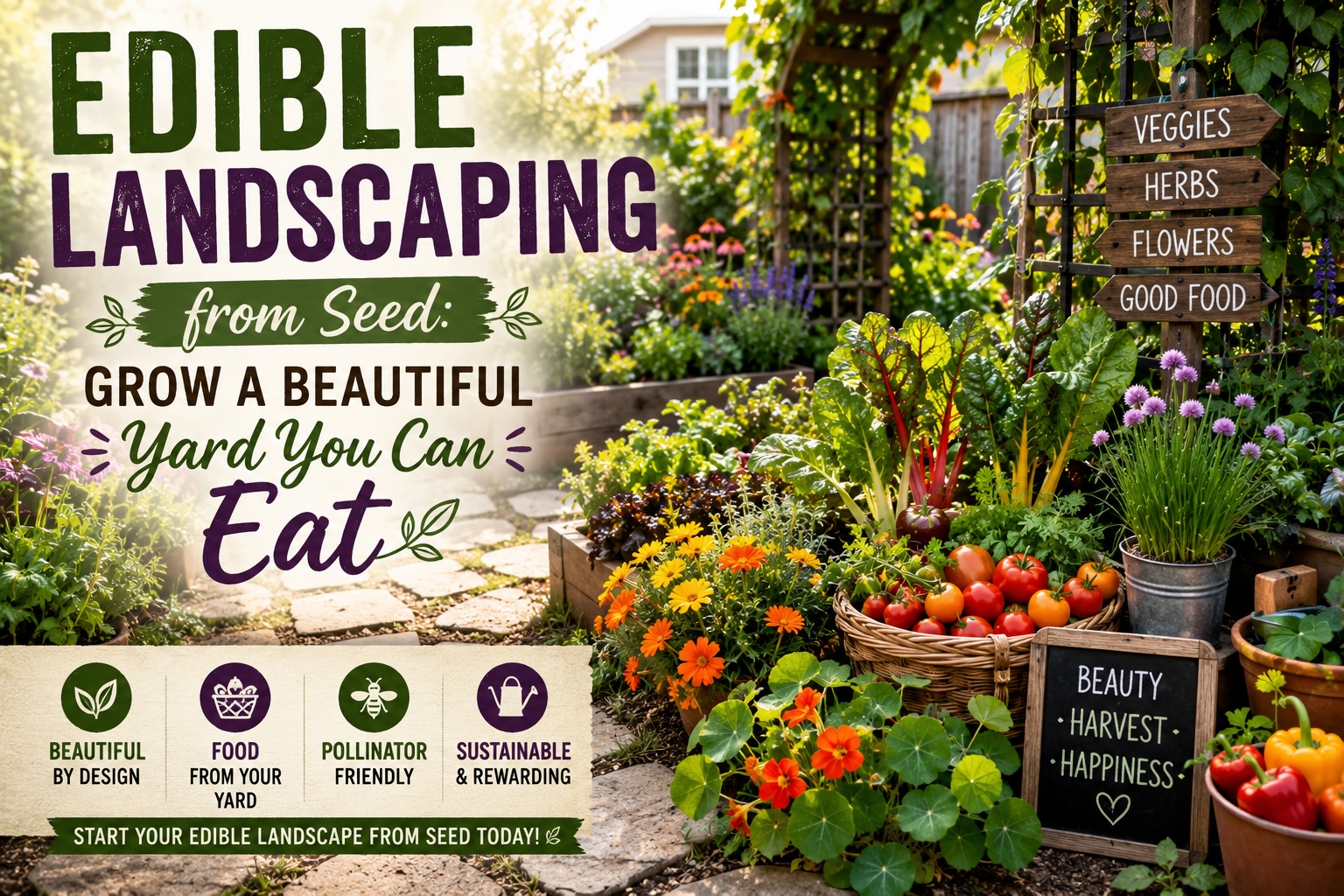
A beautiful yard does not have to be only decorative. With the right seeds, your garden can be colorful, fragrant, pollinator-friendly, and delicious at the same time.
That is the idea behind edible landscaping: designing your outdoor space with plants that look attractive while also producing food. Instead of hiding vegetables in a separate garden bed, you can mix herbs, edible flowers, leafy greens, tomatoes, peppers, and pollinator plants into your front yard, backyard, patio, or balcony.
The best part? You can start an edible landscape from seed.
Growing from seed gives you more variety, better value, and more control over what goes into your garden. Whether you have a large yard or a few containers, edible landscaping is a smart way to grow beauty and food in the same space.
What Is Edible Landscaping?
Edible landscaping is the practice of using food-producing plants as part of your landscape design. Instead of planting only ornamental flowers and shrubs, you include vegetables, herbs, edible flowers, and fruiting plants that are both attractive and useful.
Penn State Extension describes edible landscapes as spaces that can include herbs, flowers, vegetables, and other useful plants within ornamental garden designs. Lavender and rosemary, for example, can be used as attractive borders while also providing fragrance and edible flowers or foliage.
An edible landscape may include:
Tomatoes growing beside basil and marigolds
Lettuce used as a colorful garden border
Nasturtiums trailing from containers
Swiss chard adding bright stems and leafy texture
Sunflowers creating height at the back of a bed
Calendula and borage attracting pollinators
Peppers adding glossy fruit and ornamental color
The goal is simple: create a garden that looks beautiful and gives something back.
Why Grow an Edible Landscape from Seed?
Starting an edible landscape from seed is one of the most affordable ways to transform your yard. A single packet of seeds can grow dozens of plants, giving you more design flexibility than buying mature transplants.
Growing from seed also gives you access to more interesting varieties. You can choose colorful vegetables, fragrant herbs, edible flowers, and pollinator-friendly plants that may not be available at a local nursery.
A seed-grown edible landscape can help you:
Save money on plants
Grow more varieties
Create a productive garden from scratch
Improve your yard’s beauty and function
Support bees, butterflies, and beneficial insects
Harvest fresh herbs, vegetables, and flowers
Make better use of small spaces
University of Minnesota Extension notes that home gardeners can grow vegetables by preparing the soil, selecting seeds or plants, and learning proper planting, watering, and care practices.
Best Seeds for Edible Landscaping
The best edible landscape plants are attractive, useful, and suited to your growing conditions. Choose plants with colorful leaves, interesting flowers, strong fragrance, compact growth, or vertical structure.
1. Basil
Basil is one of the best herbs to grow from seed. It has bright green leaves, a fresh fragrance, and many culinary uses. It also grows beautifully near tomatoes, peppers, and edible flowers.
Use basil in containers, raised beds, herb borders, or kitchen gardens. For the best growth, plant it in full sun and harvest regularly to encourage bushy plants.
2. Lettuce
Lettuce is not just for vegetable rows. Many lettuce varieties have attractive colors and textures, making them excellent for edible borders and container gardens.
Use loose-leaf lettuce along pathways, in patio pots, or in front of taller plants. For a beautiful look, mix green, red, and bronze varieties.
3. Kale
Kale is one of the most ornamental vegetables you can grow from seed. Its textured leaves add structure to garden beds, and some varieties have blue-green, purple, or curly foliage.
Kale works well in front yard edible landscaping because it looks decorative while producing nutritious leaves.
4. Swiss Chard
Swiss chard is excellent for edible landscaping because of its colorful stems. Red, yellow, orange, pink, and white-stemmed varieties can make a garden bed look vibrant even before harvest.
Plant Swiss chard with herbs, marigolds, calendula, or nasturtiums for a colorful edible border.
5. Tomatoes
Tomatoes are classic edible garden plants, but they can also be part of a beautiful landscape when supported properly. Use cages, stakes, or trellises to keep plants tidy.
Cherry tomatoes are especially useful in edible landscapes because they are productive, attractive, and easy to harvest.
6. Peppers
Peppers bring glossy leaves, compact growth, and colorful fruit to the garden. Many pepper plants look ornamental while producing harvestable crops.
Plant peppers in sunny beds, containers, or mixed edible borders. Their red, yellow, orange, purple, or green fruits can add visual interest throughout the season.
7. Nasturtiums
Nasturtiums are one of the best edible flowers for beginners. They grow quickly from seed, produce bright blooms, and can trail beautifully over containers or garden edges.
University of Minnesota Extension lists nasturtium and calendula among easy-to-grow favorites that bring both beauty and flavor to the garden.
8. Calendula
Calendula adds cheerful orange and yellow flowers to edible landscapes. It is easy to grow from seed and works well in herb gardens, vegetable beds, and pollinator-friendly borders.
Calendula also gives the garden a warm, cottage-style appearance.
9. Marigolds
Marigolds are bright, tough, and easy to grow. They are often planted near vegetables because they add color and attract beneficial insects.
Use marigolds along the edges of vegetable beds, around tomatoes, or in containers for a vibrant edible landscape design.
10. Borage
Borage is both ornamental and useful. It produces star-shaped blue flowers and textured leaves, making it a standout in edible and pollinator gardens. Illinois Extension describes borage as an edible ornamental herb with striking flowers and garden value.
Borage can grow large, so place it where it has room to spread.
11. Dill
Dill is a beautiful herb with feathery foliage and yellow flower umbels. It adds height, texture, fragrance, and culinary value to the garden.
Use dill behind lower herbs or vegetables, or plant it in a pollinator-friendly edible bed.
12. Sunflowers
Sunflowers create height and visual impact. They are easy to direct sow, attract pollinators, and can act as a cheerful backdrop for herbs and vegetables.
Plant them at the back of beds, along fences, or in sunny corners.
How to Design an Edible Landscape from Seed
A beautiful edible garden needs more than random planting. The key is to design it like a landscape, not just a vegetable patch.
Step 1: Start with Sunlight
Most vegetables, herbs, and edible flowers need full sun. Choose a space that receives at least 6 hours of direct sunlight per day.
Good locations include:
Front yard beds
Backyard borders
Raised beds
Patio containers
Balcony planters
Fence lines
Walkway edges
For leafy greens and herbs, partial shade may work in hot climates. For tomatoes, peppers, basil, and sunflowers, stronger sunlight is usually better.
Step 2: Build Layers
Use the same design principle as ornamental landscaping: arrange plants by height.
Back layer: sunflowers, tomatoes, trellised beans, dill
Middle layer: kale, peppers, Swiss chard, basil
Front layer: lettuce, calendula, nasturtiums, marigolds, parsley
This creates a full, intentional look while making plants easier to harvest.
Step 3: Mix Colors and Textures
Edible landscaping works best when the garden looks abundant and balanced.
Try combining:
Purple basil with green lettuce
Red-stemmed Swiss chard with yellow calendula
Curly kale with trailing nasturtiums
Tomatoes with marigolds and basil
Sunflowers with dill and borage
The result is a garden that looks decorative while producing food.
Step 4: Add Flowers for Pollinators
Flowers are not just for beauty. They help attract bees, butterflies, and beneficial insects.
Excellent seed-grown flowers for edible landscapes include:
Nasturtium
Calendula
Marigold
Borage
Sunflower
Zinnia
Cosmos
Lavender
A garden with flowers is often more attractive and more alive than a vegetable-only space.
Step 5: Use Containers for Small Spaces
You do not need a large yard to grow an edible landscape. Containers can turn patios, porches, balconies, and small yards into productive spaces.
Great container plants include:
Basil
Lettuce
Parsley
Cilantro
Dwarf tomatoes
Peppers
Nasturtiums
Calendula
Chives
Penn State Extension notes that container gardening is useful for growing vegetables, edible plants, soft fruits, and flowers, especially in small spaces.
Step 6: Grow Vertically
Vertical growing saves space and adds structure. It also makes your edible landscape look more designed.
Use trellises, cages, stakes, arches, or fences for:
Beans
Peas
Cucumbers
Tomatoes
Climbing flowers
Trailing nasturtiums
Vertical plants can create privacy, shade, and visual height while producing harvests.
Step 7: Plan for Succession Planting
Succession planting means sowing seeds in stages so your garden keeps producing over time.
For example:
Sow lettuce every few weeks for a steady harvest
Replace harvested greens with herbs or flowers
Plant warm-season crops after cool-season crops finish
Add quick-growing flowers to empty spaces
Penn State’s edible landscape demonstration garden highlights practices such as container gardening and succession planting for home gardeners.
Best Edible Landscape Combinations
Here are easy plant combinations you can grow from seed.
Tomato, Basil, and Marigold Bed
This is a classic edible landscape combination. Tomatoes provide fruit, basil adds fragrance and flavor, and marigolds bring bright color.
Best for: raised beds, sunny borders, backyard gardens
Lettuce, Calendula, and Nasturtium Border
This combination works beautifully along walkways or patio edges. Lettuce adds leafy texture, calendula adds warm color, and nasturtiums spill over the edge.
Best for: small spaces, cottage gardens, containers
Swiss Chard, Kale, and Herbs
Swiss chard and kale create bold foliage, while herbs like parsley, dill, and basil add fragrance and harvest value.
Best for: front yard beds, ornamental vegetable gardens
Sunflowers, Borage, and Zinnias
This is a pollinator-friendly edible landscape mix with height, color, and movement.
Best for: back borders, fence lines, pollinator gardens
Peppers, Basil, and Calendula
Compact and colorful, this combination works well in containers or small raised beds.
Best for: patios, balconies, compact edible gardens
Safety Tips for Edible Flowers
Edible flowers can be beautiful and useful, but safety matters.
Do not eat any flower unless you are certain it is edible. Illinois Extension warns that gardeners should never experiment with eating flowers or plant parts unless they know they are safe to consume.
Follow these safety rules:
Only eat flowers from plants you can positively identify
Avoid flowers treated with pesticides or chemicals
Do not eat roadside flowers
Wash flowers before use
Introduce edible flowers in small amounts
Avoid edible flowers if you have relevant allergies
Use reliable references before consuming any new plant
For a seed business, this is also a good place to remind customers to follow packet instructions and local growing guidance.
Common Mistakes to Avoid
Mistake 1: Planting Without a Design
If you scatter seeds randomly, the garden may look messy. Plan your layout by height, color, and harvest access.
Mistake 2: Overcrowding
Seedlings may look small at first, but many plants grow quickly. Thin seedlings according to packet directions so plants have enough airflow, light, and root space.
Mistake 3: Mixing Plants with Different Water Needs
Some herbs prefer drier soil, while leafy greens need more consistent moisture. Group plants with similar needs together.
Mistake 4: Forgetting Pathways
Make sure you can reach your plants for watering, harvesting, pruning, and re-sowing.
Mistake 5: Ignoring Soil Quality
Healthy edible gardens need healthy soil. Add compost, avoid compacted areas, and make sure containers have good drainage.
Mistake 6: Using Chemicals on Edible Plants
Avoid using pesticides or sprays that are not labeled for edible crops. This is especially important for edible flowers and herbs.
Edible Landscaping for Small Spaces
A small yard, patio, or balcony can still become a beautiful edible landscape.
Try these ideas:
Grow basil, lettuce, and calendula in a window box
Plant tomatoes and marigolds in a large container
Use hanging baskets for trailing nasturtiums
Grow herbs in vertical planters
Place peppers in decorative patio pots
Use a trellis for beans or cucumbers
Plant lettuce as a border around a raised bed
Small-space edible landscaping works best when every plant has more than one purpose: beauty, food, fragrance, shade, or pollinator support.
Edible Landscaping Seed Shopping List
Here is a beginner-friendly seed list for Urban Garden Seed customers:
Basil seeds
Lettuce seeds
Kale seeds
Swiss chard seeds
Tomato seeds
Pepper seeds
Nasturtium seeds
Calendula seeds
Marigold seeds
Borage seeds
Dill seeds
Sunflower seeds
Zinnia seeds
Cosmos seeds
Parsley seeds
Cilantro seeds
For best SEO and sales conversion, link each item to the matching product page or seed collection on UrbanGardenSeed.com.
Final Thoughts
Edible landscaping is one of the smartest ways to make your yard more beautiful, productive, and sustainable. Instead of choosing between flowers and food, you can grow both together.
With the right seeds, a sunny space, healthy soil, and a simple design plan, you can create a garden that looks like landscaping but harvests like a vegetable garden.
Start with easy seeds like basil, lettuce, marigolds, nasturtiums, tomatoes, peppers, and sunflowers. Then add more herbs, flowers, and vegetables as your confidence grows.
A beautiful yard you can eat starts with a single seed.
Call to Action
Ready to grow a garden that is both beautiful and productive?
Explore Urban Garden Seed’s flower, herb, and vegetable seeds and start your edible landscape from seed today.
FAQ
Can you grow an edible landscape from seed?
Yes. Many vegetables, herbs, and edible flowers can be grown from seed and used in edible landscaping. Basil, lettuce, kale, Swiss chard, tomatoes, peppers, marigolds, nasturtiums, calendula, dill, and sunflowers are excellent options.
What are the best seeds for edible landscaping?
The best seeds for edible landscaping include colorful vegetables, culinary herbs, edible flowers, and pollinator plants. Good choices include basil, lettuce, Swiss chard, kale, tomatoes, peppers, nasturtium, calendula, marigold, borage, dill, and sunflower.
How do I make a vegetable garden look beautiful?
Use landscape design principles. Arrange plants by height, mix colors and textures, add flowers, use clean borders, grow vertically, and combine vegetables with herbs and pollinator-friendly flowers.
What edible flowers are easy to grow from seed?
Nasturtium, calendula, marigold, borage, and sunflower are easy edible or useful garden flowers to grow from seed. Always confirm the exact plant is edible before eating and avoid flowers exposed to pesticides.
Can edible landscaping work in a small yard?
Yes. Edible landscaping works well in small yards, patios, balconies, raised beds, and containers. Choose compact plants like herbs, lettuce, peppers, dwarf tomatoes, nasturtiums, and calendula.
Is edible landscaping good for pollinators?
Yes. Adding flowers such as calendula, borage, sunflowers, zinnias, cosmos, and marigolds can help attract bees, butterflies, and beneficial insects to the garden.
