
Family & Kids' Gardening, Flower Seeds, Herb Seeds, Sensory & Wellness Gardening, Sustainable & Regenerative Living, The Horticulturist’s Lab, Urban & Small-Space Gardening, Vegetables
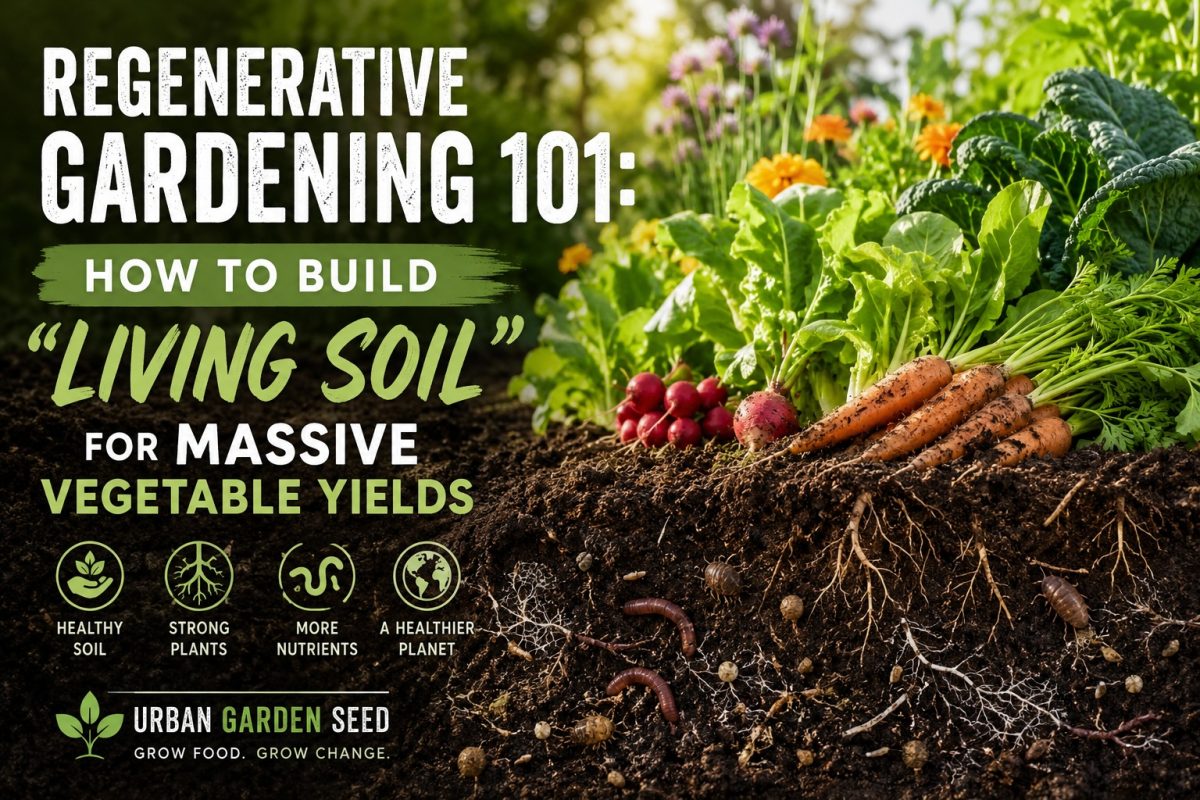
Regenerative Gardening 101: How to Build “Living Soil” for Massive Vegetable Yields
Jun
Regenerative gardening at home, how to boost soil microbes, organic living soil, companion planting for soil health, high-yield vegetable garden.
For decades, the standard approach to home gardening was simple: dig a hole, drop in a seed, and pour on synthetic fertilizer whenever the plant looked tired. But as extreme weather patterns rise and standard garden soils become depleted, high-performance growers are looking downward.
The secret to a lush, disease-resistant, and high-yielding vegetable garden isn’t what you put on your plants—it is what you build underneath them.
Welcome to regenerative gardening at home. By focusing on building an active, thriving ecosystem of beneficial soil microbes, you can create “living soil” that naturally feeds your crops, retains water like a sponge, and unlocks the true genetic potential of your high-germination heirloom seeds.
Here is exactly how to stop feeding your plants and start feeding your soil.
The Magic of the Soil Food Web
When you step into an old-growth forest, nobody is applying synthetic blue fertilizer pellets, yet the trees and foliage are bursting with life. That is because the ground is alive with a microscopic network of beneficial bacteria, predatory nematodes, and mycorrhizal fungi.
This ecosystem, known as the Soil Food Web, converts raw organic matter into highly bioavailable nutrients that plant roots can immediately absorb.
Quick Facts: The Power of Living Soil
- Supercharged Water Retention: Every 1% increase in organic soil matter allows the earth to retain roughly 20,000 gallons of water per acre, drastically reducing your summer watering needs.
- Natural Disease Shield: Thriving colonies of beneficial soil bacteria physically coat plant roots, creating a biological armor that blocks harmful soil-borne pathogens like root rot.
- Maximum Flavor & Nutrition: Plants grown in microbe-rich living soil absorb a wider array of trace minerals, resulting in significantly sweeter, more intensely flavorful vegetables and herbs.
4 Steps to Kickstart Regenerative Living Soil
Transitioning your garden beds, raised boxes, or large containers into a self-sustaining regenerative loop requires a deliberate strategy. Follow this assembly sequence to maximize your underground microbial activity.
1
Ditch the Tiller (Embrace No-Till)
Step 1
Aggressively digging up or rototilling your soil completely tears apart the delicate, microscopic webs of mycorrhizal fungi that transport nutrients to your plants. Instead, practice no-till gardening—simply layer organic inputs directly onto the soil surface and let earthworms do the digging for you.
2
Inoculate with Microbial Compost Teas
Step 2
Introduce billions of beneficial microbes to your garden by applying a top layer of premium worm castings or watering your beds with an organic compost tea. This instantly infuses your growing medium with active biology ready to process nutrients.
3
Plant High-Performance Companion Seed Duos
Step 3
Sow crops that structurally cooperate underground. For example, planting nitrogen-fixing bush beans alongside heavy-feeding tomatoes creates a symbiotic relationship where the beans actively draw nitrogen from the air and pump it into the root zone of the neighboring plants.
4
Keep the Soil Covered (Always Living, Always Mulched)
Step 4
Bare soil is dying soil; direct sunlight bakes and kills surface microbes. Keep your soil constantly covered with either a thick organic wood-chip mulch or a living ground cover like low-growing clover to protect your underground ecosystem.
The Best Resilient Seed Varieties for Regenerative Systems
Regenerative gardening shines brightest when paired with robust, genetically diverse open-pollinated seeds. Because these varieties haven’t been babied by synthetic chemicals in commercial fields, their root systems are optimized to forage deeply for nutrients:
- Heavy-Feeding Solanaceae (Tomatoes & Peppers): High-yielding heirlooms develop massive root systems that latch beautifully onto mycorrhizal fungi networks, maximizing fruit size and sugar content.
- Nitrogen-Fixing Legumes (Beans & Peas): Essential for any regenerative layout, legumes house specialized bacteria on their roots that naturally fertilize your garden soil for the following season.
- Deep-Rooted Pollinator Attractors (Sunflowers & Marigolds): These companion champions punch deep channels into compacted clay soils, opening up air and water pathways while drawing predatory insects to manage garden pests organically.
Pro Soil Health Tip: If your garden soil smells sour, metallic, or completely scentless, it lacks vital oxygen and microbial diversity. Healthy living soil should always smell rich, sweet, and earthy—just like a fresh forest floor after a morning rain shower!
