
Family & Kids' Gardening, Flower Seeds, Herb Seeds, Sensory & Wellness Gardening, Sustainable & Regenerative Living, The Horticulturist’s Lab, Urban & Small-Space Gardening, Vegetables
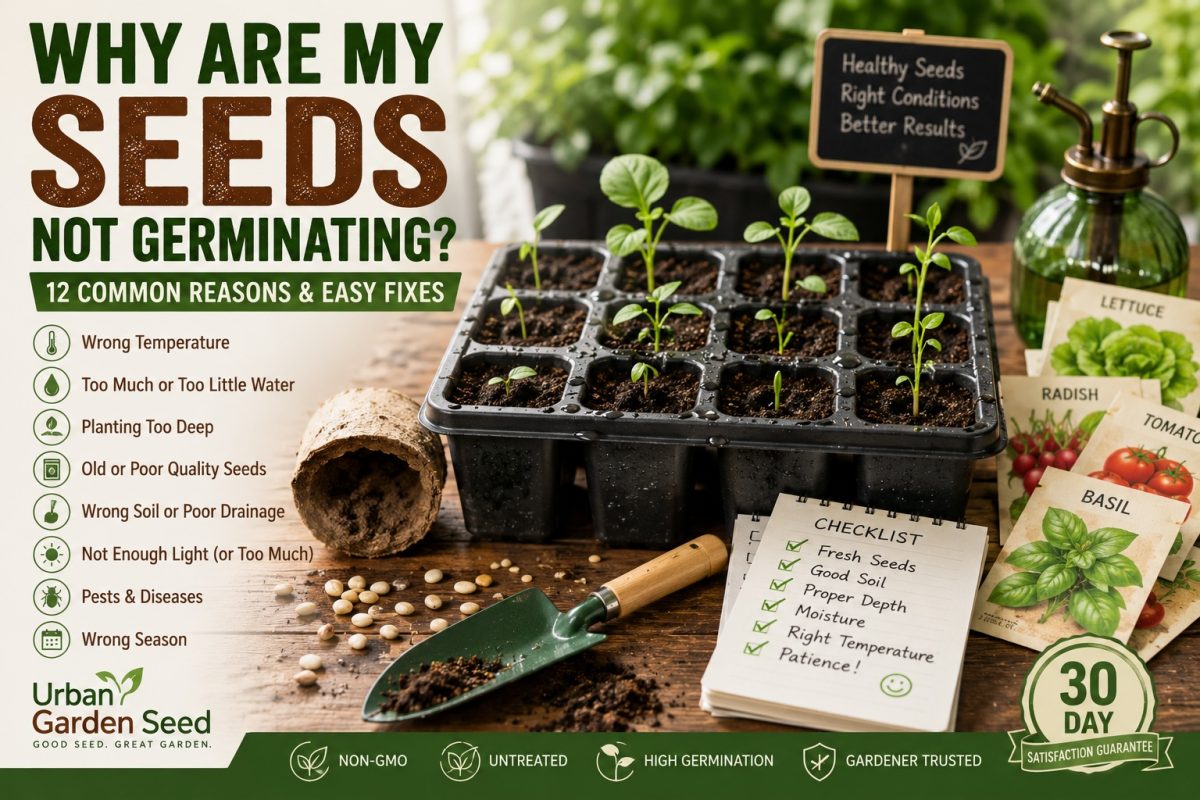
Why Are My Seeds Not Germinating? 12 Common Reasons and Easy Fixes
Jun
Few things are more frustrating for a gardener than planting seeds, watering them carefully, waiting patiently, and seeing nothing sprout. If your seeds are not germinating, do not worry. Seed-starting problems are common, especially for beginners, and most of them are easy to fix.
Seed germination depends on several important factors: seed quality, moisture, temperature, soil, planting depth, light, and timing. When one of these conditions is not right, seeds may sprout slowly, unevenly, or not at all.
At Urban Garden Seed, we want gardeners to grow with confidence. Our Non-GMO, untreated seeds are tested for high germination, but even good seeds need the right growing conditions. This guide explains the most common reasons seeds do not germinate and what you can do to improve your results.
What Does Seed Germination Mean?
Seed germination is the process where a seed wakes up and begins to grow. Under the right conditions, the seed absorbs water, activates growth, develops a root, and eventually pushes a seedling above the soil.
For germination to happen, most seeds need moisture, oxygen, the right temperature, and proper planting depth. Some seeds also need light, darkness, soaking, cold treatment, or special preparation before they sprout.
Understanding these basic needs can help you avoid the most common seed-starting mistakes.
1. The Seeds Were Planted Too Deep
Planting seeds too deep is one of the most common reasons seeds fail to sprout. Small seeds often do not have enough stored energy to push through a thick layer of soil.
A general rule is to plant seeds about two to three times as deep as the seed is wide. Very tiny seeds may only need to be pressed gently onto the soil surface or covered with a very thin layer of soil.
Easy Fix
Read the planting instructions for each seed variety before sowing. For small seeds, avoid burying them deeply. For larger seeds like beans, peas, squash, and corn, plant them deeper than tiny seeds but still follow the recommended depth.
2. The Soil Was Too Dry
Seeds need moisture to begin germinating. If the soil dries out during the germination period, the seed may stop developing or fail to sprout.
This is especially common when seeds are started in shallow trays, small pots, or warm locations where moisture evaporates quickly.
Easy Fix
Keep the soil evenly moist but not soggy. Use a spray bottle, gentle watering can, or bottom-watering method to avoid washing seeds away. Check seed trays daily, especially during warm weather.
3. The Soil Was Too Wet
Too much water can be just as harmful as too little water. Waterlogged soil reduces oxygen around the seed and can cause rotting before the seed has a chance to sprout.
Seeds need moisture, but they also need oxygen. Heavy, soggy soil can suffocate seeds and damage young roots.
Easy Fix
Use containers with drainage holes. Choose a light, well-draining seed-starting mix or potting mix. Water gently and avoid letting trays sit in standing water for too long.
4. The Temperature Was Wrong
Temperature plays a major role in germination. Some seeds prefer cooler soil, while others need warmth to sprout.
Cool-season crops such as lettuce, spinach, kale, radishes, and peas usually germinate better in cooler conditions. Warm-season crops such as tomatoes, peppers, cucumbers, basil, squash, and eggplant need warmer soil.
If the temperature is too cold, seeds may take much longer to sprout. If it is too hot, some seeds may fail completely.
Easy Fix
Check the ideal germination temperature for each seed type. Start warm-season seeds indoors if outdoor soil is still cool. For seed trays, use a warm location with stable temperature. Avoid placing trays in direct harsh heat that can dry the soil too quickly.
5. The Seeds Were Old or Poorly Stored
Seeds are living organisms, and they do not last forever. Over time, seed viability decreases. Heat, humidity, sunlight, and poor storage can shorten seed life.
Old seeds may still sprout, but germination may be slower or less reliable. Some seed types naturally last longer than others.
Easy Fix
Store seeds in a cool, dry, dark place. Keep packets sealed when not in use. For older seeds, plant a few extra to increase your chances of success. Choose seeds from a trusted supplier that values germination quality.
6. The Seeds Needed Light to Germinate
Not all seeds want to be buried. Some seeds need light to germinate properly. If these seeds are covered with too much soil, they may not sprout.
This can happen with some flower seeds, herbs, and very small-seeded plants.
Easy Fix
Check the seed packet instructions. If a seed needs light, press it gently onto the soil surface and keep it moist. Do not cover it heavily with soil.
7. The Seeds Needed Darkness to Germinate
Some seeds germinate better in darkness. If they are left exposed on the soil surface, germination may be poor.
Easy Fix
Follow the planting instructions for each variety. If the seed requires darkness, cover it lightly with soil according to the recommended planting depth.
8. The Soil Was Too Heavy or Compacted
Heavy garden soil can become hard, compacted, or poorly drained. This makes it difficult for seeds to absorb water, access oxygen, and push seedlings through the surface.
This is especially common when starting seeds in containers using dense outdoor soil.
Easy Fix
Use a fine, loose seed-starting mix for seed trays and small containers. For garden beds, loosen the soil before planting and remove rocks, large clumps, and debris. Add compost or organic matter to improve soil texture.
9. The Seeds Were Washed Away
Small seeds can easily move when watered too strongly. Sometimes gardeners think seeds failed to germinate, but the seeds were actually washed to the edge of the container, buried too deeply, or moved out of place.
Easy Fix
Water gently after planting. Use a spray bottle or mist setting for tiny seeds. Bottom-watering seed trays can also help keep seeds in place.
10. Pests Ate the Seeds
Birds, ants, rodents, slugs, and insects can sometimes eat seeds or damage seedlings before you notice them. This is more common when seeds are planted directly outdoors.
Easy Fix
Protect newly planted areas with mesh, row covers, or seed trays until plants are stronger. Keep the garden clean and check for pest activity regularly.
11. Seeds Were Planted at the Wrong Season
Even high-quality seeds may fail if planted at the wrong time of year. Cool-season crops can struggle in intense heat, while warm-season crops may not germinate well in cold soil.
Planting at the correct time helps seeds sprout faster and grow stronger.
Easy Fix
Match your seeds to the season. Plant lettuce, spinach, kale, radishes, and peas in cooler weather. Plant tomatoes, peppers, basil, cucumbers, squash, and beans when temperatures are warmer.
12. Some Seeds Naturally Take Longer to Germinate
Not all seeds sprout at the same speed. Radishes, lettuce, and beans can germinate quickly, while peppers, parsley, some flowers, and many tree seeds may take longer.
Some seeds also require special treatment such as soaking, scarification, or cold stratification before they sprout.
Easy Fix
Be patient and check the expected germination time for each seed type. Do not throw away seed trays too early. For tree seeds and specialty varieties, follow the specific germination instructions carefully.
How Long Should Seeds Take to Germinate?
Seed germination time depends on the plant variety and growing conditions.
Fast-growing seeds like radishes, lettuce, beans, and basil may sprout relatively quickly. Tomatoes, peppers, carrots, parsley, flowers, and tree seeds may take longer.
If seeds have not sprouted within the expected time, review the basics: moisture, temperature, planting depth, seed age, and soil quality.
Best Conditions for Seed Germination
For better germination, start with fresh, high-quality seeds. Use loose, well-draining soil. Keep the soil evenly moist. Plant at the correct depth. Maintain the right temperature. Give light or darkness depending on the seed’s needs. Protect seeds from pests and harsh weather.
Gardening becomes much easier when you create the right environment from the beginning.
Seed Germination Checklist for Beginners
Before planting seeds, use this simple checklist:
- Are the seeds fresh and properly stored?
- Is the soil loose and well-draining?
- Does the container have drainage holes?
- Did you plant at the correct depth?
- Does the seed need light or darkness?
- Is the soil evenly moist but not soggy?
- Is the temperature right for that seed type?
- Are the seeds protected from pests?
- Are you planting in the correct season?
This checklist can prevent many common seed-starting problems.
Why Seed Quality Matters
Good growing conditions are important, but seed quality also matters. Poor-quality seeds may have low germination rates even when planted correctly.
Urban Garden Seed focuses on high-quality seeds for home gardeners. Every seed we ship is tested for high germination and backed by our 30-Day Satisfaction Guarantee. Our seeds are Non-GMO and untreated, giving gardeners a clean and reliable start.
Whether you are growing vegetables, flowers, herbs, or trees, starting with quality seeds gives your garden a better chance of success.
Frequently Asked Questions
Why are my seeds not sprouting?
Seeds may not sprout because they were planted too deep, kept too dry, overwatered, exposed to the wrong temperature, planted in poor soil, or planted at the wrong season. Old or poorly stored seeds can also have lower germination.
Can overwatering stop seeds from germinating?
Yes. Too much water can reduce oxygen in the soil and cause seeds to rot. Soil should be moist, not soggy.
Do seeds need sunlight to germinate?
Some seeds need light to germinate, while others need darkness. Always check the instructions for the specific seed variety.
How do I know if my seeds are too old?
Older seeds may germinate slowly or unevenly. If you are unsure, plant a few extra seeds or do a simple germination test using a damp paper towel.
Should I soak seeds before planting?
Some larger or hard-coated seeds benefit from soaking, but not all seeds need it. Always check the instructions for the specific seed variety.
What is the best soil for starting seeds?
A loose, fine, well-draining seed-starting mix is best for seed trays and small containers. Avoid heavy, compacted soil.
Grow with Confidence with Urban Garden Seed
Seed germination does not have to be complicated. When you understand moisture, temperature, planting depth, soil quality, and seed freshness, you can solve most seed-starting problems.
Urban Garden Seed offers Non-GMO, untreated vegetable seeds, flower seeds, and tree seeds selected for gardeners who want quality and confidence. Our seeds are tested for high germination and backed by our 30-Day Satisfaction Guarantee.
Start your garden with better seeds, better knowledge, and better confidence.
Visit UrbanGardenSeed.com to explore our seed collection and start growing today.
