
Cactus & Succulent, Family & Kids' Gardening, Flower Seeds, Herb Seeds, Sensory & Wellness Gardening, Style, Sustainable & Regenerative Living, The Horticulturist’s Lab, Urban & Small-Space Gardening, Vegetables
How to Grow a Creeping Thyme Lawn from Seed: Complete U.S. Guide
Jul
A traditional grass lawn is not the only way to create an attractive green space.
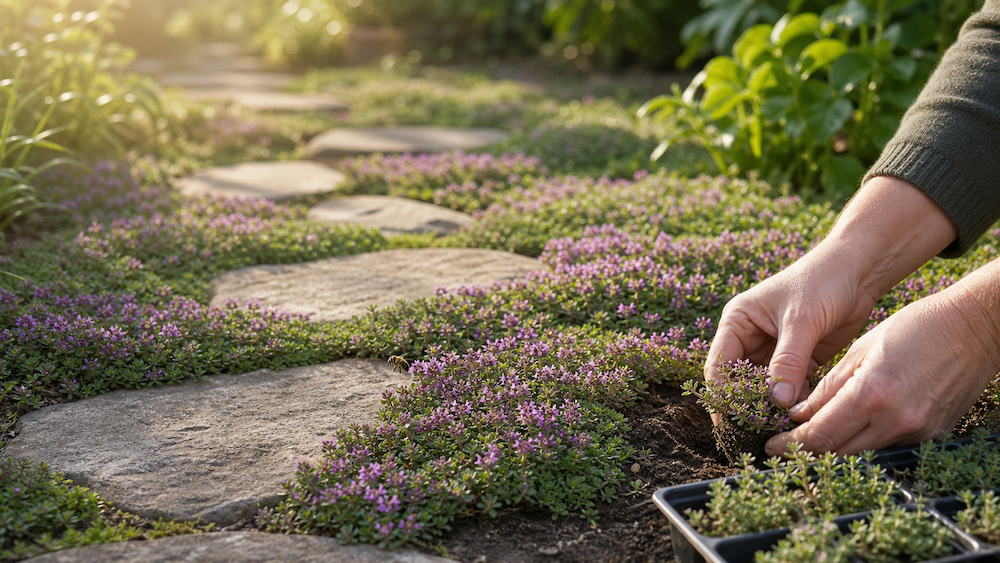
For sunny areas with excellent drainage, creeping thyme can form a low, fragrant ground cover with tiny flowers that attract bees and butterflies. It can fill spaces between stepping stones, soften rock gardens, cover small slopes and replace grass in selected low-traffic areas.
Growing creeping thyme from seed costs less than buying hundreds of mature plants, but it requires patience. The seeds are tiny, young plants grow slowly at first and the soil must remain carefully moist without becoming waterlogged.
This guide explains how to grow creeping thyme from seed, prepare the planting area, calculate coverage and avoid the mistakes that cause many thyme lawns to fail.
Ready to start? Shop Creeping Thyme Seeds at Urban Garden Seed.
Quick Answer: How Do You Grow Creeping Thyme from Seed?
For the best chance of success:
- Choose a location with full sun and very well-drained soil.
- Remove existing grass, weeds and roots.
- Start the tiny seeds on the surface of moist seed-starting mix.
- Do not bury them deeply; thyme seeds benefit from light during germination.
- Keep the growing medium moist but never soggy.
- Transplant established seedlings after frost danger has passed.
- Space plants approximately 8–12 inches apart.
- Water consistently until the roots become established.
- Keep weeds out while the young plants spread.
- Limit walking until the thyme forms a healthy mat.
Creeping thyme is a perennial in suitable climates. It may remain green during mild winters but can become partially dormant in colder areas.
What Is Creeping Thyme?
Creeping thyme generally refers to low-growing thyme species and cultivars used as ornamental ground covers.
One commonly grown species is Thymus serpyllum, also called mother of thyme or wild thyme. It develops thin, woody stems, tiny aromatic leaves and small flowers that may be pink, purple, red or white, depending on the cultivar.
Creeping thyme is commonly used:
- Between stepping stones
- Along pathways
- At the front of sunny borders
- In rock gardens
- Around patios
- On small slopes
- In containers
- As a small-area lawn substitute
Illinois Extension describes Thymus serpyllum as a low-growing perennial suitable for small lawn areas and spaces between stepping stones. It prefers full sun to very light shade and requires well-drained soil.
Is Creeping Thyme a Good Lawn Replacement?
Creeping thyme can replace grass in the right location, but it is not a direct substitute for every lawn.
| Creeping thyme may work well for | Creeping thyme may not work well for |
|---|---|
| Small sunny lawn areas | Heavily used play areas |
| Spaces between pavers | Dog-running routes |
| Rock gardens | Wet or poorly drained soil |
| Low-traffic front yards | Deep shade |
| Dry slopes | Frequently flooded areas |
| Path edges | Athletic or recreation lawns |
| Decorative garden spaces | Heavy clay that remains wet |
Established creeping thyme can tolerate occasional or light foot traffic. It should not be expected to handle the same level of wear as turfgrass.
For a frequently used backyard, consider planting creeping thyme around stepping stones while keeping durable pathways for regular walking.
Creeping Thyme Lawn Benefits
Low-growing habit
Many creeping thyme varieties remain only a few inches tall. Their spreading stems can create a dense mat when the growing conditions are suitable.
Fragrant foliage
Walking lightly across established plants or brushing the leaves can release a noticeable herbal fragrance.
Flowers for pollinators
The small flowers can provide nectar for bees and butterflies. North Carolina Extension identifies creeping thyme as a pollinator-attracting ground cover.
Lower water needs after establishment
Creeping thyme tolerates dry conditions once it develops a healthy root system. New seedlings still require careful, consistent moisture.
Useful in difficult sunny spaces
It can grow in sandy, gritty, rocky or relatively lean soil where some conventional lawn grasses struggle—as long as drainage is excellent.
When Should You Plant Creeping Thyme Seeds?
The best planting time depends on your climate and whether you start seeds indoors or outside.
Indoor seed starting
Start seeds indoors during late winter or spring so the seedlings have time to develop before outdoor planting.
Transplant them after frost danger has passed and the plants are well rooted. Indoor-grown seedlings must be hardened off before they move permanently outdoors.
Spring outdoor planting
Spring is the safest outdoor planting period in many U.S. regions. Wait until extreme cold has passed and the soil can be worked.
Early fall planting
Early fall may work in mild climates when plants have enough time to establish before cold, wet or freezing conditions arrive.
Avoid planting immediately before severe winter weather. Young seedlings are less resilient than established plants.
General planting guide
| Climate | Suggested approach |
| USDA Zones 4–6 | Start indoors and transplant during spring |
| USDA Zones 7–8 | Plant during spring or consider early fall |
| USDA Zone 9 | Plant during mild spring or fall weather |
| Hot, humid regions | Use raised beds or containers if drainage is questionable |
| Cold mountain climates | Transplant after local frost danger passes |
Creeping thyme is generally listed for USDA Zones 4–9, but drainage, humidity, snow cover and local weather can affect winter survival.
How Long Does Creeping Thyme Take to Grow from Seed?
Under suitable indoor conditions, thyme seeds may begin germinating within a few weeks. Germination can be slow or uneven, so do not discard a tray too early.
Creating dense ground coverage takes considerably longer than germinating the seeds. Depending on the variety, climate, spacing and care, plants may need a full growing season or longer to develop a connected mat.
Seeds offer a cost-effective way to produce many plants, but plugs provide faster visual results. A practical compromise is to:
- Start a large number of seedlings in trays.
- Transplant the strongest plants.
- Allow those plants to spread.
- Propagate established plants later by division or layering.
Step 1: Choose the Right Location
Creeping thyme performs best with:
- At least six hours of direct sunlight
- Excellent drainage
- Good airflow
- Average to dry soil after establishment
- Protection from standing winter water
A small amount of light shade may be tolerated, but dense shade usually produces weak, open growth and fewer flowers.
Before planting, observe the area after heavy rain. If water remains on the surface or the soil stays saturated for days, improve the drainage or select a different location.
Step 2: Test and Improve Soil Drainage
Drainage is the most important requirement for creeping thyme.
Heavy, wet soil can cause root and crown rot. Illinois Extension emphasizes that thyme requires very well-drained soil, while North Carolina Extension notes its susceptibility to rot when overwatered or planted in poorly drained conditions.
To improve a small planting area:
- Remove compacted debris and construction material.
- Loosen the planting layer.
- Incorporate suitable mineral material when recommended for your soil.
- Create a slightly raised planting area.
- Use a raised bed for persistently wet sites.
- Avoid low spots where rain collects.
Do not assume that adding a thin layer of sand to heavy clay will solve drainage problems. A raised bed or different location may be more effective.
Step 3: Remove Existing Grass and Weeds
Creeping thyme seedlings cannot compete effectively with an established lawn.
Before sowing or transplanting:
- Remove existing turf.
- Dig out perennial weed roots.
- Clear stones and debris from the surface.
- Rake the soil into a fine, level seedbed.
- Allow hidden weeds to emerge.
- Remove those weeds before planting thyme.
Do not simply scatter creeping thyme seed over healthy grass. Most seeds will fail to establish because they cannot reach the soil, receive consistent moisture or compete for light.
Weed control remains important throughout the first season. Once thyme forms a dense mat, it may reduce some new weed growth, but it will not eliminate all weeds.
Step 4: Start Creeping Thyme Seeds Indoors
Starting creeping thyme in trays gives you more control than sowing tiny seeds across a large outdoor area.
You will need:
- Clean seed trays or cell packs
- Fine, free-draining seed-starting mix
- A gentle mister or bottom-watering tray
- Bright light
- Plant labels
- A clear cover, if carefully ventilated
Sowing instructions
- Fill the tray with moist seed-starting mix.
- Level the surface without compacting it heavily.
- Scatter the tiny seeds thinly across the surface.
- Press them gently into contact with the growing medium.
- Do not cover them with a thick layer of soil.
- Mist carefully or water from below.
- Place the tray somewhere warm and bright.
- Maintain moisture without saturating the mix.
The Royal Horticultural Society recommends surface-sowing tiny thyme seeds without covering them and maintaining a temperature around 59–68°F.
If you use a humidity cover, remove or vent it after germination. Constant stagnant moisture increases the risk of damping-off disease.
Step 5: Give Seedlings Strong Light
Weak light produces thin, stretched seedlings.
Once germination begins:
- Provide bright light immediately.
- Keep grow lights close enough to prevent stretching without overheating the leaves.
- Follow the light manufacturer’s safety directions.
- Rotate window-grown trays regularly.
- Maintain airflow around the seedlings.
Water when the surface begins to dry, but do not allow trays to remain soaked.
Step 6: Thin or Transplant Seedlings
When seedlings develop several true leaves and are large enough to handle, separate crowded plants carefully.
Move them into individual cells or small pots if necessary. Allow roots to develop before outdoor transplanting.
Handle seedlings by their leaves rather than squeezing the delicate stems. A damaged leaf can be replaced; a crushed stem often cannot.
Step 7: Harden Off the Plants
Indoor seedlings need time to adjust to direct sun, wind and outdoor temperature changes.
Approximately one week before transplanting:
- Place the seedlings outside in a protected, shaded location.
- Bring them inside after a short period.
- Increase outdoor exposure each day.
- Introduce direct sunlight gradually.
- Protect them from strong wind and cold nights.
Transplant after the seedlings are sturdy and local frost danger has passed.
Step 8: Space Creeping Thyme Correctly
Illinois Extension recommends spacing creeping thyme approximately 8–12 inches apart.
Closer spacing can produce faster visual coverage but requires more plants. Wider spacing costs less initially but leaves open soil exposed to weeds for longer.
Plant each seedling at the same depth it was growing in its container. Avoid burying the crown.
Water after planting to settle the soil around the roots.
Creeping Thyme Coverage Calculator
Use this formula to estimate the number of established planting positions:
Area in square feet ÷ space occupied by each plant = approximate number of plants
For square spacing:
- 8-inch spacing: approximately 2.25 plants per square foot
- 10-inch spacing: approximately 1.44 plants per square foot
- 12-inch spacing: approximately 1 plant per square foot
Example for a 100-square-foot area:
| Spacing | Approximate planting positions |
| 8 inches | 225 |
| 10 inches | 144 |
| 12 inches | 100 |
Add approximately 10% for replacements when planning the number of established seedlings.
These figures represent planting positions—not the number of seeds required. Germination and seedling survival vary. Check the packet quantity and start more seeds than the final number of plants you need.
Can You Direct-Sow Creeping Thyme?
Direct sowing is possible, but it is harder to manage than starting seeds in trays.
For a small direct-sown area:
- Remove every visible weed.
- Prepare a fine, level surface.
- Mix tiny seeds with a dry carrier if necessary for more even distribution.
- Scatter the seeds lightly.
- Press them into the soil without burying them deeply.
- Water with a very fine spray.
- Keep the surface consistently moist.
- Protect the site from heavy rain, birds and foot traffic.
Direct sowing becomes difficult across a large area because the soil surface can dry quickly and young thyme is hard to distinguish from weeds.
Watering a New Creeping Thyme Lawn
Newly planted thyme needs more frequent water than established thyme.
During germination and establishment:
- Keep the seedbed evenly moist.
- Use gentle watering that will not wash seeds away.
- Check containers and surface-sown areas daily.
- Reduce frequency as roots grow deeper.
- Never leave plants standing in water.
Once established, water deeply but less often. Allowing the soil to dry somewhat between watering encourages healthier conditions than constant surface saturation.
Fertilizing Creeping Thyme
Creeping thyme usually does not need rich soil or heavy feeding.
Excessive nitrogen can encourage soft, weak growth and reduce flowering. If the soil is severely depleted, use a light, balanced amendment based on a soil test.
Do not treat a thyme lawn like heavily fertilized turfgrass.
Walking on Creeping Thyme
Wait until the plants have formed a strong, rooted mat before allowing regular foot traffic.
Even mature thyme is better suited to occasional walking than constant use. Add stepping stones through frequently traveled areas.
This arrangement provides:
- A stable walking surface
- Less damage to plants
- Easier garden access
- Attractive thyme growth around the stones
- Fragrance when the foliage is brushed
Maintaining an Established Thyme Lawn
Remove weeds early
Pull weeds before they flower and set seed. Work carefully so you do not uproot shallow thyme plants.
Trim after flowering
Light trimming can remove faded flowers and encourage compact growth. Older thyme can become woody and may need stronger renewal pruning.
Replace bare areas
Start additional seedlings or divide established plants to repair open patches.
Limit winter moisture
Cold temperatures combined with saturated soil can be more damaging than cold alone.
Avoid heavy mulch over the crown
Thick organic mulch can trap moisture against the stems. Use gravel or another suitable mineral surface only when appropriate for the planting design and soil.
Common Creeping Thyme Problems
Seeds do not germinate
Possible causes include:
- Seeds buried too deeply
- Growing medium allowed to dry
- Excessive water
- Old or incorrectly stored seed
- Inappropriate temperature
- Insufficient light
Seedlings collapse
This may indicate damping off, which is encouraged by saturated growing mix, poor airflow and contaminated containers.
Plants turn brown
Common causes include:
- Poor drainage
- Overwatering
- Winter wetness
- Root or crown rot
- Severe drought before establishment
- Physical damage from traffic
The thyme does not spread
Check for:
- Insufficient sunlight
- Compacted or saturated soil
- Weed competition
- Inappropriate variety
- Plants that have not had enough time to establish
The lawn remains patchy
Seed-grown thyme will not create an instant carpet. Repair bare sections with additional seedlings and keep weeds from occupying the open soil.
Is Creeping Thyme the Same as Rock Cress?
No.
Creeping thyme generally belongs to the genus Thymus. Rock cress commonly refers to plants in genera such as Aubrietaor Arabis.
They may both be low-growing flowering plants, but they have different botanical identities, growing habits and seed-starting requirements.
Always verify the botanical name on the product page and seed packet before planting.
Is Creeping Thyme Native to the United States?
Thymus serpyllum is not native to the United States. Gardeners seeking native lawn alternatives should consult a local extension office or native plant organization for species suited to their region.
Creeping thyme is best used thoughtfully in maintained landscapes where it can be monitored and kept within the intended planting area.
Where to Buy Creeping Thyme Seeds Online
Before purchasing, check:
- Botanical species
- Cultivar or color
- Packet quantity
- Germination instructions
- Hardiness range
- Mature height and spread
- Seed origin when available
- Shipping information
- Satisfaction policy
Urban Garden Seed supplies flower, vegetable, fruit and specialty seeds to gardeners across the United States. Our selection includes colorful ground-cover options for patios, pathways, rock gardens and small urban spaces.
Shop Creeping Thyme Seeds at UrbanGardenSeed.com.
Frequently Asked Questions
Does creeping thyme come back every year?
Creeping thyme is a perennial in suitable climates, commonly USDA Zones 4–9. Winter survival depends on the cultivar, drainage and local conditions.
Can I scatter creeping thyme seeds over an existing lawn?
This is unlikely to produce good results. Existing grass will compete with the seedlings. Remove the turf and prepare a clean seedbed first.
Does creeping thyme need full sun?
Full sun is preferred. Very light shade may be tolerated, but flowering and density can decline as shade increases.
Can creeping thyme grow in clay soil?
It may struggle in clay that remains wet. Use a raised bed, container or properly prepared site with excellent drainage.
How much foot traffic can creeping thyme tolerate?
Established thyme can tolerate light or occasional traffic. Use stepping stones for frequently traveled routes.
How long before creeping thyme forms a lawn?
Germination may occur within a few weeks under good conditions, but dense coverage can require a full growing season or longer.
Does creeping thyme choke out weeds?
A dense mature mat may suppress some new weeds, but it will not eliminate established grass or perennial weeds. Weed control is essential during establishment.
Can creeping thyme be grown in containers?
Yes. Use a sunny container with drainage holes and a free-draining growing medium.
Are creeping thyme and culinary thyme the same?
They belong to the same genus, but creeping ornamental species and cultivars differ from common culinary thyme. Do not assume a ground-cover variety is intended for cooking.
Start Your Creeping Thyme Ground Cover
A successful thyme lawn begins with realistic expectations.
Choose a small sunny area, eliminate grass and weeds, correct drainage problems and start the tiny seeds carefully. Give young plants time to establish before exposing them to foot traffic.
Creeping thyme will not create an instant lawn, but with patience it can become a fragrant, flowering ground cover for pathways, patios, rock gardens and selected low-traffic spaces.
Order Creeping Thyme Seeds from Urban Garden Seed and begin preparing your planting area today.
Grow low. Bloom beautifully. Walk lightly.
SOURCES
- Illinois Extension: Creeping Thyme
- North Carolina Extension: Thymus serpyllum
- Iowa State Extension: Groundcovers for Sun
- Royal Horticultural Society: How to Grow Thyme
