
Adenium, Cactus & Succulent, Flower Seeds, Herb Seeds, Sensory & Wellness Gardening, Sustainable & Regenerative Living, The Horticulturist’s Lab, Urban & Small-Space Gardening, Vegetables
How to Start a Cut Flower Garden from Seed: Beginner Plan and Planting Calendar
Jul
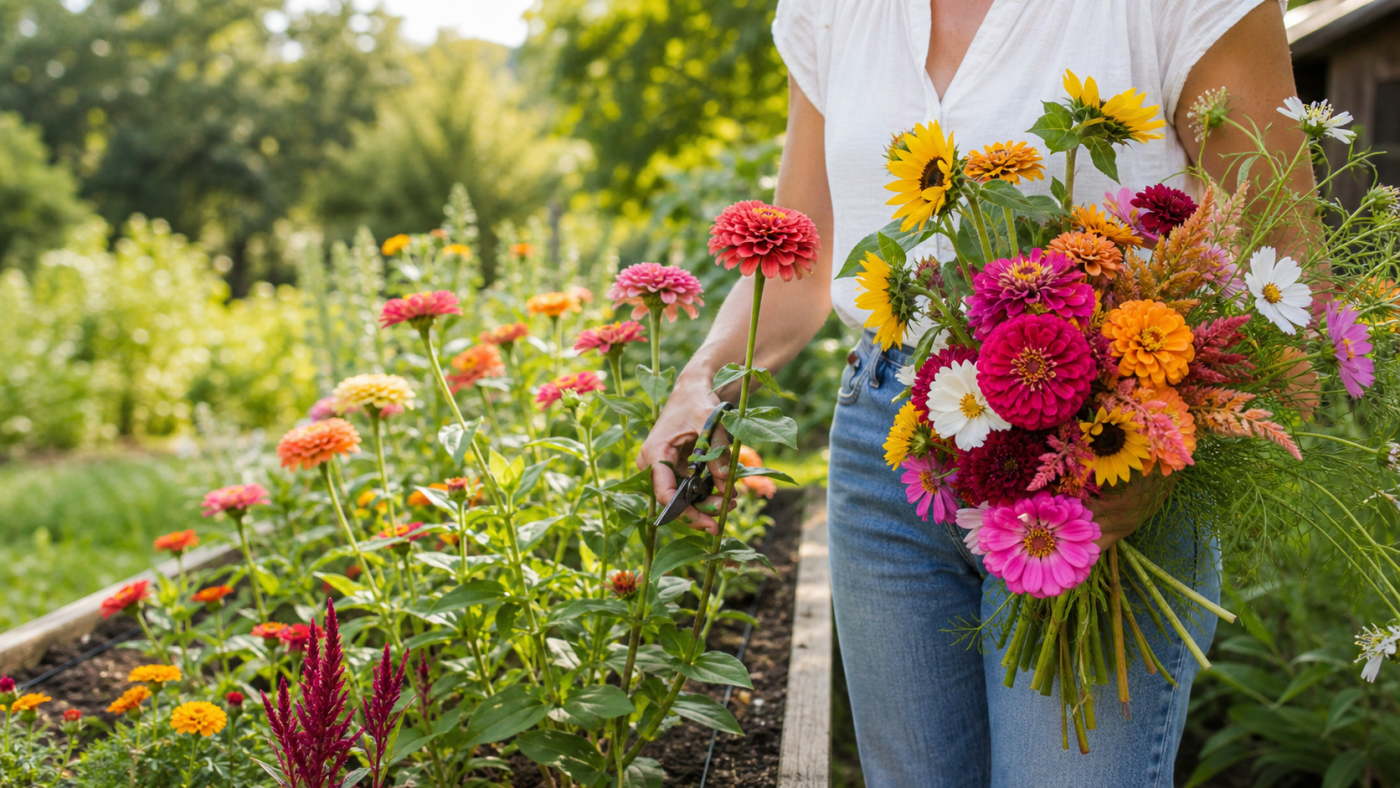
Imagine stepping into your backyard, cutting a handful of colorful flowers and arranging a fresh bouquet for your home.
A cut flower garden makes this possible—and you do not need a large farm, professional greenhouse or expensive plants to begin.
Many popular bouquet flowers can be grown directly from seed. You can start with a sunny garden bed, raised bed or collection of large containers. The key is choosing suitable varieties, planting at the right time and growing flowers that produce useful stems throughout the season.
This guide explains how to start a cut flower garden from seed, including what to grow, when to plant and how to arrange a simple 4-by-8-foot cutting bed.
Ready to begin? Browse flower seeds at Urban Garden Seed and build a collection that matches your climate and favorite bouquet colors.
The Five-Step Cut Flower Garden Plan
Starting a cutting garden becomes easier when you break it into five steps:
- Choose a location receiving at least six hours of direct sunlight.
- Find your area’s average last spring frost date.
- Select tall, long-stemmed flower varieties.
- Start suitable flowers indoors and direct-sow the rest.
- Plant additional seeds every two or three weeks for a longer harvest.
A cutting garden is different from an ornamental flower border. Flowers are grown primarily to be harvested, so plants can be placed closer together when the variety’s instructions allow. Appearance inside the garden matters less than stem quality, productivity and access for cutting.
Choose Flowers Suitable for Bouquets
Not every beautiful flower is an ideal cut flower.
For bouquets, look for varieties with:
- Long, sturdy stems
- Good vase life
- Repeat flowering
- Suitable mature height
- Flowers that hold their shape after cutting
- Colors that complement one another
Avoid choosing only dwarf or compact bedding varieties. They may look beautiful along a walkway but produce stems that are too short for a vase.
The University of Minnesota Extension recommends looking for tall varieties with sturdy stems and avoiding compact forms unless they were specifically bred for cutting.
Best Cut Flower Seeds for Beginners
The following flowers can form the foundation of a beginner cutting garden. Check the instructions for each particular variety because height, maturity time and planting requirements can differ.
1. Zinnias
Zinnias are among the most rewarding cut flowers for beginners. They grow quickly in warm weather and are available in many colors, shapes and sizes.
Many zinnias are cut-and-come-again flowers. Harvesting mature blooms encourages suitable branching varieties to produce additional stems.
Best qualities:
- Wide range of colors
- Long, straight stems on tall varieties
- Excellent for mixed bouquets
- Productive during warm weather
- Relatively easy to direct-sow
Planting tip: Direct-sow after frost danger has passed and the soil has warmed. Zinnias dislike cold conditions.
Shopping tip: Choose tall zinnias instead of dwarf border varieties when bouquet stems are your priority.
2. Cosmos
Cosmos produce delicate flowers on airy stems. They add movement and a natural cottage-garden appearance to arrangements.
The plants can become tall, so place them where they will not shade shorter flowers. Some gardens may need stakes or netting to prevent stems from falling during storms.
Best qualities:
- Light, graceful bouquet filler
- Long flowering period
- Good for informal arrangements
- Attractive to many pollinators
- Easy to grow in sunny locations
Planting tip: Cosmos can generally be direct-sown after frost danger passes. Avoid overfertilizing; overly rich soil may encourage excessive foliage.
3. Sunflowers
Sunflowers provide bold focal flowers for arrangements. Seeds are large, easy to handle and well suited to direct sowing.
Single-stem and branching sunflowers behave differently. Single-stem types generally produce one primary bloom, while branching types can provide multiple flowers.
Best qualities:
- Dramatic bouquet focal point
- Easy-to-handle seeds
- Many colors and flower sizes
- Useful for succession planting
- Popular with beginner and family gardeners
Planting tip: Direct-sow after frost danger has passed. Plant a small batch every one or two weeks for a continuing supply.
Do not automatically pinch single-stem sunflowers. Removing their growing tip can destroy the primary flower.
4. Marigolds
Tall marigold varieties can provide cheerful gold, orange, yellow and red flowers for bouquets.
Smaller French marigolds are excellent for borders and containers but may not produce long stems. Taller African or cutting varieties are usually more appropriate for arrangements.
Best qualities:
- Warm, bright colors
- Long flowering season
- Useful in mixed gardens
- Suitable for repeated harvesting
- Productive during warm weather
Planting tip: Start indoors before the last frost or direct-sow once the soil is warm.
Urban Garden Seed offers several unusual options, including Rare Red and Yellow Marigold Seeds. Confirm the selected variety’s mature height and botanical identity before purchasing it for cutting.
5. Celosia
Celosia adds valuable texture to bouquets. Depending on the type, its flowers may resemble colorful flames, plumes or coral-like crests.
Celosia prefers warm conditions and should not be transplanted into cold soil.
Best qualities:
- Strong visual texture
- Bright and unusual colors
- Useful for fresh or dried arrangements
- Performs well during summer
- Complements round flowers such as zinnias
Planting tip: Start seeds indoors or direct-sow after the soil has warmed. Small seeds should be planted according to the packet’s depth instructions.
6. Snapdragons
Snapdragons produce tall flower spikes that create height in arrangements. Unlike zinnias and sunflowers, they prefer cooler growing conditions.
They are slower and more demanding to start than some warm-season flowers, but their vertical form makes them valuable in a cutting garden.
Best qualities:
- Tall flower spikes
- Strong vertical bouquet element
- Wide color selection
- Performs during cooler weather
- Useful early or late in the season
Planting tip: Start seeds indoors well before the last frost. Snapdragon seeds are very small, so use a fine seed-starting mix and follow the packet instructions carefully.
7. Calendula
Calendula produces cheerful yellow and orange flowers during cooler parts of the growing season.
It works well in cottage-style arrangements and can bridge the gap before heat-loving summer flowers begin blooming.
Best qualities:
- Beginner-friendly
- Tolerates cooler conditions
- Bright, warm colors
- Useful in smaller arrangements
- Can be direct-sown in suitable weather
Planting tip: Sow during cool spring conditions. In mild-winter regions, fall planting may also be possible.
8. Coneflowers
Coneflowers can add durable, daisy-like flowers to arrangements while supporting pollinators in the garden.
Unlike fast annual flowers, coneflowers are perennials in suitable climates and may take longer to establish. They should be considered a long-term addition rather than the main source of first-season bouquets.
Best qualities:
- Returns in suitable climates
- Strong summer color
- Useful fresh or dried
- Attractive seed heads
- Pollinator value
Planting tip: Review the variety’s germination requirements. Some perennial seeds benefit from a period of cold, moist conditions.
9. Chrysanthemums
Chrysanthemums provide valuable late-season color. However, seed-grown chrysanthemums can vary in their growth habits and may not bloom as quickly as annual cut flowers.
Use them as a supporting crop while relying on zinnias, cosmos, sunflowers and celosia for faster results.
Best qualities:
- Late-season flowers
- Many colors and flower forms
- Useful for autumn arrangements
- Can complement warm bouquet palettes
Browse Ground-Cover Chrysanthemum Seeds, but remember that ground-cover varieties may produce shorter stems than chrysanthemums selected specifically for cutting.
Cut Flower Seed-Starting Calendar
Use your average last spring frost date—not simply the month—to create your planting schedule.
| Planting window | What to do |
|---|---|
| 10–12 weeks before last frost | Start snapdragons and slower perennial flowers indoors |
| 6–8 weeks before last frost | Start celosia and marigolds indoors |
| 4–6 weeks before last frost | Start zinnias and cosmos indoors if desired |
| 1–2 weeks before last frost | Prepare beds, install supports and harden off suitable seedlings |
| After frost danger passes | Transplant warm-season flowers and direct-sow sunflowers, zinnias and cosmos |
| Every 1–3 weeks afterward | Succession-sow sunflowers and other suitable flowers |
| Midseason | Replace weak plants and sow another round where the growing season permits |
This calendar is a general starting point. Follow the instructions for the exact species and variety you purchase.
Gardeners in warm climates may have different planting windows. Some areas experience summer conditions that are too hot for certain flowers but offer a productive fall, winter or early-spring cutting season. Use a local university extension planting calendar for regional guidance.
A Simple 4-by-8-Foot Cut Flower Garden
A 4-by-8-foot raised bed provides 32 square feet of growing space—enough to test several flowers without creating an overwhelming project.
Use this basic layout:
| Bed section | Flowers |
| North or back edge | Sunflowers and tall cosmos |
| Middle row | Tall zinnias and celosia |
| Front row | Marigolds and calendula |
| Corners | Additional fillers or trial varieties |
Place tall flowers where they will not shade smaller plants. If the bed can be accessed from every side, taller plants can occupy the center.
Leave enough room to reach flowers without stepping on the soil. Good access makes cutting, watering and removing damaged foliage easier.
Always use the spacing provided for the particular variety. A tall branching sunflower needs more room than a narrow single-stem sunflower.
Choose a Simple Bouquet Color Palette
Buying every appealing color can produce a garden that feels disconnected. A basic color plan makes bouquets easier to arrange.
Try one of these combinations:
Warm sunset garden
- Golden sunflowers
- Orange marigolds
- Red celosia
- Coral or pink zinnias
Soft cottage garden
- Pink cosmos
- White zinnias
- Lavender flowers
- Pale yellow calendula
Bright celebration garden
- Mixed zinnias
- Yellow sunflowers
- Red marigolds
- Purple celosia
Autumn bouquet garden
- Bronze sunflowers
- Burgundy celosia
- Orange marigolds
- Yellow chrysanthemums
Select three dominant colors and one accent color. This creates variety without making every bouquet difficult to coordinate.
How Many Seed Packets Do You Need?
The answer depends on:
- Packet quantity
- Recommended spacing
- Bed size
- Expected plant size
- Whether you start indoors or direct-sow
- How many succession plantings you want
- Whether every seedling is intended for the garden
A beginner with one 4-by-8-foot bed can start with five or six carefully chosen flower types:
- One focal flower
- Two productive cut-and-come-again flowers
- One vertical flower
- One textural flower
- One bouquet filler
For example:
- Sunflowers for focal blooms
- Zinnias and cosmos for repeated cutting
- Snapdragons for height
- Celosia for texture
- Calendula for filler and early color
Do not sow every seed at once. Reserve part of each suitable packet for a second planting or to replace unsuccessful seedlings.
Start Seeds Indoors or Direct-Sow?
Both methods have advantages.
Starting seeds indoors
Indoor seed starting gives slow-growing plants more time and protects delicate seedlings from cold weather.
It is especially useful for:
- Snapdragons
- Celosia
- Marigolds
- Slower perennial flowers
Use containers with drainage holes and fresh seed-starting mix. Provide adequate light and avoid keeping the growing medium waterlogged.
Direct sowing
Direct sowing reduces transplant stress and requires less equipment.
It is often suitable for:
- Sunflowers
- Zinnias
- Cosmos
- Calendula
Prepare the soil, plant at the recommended depth and keep the surface consistently moist during germination.
Harden Seedlings Before Transplanting
Indoor seedlings should not be moved directly from a protected room into full outdoor sun.
About one week before transplanting, gradually expose them to outdoor conditions:
- Begin with a short period in a sheltered, shaded location.
- Increase their outdoor time each day.
- Introduce more sunlight gradually.
- Protect them from strong wind and cold nights.
- Transplant after they have adjusted.
This process is called hardening off. It helps reduce sun damage, water stress and transplant shock.
Support Tall Flowers Before They Fall
Do not wait until flowers bend in a storm to install support.
Options include:
- Horizontal flower netting
- Stakes and soft ties
- Garden twine
- Small trellises
- Support rings
Install netting while plants are still short so they can grow through it. Check supports regularly and make sure they are not cutting into expanding stems.
Pinching Cut Flowers
Pinching means removing the central growing tip from a young plant to encourage side branches.
Many branching zinnias, cosmos and celosia varieties can produce more usable stems after appropriate pinching. However, not every flower should be pinched.
Do not pinch:
- Single-stem sunflowers
- Plants already stressed or flowering
- Varieties whose instructions advise against it
- Seedlings that are still too small
Check variety-specific guidance before pinching.
Succession Planting for Continuous Bouquets
Some flowers produce repeatedly, while others provide one major bloom.
Succession planting prevents the entire cutting garden from flowering at once.
For suitable flowers:
- Sow the first group after frost danger passes.
- Sow a smaller second group one or two weeks later.
- Continue while enough warm growing weather remains.
- Stop when new plants will not have time to flower before frost.
Sunflowers are particularly useful for succession planting. A small new row can be sown at regular intervals instead of planting the entire supply on one day.
How to Harvest Cut Flowers
Harvesting at the correct stage improves appearance and vase life.
General harvesting practices include:
- Cut during the cool morning or evening.
- Use clean, sharp scissors or pruners.
- Carry a clean bucket of water into the garden.
- Place stems in water immediately.
- Remove leaves that would sit below the waterline.
- Keep freshly cut flowers out of direct heat.
- Clean the vase before arranging the bouquet.
The correct harvest stage varies by flower. Some flowers should be fully open, while others last longer when cut as the buds begin opening.
Keep Flowers Producing
A productive cutting garden requires regular attention:
- Cut flowers frequently.
- Remove damaged or diseased foliage.
- Deadhead flowers you do not harvest.
- Water the soil rather than repeatedly wetting the leaves.
- Check tall plants after wind and storms.
- Replace finished plants when the season allows.
- Avoid excessive nitrogen fertilizer, which can create lush foliage with fewer flowers.
Record which varieties perform well. Your notes will make next year’s seed order and planting plan more effective.
Can You Grow Cut Flowers in Containers?
Yes, although container size and variety selection matter.
Choose:
- Tall containers that will not tip over
- Drainage holes
- Fresh potting mix
- Compact cutting varieties
- A sunny location
- Supports for taller plants
Zinnias, marigolds, calendula and compact sunflowers can work in containers when the pot is large enough for the selected variety.
Containers dry faster than garden soil, so check them frequently during warm weather. Avoid crowding many full-sized plants into one small pot.
Where to Buy Cut Flower Seeds Online in the USA
A successful cutting garden begins with clearly identified seeds and accurate growing information.
When comparing seed suppliers, check:
- Botanical and variety names
- Mature plant height
- Packet quantity
- Days to maturity or bloom
- Annual or perennial classification
- Indoor and outdoor sowing directions
- Shipping information
- Customer-support access
- Satisfaction policy
- Whether claims such as untreated, Non-GMO or organic are documented
Urban Garden Seed serves gardeners throughout the United States with a broad selection of flower, vegetable, fruit, herb and specialty seeds.
Our flower catalog includes colorful and unusual options for backyard gardens, raised beds, containers and cutting gardens. Product availability changes, so order early enough to start seeds during the correct planting window.
Shop flower seeds at UrbanGardenSeed.com.
Frequently Asked Questions
What are the easiest cut flowers to grow from seed?
Zinnias, cosmos, sunflowers, marigolds and calendula are good starting choices. Select tall varieties that produce stems suitable for arrangements.
How much space does a cut flower garden need?
You can begin with a small raised bed, an existing sunny border or several containers. A 4-by-8-foot bed provides enough space to test multiple flower types.
When should I start cut flower seeds indoors?
Count backward from your average last frost date. Some slow flowers may need to be started 10–12 weeks before frost, while faster warm-season flowers may need four to eight weeks. Follow each packet’s instructions.
Which cut flowers bloom repeatedly?
Many branching zinnias, cosmos, marigolds and celosia varieties can continue producing when harvested regularly. Performance depends on the particular variety and growing conditions.
Can I grow a cutting garden in containers?
Yes. Choose containers with adequate drainage and varieties suited to the available space. Provide supports for plants that produce tall stems.
How many seed packets should a beginner buy?
Start with approximately five or six complementary flower types. Check packet quantities, mature spacing and bed size before ordering.
Should I plant all my flower seeds at once?
No. Reserve seeds of suitable varieties for succession planting and replacements. Staggered sowing can extend the bouquet season.
Where can I buy flower seeds online?
Urban Garden Seed offers a broad online selection for U.S. gardeners, including flower seeds for beds, containers, pollinator gardens and home bouquets.
Grow Your First Homegrown Bouquet
You do not need to create a perfect flower farm during your first season.
Begin with a sunny space and a small collection of dependable flowers. Combine bold focal blooms, productive cut-and-come-again flowers, vertical spikes and delicate fillers.
Plant according to your frost date, support tall stems and harvest regularly. Keep notes about the flowers that perform best in your garden.
Every bouquet you cut will teach you something—and your next garden will be even better.
Explore flower seeds from Urban Garden Seed and start planning your first cutting garden today.
Grow color. Cut fresh. Bring your garden indoors.
SOURCES
- University of Minnesota Extension: Growing a Cutting Garden from Seed
- UC Master Gardeners: Cut Flower Planting Chart
