
Cactus & Succulent, Family & Kids' Gardening, Flower Seeds, Herb Seeds, Sensory & Wellness Gardening, Style, Sustainable & Regenerative Living, The Horticulturist’s Lab, Urban & Small-Space Gardening, Vegetables
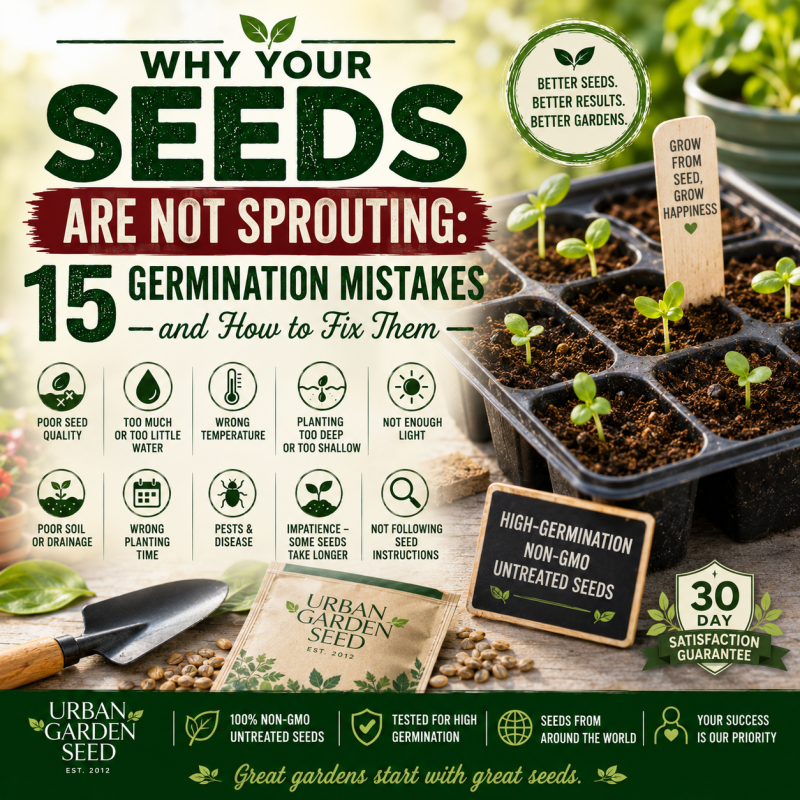
Why Your Seeds Are Not Sprouting: 15 Germination Mistakes and How to Fix Them
Jul
Few things are more frustrating than planting seeds, waiting patiently, watering carefully, checking every morning—and seeing nothing.
No tiny green shoots.
No seedlings.
No progress.
Just soil.
If your vegetable seeds, flower seeds, herb seeds, or tree seeds are not sprouting, the problem may not be one single thing. Seed germination depends on several conditions working together: moisture, temperature, light, planting depth, seed quality, timing, soil, and care.
The good news?
Most germination problems can be fixed.
This guide explains the most common reasons seeds fail to sprout and how to improve your results, whether you are starting seeds indoors, planting in raised beds, growing in containers, or building your first backyard garden.
Quick Answer: Why Are My Seeds Not Sprouting?
Seeds may fail to sprout because of:
- Poor seed quality
- Old or improperly stored seeds
- Planting too deep
- Planting too shallow
- Soil that is too wet
- Soil that is too dry
- Wrong soil temperature
- Not enough light for light-dependent seeds
- Too much direct sun for delicate seedlings
- Compacted or heavy soil
- Starting seeds at the wrong season
- Using containers without drainage
- Letting seed trays dry out
- Pests eating seeds or seedlings
- Expecting every seed type to germinate at the same speed
Before you throw away your tray or give up on gardening, check these issues one by one.
A small correction can make a big difference.
1. The Seeds Were Low Quality
Not all seeds are equal.
Seed quality is one of the most important factors in germination success. Even if you provide the right moisture, light, and temperature, poor-quality seeds may produce weak results.
High-quality seeds are especially important for beginners because new gardeners often blame themselves when the real issue starts with the seed.
Signs seed quality may be the issue:
- Very low germination across multiple containers
- Weak or abnormal seedlings
- Seeds that look damaged, crushed, moldy, or poorly packed
- Unknown source or no clear variety information
- Old seeds with no storage history
How to fix it:
Start with seeds from a trusted supplier.
At Urban Garden Seed, we focus on Non-GMO, untreated seeds selected for strong germination and reliable garden performance.
Good gardening begins before the seed touches the soil.
It begins with the seed itself.
2. The Seeds Were Too Old or Stored Incorrectly
Seeds are living plant material in a dormant state.
Over time, their viability can decline, especially if they are exposed to heat, humidity, sunlight, or poor storage conditions.
Some seeds remain viable for years under proper storage, while others lose strength faster.
Poor seed storage conditions include:
- Hot garages
- Humid kitchens
- Open packets
- Direct sunlight
- Damp storage boxes
- Temperature swings
- Unlabeled seed envelopes
How to fix it:
Store seeds in a cool, dry, dark place.
Keep packets sealed when possible.
Label seeds clearly with the variety and date received.
If seeds are old, consider testing a few before planting your entire garden.
3. You Planted the Seeds Too Deep
Planting depth is one of the most common germination mistakes.
A seed contains only enough stored energy to push a young shoot toward the surface. If it is buried too deeply, it may germinate underground but never reach the light.
This is especially common with small seeds.
How to fix it:
Follow the recommended planting depth for each seed type.
As a general concept, tiny seeds are usually planted more shallowly than large seeds. But do not guess. Check the variety instructions.
Common mistake:
Planting all seeds at the same depth.
A tomato seed, lettuce seed, bean seed, carrot seed, and zinnia seed should not automatically be treated the same.
Each plant has different requirements.
4. You Planted the Seeds Too Shallow
Seeds can also fail when they are barely covered or left exposed when they should be planted deeper.
Very shallow seeds may:
- Dry out too quickly
- Wash away during watering
- Be eaten by birds or pests
- Fail to make good contact with the growing medium
How to fix it:
Make sure the seed has proper soil contact.
After sowing, gently firm the soil or seed-starting mix so moisture can reach the seed.
Do not press so hard that the soil becomes compacted.
5. The Soil Was Too Dry
Seeds need moisture to begin germination.
If the seed zone dries out completely during the critical sprouting period, germination can fail or become uneven.
This problem is common in:
- Small seed trays
- Shallow containers
- Balcony gardens
- Hot windowsills
- Outdoor summer planting
- Raised beds during dry weather
How to fix it:
Keep the seed-starting area consistently moist, but not waterlogged.
Check seed trays and small containers daily.
During hot weather, outdoor sowings may need extra monitoring because the top layer of soil can dry quickly.
Important:
Moist does not mean flooded.
Seeds need water, but they also need oxygen.
6. The Soil Was Too Wet
Overwatering can be just as damaging as underwatering.
Seeds and young roots need oxygen. When soil stays constantly soggy, seeds may rot before they sprout.
This is common when:
- Containers have no drainage holes
- Seed trays sit in standing water
- Heavy soil is used in small pots
- Gardeners water too frequently
- Indoor trays are covered too long without airflow
How to fix it:
Use containers with drainage.
Use a seed-starting mix or growing medium appropriate for your planting method.
Water gently and consistently, but do not turn the seed tray into a swamp.
If water pools on the surface or the tray smells sour, conditions may be too wet.
7. The Temperature Was Wrong
Temperature is a major germination trigger.
Some seeds prefer cooler conditions, while others need warmth. If the soil is too cold, some seeds may sit dormant. If the soil is too hot, other seeds may struggle or fail.
This is one reason planting calendars matter.
A seed that performs well in spring may struggle in midsummer heat. A warm-season seed may refuse to sprout in cold soil.
How to fix it:
Match the seed to the season.
Warm-season crops such as tomatoes, peppers, eggplant, cucumbers, and basil often need warmer conditions.
Cool-season crops such as lettuce, spinach, kale, radishes, and many greens may prefer cooler windows.
Do not plant only by the calendar month.
Plant by your region, weather, and crop requirements.
8. The Seeds Needed Light to Germinate
Some seeds require light or benefit from light exposure during germination. If those seeds are buried too deeply, they may fail or germinate poorly.
This is especially important for certain flower and herb seeds.
How to fix it:
Read the sowing instructions carefully.
If a seed needs light, it is usually sown on the surface or only lightly pressed into the growing medium.
Do not cover light-dependent seeds with a thick layer of soil.
9. The Seeds Needed Darkness
Other seeds prefer darkness for germination. Leaving them exposed on the surface may reduce germination success.
How to fix it:
Again, follow the seed-specific directions.
Germination is not one-size-fits-all.
A good seed-starting routine respects the biology of each plant.
10. You Used Heavy or Compacted Soil
Seeds need a growing medium that allows water, air, and roots to move properly.
Heavy garden soil can become dense in trays and small containers. Compacted soil can create a physical barrier that makes sprouting difficult.
Common symptoms:
- Water sits on the surface
- Seedlings emerge unevenly
- Roots develop poorly
- Soil forms a hard crust
- Tiny seedlings cannot push through
How to fix it:
For indoor seed starting, use a suitable seed-starting mix.
For outdoor beds, prepare the soil before sowing. Remove large clumps, avoid compaction, and make sure the seedbed is appropriate for the crop.
Fine seeds need especially good surface preparation.
Carrots, lettuce, and many flowers can struggle when sown into rough, crusted soil.
11. You Started Seeds at the Wrong Time
Even high-quality seeds can disappoint if planted at the wrong season.
For example:
- Lettuce may struggle in excessive heat.
- Peppers may fail in cold soil.
- Cilantro may bolt quickly in hot weather.
- Some flowers need a specific seasonal window.
- Fall crops may need to be planted while it still feels like summer.
Timing is a major part of gardening success.
How to fix it:
Check your local planting window.
Consider:
- USDA zone
- Average last spring frost
- Average first fall frost
- Soil temperature
- Day length
- Local heat conditions
- Variety-specific days to maturity
The best seed is still limited by the season you plant it in.
12. You Used Containers Without Drainage
Decorative pots can look beautiful, but if they do not drain, they can create major germination problems.
Seeds may rot in waterlogged soil.
Seedlings may collapse after sprouting.
Roots may lack oxygen.
How to fix it:
Use containers with drainage holes.
If you love a decorative container, use it as a cover pot and place a proper nursery pot or seed tray inside.
For balcony and apartment gardeners, also make sure drainage does not create problems for neighbors or flooring.
13. You Watered Too Aggressively
Seeds can be displaced by strong watering.
This is especially true for small seeds like lettuce, basil, many flowers, and herbs.
Heavy watering can:
- Wash seeds into corners
- Bury seeds too deeply
- Expose seeds
- Create uneven germination
- Compact the soil surface
How to fix it:
Water gently.
Use a spray bottle, fine mist, watering can with a rose head, or bottom-watering method when appropriate.
The goal is to moisten the seed zone without moving the seeds.
14. Pests Ate the Seeds or Seedlings
Sometimes seeds do germinate, but something eats the seed or seedling before you notice it.
Possible culprits include:
- Birds
- Rodents
- Insects
- Slugs
- Snails
- Soil pests
Outdoor sowing can be especially vulnerable.
How to fix it:
Inspect the planting area.
Look for disturbed soil, missing seedlings, slime trails, tiny bite marks, or dug-up seed rows.
Use appropriate protective methods for your garden, such as row covers, physical barriers, cleaner growing areas, or pest-specific management.
15. You Expected All Seeds to Germinate at the Same Speed
Different seeds germinate at different rates.
Some sprout quickly.
Others take longer.
This is normal.
A beginner may assume seeds failed after only a few days, when the crop simply needs more time.
How to fix it:
Check the expected germination window for each variety.
Do not compare radishes to peppers or lettuce to parsley.
Patience matters.
But patience should be informed by the crop.
If the normal germination window has passed and conditions were poor, then it is time to troubleshoot.
Seed Germination Checklist for Beginners
Before planting your next seed packet, ask these questions:
- Is this a quality seed from a trusted source?
- Is this the right season for this crop?
- Is the planting depth correct?
- Is the soil moist but not soggy?
- Is the soil temperature suitable?
- Does this seed need light or darkness?
- Does the container have drainage?
- Is the seed-starting mix loose enough?
- Am I watering gently?
- Is the garden protected from pests?
- Do I know the expected germination time?
If you can answer these questions, you are already ahead of many beginning gardeners.
Best Seeds for Beginners
If you are new to gardening, start with crops that tend to show progress quickly and are easier to manage.
Good beginner options may include:
- Radishes
- Lettuce
- Arugula
- Basil
- Green onions
- Bush beans
- Marigolds
- Zinnias
- Nasturtiums
- Sunflowers
These crops can help build confidence while you learn how seeds respond to water, light, soil, and temperature.
Best Vegetable Seeds to Start at Home
Vegetable seeds are popular because they offer real kitchen value.
Depending on your season and growing space, consider:
- Lettuce
- Carrots
- Tomatoes
- Peppers
- Cucumbers
- Kale
- Spinach
- Radishes
- Beans
- Herbs
For small spaces, choose varieties suited for containers, raised beds, or compact gardens.
A seed may be tiny, but the mature plant can be large. Always check spacing.
Best Flower Seeds for Beginner Gardeners
Flower seeds are a wonderful way to add beauty, color, and pollinator appeal to the garden.
Beginner-friendly options may include:
- Marigolds
- Zinnias
- Cosmos
- Sunflowers
- Nasturtiums
- Calendula
- Alyssum
Flowers can also make vegetable gardens more enjoyable.
A beautiful garden is a garden you are more likely to visit, water, and maintain.
Starting Seeds Indoors vs. Direct Sowing Outdoors
Some seeds do well started indoors.
Others are often better direct sown outdoors.
Indoor seed starting may be useful for:
- Tomatoes
- Peppers
- Eggplant
- Some herbs
- Some flowers
- Crops that need a longer head start
Direct sowing may be useful for:
- Carrots
- Radishes
- Beans
- Peas
- Lettuce
- Spinach
- Many root crops
- Some annual flowers
The right method depends on the crop, climate, and season.
Do not assume every seed should be started the same way.
How to Improve Germination Results
Use fresh, high-quality seeds
Start with the strongest foundation possible.
Follow planting depth
Small seeds and large seeds need different treatment.
Keep moisture consistent
Avoid both drought and soggy conditions.
Match crop to season
Cool-season and warm-season crops have different needs.
Use proper containers
Drainage is essential.
Label everything
Include crop name, variety, and sowing date.
Be patient but observant
Wait the expected number of days, but watch for signs of trouble.
Why Seed Quality Matters When Buying Online
When customers buy seeds online, they are trusting that the seller selected, packed, and shipped seeds responsibly.
Seed quality matters because gardeners invest more than money.
They invest time, care, space, and hope.
Poor seeds can waste the best planting window.
That is especially frustrating for gardeners working with:
- Small balconies
- Short growing seasons
- Limited raised-bed space
- A first-time garden
- Seasonal crops
- Fall planting windows
At Urban Garden Seed, our focus is your success. We offer Non-GMO, untreated seeds selected for high germination and backed by our 30-Day Satisfaction Guarantee.
Whether you are growing vegetables, flowers, herbs, trees, or unique garden varieties, we want your garden to begin with confidence.
What to Do If Your Seeds Still Do Not Sprout
If your seeds did not sprout, do not immediately give up.
Try this troubleshooting process:
Step 1: Check the seed packet or product information
Confirm expected germination time, planting depth, and season.
Step 2: Check moisture
Was the seed zone dry, soggy, or inconsistent?
Step 3: Check temperature
Was the soil too cold or too hot?
Step 4: Check planting depth
Were seeds buried too deeply or left too exposed?
Step 5: Check the growing medium
Was the soil compacted, crusted, or poorly draining?
Step 6: Check pests
Were seeds or seedlings eaten?
Step 7: Try a small germination test
Place a few seeds in controlled moist conditions and observe whether they sprout.
This can help you determine whether the issue is seed viability or growing conditions.
The Bottom Line: Better Seeds, Better Setup, Better Results
Successful germination is not luck.
It is a combination of quality seeds and the right growing conditions.
If your seeds are not sprouting, check the basics:
- Seed quality
- Moisture
- Temperature
- Planting depth
- Light requirements
- Soil structure
- Drainage
- Timing
- Pest pressure
When these factors line up, gardening becomes much more rewarding.
Start with better seeds.
Plant them correctly.
Give them the conditions they need.
And watch your garden begin.
Ready to Grow With Confidence?
Shop high-quality, Non-GMO, untreated vegetable seeds, flower seeds, herb seeds, tree seeds, and unique garden varieties at UrbanGardenSeed.com.
At Urban Garden Seed, your success is our priority.
Choose seeds you can trust.
Plant with confidence.
Grow something beautiful.
Frequently Asked Questions
Why are my seeds not sprouting?
Seeds may not sprout because of poor seed quality, incorrect planting depth, too much or too little water, unsuitable temperature, compacted soil, lack of drainage, wrong season, or pest damage.
How long should I wait for seeds to germinate?
It depends on the crop and variety. Some seeds sprout quickly, while others take longer. Always check the expected germination window for the specific seed variety.
Can seeds be too old to grow?
Yes. Seed viability can decline over time, especially if seeds are stored in hot, humid, or bright conditions.
Should seeds be kept wet all the time?
Seeds should usually be kept consistently moist during germination, but not waterlogged. Too much water can cause seeds to rot.
Can I plant seeds directly in garden soil?
Yes, many crops can be direct sown outdoors. However, some seeds benefit from indoor starting, and some garden soils need preparation before sowing.
What are the easiest seeds for beginners?
Radishes, lettuce, arugula, basil, green onions, bush beans, marigolds, zinnias, nasturtiums, and sunflowers are commonly beginner-friendly choices.
Why did my seeds sprout and then die?
Seedlings may die from overwatering, underwatering, poor light, disease, heat stress, cold stress, pests, or weak root development.
Are Non-GMO seeds good for home gardens?
Many gardeners prefer Non-GMO seeds for home vegetable, flower, and herb gardens. Urban Garden Seed offers Non-GMO, untreated seeds for gardeners who want that option.
Where can I buy high-germination seeds online?
Visit UrbanGardenSeed.com to shop Non-GMO, untreated vegetable, flower, herb, tree, and specialty seeds selected for home gardeners, farms, raised beds, patios, and containers.
