
Adenium, Backyard Gardening, Cactus & Succulent, Family & Kids' Gardening, Flower Seeds, Garden Planning & Design, Herb Seeds, Homesteading & Self-Reliance, Sensory & Wellness Gardening, Sustainable & Regenerative Living, The Horticulturist’s Lab, Urban & Small-Space Gardening, Vegetables
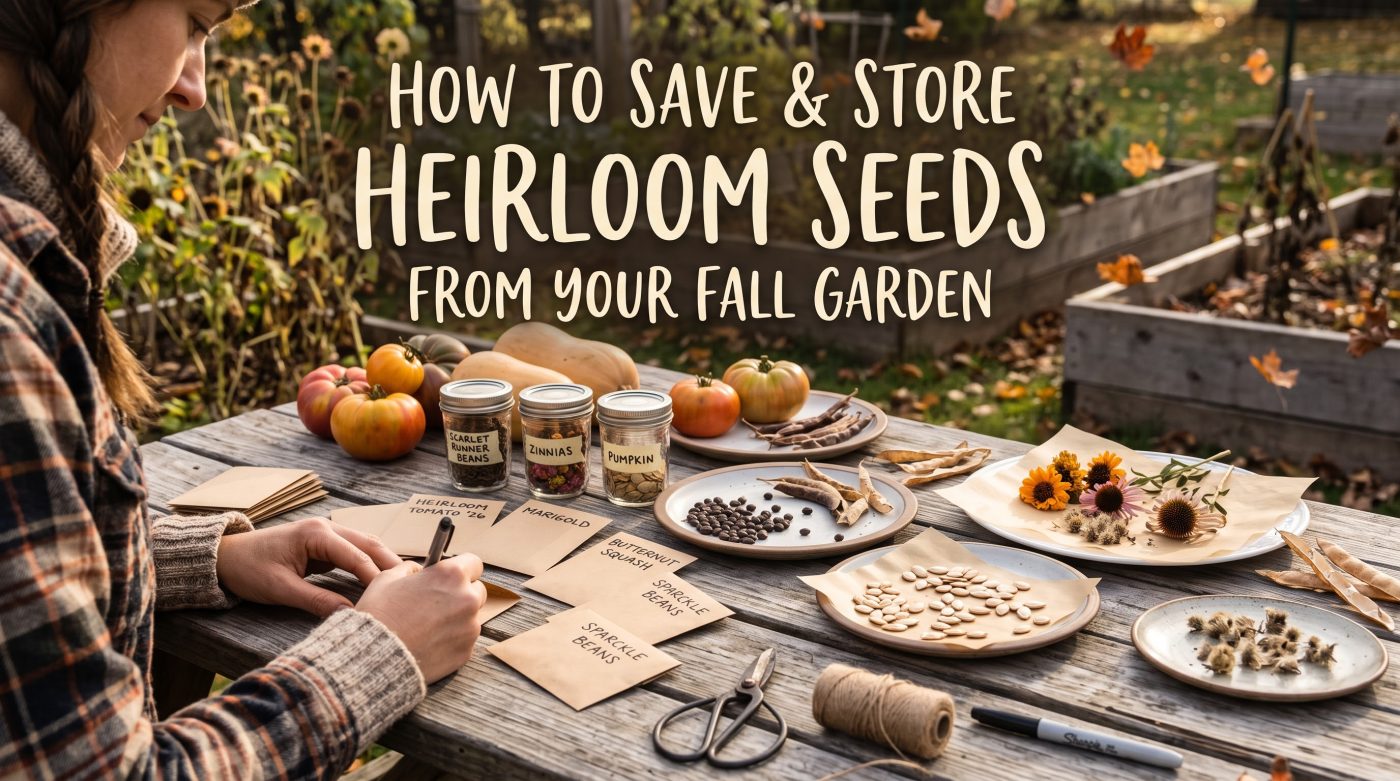
How to Save and Store Heirloom Seeds from Your Fall Garden
Oct
As October signals the end of the summer growing season, fall garden cleanup becomes the priority. Before you pull up your dying tomato vines or cut back the faded flower stalks, take a moment to look at what remains. Those overripe, forgotten vegetables and dried seed pods hold the key to next year’s garden.
Saving your own seeds is a rewarding practice that builds a resilient, localized garden. Plants adapt to your specific microclimate, soil, and pest pressures over time. By harvesting seeds from your strongest, most productive plants this fall, you are cultivating a custom strain perfectly suited to your backyard.
1. The Golden Rule: Only Save Heirloom Seeds
Before you begin harvesting, it is critical to understand the difference between plant types. You should only save seeds from open-pollinated or heirloom varieties.
If you attempt to save seeds from a hybrid plant (often labeled as F1 on commercial seed packets), the resulting seeds will not grow “true to type.” They will revert to the unpredictable genetics of their parent plants, often resulting in poor yields, strange flavors, or sterile plants. Heirloom seeds, however, have stable genetics and will produce the exact same high-quality fruit year after year.
2. The Two Methods of Seed Harvesting
Different crops require different harvesting techniques. Seed saving generally falls into two categories: dry processing and wet processing.
Dry Processing (For Beans, Peas, Peppers, and Flowers)
This is the easiest method and applies to crops where seeds dry naturally on the plant.
- Beans & Peas: Leave the pods on the vine until they turn brown, dry, and brittle. The seeds inside should rattle. Shell the seeds and let them air-dry indoors on a screen for an additional week.
- Peppers: Allow the pepper to fully ripen and change color (usually red or orange) on the plant. Cut the pepper open, scrape the seeds onto a paper plate, and let them dry in a well-ventilated room for 7 to 10 days until they are brittle enough to snap in half.
- Flowers (Zinnias, Marigolds, Sunflowers): Wait until the flower head is completely brown and dry on the stem. Snip the head off and crumble it between your fingers to release the seeds.
Wet Processing (For Tomatoes and Cucumbers)
Seeds encased in a fleshy, gel-like pulp require a fermentation process to remove the gel coat, which naturally inhibits premature germination.
- Step 1: Scoop the seeds and the surrounding gel from a fully overripe tomato or cucumber into a glass jar.
- Step 2: Add a splash of water, cover the jar loosely with a paper towel, and let it sit at room temperature for 3 to 5 days.
- Step 3: A layer of white mold will form on the top. This is the fermentation breaking down the gel coat.
- Step 4: Add water to the jar and stir. The viable, heavy seeds will sink to the bottom, while the dead seeds and moldy pulp will float. Pour off the floating layer.
- Step 5: Strain the clean seeds, rinse them, and spread them on a coffee filter or window screen to dry completely for 1 to 2 weeks.
3. Seed Saving Quick-Reference Guide
| Crop Type | Processing Method | Harvest Indicator | Drying Time |
|---|---|---|---|
| Tomatoes | Wet (Fermentation) | Fruit is overripe and soft | 1–2 Weeks |
| Peppers | Dry | Fully ripe, final color change | 7–10 Days |
| Beans & Peas | Dry | Pod is brown, dry, and rattles | 5–7 Days |
| Zinnias | Dry | Flower head is fully brown/crisp | 3–5 Days |
| Cucumbers | Wet (Fermentation) | Fruit is oversized, yellow/orange | 1–2 Weeks |
4. How to Store Seeds for Maximum Lifespan
Moisture and heat are the enemies of stored seeds. To ensure your seeds remain viable for the highest possible germination rate next spring, follow the Cool, Dark, and Dry rule.
Once your seeds are 100% bone-dry, place them in paper envelopes and label them with the crop variety and the year harvested. Store these envelopes inside a glass Mason jar with a tight-fitting lid. To combat residual moisture, drop a silica gel packet or a tablespoon of powdered milk wrapped in a tissue into the bottom of the jar. Store the sealed jar in a cool, dark closet, a dry basement, or the back of your refrigerator.
Build Your Heirloom Collection Today
If your current garden was grown from hybrids, or if you want to introduce exciting new varieties into your seed-saving rotation next year, autumn is the perfect time to plan ahead. Stock up on stable, high-vigor genetics to ensure a lifetime of beautiful harvests.
👉 Shop our 100% Non-GMO, Open-Pollinated Heirloom Seed Collection at Urban Garden Seed today!
