
Adenium, Backyard Gardening, Cactus & Succulent, Family & Kids' Gardening, Flower Seeds, Garden Planning & Design, Herb Seeds, Homesteading & Self-Reliance, Sensory & Wellness Gardening, Sustainable & Regenerative Living, The Horticulturist’s Lab, Urban & Small-Space Gardening, Vegetables
Cold Frame Gardening: Harvesting Fresh Greens All Winter Long
Oct
As October nights grow freezing and the first snowfalls loom, it is easy to assume that outdoor vegetable gardening is finished for the year. But with one simple, inexpensive tool, you can keep harvesting fresh, sweet greens straight through the darkest, coldest days of winter: the cold frame.
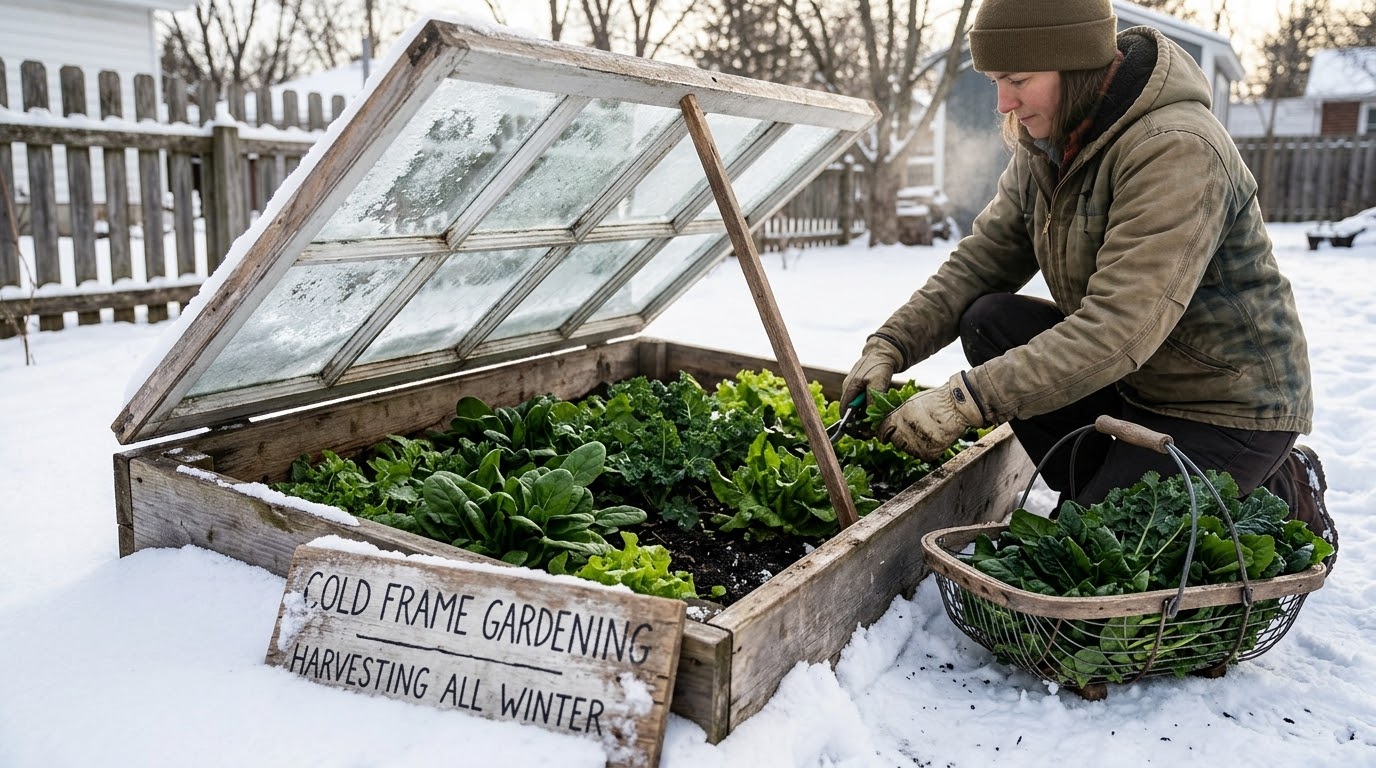
A cold frame is essentially a miniature, unheated greenhouse—usually a simple wooden box with a clear glass or plastic lid. Placed over your garden soil and angled toward the low winter sun, it traps radiant heat and protects plants from harsh winds and crushing snow. By sowing the right cold-hardy seeds inside a cold frame right now, you can create a microclimate that keeps greens alive and crisp all winter.
1. The Best Seeds for a Winter Cold Frame
When temperatures drop inside a cold frame, plant growth slows significantly. The secret to a successful winter harvest is choosing varieties that are genetically adapted to withstand freezing temperatures and low light.
- Mâche (Corn Salad): The ultimate winter survivor. This delicate, nutty green actually prefers cold weather and will reliably produce rosettes of leaves even under a blanket of snow.
- Spinach (Savoy Varieties): Cold temperatures trigger spinach to produce natural sugars as an anti-freeze, making cold-frame spinach the sweetest, most tender spinach you will ever eat.
- Claytonia (Miner’s Lettuce): A highly cold-tolerant, fleshy green packed with Vitamin C that thrives in the low light of mid-winter.
- Winter Density Lettuce: A rugged, compact romaine hybrid that resists freezing and rot better than almost any other lettuce variety.
- Mustard Greens: For a sharp, peppery bite that holds up perfectly against freezing nights.
2. Cold Frame Seed Quick-Reference Guide
| Seed Variety | Frost Tolerance | Sowing Depth | Winter Growth Habit | Flavor Profile |
|---|---|---|---|---|
| Mâche (Corn Salad) | Extreme (Survives hard freezes) | 1/2 inch | Very slow, compact | Mild, nutty, tender |
| Savoy Spinach | Very High | 1/2 inch | Moderate | Extremely sweet, crisp |
| Claytonia | Very High | Surface sow | Spreading | Mild, slightly succulent |
| Winter Density Lettuce | High | 1/8 inch | Upright heads | Sweet, crisp romaine |
| Mustard Greens | High | 1/4 inch | Leafy, upright | Pungent, spicy, sharp |
3. How to Manage Your Cold Frame for Success
Step 1: Position and Prep
Place your cold frame over a weed-free patch of well-draining soil, ideally facing South or Southwest to capture maximum winter sunlight. Before sowing, water the soil deeply.
Step 2: Sow Densely
Because plants grow very slowly in winter, they will not reach their massive summer sizes. Sow your seeds about twice as densely as you would in the spring. You want a thick, continuous carpet of greens to harvest continuously via the “cut-and-come-again” method.
Step 3: Master the “Venting” Rule
The biggest threat to a cold frame isn’t the cold—it’s the heat. On a sunny winter day, the temperature inside a closed cold frame can skyrocket past 80°F (26°C), which will quickly cook your cool-weather greens. Rule of thumb: If the outside temperature is predicted to rise above 40°F (4°C) and it is sunny, prop the lid open a few inches to vent the heat. Remember to close it before the sun goes down!
Step 4: Water Sparingly
During the winter, evaporation is extremely low, and the cold frame traps moisture inside. You will likely only need to water your seedlings once every few weeks. Check the soil with your finger; only water if the top inch is bone dry, and always water on a sunny morning so the leaves can dry before nightfall.
Outsmart the Frost This Season
There is a profound satisfaction in brushing snow off the glass lid of a cold frame to harvest a bowl of vibrant, crisp salad greens in the dead of January. With the right seeds and a little bit of venting, your garden never truly has to sleep.
👉 Shop our Cold-Hardy Winter Vegetable Seed Collection at Urban Garden Seed today!
