
Adenium, Backyard Gardening, Cactus & Succulent, Family & Kids' Gardening, Flower Seeds, Garden Planning & Design, Herb Seeds, Homesteading & Self-Reliance, Sensory & Wellness Gardening, Sustainable & Regenerative Living, The Horticulturist’s Lab, Urban & Small-Space Gardening, Vegetables
How to Cold Stratify Seeds in the Fridge for Spring Planting
Oct
Many of the most beautiful and resilient plants in the garden—especially native wildflowers, medicinal herbs, and woody perennials—refuse to sprout if you simply push them into warm potting soil. Because these plants evolved in climates with harsh winters, their seeds possess a hard outer coat and a built-in chemical dormancy. This prevents them from germinating in the middle of autumn only to be killed by incoming frost.
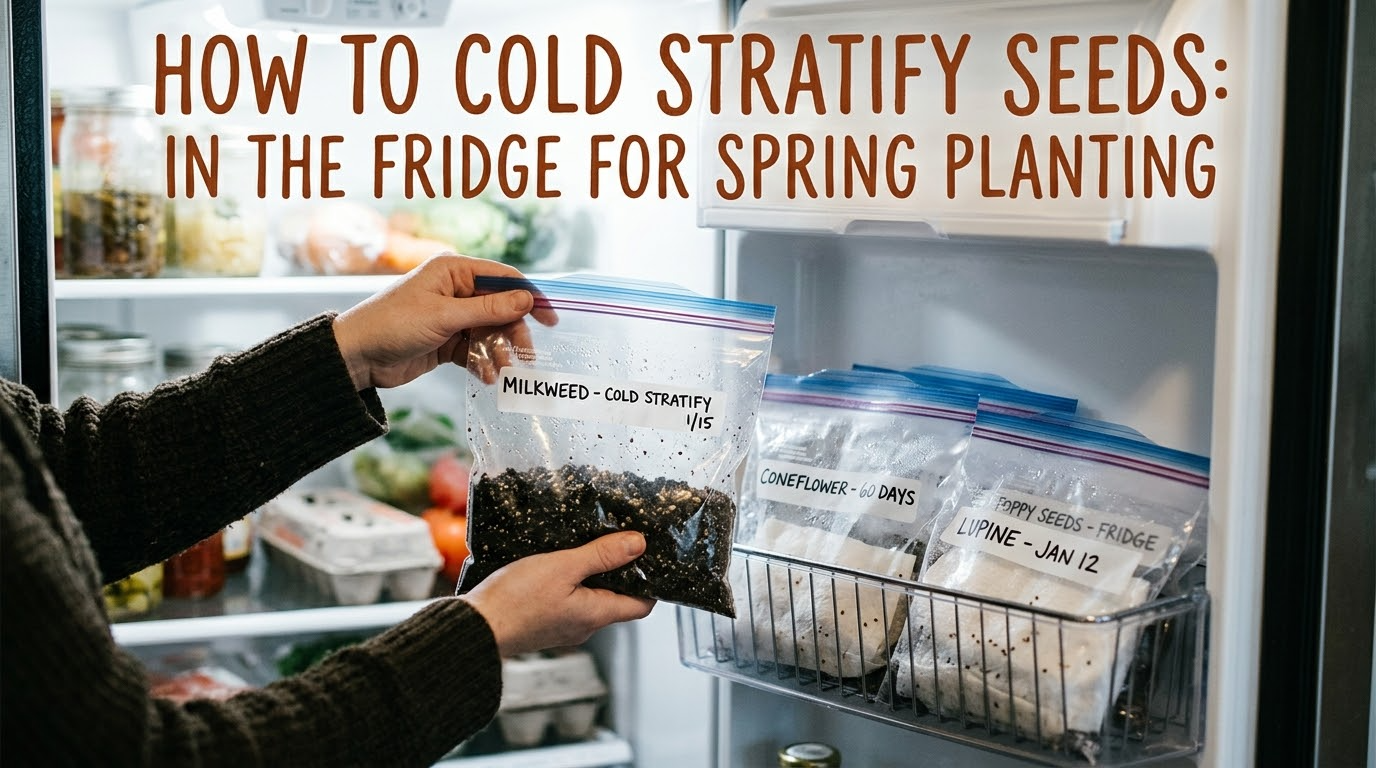
To break this dormancy, the seeds must go through “cold stratification”—a prolonged period of cold, moist conditions that mimics winter.
While you can leave seeds outside in milk jugs to weather the actual winter, artificial cold stratification inside your kitchen refrigerator offers a foolproof alternative. This method is essential if you live in a mild southern climate that doesn’t get hard freezes, or if you simply want complete control over your germination rates before spring arrives.
1. Which Seeds Require Cold Stratification?
Not all seeds need a winter chill. Standard annual vegetables (like tomatoes and cucumbers) and heat-loving annual flowers (like zinnias) will rot in the fridge. You only need to cold-stratify specific perennial and native varieties.
- Native Perennials: Coneflower (Echinacea), Black-Eyed Susans, Lupines, and Columbine all require a cold period to weaken their thick seed coats.
- Crucial Pollinator Plants: Milkweed—the sole food source for Monarch butterfly caterpillars—has notoriously low germination rates unless it undergoes at least 30 days of cold moist stratification.
- Woody Herbs: Lavender and Rosemary seeds are notoriously stubborn and benefit massively from a 30- to 40-day stint in the refrigerator to speed up their slow germination.
- Fruiting Shrubs & Trees: Elderberries, strawberries, and apples require extensive chilling hours to sprout successfully.
2. Cold Stratification Timetable
The amount of time your seeds need in the fridge depends entirely on the plant species. Counting backward from your target spring planting date will tell you exactly when to start the process.
| Seed Variety | Stratification Time Needed | Ideal Fridge Temperature | Moisture Requirement |
|---|---|---|---|
| Milkweed | 30 Days | 35°F – 40°F | Moist (not dripping) |
| Lavender | 30–40 Days | 35°F – 40°F | Barely moist |
| Coneflower (Echinacea) | 30–60 Days | 35°F – 40°F | Moist |
| Columbine | 21–30 Days | 35°F – 40°F | Moist |
| Lupine | 10–14 Days (plus scarification) | 35°F – 40°F | Moist |
3. The Refrigerator “Paper Towel” Method
The most space-efficient and reliable way to stratify seeds indoors uses household items you already have on hand.
Step 1: Prepare the Moisture Medium
Fold a standard paper towel or a standard coffee filter in half. Dampen it with clean water, then squeeze it out completely. The towel must be noticeably damp to the touch, but not soaking wet. If water drips when you squeeze it, it is too wet and your seeds will mold.
Step 2: Place the Seeds
Open the damp paper towel and sprinkle your seeds evenly across one half of it. Fold the other half over the seeds so they are completely sandwiched in the moisture.
Step 3: Seal and Label
Slide the folded, seeded paper towel into a standard plastic zip-top bag. Crucial step: Before sealing, use a permanent marker to write the plant variety and the exact date you put it in the fridge directly on the bag. Press most of the air out and seal it tightly.
Step 4: Refrigerate (Do Not Freeze!)
Place the sealed bag in the back of your refrigerator or inside the crisper drawer. The ideal temperature is between 35°F and 40°F (1°C to 4°C). Never put the seeds in the freezer, as the extreme ice crystal expansion will rupture and kill wet seeds.
Step 5: Monitor and Plant
Check your bags once a week. If the paper towel feels dry, give it a light mist. If you spot any mold, open the bag slightly to allow for airflow. Once the required 30 to 60 days have passed, remove the seeds and immediately plant them in warm seedling trays under grow lights. You will experience lightning-fast, highly uniform germination.
Plan Your Spring Garden Now
Mid-autumn is the perfect time to calculate your stratification schedules and secure your seeds for the upcoming season. With a little planning and a crisper drawer, you can cultivate a thriving landscape of resilient native plants.
👉 Shop our Premium Native Wildflower & Perennial Seed Collection at Urban Garden Seed to start your cold stratification today!
