
Adenium, Backyard Gardening, Cactus & Succulent, Family & Kids' Gardening, Flower Seeds, Garden Planning & Design, Herb Seeds, Homesteading & Self-Reliance, Sensory & Wellness Gardening, Sustainable & Regenerative Living, The Horticulturist’s Lab, Urban & Small-Space Gardening, Vegetables
How to Grow Fresh Sprouts in a Mason Jar in Just 5 Days
Oct
As the crisp October weather sets in and our outdoor gardens slow down, the desire for fresh, homegrown crunch doesn’t just disappear. If you want to grow your own food indoors this winter but don’t want to deal with messy potting soil or expensive LED grow lights, sprouting is the perfect solution.
Unlike microgreens, which are grown in soil and harvested for their leaves, sprouts are germinated entirely in water. You eat the whole plant—seed, root, and tiny leaves. Because they rely entirely on the energy stored within the seed itself, sprouts require zero fertilizer, zero soil, and only a few minutes of your time each day. Within just five days, a single tablespoon of dormant seeds will explode into a massive, crunchy harvest of fresh superfoods.
1. The Best Seeds for Indoor Sprouting
While you can sprout many types of seeds, you must ensure you are buying seeds explicitly labeled for sprouting. Traditional garden seeds are sometimes treated with agricultural fungicides that are not safe to eat whole. For the best flavor and fastest growth, start here:
- Broccoli: The most popular sprouting seed available. Broccoli sprouts have a mild, earthy flavor and are globally prized for their massive concentration of sulforaphane, a powerful antioxidant.
- Alfalfa: The classic deli sandwich sprout. Alfalfa seeds are tiny but yield a huge volume of delicate, sweet, and incredibly crisp sprouts.
- Mung Bean: If you love stir-fries or pho, you know mung bean sprouts. They produce incredibly thick, juicy, and crunchy stems.
- Radish: For those who like a kick. Radish sprouts germinate extremely quickly and deliver a sharp, peppery bite that elevates any winter salad.
- Lentils: Highly affordable and incredibly filling. Sprouted lentils have a robust, nutty flavor and can be eaten raw or tossed into warm winter soups.
2. Sprouting Seed Quick-Reference Guide
| Seed Variety | Initial Soak Time | Rinse Frequency | Days to Harvest | Flavor Profile |
|---|---|---|---|---|
| Broccoli | 8 Hours | Twice Daily | 4–6 Days | Mild, earthy, fresh |
| Alfalfa | 8 Hours | Twice Daily | 5–6 Days | Sweet, delicate, crisp |
| Mung Bean | 12 Hours | Twice Daily | 3–5 Days | Thick, juicy, mild |
| Radish | 8 Hours | Twice Daily | 4–5 Days | Sharp, peppery |
| Lentils | 8–12 Hours | Twice Daily | 3–4 Days | Nutty, crunchy |
3. Step-by-Step Guide to Jar Sprouting
Step 1: The Equipment
You only need two things: a wide-mouth glass Mason jar (a quart size is perfect) and a breathable lid. You can buy specialized mesh sprouting lids, or simply use a square of cheesecloth secured tightly over the mouth of the jar with a rubber band.
Step 2: The Initial Soak
Place 1 to 2 tablespoons of sprouting seeds into the bottom of your clean jar. Add about two inches of cool, filtered water. Swirl the seeds around, secure your mesh lid or cheesecloth, and leave the jar on your counter overnight (8 to 12 hours) to wake the seeds up from dormancy.
Step 3: Drain and Rinse
The next morning, dump the soak water out through the mesh lid. Refill the jar with fresh, cool water, swirl to wash the seeds, and drain it completely. This is the most critical step: seeds need moisture to grow, but sitting in standing water will cause them to rot. Shake the jar gently to get as much water out as possible.
Step 4: The Tilt
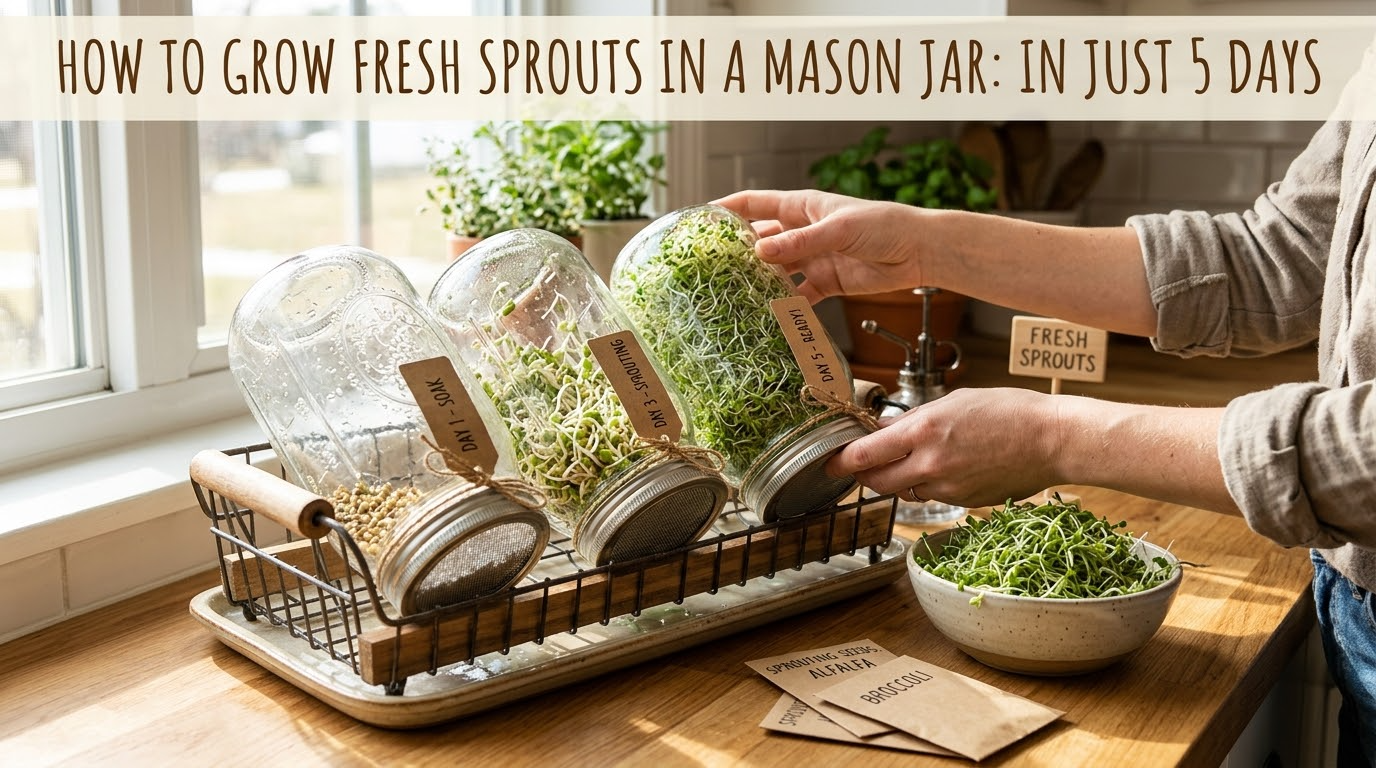
To ensure proper drainage and airflow, store the jar upside down at a 45-degree angle. You can buy a specialized sprouting stand, or simply prop the jar upside down inside a standard cereal bowl. Keep the jar out of direct sunlight—a dim corner of the kitchen counter is perfectly fine.
Step 5: Rinse, Repeat, and Harvest
Repeat the “Rinse and Drain” process every morning and every evening (twice a day). By day three, the jar will be packed with white roots and shoots. On the final day, move the jar into indirect sunlight for a few hours so the tiny leaves can turn a vibrant, healthy green.
Step 6: Store Properly
Once harvested, give your sprouts a final, thorough rinse. Use a salad spinner or paper towels to dry them completely, then store them in a sealed container in the refrigerator, where they will stay fresh and crunchy for up to a week.
Crunch Through the Cold Months
You don’t need a greenhouse to be a winter gardener. With a simple glass jar and a handful of high-quality seeds, you can keep a steady supply of fresh, living food on your kitchen counter all season long.
👉 Shop our Certified Organic Sprouting Seeds at Urban Garden Seed to start your indoor jar garden today!
