
Flower Seeds, Herb Seeds, Sensory & Wellness Gardening, Sustainable & Regenerative Living, The Horticulturist’s Lab, Urban & Small-Space Gardening, Vegetables
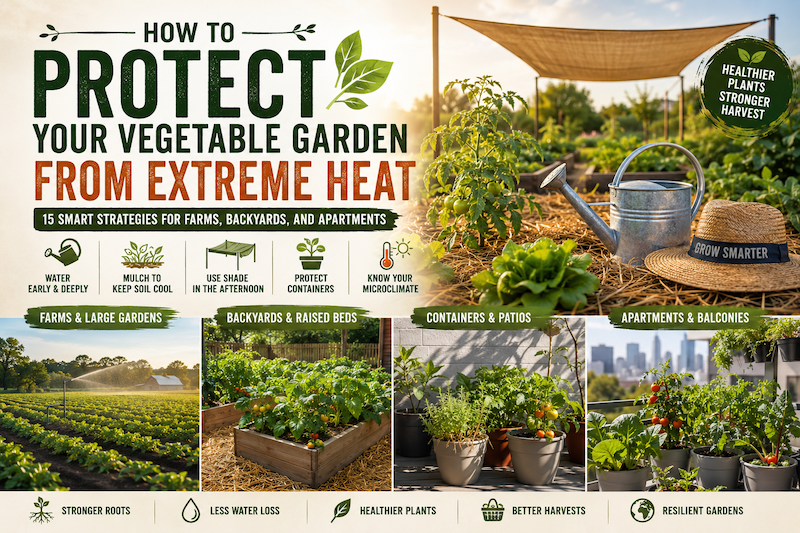
How to Protect Your Vegetable Garden From Extreme Heat: 15 Smart Strategies for Farms, Backyards, and Apartments
Jul
Summer heat can turn a thriving garden into a stressed landscape surprisingly quickly.
Tomato leaves droop. Lettuce turns bitter. Flowers fall from pepper plants. Containers dry out before dinner. Seedlings that looked healthy in the morning can appear scorched by late afternoon.
Whether you grow vegetables on a farm, in a suburban backyard, in raised beds, or on a small apartment balcony, extreme heat changes the rules of gardening.
The good news? Hot weather does not automatically mean a failed garden.
With better timing, smarter watering, soil protection, temporary shade, and the right crop strategy, you can help your garden survive a heat wave—and in many cases continue producing through summer.
This guide explains how to protect a vegetable garden from extreme heat using practical methods for:
- In-ground gardens
- Farms and market gardens
- Raised beds
- Patio containers
- Rooftop gardens
- Apartment balconies
- Small urban gardens
Let’s protect your harvest.
Why Extreme Heat Is Hard on Garden Plants
Plants need sunlight and warmth, but there is a major difference between warm growing weather and extreme heat stress.
During very hot conditions, plants may lose water through their leaves faster than their roots can replace it. This can lead to temporary wilting, slowed growth, flower drop, poor fruit development, leaf scorch, and—in severe cases—plant death.
Heat becomes even more challenging when combined with:
- Dry soil
- Hot wind
- Low humidity
- Small containers
- Dark-colored pots
- Reflected heat from concrete
- Newly transplanted seedlings
- Poor soil organic matter
- Shallow watering
Urban gardeners face an additional problem: buildings, pavement, walls, rooftops, and concrete can absorb heat during the day and release it later.
That means an apartment balcony or paved patio can create a very different microclimate from a nearby backyard.
The first rule of heat-wave gardening is simple:
Do not treat every garden the same.
A farm row, raised bed, hanging basket, and balcony tomato plant can all require different watering and protection strategies.
1. Water Early in the Morning
For most gardens, early morning is the best time to water during extreme heat.
Why?
Because morning watering gives roots access to moisture before the strongest heat of the day arrives. It also reduces some of the evaporative loss that can occur during hotter afternoon conditions.
For larger gardens and farms, starting irrigation early can be especially valuable.
A practical routine:
- Check soil moisture before watering.
- Water the root zone thoroughly.
- Allow water to penetrate deeply.
- Recheck vulnerable containers later in the day.
Avoid assuming that every plant needs water simply because its leaves droop at 3:00 p.m. Some plants temporarily wilt during intense afternoon heat and recover as temperatures fall.
Always check the soil.
2. Water Deeply, Not Just Frequently
One of the biggest mistakes gardeners make during a heat wave is giving plants a tiny splash of water several times a day.
A shallow sprinkle may wet only the soil surface.
That can encourage roots to remain near the top of the soil, where conditions are hotter and moisture disappears faster.
Instead, aim for slow, thorough watering that reaches the active root zone.
For an in-ground vegetable garden, this often means watering long enough for moisture to penetrate below the surface rather than simply making the top inch look dark.
Try this simple test:
After watering, carefully dig a small test hole several inches away from the plant stem.
Ask:
- Is moisture reaching below the surface?
- Is only the top layer wet?
- Is water running away instead of soaking in?
Your garden will give you the answer.
3. Add Organic Mulch to Protect the Soil
Bare soil can heat rapidly under intense summer sun.
A layer of organic mulch can help:
- Reduce moisture loss
- Moderate soil temperature
- Suppress weeds
- Reduce soil splash
- Protect soil structure
- Add organic matter as some materials decompose
Useful organic mulch options may include:
- Clean straw
- Shredded leaves
- Untreated grass clippings used appropriately
- Pine straw
- Other locally suitable organic materials
Keep mulch from being piled tightly against plant stems.
Why mulch matters even more during a heat wave
Think of unprotected soil like an uncovered container of water sitting in the sun.
Heat and moving air accelerate moisture loss.
Covering the soil helps create a buffer between the sun and the root environment.
For organic gardeners, this is one of the simplest low-input strategies available.
4. Use Temporary Afternoon Shade
Vegetables need adequate light, but during severe heat, temporary protection from the strongest afternoon sun can reduce stress on vulnerable plants.
Shade can be particularly helpful for:
- New transplants
- Young seedlings
- Lettuce
- Tender greens
- Container-grown vegetables
- Recently moved plants
- Heat-stressed peppers
- Small balcony gardens
Possible temporary shade materials include:
- Garden shade cloth
- Lightweight fabric positioned above plants
- Purpose-built shade structures
- Patio umbrellas for containers
- Trellises with strategic positioning
The goal is not to put the garden in permanent darkness.
The goal is to reduce the most punishing exposure during the hottest part of an extreme heat event.
Important:
Keep shade material above the plants when possible so air can move around the foliage.
Good airflow matters.
5. Pay Extra Attention to Container Gardens
A tomato growing in the ground and the same tomato growing in a pot can experience completely different heat stress.
Containers have limited soil volume.
That means they can:
- Dry faster
- Heat faster
- Experience larger temperature swings
- Require more frequent monitoring
This is especially important for apartment gardeners.
During very hot weather:
Check container moisture at least daily and potentially more often when conditions, pot size, exposure, and crop needs justify it.
Some containers may require frequent watering during extreme heat—but do not blindly water on a schedule.
Check the soil first.
Warning signs that a container is drying too quickly:
- Plant wilts soon after watering
- Water runs immediately down the sides
- Root ball has pulled away from the pot
- Pot feels unusually light
- Soil becomes hard and difficult to rewet
A severely dried potting mix may need slow, repeated watering so moisture can penetrate the root ball instead of flowing straight through.
6. Move Pots Away From Heat-Trapping Surfaces
Apartment and patio gardeners should think beyond air temperature.
A plant may be exposed to additional radiant heat from:
- Concrete
- Brick walls
- Metal railings
- Glass
- Asphalt
- Dark rooftops
- South- or west-facing walls
During a heat wave, moving a container just a few feet can dramatically change its exposure.
Consider relocating vulnerable pots to:
- Morning sun with afternoon protection
- Bright filtered light
- An area protected from hot wind
- A position away from heat-reflective walls
This is one of the biggest advantages of container gardening:
Your garden can move.
Use that flexibility.
7. Group Containers Together—But Maintain Airflow
A lonely container exposed on a hot balcony can heat and dry rapidly.
Grouping pots can sometimes help create a more buffered microenvironment and reduce the amount of direct sun striking every side of every container.
However, do not pack plants so tightly that you eliminate airflow.
Poor air circulation can contribute to other plant-health problems.
The better strategy is:
Cluster intelligently, not densely.
Place taller heat-tolerant plants where they can offer limited afternoon protection to smaller vulnerable containers without completely blocking light.
8. Avoid Transplanting During the Hottest Part of a Heat Wave
Transplanting is stressful even under favorable conditions.
Roots are disturbed. Water uptake may temporarily decline. Leaves continue losing moisture.
Extreme heat adds another layer of stress.
Whenever practical, avoid unnecessary transplanting immediately before or during severe heat.
When transplanting cannot be postponed:
- Work during cooler hours
- Water appropriately
- Reduce unnecessary root disturbance
- Provide temporary protection
- Monitor closely during establishment
Young plants do not have the established root systems of mature crops.
Treat them accordingly.
9. Pause Heavy Pruning During Extreme Heat
A heat wave is generally not the ideal moment for aggressive, unnecessary pruning.
Removing large amounts of foliage can suddenly expose previously shaded stems, fruit, and plant tissue to intense sunlight.
This may increase the risk of sun injury.
For fruiting vegetables such as tomatoes, remember that leaves are not merely decorative. Healthy foliage participates in photosynthesis and can provide physical protection.
Remove clearly diseased material when necessary, but think carefully before giving already stressed plants a dramatic haircut during extreme heat.
10. Be Careful With Fertilizer
When gardeners see a stressed plant, one common reaction is:
“Maybe it needs more fertilizer.”
Not necessarily.
A plant suffering primarily from heat and water stress does not automatically need a heavy dose of nutrients.
Excessive or poorly timed fertilizer can create additional problems, including salt stress or a push toward tender growth at an unfavorable moment.
During severe heat, first investigate:
- Soil moisture
- Root-zone temperature
- Sun exposure
- Recent transplanting
- Container size
- Drainage
- Hot wind
Do not use fertilizer as an automatic emergency treatment for every wilted plant.
11. Protect Newly Germinated Seedlings
Seeds and young seedlings can be especially vulnerable because the upper soil layer dries quickly.
This creates a challenge for summer succession sowing.
Mature plants often benefit from deep watering. Germinating seeds, however, require appropriate moisture near the surface where the seeds are located.
For hot-weather sowing:
- Follow the correct sowing depth for the crop.
- Monitor the seed zone carefully.
- Prevent the surface from repeatedly drying out during critical germination.
- Use temporary protection when appropriate.
- Avoid washing seeds away with aggressive watering.
- Consider seasonal suitability before sowing.
Not every vegetable should be planted during peak summer heat in every U.S. region.
Local climate matters.
12. Know the Difference Between Temporary Wilt and Dangerous Stress
A plant can wilt for multiple reasons.
Possible causes include:
- Dry soil
- Extreme afternoon heat
- Root damage
- Waterlogged soil
- Vascular disease
- Container overheating
This is why automatically adding more water can be dangerous.
Before watering a wilted plant:
Check the soil.
If the root zone is already saturated, more water may make the problem worse.
A plant that droops during peak afternoon heat but recovers in the evening may be experiencing temporary heat stress.
A plant that remains severely wilted into the cooler evening or next morning requires closer investigation.
13. Harvest Frequently During Hot Weather
Do not leave harvest-ready produce on the plant indefinitely during a stressful weather event.
Regular harvesting can be beneficial for many productive crops and keeps gardeners attentive to developing problems.
Check:
- Beans
- Cucumbers
- Zucchini
- Peppers
- Tomatoes
- Okra
- Summer squash
Early morning is often a comfortable time for both gardener and garden.
You are also more likely to notice:
- Pest damage
- Wilting
- Dry containers
- Sunscald
- Split fruit
- Irrigation failures
A five-minute inspection can prevent a small problem from becoming a major one.
14. Control Weeds Before They Steal Water
During limited-moisture conditions, weeds compete with crops for resources.
Do not let aggressive weeds dominate:
- Vegetable rows
- Raised beds
- Container edges
- Irrigation zones
However, extreme heat is also a poor time to damage crop roots through overly aggressive cultivation.
Remove weeds thoughtfully.
Then protect exposed soil appropriately.
For farms and larger gardens, weed management and irrigation planning should work together rather than being treated as separate tasks.
15. Build a Heat-Resilient Garden Before the Next Heat Wave
Emergency measures are useful.
But the best heat protection begins before the forecast turns dangerous.
Long-term improvements may include:
- Increasing soil organic matter appropriately
- Using drip irrigation or soaker systems
- Choosing containers with adequate soil volume
- Mulching exposed soil
- Improving irrigation efficiency
- Building healthy root systems
- Selecting crops appropriate for the season
- Creating flexible shade systems
- Understanding your garden’s microclimates
- Choosing climate-appropriate seed varieties
A resilient garden is not a garden that never experiences stress.
It is a garden designed to recover.
Extreme Heat Guide by Garden Type
For Farms and Large Gardens
Prioritize:
- Irrigation inspection
- Early watering schedules
- Efficient root-zone delivery
- Weed control
- Mulch where practical
- Monitoring young plantings
- Crop-specific heat response
- Wind exposure
Check irrigation systems before a heat emergency—not during it.
A clogged emitter or damaged line can become a serious problem quickly.
For Backyard Vegetable Gardens
Focus on:
- Deep watering
- Soil moisture checks
- Organic mulch
- Temporary afternoon shade
- Frequent harvesting
- Avoiding unnecessary plant stress
Walk through the garden each morning.
The earlier you notice stress, the more options you have.
For Raised Bed Gardens
Raised beds offer excellent control over soil, but they can also dry more quickly under some conditions because more soil surface may be exposed to warm air.
Monitor:
- Bed depth
- Soil composition
- Irrigation coverage
- Edge drying
- Mulch condition
Do not assume that one short watering reaches the bottom of the active root zone.
Test it.
For Apartment Balcony Gardens
Your biggest issues may be:
- Small pots
- Reflected heat
- Hot wind
- West-facing exposure
- Containers drying rapidly
Prioritize:
- Larger appropriate containers
- Morning watering
- Daily moisture checks
- Strategic pot movement
- Temporary afternoon shade
- Mulching larger containers
- Protection from hot wind
A balcony garden may need more active management than an in-ground garden.
For Rooftop Gardens
Rooftops can expose plants to intense combinations of:
- Sun
- Wind
- Heat
- Rapid evaporation
Focus on:
- Secure shade structures
- Wind-safe materials
- Reliable irrigation
- Adequate container volume
- Frequent monitoring
Never install temporary fabric or shade structures that could become dangerous in strong wind.
Which Vegetables Handle Summer Heat Better?
No crop is invincible, and variety selection matters, but warm-season vegetables are generally better candidates for summer conditions than classic cool-season crops.
Depending on your climate, growing season, and variety, warm-season possibilities may include:
- Okra
- Eggplant
- Peppers
- Tomatoes
- Southern peas or cowpeas
- Melons
- Cucumbers
- Summer squash
- Certain beans
But remember:
“Heat-loving” does not mean “never needs water.”
Even warm-season crops can suffer when root zones become severely dry or temperatures become extreme.
What About Lettuce, Spinach, and Cool-Season Greens?
Many cool-season vegetables struggle during intense summer conditions.
Possible problems include:
- Bolting
- Bitter flavor
- Poor germination
- Slow growth
- Leaf scorch
Instead of forcing every cool-season crop through peak heat, consider whether your location is approaching a better sowing window for a fall garden.
This is where regional planning becomes essential.
The United States contains dramatically different growing climates.
A gardener in:
- Maine
- Minnesota
- Texas
- Arizona
- Florida
- California
- Washington
should not automatically follow the same planting calendar.
Always combine seed information with your local frost dates, weather conditions, and growing zone.
Common Heat-Wave Gardening Mistakes
Mistake 1: Watering by calendar instead of checking soil
“Every Tuesday” is not a moisture diagnosis.
Weather changes.
Check your garden.
Mistake 2: Giving plants a tiny surface splash
The soil may look wet while deeper roots remain dry.
Mistake 3: Assuming every wilted plant needs more water
Waterlogged roots can also cause wilting.
Mistake 4: Fertilizing a heat-stressed plant heavily
First identify the actual problem.
Mistake 5: Leaving black nursery pots in brutal reflected heat
Temporary containers can become extremely stressful environments.
Mistake 6: Placing shade cloth directly on tender foliage
Create airflow when possible.
Mistake 7: Forgetting the wind
Hot, dry wind can dramatically increase plant water loss.
Mistake 8: Following generic internet advice without considering location
Gardening in the U.S. is regional.
Your climate matters.
A Simple 24-Hour Heat-Wave Garden Checklist
Early Morning
- Check soil moisture.
- Water where needed.
- Inspect irrigation.
- Harvest mature vegetables.
- Check seedlings.
- Move vulnerable containers if necessary.
Midday
- Avoid unnecessary garden work during dangerous heat.
- Observe whether temporary shade is functioning.
- Look for extreme container stress from a safe location.
Late Afternoon
- Recheck small containers.
- Inspect young seedlings.
- Do not automatically water everything without checking moisture.
Evening
- Note which plants recovered.
- Identify plants still severely wilted.
- Prepare adjustments for the next day.
Frequently Asked Questions
How often should I water my vegetable garden during extreme heat?
There is no universal schedule.
Watering frequency depends on soil type, crop, plant age, root depth, rainfall, humidity, wind, container size, and temperature.
Check actual soil moisture rather than relying only on the calendar.
Should I water my garden twice a day during a heat wave?
Some small containers may require frequent watering in extreme conditions, while established in-ground plants may benefit from less frequent but deeper irrigation.
Check the soil and the specific plant’s needs.
Do not automatically water an already saturated root zone.
Is it bad to water plants in the afternoon?
Emergency watering is better than allowing a genuinely dry, severely stressed plant to die simply because the clock says afternoon.
However, routine irrigation is often more efficient during cooler parts of the day, particularly early morning.
Can I use shade cloth over tomatoes?
Temporary shade may help reduce stress during extreme heat, especially where intense afternoon exposure is a problem.
Maintain airflow and avoid turning the growing area into permanent deep shade.
Should I fertilize vegetables during a heat wave?
Avoid assuming that fertilizer is the solution to heat stress.
Correct water, root-zone, and exposure problems first. Follow crop-specific fertilizer recommendations rather than applying a heavy emergency dose.
How do I protect an apartment balcony garden from extreme heat?
Prioritize container moisture, pot size, reflected heat, wind exposure, and afternoon sun.
Move vulnerable pots when possible and use safe temporary shade strategically.
Does mulch help vegetable gardens in hot weather?
Organic mulch can help reduce evaporation, moderate soil temperature, suppress weeds, and protect the soil surface.
Use materials appropriate for your crops and location.
Final Thoughts: Grow Smarter, Not Harder
Extreme summer heat can be intimidating, but a heat wave does not have to destroy your garden.
The most effective strategy is a combination of:
- Early observation
- Smart watering
- Healthy soil
- Organic mulch
- Temporary shade
- Appropriate crop selection
- Better container management
- Regional planning
Whether you manage a farm, a backyard garden, a raised bed, or three containers on a city balcony, the principle is the same:
Protect the roots, conserve moisture, reduce unnecessary stress, and respond to the actual conditions in your garden.
At Urban Garden Seed, we believe growing food should be possible whether you have 100 acres or a 3-foot balcony.
Our focus is your success. We offer Non-GMO, untreated seeds selected for gardeners who want to grow with greater confidence—from vegetables and herbs to flowers, trees, and unique varieties from around the world.
Ready to grow your next harvest? Explore Urban Garden Seed and find seeds for your farm, backyard, raised bed, patio, or apartment garden.
Your garden does not need perfect weather.
It needs a better plan.
