
Adenium, Backyard Gardening, Cactus & Succulent, Family & Kids' Gardening, Flower Seeds, Garden Planning & Design, Herb Seeds, Homesteading & Self-Reliance, Sensory & Wellness Gardening, Sustainable & Regenerative Living, The Horticulturist’s Lab, Urban & Small-Space Gardening, Vegetables
The Ultimate Companion Planting Guide for Vegetables: Nature’s Secret to a Thriving Garden
Aug
When you look at a thriving, wild ecosystem, you will never see just one type of plant growing in perfect, isolated rows. Nature thrives on diversity. Different root depths, varying plant heights, and unique floral scents all work together to create a balanced, resilient environment.
You can harness this exact same biological synergy in your own backyard through a technique known as companion planting.
Companion planting is the strategic placement of different crops, herbs, and flowers in close proximity to maximize growth, naturally repel pests, and enhance the flavor of your harvest. By moving away from rigid monocultures and instead planting a diverse community of premium artisan seeds, you can drastically reduce the need for synthetic fertilizers and chemical pesticides.
Here is how to strategically pair your plants for your most vigorous, productive garden yet.
1. The Most Powerful Garden Pairings
Certain plants are simply meant to grow side-by-side. When planning your garden layout, integrate these proven, high-performing combinations:
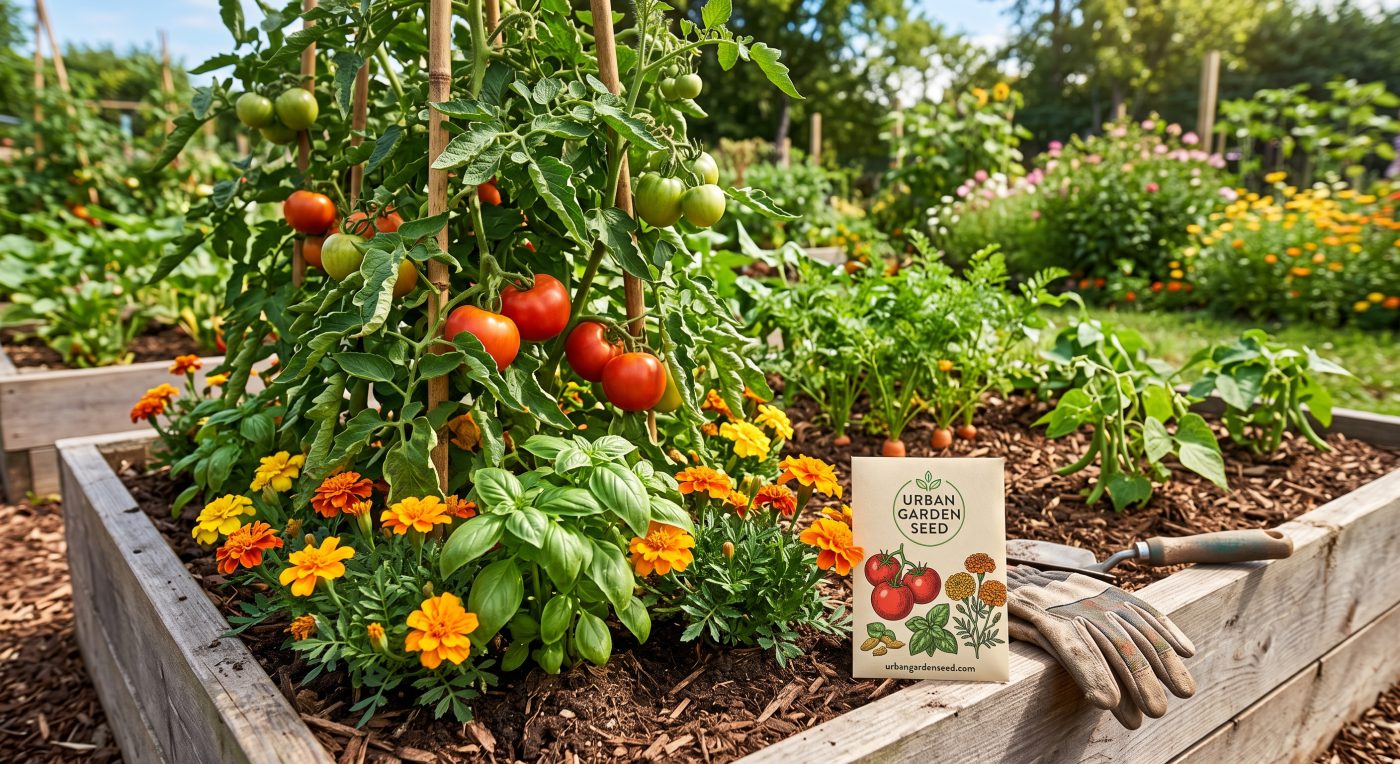
Tomatoes, Basil, and Marigolds
This is the holy trinity of the summer vegetable garden.
- The Benefit: Marigolds release a scent that confuses and repels destructive nematodes in the soil and deters tomato hornworms above ground. Basil naturally repels flies and mosquitoes, and many seasoned gardeners swear that growing basil directly next to your tomato vines actually improves the flavor of the tomatoes.
Carrots and Onions
These two staple crops are the perfect underground companions.
- The Benefit: The pungent aroma of onions naturally deters the carrot rust fly, a pest that can easily decimate a carrot crop. In return, the carrots help deter onion maggots. Because onions have a shallow root system and carrots plunge deep into the earth, they never compete for the same soil space.
Cucumbers, Radishes, and Nasturtiums
If you struggle with pests on your vining crops, this combination is a lifesaver.
- The Benefit: Radishes can be planted in a protective ring around your cucumber seedlings to deter cucumber beetles. Nasturtiums serve as a highly effective “trap crop”—aphids are naturally drawn to the nasturtiums, leaving your premium cucumber vines completely untouched.
2. Bad Neighbors: Plants to Keep Separated
Just as some plants support each other, others actively stunt growth or attract shared diseases when planted too closely. Be sure to keep these combinations far apart in your raised beds:
- Tomatoes and Potatoes: Both belong to the nightshade family and are susceptible to the exact same blights and fungal diseases. Planting them together guarantees that if one gets sick, the other will rapidly follow.
- Onions and Beans/Peas: All members of the allium family (onions, garlic, chives) stunt the growth of legumes. Keep your artisan pole beans and snap peas on the opposite side of the garden from your garlic and onions.
- Brassicas and Tomatoes: Plants in the brassica family (cabbage, broccoli, cauliflower) require massive amounts of nutrients and will outcompete your tomato vines, leading to stunted growth and poor fruit production.
3. Companion Planting Quick-Reference Guide
Use this chart when planning out your raised beds to ensure a harmonious, high-yielding garden space:
| Plant | Best Companions to Plant Nearby | Keep Away From |
|---|---|---|
| Tomatoes | Basil, Marigolds, Carrots, Onions | Potatoes, Cabbage, Corn |
| Peppers | Basil, Spinach, Onions, Swiss Chard | Beans, Kohlrabi |
| Carrots | Onions, Leeks, Radishes, Peas | Dill, Parsnips |
| Cucumbers | Radishes, Nasturtiums, Sunflowers, Beans | Potatoes, Sage |
| Bush/Pole Beans | Corn, Marigolds, Potatoes, Cucumbers | Onions, Garlic, Chives |
4. Why Flowers are Non-Negotiable
A common mistake new gardeners make is dedicating 100% of their soil to vegetables. To unlock exceptional yields, you must dedicate at least 10% to 15% of your garden space to high-nectar, heirloom flowers.
Flowers like Zinnias, Sunflowers, and Cosmos do heavy lifting for your ecosystem. They attract essential pollinators (bees and butterflies) to ensure your vegetable blossoms actually turn into fruit. Even more importantly, they attract predatory insects—like ladybugs and parasitic wasps—which naturally hunt and destroy garden pests before they can damage your crops.
Cultivate a Resilient, Thriving Ecosystem
By mimicking the natural biodiversity of a wild ecosystem, your home garden will become more resilient, more productive, and significantly easier to maintain.
The foundation of a successful companion garden begins with high-germination, premium genetics. Whether you are looking for vibrant marigolds to protect your borders or artisan heirloom vegetables to fill your harvest baskets, we have exactly what you need.
