
Adenium, Backyard Gardening, Cactus & Succulent, Family & Kids' Gardening, Flower Seeds, Garden Planning & Design, Herb Seeds, Homesteading & Self-Reliance, Sensory & Wellness Gardening, Sustainable & Regenerative Living, The Horticulturist’s Lab, Urban & Small-Space Gardening, Vegetables
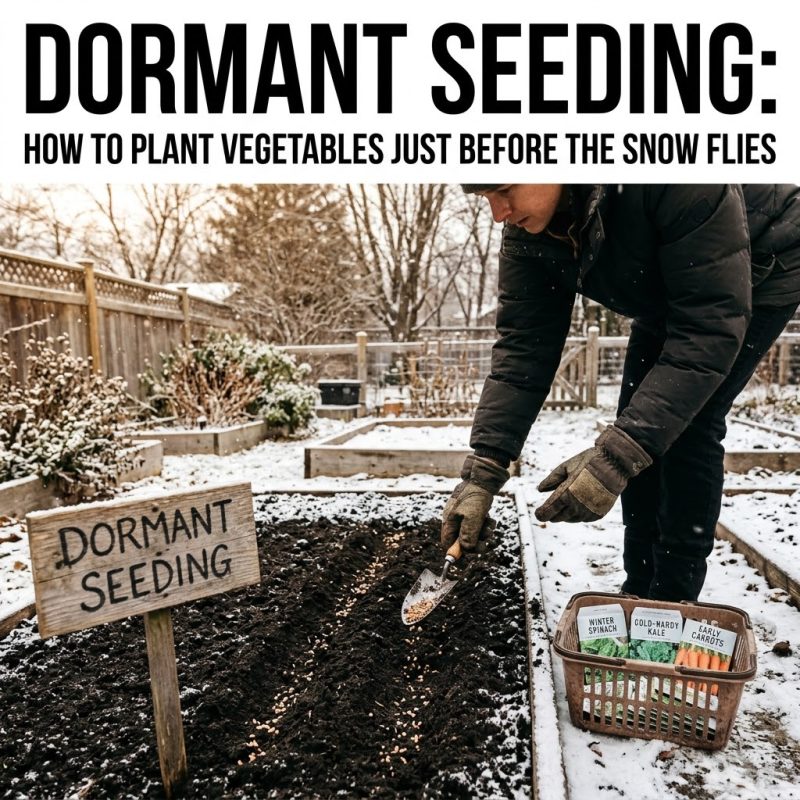
Dormant Seeding: How to Plant Vegetables Just Before the Snow Flies
Oct
As late October gives way to November and heavy frosts turn the garden brown, most growers hang up their trowels for the year. The soil is getting cold, the days are short, and the threat of snow is looming. It feels like the worst possible time to plant a seed.
But for seasoned gardeners, this brief window just before the ground freezes solid is an incredible opportunity.
This technique is called dormant seeding. By intentionally planting specific cold-hardy vegetable seeds into freezing soil, you are tucking them in for a long winter nap. The seeds will lie dormant safely under the snow all winter. The moment the soil thaws and warms slightly in early spring, they will germinate entirely on their own—weeks before you could even attempt to work the muddy spring soil with a shovel.
1. Why Try Dormant Seeding?
While starting seeds indoors under lights or winter sowing in milk jugs are fantastic methods, dormant seeding directly into the earth offers unique, zero-effort advantages:
- Zero Transplant Shock: Because the seeds sprout exactly where they are going to grow, they never have to be transplanted. This leads to incredibly deep, robust root systems.
- Unbeatable Timing: Mother Nature knows best. The seeds will naturally break dormancy at the exact perfect micro-moment in early spring, yielding harvests up to a month earlier than spring-sown crops.
- Saves Spring Labor: Spring is notoriously busy and often too muddy for digging. By prepping your beds and sowing your seeds in the crisp, dry air of late fall, your spring garden is already planted while you are still inside drinking coffee.
2. The Best Seeds for Dormant Planting
Not every vegetable can survive a winter in the frozen earth. You must select seeds with tough outer coats and genetics suited for extreme cold. Fast-growing, cool-weather greens and rugged root crops are the only candidates for this method.
| Vegetable Variety | Sowing Depth | Frost Tolerance | Spring Sprout Timing |
|---|---|---|---|
| Spinach (Bloomsdale) | 1/2 inch | Extreme | Very Early Spring |
| Kale (Winterbor/Russian) | 1/4 inch | Extreme | Early Spring |
| Mâche (Corn Salad) | 1/4 inch | Extreme | Very Early Spring |
| Radish (Cherry Belle) | 1/2 inch | High | Early to Mid-Spring |
| Lettuce (Cold-Hardy Blends) | Surface (needs light) | Moderate to High | Mid-Spring |
3. The Golden Rule of Timing
The biggest mistake you can make with dormant seeding is planting too early.
If you plant these seeds while the soil is still in the 50s (Fahrenheit), they will germinate, sprout delicate green leaves, and promptly be killed by the incoming winter freeze. You must wait until the soil temperature is consistently below 40°F (4°C), but before the ground is frozen solid. For most northern and Midwestern zones, this sweet spot occurs between late October and late November.
4. Step-by-Step Guide to Dormant Seeding
Step 1: Prep the Bed
Clear away any dead summer debris. Loosen the top few inches of the soil with a rake and add a light layer of compost. It is crucial to do this while the soil is still workable, even if you are waiting a few more weeks for temperatures to drop before actually planting.
Step 2: Sow Heavier Than Usual
Winter weather, hungry birds, and natural decay will inevitably claim a portion of your seeds. To guarantee a full stand in the spring, sow your seeds about 25% to 50% more thickly than the packet recommends. You can easily thin the seedlings out once they emerge next year.
Step 3: Tamp and Protect
Cover the seeds with a light dusting of soil according to their required planting depth, and press down firmly with your hands or boots to ensure good seed-to-soil contact.
Step 4: Apply a Light Mulch
Do not cover the bed with a heavy, suffocating layer of wood chips. Instead, use a light, breathable mulch to prevent the seeds from washing away in winter rains or blowing away in harsh winds. A thin layer of clean straw, pine needles, or a single piece of frost fabric pinned to the earth works perfectly.
Step 5: Wait for Spring
Walk away! Let the snow fall and the winter winds blow. As the snow melts in March or April, pull back your straw or frost fabric to reveal a perfect, tiny carpet of green seedlings.
Lock In Your Earliest Spring Harvest
Don’t let the end of the season stop your gardening momentum. Secure your cold-hardy varieties now, prep your beds, and let the winter weather do the hard work for you.
👉 Shop our Ultra Cold-Hardy Vegetable Seeds at Urban Garden Seed to prep your dormant beds today!