
Adenium, Backyard Gardening, Cactus & Succulent, Family & Kids' Gardening, Flower Seeds, Garden Planning & Design, Herb Seeds, Homesteading & Self-Reliance, Sensory & Wellness Gardening, Sustainable & Regenerative Living, The Horticulturist’s Lab, Urban & Small-Space Gardening, Vegetables
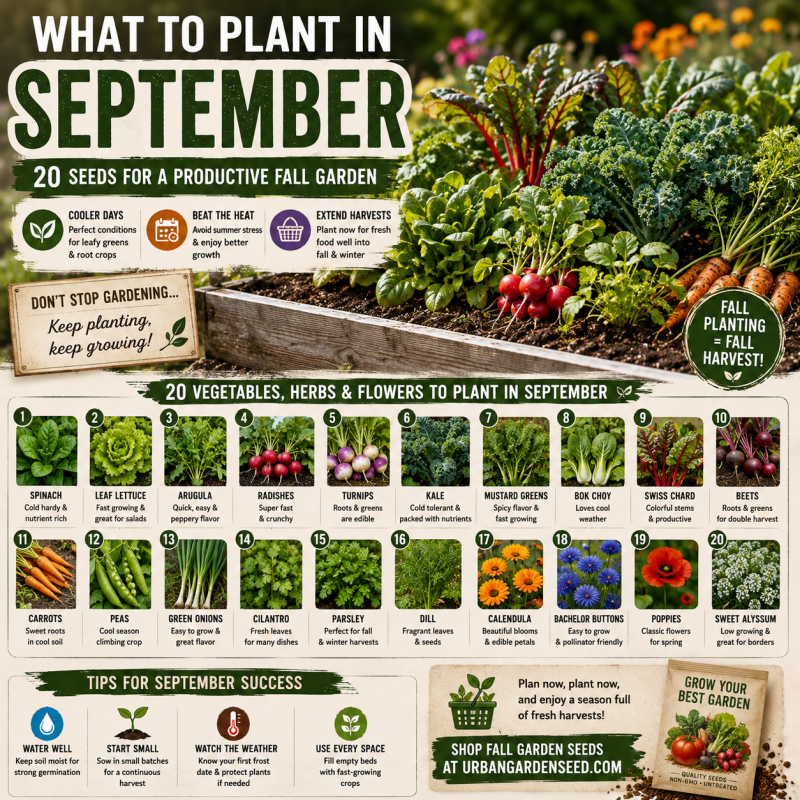
What to Plant in September: 20 Seeds for a Productive Fall Garden
Aug
September does not mean the gardening season is over.
For many gardeners across the United States, it means an entirely new planting season is beginning.
Summer tomatoes and cucumbers may still be producing, but cooler nights and shorter days create opportunities for a second round of vegetables, herbs, flowers, cover crops, and plants that prefer conditions very different from July heat.
Depending on where you live, September can be the perfect time to sow:
- Spinach
- Lettuce
- Radishes
- Arugula
- Kale
- Bok choy
- Turnips
- Mustard greens
- Carrots
- Beets
- Peas
- Cilantro
- Calendula
- Poppies
- And many more
The key is understanding that September gardening is regional.
A gardener in Minnesota may be racing an approaching frost.
A gardener in North Carolina may be entering an excellent cool-season planting window.
A gardener in Texas or Florida may finally be preparing for one of the most productive vegetable-growing periods of the year.
This guide will help you decide what to plant in September and how to make the most of the fall growing season.
Quick Answer: What Can You Plant in September?
Some of the best seeds to consider for September planting include:
- Spinach
- Leaf lettuce
- Arugula
- Radishes
- Turnips
- Kale
- Mustard greens
- Bok choy
- Swiss chard
- Beets
- Carrots
- Peas
- Green onions
- Cilantro
- Parsley
- Dill
- Calendula
- Bachelor buttons
- Poppies
- Sweet alyssum
Not all 20 belong in every September garden.
Choose according to your first fall frost, local temperature, days to maturity, and individual variety.
Why September Is an Important Planting Month
Spring gets most of the attention.
But fall gardening has several advantages.
Cooler temperatures
Many leafy greens and root vegetables grow better under moderate temperatures than extreme summer heat.
Lettuce, spinach, arugula, radishes, kale and other cool-season crops can become much easier to grow once summer begins fading.
Warm soil
Although the air is cooling, soil can remain warm from summer.
That can help seeds germinate rapidly if moisture is maintained.
Fewer summer stresses
As temperatures decline, gardeners may face less extreme heat and evaporation.
Some insect and weed pressures may also decline as the season progresses.
A second harvest
September sowing allows gardeners to use space vacated by:
- Beans
- Cucumbers
- Early corn
- Potatoes
- Summer greens
- Other finished crops
Instead of allowing productive soil to remain empty, plant again.
First: Find Your Average First Fall Frost
Before buying September seeds, determine your local average first fall frost date.
That date gives you a rough estimate of how much growing time remains.
Do not rely only on your USDA hardiness zone.
Your zone is useful for understanding winter cold tolerance, but two locations in the same zone can have different first-frost dates and growing seasons.
For fall vegetables, consider:
- Average first frost
- Current weather
- Days to maturity
- Frost tolerance
- Day length
- Your local microclimate
Then choose crops that realistically have time to produce.
Remember That Fall Growth Slows Down
A seed packet might say:
35 days to maturity.
That does not necessarily mean a crop planted September 15 will perform exactly like the same crop planted April 15.
As autumn progresses:
- Days become shorter
- Sun angles change
- Temperatures decline
- Plant growth slows
Give fall crops more time than their ideal-season maturity number might suggest.
Fast-growing varieties are especially useful for late planting.
1. Spinach
Spinach is one of the strongest September crops.
Summer heat can make spinach difficult because high temperatures encourage bolting.
Cool fall conditions are much more favorable.
Why plant spinach in September?
It is:
- Cold tolerant
- Compact
- Useful in raised beds
- Suitable for containers
- Excellent for succession planting
- Harvestable as baby leaves
In colder climates, plant early enough for plants to become established before severe freezes.
In milder areas, spinach can continue producing much later into fall or winter.
Planting tip
Keep the seedbed consistently moist during germination.
Late-summer soil can still be surprisingly hot and dry.
2. Leaf Lettuce
Lettuce is another excellent September vegetable.
Rather than waiting for large mature heads, grow leaf lettuce for repeated harvests.
Possible uses include:
- Salads
- Sandwiches
- Wraps
- Burgers
- Baby greens
Succession sow lettuce
Plant a small amount.
Wait approximately a week or two.
Plant another small amount.
This can provide a more continuous harvest instead of producing thirty mature plants simultaneously.
In cold regions, prioritize fast-growing leaf varieties.
3. Arugula
Arugula is one of the fastest cool-season greens.
Its peppery leaves work well in:
- Salads
- Pizza
- Sandwiches
- Pasta
- Mixed greens
It can be harvested young for a milder flavor.
Because it grows quickly, arugula is particularly useful when the fall growing window is becoming short.
4. Radishes
If you want one of the fastest September vegetables, grow radishes.
Many radish varieties can mature rapidly enough to fit between summer and winter.
They also require relatively little garden space.
Plant them in:
- Raised beds
- Containers
- Garden rows
- Open spaces between slower crops
Sow several small batches
Instead of planting an entire packet at once, sow small quantities every week or two while conditions remain suitable.
This prevents one enormous radish harvest.
5. Turnips
Turnips offer both edible roots and edible greens.
Young leaves can be harvested before the roots reach full size.
They prefer cool conditions and can tolerate light frost better than many warm-season vegetables.
September planting can work particularly well in regions with a sufficiently long fall.
Choose quicker-maturing varieties when frost arrives early.
6. Kale
Kale is one of the most cold-tolerant vegetables in the fall garden.
It can be harvested as:
- Baby greens
- Mature leaves
- Cooking greens
Instead of harvesting the entire plant, pick outer leaves and allow the center to continue growing.
Kale can become particularly valuable as summer vegetables decline.
7. Mustard Greens
Mustard greens are fast-growing, flavorful and well suited to cool weather.
Their flavor ranges from mild to strongly peppery depending on variety.
Harvest young leaves for salads.
Allow plants to become larger for cooked greens.
They are particularly useful for gardeners who want a quick fall crop without waiting months for maturity.
8. Bok Choy
Bok choy is an excellent fall vegetable.
Hot weather can cause it to bolt prematurely, while cooler weather generally produces better growth.
Depending on the variety, you can harvest:
- Baby bok choy
- Individual leaves
- Mature heads
Compact varieties make excellent raised-bed crops.
9. Swiss Chard
Swiss chard gives you both productivity and color.
Stems may be:
- Red
- Yellow
- Pink
- White
- Orange
It can continue producing leaves for an extended period and tolerates cooler weather better than many summer vegetables.
Plant it in edible landscapes as well as traditional vegetable beds.
10. Beets
Beets provide two harvests.
The root is edible.
So are the greens.
That makes them an efficient fall vegetable.
Give developing roots enough space by thinning crowded seedlings.
If the season becomes too short for large roots, young beet greens can still provide a useful harvest.
11. Carrots
Carrots can be excellent fall crops when planted early enough.
The biggest challenge is germination.
Carrot seeds are small and planted shallowly, which means the seedbed can dry rapidly during late-summer heat.
Keep carrot rows moist
Do not allow the surface to repeatedly dry while seeds are germinating.
Once established, carrots become easier to manage.
Choose faster or shorter varieties if your remaining season is limited.
12. Peas
Peas prefer cool weather.
In regions with enough fall growing time, September can provide an opportunity for a second pea crop.
Use:
- Trellises
- Netting
- Fences
- Other vertical supports
Give peas support early rather than trying to untangle mature vines later.
In northern regions with an early first frost, September may be too late for many pea varieties.
Check days to maturity before planting.
13. Green Onions
Green onions or scallions are efficient crops for small spaces.
They grow vertically rather than spreading widely.
Plant them in:
- Raised beds
- Containers
- Herb gardens
- Vegetable beds
Even when the remaining season is too short for large bulb onions, green onions may still produce a useful harvest.
14. Cilantro
Gardeners frustrated by cilantro during summer should try it again in fall.
Cilantro often bolts rapidly during hot weather.
Cooler conditions can extend the useful leaf-harvest period.
Use fresh cilantro in:
- Salsa
- Tacos
- Curries
- Soups
- Salads
- Asian dishes
Succession sowing is useful because cilantro naturally moves through its life cycle relatively quickly.
15. Parsley
Parsley tolerates cool conditions and can remain productive well into fall.
It germinates more slowly than radishes or arugula, so September sowing works best where the season remains relatively long.
In colder climates, established parsley plants may be more useful than starting very late seed.
16. Dill
Dill can be direct sown for fall production in suitable climates.
It prefers cooler weather compared with extreme midsummer heat.
Because dill develops a taproot, direct sowing is usually easier than repeatedly transplanting established plants.
Grow it for:
- Fresh leaves
- Pickling
- Seeds
- Pollinator flowers
17. Calendula
September is not only about vegetables.
Calendula can thrive during cool weather in many regions.
Its orange and yellow flowers add color when summer annuals begin fading.
In mild climates, fall-sown calendula may produce flowers over an extended cool season.
In colder climates, planting timing and winter survival depend heavily on local conditions.
18. Bachelor Buttons
Bachelor buttons—also called cornflowers—are classic cottage-garden flowers.
In suitable climates, fall sowing can help produce strong spring plants.
They are available in:
- Blue
- Pink
- White
- Purple
- Mixed colors
Check your local climate before fall planting.
Gardeners in extremely cold regions may prefer spring or dormant-sowing methods instead.
19. Poppies
Certain poppies respond well to fall or cool-season sowing.
Their seeds are tiny and generally should not be buried deeply.
Many poppies dislike root disturbance, making direct sowing a practical method.
Because requirements differ by species, always identify the exact poppy before planting.
20. Sweet Alyssum
Sweet alyssum is a low-growing flower useful for:
- Garden edges
- Raised beds
- Pollinator plantings
- Containers
- Path borders
It performs well in cooler conditions and can complement fall vegetables.
Its small flowers can soften the appearance of vegetable beds while adding another flowering resource to the garden.
What to Plant in September in Northern States
Gardeners in northern states have the shortest window.
Focus on very fast and cold-tolerant crops.
Potential choices include:
- Spinach
- Radishes
- Leaf lettuce
- Arugula
- Mustard greens
- Baby kale
- Fast turnips
The farther north you are, the more important crop maturity becomes.
September may also become a period for:
- Cover crops
- Soil preparation
- Seed saving
- Fall-planted perennials
- Preparing beds for winter
Do not force a 90-day vegetable into a four-week growing window.
What to Plant in the Midwest and Northeast
Depending on first-frost timing, gardeners may still plant:
- Spinach
- Leaf lettuce
- Radishes
- Arugula
- Turnips
- Mustard greens
- Kale
- Cilantro
Use frost protection to extend the season.
A simple row cover can sometimes make the difference between losing a crop during one cold night and harvesting for several additional weeks.
What to Plant in the Mid-Atlantic
The longer fall allows more options.
Consider:
- Lettuce
- Spinach
- Radishes
- Kale
- Bok choy
- Mustard
- Turnips
- Beets
- Carrots
- Cilantro
- Peas
Later plantings should increasingly emphasize faster varieties.
What to Plant in the Southeast
For many Southeastern gardeners, September can be the beginning of an important cool-season vegetable cycle.
As extreme summer heat begins easing, gardeners can transition toward crops such as:
- Broccoli
- Cabbage
- Kale
- Lettuce
- Spinach
- Mustard greens
- Bok choy
- Radishes
- Carrots
- Beets
- Turnips
- Cilantro
Some longer-maturing crops may be better started from transplants rather than seed when the calendar is already advanced.
What to Plant in Texas and the Southern Plains
Texas contains several very different climates.
North Texas, Central Texas and the Gulf Coast should not automatically use the same date.
September may open opportunities for cool-season vegetables as temperatures become more manageable.
Potential crops include:
- Radishes
- Lettuce
- Greens
- Kale
- Mustard
- Carrots
- Beets
- Turnips
- Cilantro
In the hottest areas, soil temperatures may still be excessive early in the month.
Use shade, moisture management, and appropriate planting dates.
What to Plant in California
California has tremendous climate variation.
Coastal gardeners, Central Valley gardeners, mountain gardeners and Southern California gardeners need different schedules.
In suitable regions, September planting may include:
- Beets
- Bok choy
- Spinach
- Lettuce
- Peas
- Radishes
- Carrots
- Swiss chard
- Parsley
- Cilantro
Fall can also be useful for establishing certain flowers and perennials.
Always use county-level guidance whenever possible.
What to Plant in the Pacific Northwest
September can be an important period for:
- Spinach
- Lettuce
- Arugula
- Radishes
- Hardy greens
- Selected overwintering crops
- Cover crops
The challenge increasingly becomes decreasing daylight rather than extreme cold alone.
Plant quickly.
Every week matters.
What to Plant in the Desert Southwest
Gardeners in extremely hot summer climates often experience a very different seasonal pattern.
September may finally bring conditions suitable for beginning fall food production.
Depending on elevation and local temperatures, consider:
- Carrots
- Beets
- Radishes
- Lettuce
- Spinach
- Cilantro
- Kale
- Other cool-season greens
If daytime temperatures remain extremely high, wait or provide temporary shade during germination.
September Seed-Starting Challenge: Hot Soil
One of the hardest things about a fall garden is that you are trying to establish cool-season plants while summer may still be present.
Seeds require consistent moisture.
Tiny seedlings have shallow roots.
A seedbed can dry in hours under hot September sun.
Use several strategies.
Plant in the evening
This gives seeds a cooler first night before the next day’s heat.
Water before planting
Begin with evenly moist soil.
Water gently afterward
Do not blast tiny seeds out of their rows.
Use temporary shade
Shade cloth can help moderate extreme conditions during establishment.
Check moisture frequently
Do not follow a once-a-week watering routine during germination.
Look at the soil.
Use Succession Planting
September is perfect for succession sowing.
Instead of planting fifty radishes today, plant ten.
Plant another ten next week.
Then another group.
Do the same with:
- Lettuce
- Arugula
- Spinach
- Cilantro
- Mustard greens
As long as your remaining season allows it, succession sowing creates a continuous harvest.
Use Every Empty Space
Look at your summer garden.
Where are there gaps?
Perhaps:
The beans finished.
One cucumber vine died.
The potatoes were harvested.
Early corn is gone.
Lettuce bolted months ago.
Do not wait until the entire garden is empty.
Plant fall crops into available spaces immediately.
This is sometimes called relay planting.
One crop begins while another is finishing.
Grow Fast Crops Between Slow Crops
Radishes, arugula and baby lettuce can mature while slower plants are still developing.
Plant them between appropriately spaced:
- Kale
- Broccoli
- Cabbage
- Other long-season crops
Harvest the fast crop before the larger plants require the space.
That turns empty early-season soil into productive growing area.
Protect Crops From Early Frost
An early frost does not always need to end the fall garden.
Many cool-season vegetables tolerate some cold.
Additional protection can help.
Options include:
- Floating row covers
- Low tunnels
- Cold frames
- Cloches
A small amount of protection can sometimes extend harvest considerably.
Do not use plastic directly against tender foliage during freezing conditions.
What NOT to Plant in September
For much of the United States, September is too late to begin long-season warm-weather crops from seed.
These commonly include:
- Tomatoes
- Peppers
- Eggplants
- Watermelons
- Muskmelons
- Sweet corn
- Pumpkins
- Long-season squash
Exceptions exist in frost-free and subtropical climates.
But for most gardeners, September is the time to switch from summer crops toward cool-season vegetables.
Do not waste seeds fighting the calendar.
Think Beyond This Fall
Some September planting is done for next year.
Depending on climate and species, gardeners may use fall for:
- Perennial flowers
- Native plants
- Wildflowers
- Spring-flowering plants
- Overwintering vegetables
- Cover crops
A fall garden does not need to produce every harvest before December.
Some of what you plant now is an investment in spring.
Why September Is a Great Time to Buy Seeds
Spring is not the only seed-shopping season.
September gardeners need varieties selected for:
- Fast maturity
- Cold tolerance
- Fall production
- Overwintering
- Succession planting
- Spring establishment
Buying seeds now also allows you to begin preparing for:
- Winter sowing
- Indoor seed starting
- Next year’s vegetable garden
- Pollinator projects
- Cottage gardens
- Food forests
Good gardens are rarely planned one week before planting.
Build a September Seed Collection
A practical fall collection could include four groups.
Fast vegetables
- Radishes
- Arugula
- Leaf lettuce
Cold-tolerant vegetables
- Spinach
- Kale
- Mustard
- Turnips
Herbs
- Cilantro
- Parsley
- Dill
Flowers
- Calendula
- Bachelor buttons
- Poppies
- Alyssum
Then choose varieties according to your local season.
Why Choose Urban Garden Seed?
Urban Garden Seed offers vegetable, herb, flower, fruit, tree, plant, and specialty seeds for gardeners across the United States.
September is an excellent time to explore seeds differently.
Instead of shopping only for tomatoes and cucumbers, build a fall collection around:
- Leafy greens
- Root vegetables
- Cool-season herbs
- Cold-tolerant flowers
- Plants for next spring
Urban Garden Seed focuses on Non-GMO, untreated seeds and offers a 30-Day Satisfaction Guarantee.
Always review the growing requirements and days to maturity of the individual variety before planting.
Summer Is Ending. Your Garden Doesn’t Have To.
September can feel like the end of the gardening season.
It is not.
Pull the finished bean plants.
Harvest the last cucumber.
Clear one small section.
Rake the soil.
Choose something fast.
Plant another seed.
A few weeks later, you may be harvesting fresh radishes, lettuce, arugula or spinach while summer gardens around you are already empty.
That is the advantage of thinking beyond spring.
A productive garden does not have only one planting season.
It changes with the weather.
And September can be one of its most rewarding chapters.
Ready to Plant Your September Garden?
Explore vegetable, herb, flower and specialty seeds at UrbanGardenSeed.com and choose varieties for your fall garden.
Plant fast-growing crops.
Use your local frost date.
Protect seedlings from late-summer heat.
Keep sowing while the season allows.
Summer harvests may be ending. Your next garden can start now.
Frequently Asked Questions
What vegetables can I plant in September?
Depending on region, September planting can include spinach, lettuce, radishes, arugula, kale, mustard greens, turnips, bok choy, beets, carrots, peas and other cool-season vegetables.
Is September too late to plant vegetables?
Not necessarily. In northern climates, focus on very fast crops. In southern climates, September may mark the beginning of the main cool-season vegetable-growing period.
What is the fastest vegetable to plant in September?
Radishes and baby greens such as arugula and leaf lettuce are among the quickest options.
Can I plant lettuce in September?
Yes, in many regions. Lettuce prefers cooler conditions and can be an excellent fall crop.
Can I plant spinach in September?
Yes. Spinach is highly suited to cool weather and is one of the strongest fall vegetables in many climates.
Can carrots be planted in September?
Yes where enough growing season remains. In colder locations, September may be too late for full-sized carrots, so choose faster varieties or plant earlier.
Can I plant kale in September?
Yes in many regions. Kale tolerates cold conditions better than most warm-season vegetables.
Can I plant radishes in September?
Yes. Radishes are particularly useful because many varieties mature quickly.
Can I plant peas in September?
It depends on the region and days until frost. Areas with a long fall may have sufficient time for peas; colder northern gardens may not.
What herbs can I plant in September?
Cilantro, parsley and dill may be suitable depending on local temperatures and remaining growing season.
What flowers can I plant in September?
Calendula, bachelor buttons, certain poppies, sweet alyssum and regionally appropriate perennials may be suitable depending on climate and species.
Should I use my USDA zone to decide what to plant?
Use it as context, but your local first frost date, weather and individual crop requirements are more useful for fall vegetable timing.
How do I germinate fall seeds when September is still hot?
Maintain consistent soil moisture, consider temporary shade during extreme heat, and sow during cooler parts of the day.
What should I do if frost comes early?
Cold-tolerant vegetables may survive light frost, and row covers, low tunnels, cloches or cold frames can provide additional protection.
Where can I buy seeds for a September garden?
Visit UrbanGardenSeed.com to explore vegetable, herb, flower and specialty seeds for fall and future growing seasons.
