
Cactus & Succulent, Family & Kids' Gardening, Flower Seeds, Herb Seeds, Sensory & Wellness Gardening, Sustainable & Regenerative Living, The Horticulturist’s Lab, Urban & Small-Space Gardening, Vegetables
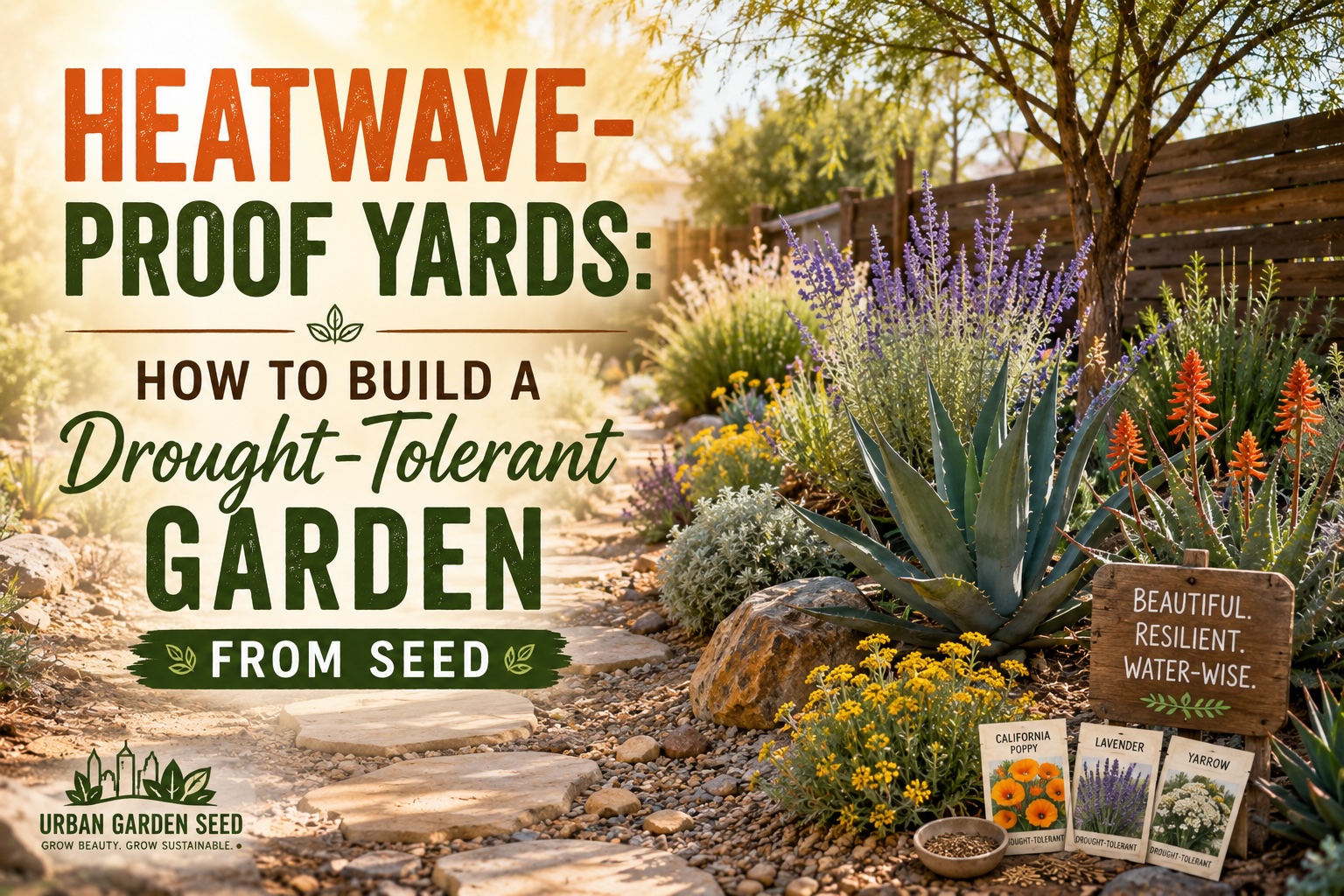
Heatwave-Proof Yards: How to Build a Drought-Tolerant Garden from Seed
May
What is Climate-Resilient Gardening?
Climate-resilient gardening (often called xeriscaping) is the practice of designing a landscape and selecting specific seeds that naturally thrive in local, low-moisture, and high-heat environments.
Instead of constantly overwatering delicate, thirsty plants, you choose varieties equipped with natural defenses against dry spells—like deep root systems, waxy leaves, or native hardiness. This creates an inherently sustainable ecosystem that looks effortlessly vibrant, even during a mid-summer dry spell.
Your Heatwave-Proof Plan in 4 Steps
Building a garden that can take the heat requires a solid foundation. If you plant the wrong seeds in poorly prepared soil, the hot sun will dry them out before they can establish. Follow this proven sequence to ensure your seeds grow deep, resilient roots:
3 Rules for A Water-Wise Oasis
1. Only water at dawn: Avoid watering in the middle of the day when the blistering sun will evaporate the water before it hits the roots. Early morning watering lets plants hydrate before the heat hits.
2. Group plants by “Hydro-Zones”: Group seeds with identical water needs in the same bed. Don’t mix a water-loving mint with a drought-loving rosemary, or one of them will suffer.
3. Lean into native varieties: Native wildflowers and plants are already adapted to your local climate’s extremes. Planting native seeds gives you an automatic home-field advantage.
A hot summer doesn’t mean your yard has to look dry and spent. By working with nature and choosing high-performance, heat-resistant seeds, you can create a lush, thriving oasis that looks beautiful no matter how high the thermometer climbs.
