
Cactus & Succulent, Family & Kids' Gardening, Flower Seeds, Herb Seeds, Sensory & Wellness Gardening, Sustainable & Regenerative Living, The Horticulturist’s Lab, Urban & Small-Space Gardening, Vegetables
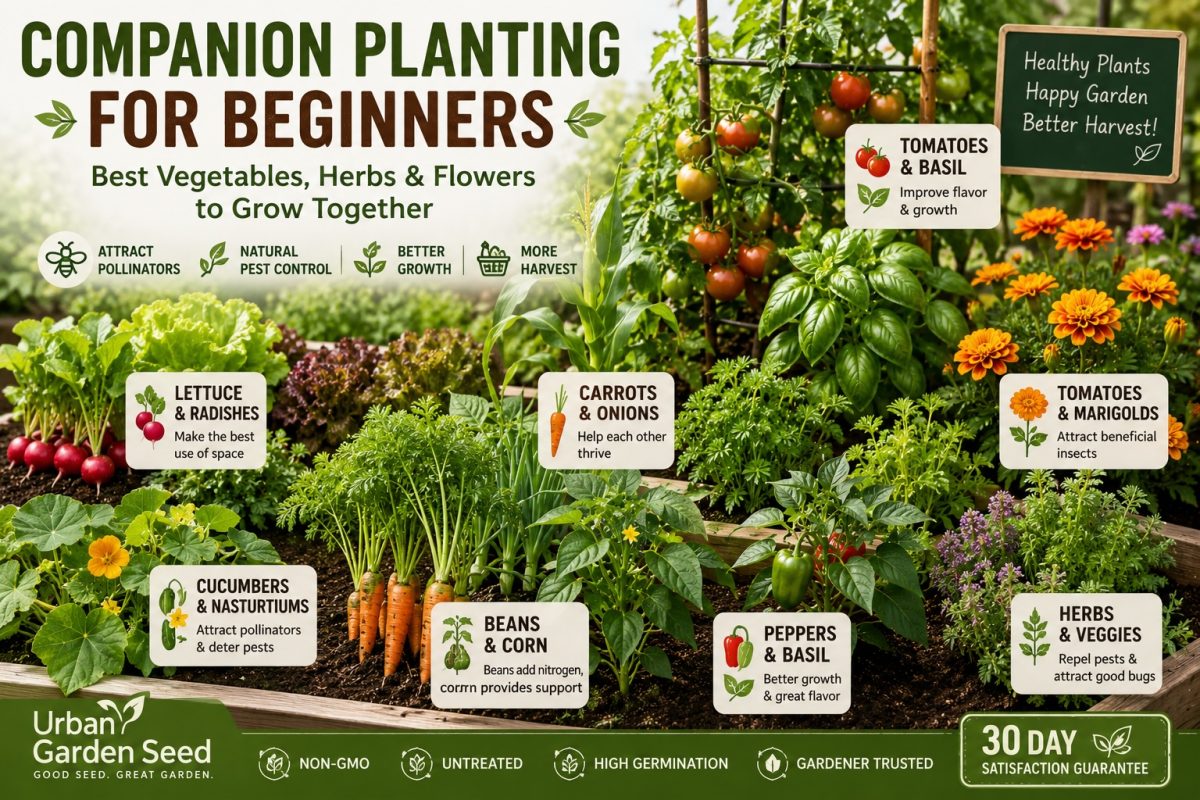
Companion Planting for Beginners: Best Vegetables, Herbs & Flowers to Grow Together
Jun
Companion planting is one of the easiest ways to build a healthier, more productive garden. Instead of growing each plant alone, companion planting pairs vegetables, herbs, and flowers that can support each other in the garden.
Some companion plants help attract pollinators. Some may help confuse pests. Others make better use of space, provide shade, or improve the overall balance of your garden.
For beginner gardeners, companion planting does not need to be complicated. You can start with simple combinations like tomatoes and basil, lettuce and radishes, or marigolds near vegetables. With the right seeds and a thoughtful garden plan, you can grow a garden that is beautiful, useful, and productive.
At Urban Garden Seed, we offer high-quality Non-GMO, untreated vegetable seeds, flower seeds, herb seeds, and tree seeds for gardeners who want to grow with confidence.
What Is Companion Planting?
Companion planting is the practice of growing certain plants near each other because they may benefit one another.
For example, flowers can attract bees and butterflies to help pollinate vegetable crops. Herbs with strong scents may help confuse some garden pests. Tall plants can provide shade for smaller crops that prefer cooler conditions. Fast-growing vegetables can be planted between slower-growing crops to make better use of garden space.
Companion planting is not magic, but it is a helpful garden strategy. When combined with good soil, proper watering, sunlight, and quality seeds, it can support a healthier home garden.
Why Companion Planting Is Useful for Home Gardeners
Companion planting is popular because it helps gardeners create a more balanced growing environment.
A good companion planting plan can help attract beneficial insects, bring more pollinators into the garden, reduce wasted space, improve biodiversity, and make your garden more beautiful.
It is also practical. Instead of planting only one type of vegetable in one area, you can combine vegetables, herbs, and flowers to create a garden that produces food while supporting natural garden activity.
For small gardens, raised beds, and container gardens, companion planting can help you get more value from limited space.
Best Companion Planting Combinations for Beginners
If you are new to companion planting, start with simple plant pairings that are easy to manage.
1. Tomatoes and Basil
Tomatoes and basil are one of the most popular companion planting combinations. They grow well together in warm weather and are also perfect together in the kitchen.
Basil is a compact herb that can grow near tomato plants without taking too much space. Both plants enjoy sunny conditions and regular watering.
Best for: Raised beds, patio pots, kitchen gardens
Seed ideas: Tomato seeds, basil seeds
Gardening tip: Give tomato plants enough space and support with stakes or cages.
2. Tomatoes and Marigolds
Marigolds are one of the most useful flowers to grow near vegetables. Their bright blooms bring color to the garden and can help attract beneficial insects.
Many gardeners plant marigolds near tomatoes, peppers, beans, squash, and other vegetables as part of a natural garden plan.
Best for: Vegetable beds, borders, raised beds
Seed ideas: Tomato seeds, marigold seeds
Gardening tip: Plant marigolds along the edges of vegetable beds for color and garden diversity.
3. Lettuce and Radishes
Lettuce and radishes are excellent companions for beginner gardeners because they both grow quickly and do not require deep soil.
Radishes mature fast, while lettuce can be harvested leaf by leaf. This combination works well in containers, raised beds, and small garden spaces.
Best for: Small gardens, containers, cool-season planting
Seed ideas: Lettuce seeds, radish seeds
Gardening tip: Sow small amounts every few weeks for a continuous harvest.
4. Carrots and Onions
Carrots and onions are often grown near each other because they use garden space differently. Carrots grow below the soil, while onions grow upright with narrow leaves.
This makes them a useful pairing for gardeners who want to maximize space in raised beds or backyard gardens.
Best for: Raised beds, rows, backyard gardens
Seed ideas: Carrot seeds, onion seeds
Gardening tip: Keep the soil loose so carrot roots can grow straight.
5. Cucumbers and Nasturtiums
Cucumbers grow well in warm weather and can spread across the garden or climb a trellis. Nasturtiums add colorful flowers and help attract pollinators.
This pairing is especially attractive in summer gardens because it combines food production with bright blooms.
Best for: Trellises, raised beds, pollinator gardens
Seed ideas: Cucumber seeds, nasturtium seeds
Gardening tip: Grow cucumbers vertically to save space and improve airflow.
6. Beans and Corn
Beans and corn are a classic companion planting combination. Corn provides a natural support for climbing beans, while beans are legumes that work with soil bacteria to fix nitrogen.
This pairing is often used in traditional garden systems and can be useful in larger garden spaces.
Best for: Backyard gardens, larger raised beds
Seed ideas: Pole bean seeds, corn seeds
Gardening tip: Make sure corn plants are strong enough before beans begin climbing heavily.
7. Peppers and Basil
Peppers and basil grow well in similar warm, sunny conditions. Basil can be planted near peppers in raised beds or containers.
This combination is practical for kitchen gardeners because both are useful in sauces, stir-fries, salads, and home cooking.
Best for: Sunny containers, raised beds, kitchen gardens
Seed ideas: Pepper seeds, basil seeds
Gardening tip: Avoid overwatering peppers; keep soil moist but not soggy.
8. Kale and Herbs
Kale grows well with many herbs, especially in cool-season gardens. Herbs such as dill, cilantro, and parsley can help attract beneficial insects when allowed to flower.
This combination is useful for gardeners who want leafy greens and fresh herbs from the same space.
Best for: Cool-season gardens, raised beds, herb gardens
Seed ideas: Kale seeds, parsley seeds, cilantro seeds, dill seeds
Gardening tip: Harvest kale outer leaves first so the plant continues growing.
9. Squash and Flowers
Squash plants produce large leaves and bright flowers. Adding companion flowers nearby can help bring pollinators into the garden.
Flowers such as zinnias, marigolds, cosmos, and nasturtiums can make the garden more attractive while supporting pollinator activity.
Best for: Summer gardens, pollinator gardens, backyard beds
Seed ideas: Squash seeds, zinnia seeds, marigold seeds, cosmos seeds
Gardening tip: Give squash plants enough room because they can spread widely.
10. Herbs and Vegetables
Many herbs are excellent companions in the vegetable garden. Basil, dill, cilantro, parsley, chives, oregano, thyme, and mint can all be useful, depending on your garden plan.
Herbs add fragrance, attract beneficial insects, and provide fresh ingredients for cooking. However, mint should usually be grown in its own container because it can spread aggressively.
Best for: Kitchen gardens, containers, raised beds
Seed ideas: Basil seeds, cilantro seeds, parsley seeds, dill seeds, chive seeds
Gardening tip: Let some herbs flower to attract pollinators and beneficial insects.
Best Flowers for Companion Planting
Flowers are important in companion planting because they help attract pollinators and beneficial insects while making the garden more beautiful.
Some of the best flowers for vegetable gardens include marigolds, nasturtiums, zinnias, cosmos, sunflowers, calendula, and alyssum.
Marigolds are popular for vegetable bed borders. Nasturtiums are colorful and useful near cucumbers and squash. Zinnias and cosmos are excellent for attracting butterflies and bees. Sunflowers can add height and structure to the garden.
Adding flowers to your vegetable garden is one of the simplest ways to improve garden diversity.
Best Herbs for Companion Planting
Herbs are excellent companion plants because many are compact, fragrant, and useful in the kitchen.
Basil is a favorite near tomatoes and peppers. Dill, parsley, and cilantro can attract beneficial insects when they flower. Chives grow well in small spaces and can be planted near many vegetables. Thyme and oregano are low-growing herbs that work well along bed edges.
Mint is useful but should be planted in containers because it can spread quickly.
Companion Planting for Small Gardens
Companion planting is especially helpful for small gardens because it allows you to use space efficiently.
In a small raised bed, you can grow tomatoes with basil and marigolds, lettuce with radishes, or peppers with herbs. In containers, you can pair a tomato plant with basil, or grow lettuce and radishes together in a wide planter.
For balcony gardens, choose compact plants and use vertical space. Grow cucumbers or beans on a trellis, herbs in small pots, and flowers in containers to attract pollinators.
Companion Planting Mistakes to Avoid
Companion planting works best when plants have similar needs and enough space.
Avoid planting crops too closely together. Crowded plants can compete for light, water, and nutrients. They may also have poor airflow, which can increase disease problems.
Avoid pairing plants with very different water needs in the same container. For example, herbs that prefer drier soil may not do well beside vegetables that need frequent watering.
Avoid letting aggressive plants take over. Mint, for example, is best grown in its own pot.
Most importantly, do not rely only on companion planting. Healthy soil, proper watering, sunlight, crop rotation, and quality seeds are still essential.
Simple Companion Planting Garden Plan
For a beginner-friendly raised bed, try this simple layout:
Plant tomatoes in the back or center with cages for support. Add basil near the tomatoes. Plant marigolds around the edges. Grow lettuce and radishes in the front where they are easy to harvest. Add carrots in loose soil along one side.
This gives you a mix of vegetables, herbs, and flowers in one productive garden bed.
For a container garden, try one large pot with a cherry tomato and basil, one wide container with lettuce and radishes, and one flower pot with marigolds or nasturtiums.
Why Seed Quality Matters in Companion Planting
A good companion planting plan starts with good seeds. Strong germination and healthy seedlings help your garden fill in properly and grow with confidence.
Urban Garden Seed offers Non-GMO, untreated seeds selected for home gardeners. Our seeds are tested for high germination and backed by our 30-Day Satisfaction Guarantee.
Whether you are planting vegetables, herbs, flowers, or trees, quality seeds give your garden a better start.
Frequently Asked Questions
What is the best companion plant for tomatoes?
Basil and marigolds are two popular companion plants for tomatoes. Basil grows well in similar conditions, while marigolds add color and attract beneficial insects.
What flowers should I plant with vegetables?
Good flowers for vegetable gardens include marigolds, nasturtiums, zinnias, cosmos, calendula, sunflowers, and alyssum.
Can I use companion planting in containers?
Yes. Companion planting works well in containers when the plants have similar sunlight and watering needs. Tomatoes with basil and lettuce with radishes are good examples.
What herbs are good companion plants?
Basil, parsley, cilantro, dill, chives, thyme, and oregano are useful herbs for companion planting. Mint is useful but should be kept in its own pot.
Does companion planting prevent all pests?
No. Companion planting can support a healthier garden, but it does not prevent every pest problem. Use it together with good soil care, watering, spacing, and regular garden inspection.
Is companion planting good for beginners?
Yes. Companion planting is excellent for beginners because it helps gardeners think about plant relationships, garden layout, pollinators, and efficient use of space.
Start Companion Planting with Urban Garden Seed
Companion planting is a simple way to grow a more beautiful, productive, and balanced garden. By combining vegetables, herbs, and flowers, you can make better use of your garden space while supporting pollinators and beneficial insects.
Start with easy combinations like tomatoes and basil, lettuce and radishes, cucumbers and nasturtiums, or vegetables with marigolds.
Urban Garden Seed offers high-quality Non-GMO, untreated seeds for vegetables, herbs, flowers, and trees. Every seed we ship is tested for high germination and backed by our 30-Day Satisfaction Guarantee.
Visit UrbanGardenSeed.com today and start planning your companion garden with seeds you can trust.
