
Cactus & Succulent, Family & Kids' Gardening, Flower Seeds, Herb Seeds, Sensory & Wellness Gardening, Sustainable & Regenerative Living, The Horticulturist’s Lab, Urban & Small-Space Gardening, Vegetables
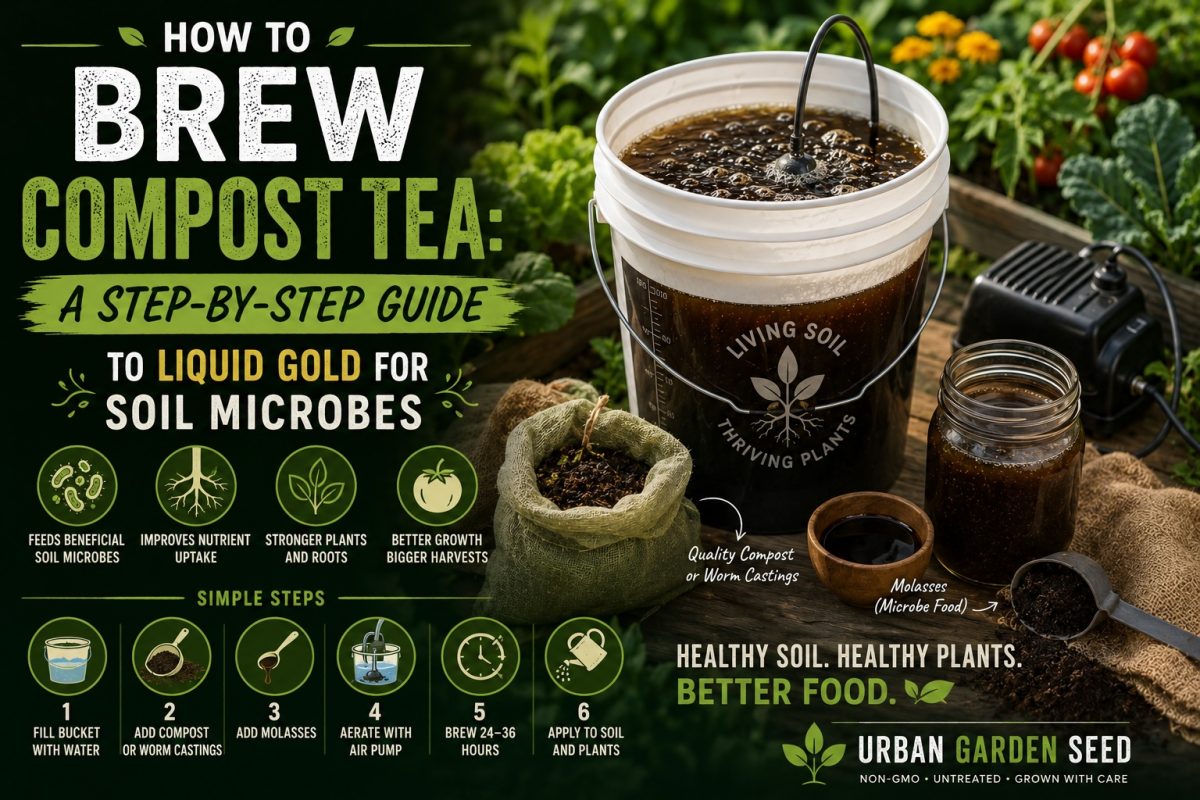
How to Brew Compost Tea: A Step-by-Step Guide to Liquid Gold for Soil Microbes
Jun
Healthy vegetables do not start with fertilizer. They start with living soil.
If your vegetable plants look weak, grow slowly, or produce smaller harvests than expected, the problem may not be your seeds. It may be your soil biology. Compost tea is one of the easiest natural ways to feed beneficial soil microbes, improve nutrient availability, and support stronger roots in your garden.
In this guide, you will learn how to brew compost tea step by step, how to use it safely, and which vegetables benefit most from microbe-rich soil.
At Urban Garden Seed, we believe great harvests begin with quality seeds and healthy soil. Our Non-GMO, untreated seeds are selected for home gardeners who want strong germination, productive plants, and a more natural way to grow food.
What Is Compost Tea?
Compost tea is a liquid soil booster made by steeping high-quality compost in water. Many gardeners call it “liquid gold” because it helps carry beneficial microbes and soluble nutrients into the soil.
Think of compost tea as a soil microbe drink. Instead of only feeding the plant, you are feeding the underground ecosystem that helps plants absorb nutrients more efficiently.
A good compost tea can support:
- Stronger root growth
- Better nutrient uptake
- Healthier leaves and stems
- Improved soil structure over time
- More resilient vegetable plants
- Higher harvest potential when paired with quality seeds
Compost tea is not a magic solution for poor gardening habits, but it can become a powerful part of a regenerative garden routine.
Why Soil Microbes Matter for Vegetable Yields
Your vegetable garden is alive beneath the surface. Beneficial bacteria, fungi, protozoa, nematodes, and earthworms all play a role in breaking down organic matter and making nutrients available to plants.
When soil microbes are active, your plants can access nutrients more efficiently. This is especially important for heavy-feeding vegetables such as tomatoes, peppers, cucumbers, squash, eggplant, corn, lettuce, kale, and cabbage.
Healthy soil biology helps vegetables grow with:
- Deeper root systems
- Better drought tolerance
- Improved nutrient cycling
- Stronger plant structure
- More productive flowering and fruiting
That is why compost tea works best when used together with good compost, mulch, organic matter, and high-quality vegetable seeds.
Compost Tea vs. Compost: What Is the Difference?
Compost and compost tea are related, but they are used differently.
Compost is solid organic matter added to garden beds to improve soil structure, fertility, and microbial life over time.
Compost tea is a liquid extract used to deliver microbial activity and soluble nutrients more quickly to the root zone.
For best results, use both. Add compost to your garden beds before planting, then use compost tea during the growing season to support active growth.
Simple Compost Tea Recipe for Vegetable Gardens
This beginner-friendly recipe makes about 5 gallons of compost tea, enough for a small to medium vegetable garden.
Ingredients
You will need:
- 5 gallons of clean, non-chlorinated water
- 2 cups high-quality finished compost or worm castings
- 1 to 2 tablespoons unsulfured molasses
- 1 mesh bag, paint strainer bag, or old clean cloth
- 1 bucket
- 1 aquarium air pump and air stone
- 1 stick or garden tool for stirring
Important Note About Water
Avoid using heavily chlorinated tap water because chlorine can reduce microbial activity. If tap water is your only option, let it sit uncovered for 24 hours before brewing.
Step-by-Step: How to Brew Compost Tea
Step 1: Fill Your Bucket With Water
Add 5 gallons of clean, non-chlorinated water to a bucket. Leave a few inches of space at the top so the tea does not overflow when bubbling.
Use a clean bucket that has not been used for chemicals, paint, pesticides, or cleaning products.
Step 2: Add Compost or Worm Castings
Place 2 cups of finished compost or worm castings into a mesh bag. Tie the bag closed and place it in the bucket like a tea bag.
The quality of your compost matters. Use compost that smells earthy, not sour, rotten, or ammonia-like. Bad compost can create bad tea.
Step 3: Add Molasses
Add 1 to 2 tablespoons of unsulfured molasses.
Molasses acts as a food source for microbes during brewing. Do not overdo it. Too much sugar can create an unbalanced brew.
Step 4: Add Aeration
Place the air stone at the bottom of the bucket and turn on the aquarium pump.
Aeration is important because beneficial aerobic microbes need oxygen. A bubbling compost tea is usually safer and more effective than a stagnant brew.
Let the tea bubble continuously.
Step 5: Brew for 24 to 36 Hours
Allow the compost tea to brew for 24 to 36 hours.
During this time, the water should become dark brown and smell earthy. If it smells rotten, sour, or like sewage, do not use it. Pour it onto a compost pile instead and start again with better compost and cleaner equipment.
Step 6: Use It Immediately
Compost tea is best used fresh. Apply it within a few hours after brewing.
The longer it sits without oxygen, the more microbial quality declines. Fresh compost tea gives your garden the best benefit.
How to Apply Compost Tea to Vegetable Plants
There are two common ways to use compost tea: as a soil drench or as a foliar spray.
Soil Drench
This is the easiest and safest method for beginners.
Pour compost tea around the base of your plants so it reaches the root zone. This helps feed soil microbes where your vegetables need them most.
Use compost tea as a soil drench for:
- Tomatoes
- Peppers
- Cucumbers
- Squash
- Zucchini
- Beans
- Peas
- Corn
- Lettuce
- Kale
- Spinach
- Cabbage
- Herbs
Foliar Spray
Some gardeners spray diluted compost tea on plant leaves. If you do this, strain the tea well and apply early in the morning.
Avoid spraying edible leaves close to harvest. For leafy greens, soil drenching is usually the better option.
How Often Should You Use Compost Tea?
For most vegetable gardens, apply compost tea every 2 to 4 weeks during the growing season.
Use it more often when:
- Transplanting seedlings
- Plants are entering a heavy growth phase
- Fruiting crops are starting to flower
- Soil is low in organic matter
- Plants need recovery after stress
Do not rely on compost tea alone. It works best as part of a full soil-building system that includes compost, mulch, crop rotation, and quality seeds.
Best Vegetables to Grow With Compost Tea
Compost tea can support almost any vegetable, but it is especially useful for crops that need steady nutrients and strong root systems.
Tomatoes
Tomatoes are heavy feeders and respond well to rich, living soil. Use compost tea after transplanting and again when flowers begin to form.
Shop Tomato Seeds
Peppers
Peppers grow best in warm, fertile soil with consistent microbial activity. Compost tea can support root establishment and fruit production.
Shop Pepper Seeds
Cucumbers
Cucumbers grow fast and need steady soil moisture and nutrients. A compost tea soil drench can help support vigorous vines.
Shop Cucumber Seeds
Lettuce and Leafy Greens
Leafy greens benefit from nitrogen-rich soil and active microbial life. Use compost tea as a gentle soil drench before harvest.
Shop Lettuce Seeds
Shop Kale Seeds
Shop Spinach Seeds
Squash and Zucchini
Squash plants produce large leaves and heavy fruit, so they need strong soil fertility. Compost tea helps support the soil biology around their roots.
Shop Squash Seeds
Shop Zucchini Seeds
Compost Tea Mistakes to Avoid
Compost tea is simple, but a few mistakes can reduce its quality.
Mistake 1: Using Unfinished Compost
Unfinished compost can contain unstable organic matter and unpleasant odors. Always use mature, finished compost.
Mistake 2: Brewing Too Long
Do not brew compost tea for several days. A 24 to 36-hour brew is usually enough for a basic aerated compost tea.
Mistake 3: Using Chlorinated Water
Chlorine may reduce microbial activity. Let tap water sit uncovered for 24 hours before brewing.
Mistake 4: Skipping Aeration
Without oxygen, compost tea can become anaerobic and foul-smelling. Use an air pump for best results.
Mistake 5: Applying Bad-Smelling Tea
Good compost tea smells earthy. Bad compost tea smells rotten. If it smells bad, do not apply it to edible crops.
Can Compost Tea Replace Fertilizer?
Compost tea is best viewed as a soil biology booster, not a complete fertilizer replacement.
It can help improve nutrient cycling, but your garden still needs organic matter and balanced fertility. For high-yield vegetable gardens, combine compost tea with:
- Finished compost
- Mulch
- Worm castings
- Cover crops
- Crop rotation
- Proper watering
- Quality Non-GMO seeds
The goal is not just to feed plants for one season. The goal is to build soil that gets better every year.
Best Time to Apply Compost Tea
Apply compost tea in the early morning or late afternoon. Avoid applying during extreme heat because intense sunlight and dry conditions can reduce microbial survival.
For transplants, water the planting hole with compost tea before or after planting. This helps introduce microbial activity directly around young roots.
Compost Tea for Raised Beds and Container Gardens
Compost tea is excellent for raised beds and containers because these growing systems can lose nutrients faster than in-ground gardens.
Use compost tea every 2 to 4 weeks in:
- Raised vegetable beds
- Grow bags
- Balcony containers
- Herb planters
- Greenhouse pots
- Seedling trays after true leaves appear
For containers, apply lightly. The goal is moist soil, not waterlogged roots.
Pair Living Soil With Better Seeds
Compost tea helps create better growing conditions, but your harvest still begins with the seed.
At Urban Garden Seed, we offer Non-GMO, untreated seeds selected for home gardeners who want productive, reliable gardens. Whether you are growing tomatoes, peppers, lettuce, herbs, flowers, or trees, starting with quality seeds gives your living soil something worth supporting.
Browse our seed collections:
Your garden’s success starts with two things: healthy soil and strong seeds.
Frequently Asked Questions About Compost Tea
Is compost tea good for all vegetables?
Yes, compost tea can be used for most vegetables as a soil drench. It is especially helpful for tomatoes, peppers, cucumbers, squash, leafy greens, herbs, and other crops grown in rich organic soil.
Can I use compost tea on seedlings?
Yes, but dilute it with water and apply gently. Seedlings are delicate, so use a light soil drench after they develop true leaves.
How long does compost tea last?
Compost tea is best used immediately after brewing. Use it within a few hours for the best microbial activity.
Should compost tea smell bad?
No. Good compost tea should smell earthy. If it smells rotten, sour, or like sewage, do not use it on your garden.
Can I make compost tea without molasses?
Yes. Molasses helps feed microbes during brewing, but you can make a basic compost extract without it. If using molasses, use only a small amount.
Is compost tea the same as liquid fertilizer?
Not exactly. Compost tea supports soil microbes and may contain soluble nutrients, but it is mainly used to improve soil biology.
Final Thoughts: Brew Better Soil, Grow Better Food
Compost tea is one of the simplest ways to support living soil in a vegetable garden. By brewing a clean, aerated compost tea and applying it regularly, you can help feed soil microbes, strengthen roots, and support more productive plants.
But remember: compost tea works best when paired with quality seeds, organic matter, and consistent garden care.
Start with healthy soil. Plant better seeds. Grow food you can be proud of.
Ready to grow your most productive garden yet?
Visit UrbanGardenSeed.com and shop our collection of Non-GMO, untreated vegetable, herb, flower, and tree seeds today.
