
Cactus & Succulent, Family & Kids' Gardening, Flower Seeds, Herb Seeds, Sensory & Wellness Gardening, Sustainable & Regenerative Living, The Horticulturist’s Lab, Urban & Small-Space Gardening, Vegetables
How to Overwinter Herbs: The Ultimate Guide to Bringing Potted Plants Indoors Pest-Free
Jun
How to overwinter herbs, bringing potted plants indoors, indoor herb garden winter, winter container gardening, pest-free indoor gardening.
As the crisp autumn air moves in and the first frost dates loom on the calendar, outdoor garden activity naturally slows down. But a drop in temperature doesn’t mean your fresh culinary harvests have to come to an end.
Many gardeners treat their favorite potted herbs as single-season annuals, letting them wither in the cold. However, with a smart transition strategy, you can easily save your investments and maintain a thriving, aromatic indoor herb garden all winter long.
The challenge? Moving a plant from the open air into a climate-controlled home can cause environmental shock, leaf drop, and an accidental invasion of hitchhiking garden pests.
Here is your step-by-step masterclass on how to overwinter your favorite herbs safely and keep them completely pest-free.
The Secret to a Shock-Free Indoor Transition
Plants are creatures of habit. When you suddenly move a container from a bright, humid outdoor patio into a dry, heated living room, the plant panics. It responds by dropping its leaves to conserve energy.
The trick to a successful transition is acclimation and quarantine. By slowly introducing your crops to indoor conditions and pre-treating the soil, you ensure they adapt beautifully without bringing unwanted insects along for the ride.
Quick Facts: The Economics of Overwintering
- Save Massive Budgets: Overwintering mature perennials like rosemary, thyme, and oregano saves you from rebuying expensive starter plants every single spring.
- Instant Spring Head Start: Come spring, an overwintered plant already possesses a massive, established root network, allowing it to explode with new growth weeks ahead of fresh seedlings.
- Natural Winter Humidity: Indoor plants transpire moisture into the air, acting as natural, green humidifiers to combat dry winter heating in your home.
4 Steps to Bring Your Herbs Indoors Safely
To completely eliminate hitchhiking pests and avoid leaf-drop shock, execute this transition sequence two to three weeks before your region’s first hard frost.
1
Execute a Thorough Pest Debugging Bath
Step 1
Before bringing any pot inside, submerge the entire container in a bucket of lukewarm water mixed with a few drops of organic insecticidal soap for 15 minutes. This forces soil-dwelling pests like fungus gnat larvae or ants to surface and wash away. Spray the upper foliage thoroughly to remove aphids and spider mites.
2
Prune the Canopy Back by One-Third
Step 2
Indoor light is significantly weaker than outdoor sunlight. To compensate for this drop in energy, use sterile shears to prune back the top foliage of your herbs by roughly 30%. This reduces the workload on the root system and encourages bushy, compact indoor growth.
3
Acclimate the Plants Gradually
Step 3
Do not bring your pots inside overnight. Instead, place them in a transitional zone—like a shaded porch or garage—for a few hours a day, gradually increasing their time indoors over the course of a week. This step allows the cellular structure of the leaves to adapt to lower light and humidity.
4
Position in an Indoor Bright Zone
Step 4
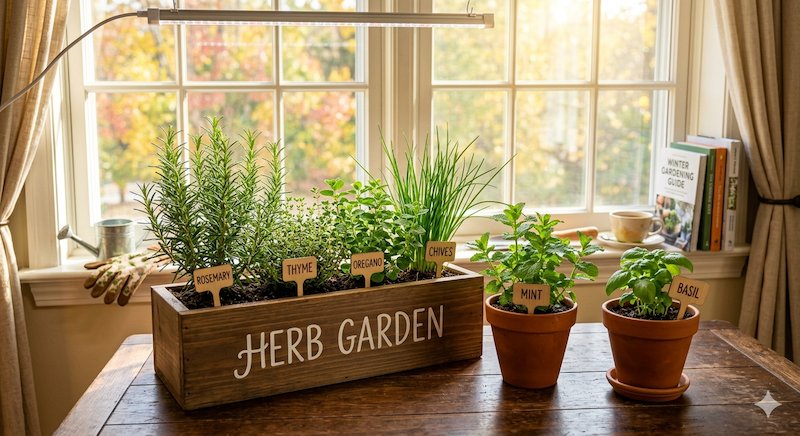
Place your overwintered herbs on your absolute brightest south-facing windowsill. Because winter sun is weak, consider hanging a compact LED grow light a few inches above woody herbs like rosemary to keep them from getting leggy and weak.
Which Herbs Overwinter Best?
Not all greens handle the indoor transition the same way. Categorizing your herbs helps you manage their winter expectations:
- The Woody Perennials (Rosemary, Thyme, Oregano): These are the toughest champions. They require very little water during the winter months and thrive on bright windowsills, entering a semi-dormant state of slow, steady production.
- The Aromatic Favorites (Chives & Mint): These varieties naturally want to die back in winter. Prune them right down to the soil line before bringing them inside; within a couple of weeks under a bright indoor light, they will push up tender, fresh new shoots.
- The Winter Reseeding Strategy: Some delicate annuals like basil do not transition well as mature plants. Instead of moving an old, woody basil plant inside, simply harvest its seeds and start fresh, high-germination indoor culinary seeds under a kitchen light setup.
Pro Winter Watering Tip: The number one killer of indoor winter plants is overwatering. With cooler indoor temperatures and shorter days, plants drink significantly less. Always let the top two inches of soil dry out entirely before watering, and never let the pots sit in stagnant drainage water!
