
Family & Kids' Gardening, Flower Seeds, Herb Seeds, Sensory & Wellness Gardening, Sustainable & Regenerative Living, The Horticulturist’s Lab, Urban & Small-Space Gardening, Vegetables
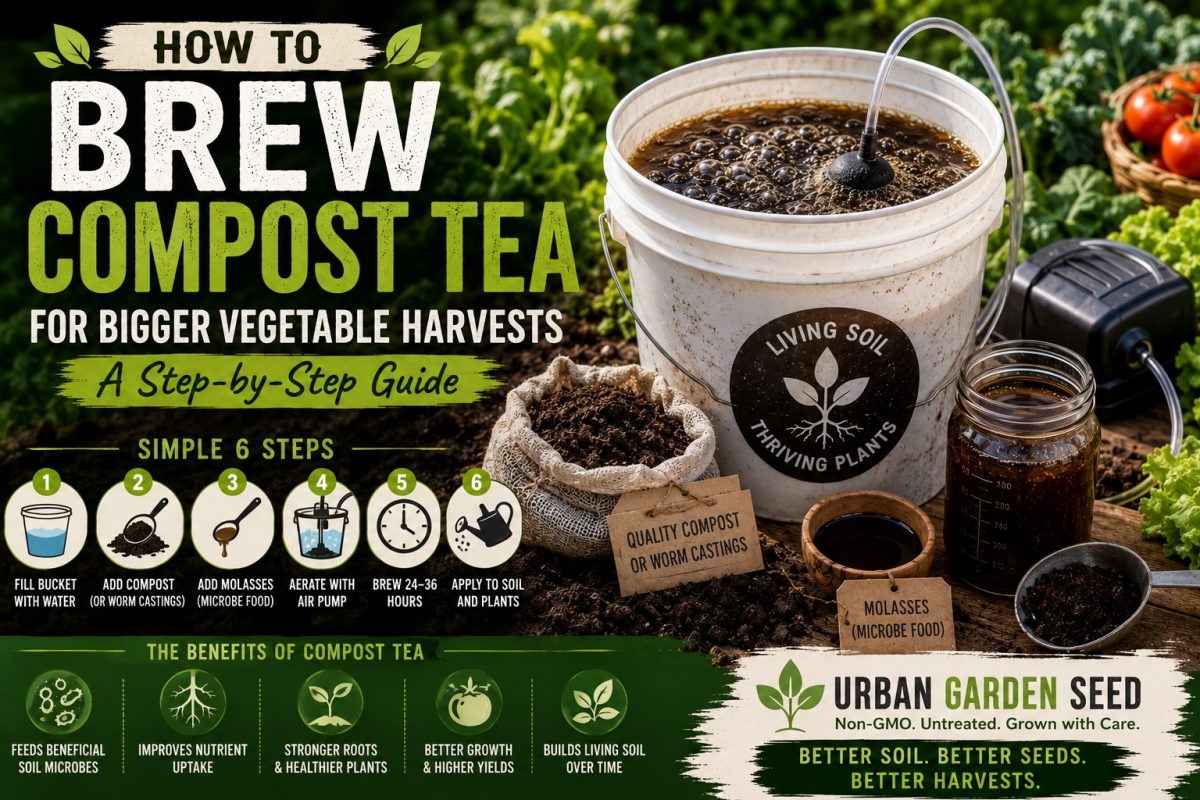
How to Brew Compost Tea for Bigger Vegetable Harvests: A Step-by-Step Guide
Jun
Every successful vegetable garden starts below the surface.
Before you see strong tomato vines, crisp lettuce leaves, heavy cucumber harvests, or healthy pepper plants, something important is happening in the soil. Beneficial microbes are breaking down organic matter, helping roots absorb nutrients, and creating the living foundation your plants need to thrive.
That is why many organic gardeners call compost tea “liquid gold.”
Compost tea is a simple, natural liquid made from compost, water, oxygen, and a small food source for microbes. When brewed correctly, it can help support active soil biology, stronger roots, and healthier vegetable plants.
In this guide, you will learn how to brew compost tea step by step, how to apply it safely, which vegetables benefit most, and how to pair living soil with high-quality seeds for better harvests.
At Urban Garden Seed, we believe a productive garden begins with two things: healthy soil and strong seeds. Our Non-GMO, untreated seeds are selected for gardeners who want reliable germination, better plant performance, and a more natural way to grow food at home.
Ready to plant after improving your soil? Shop Non-GMO vegetable seeds at UrbanGardenSeed.com.
What Is Compost Tea?
Compost tea is a liquid soil booster made by steeping finished compost or worm castings in water. The goal is to transfer beneficial microorganisms and soluble nutrients from compost into a liquid form that can be applied around plant roots.
Instead of feeding only the plant, compost tea helps feed the soil food web.
Healthy soil is full of life, including bacteria, fungi, protozoa, nematodes, earthworms, and other organisms. These microbes help break down organic matter and make nutrients more available to plants.
Compost tea may help support:
- Stronger root growth
- Better nutrient uptake
- Healthier leaves and stems
- More active soil biology
- Improved plant resilience
- Better vegetable yields when combined with proper watering, sunlight, and quality seeds
Compost tea is not a miracle product. It will not fix bad soil overnight. But when used as part of a soil-building routine, it can become a valuable tool for organic vegetable gardening.
Why Compost Tea Is Good for Vegetable Gardens
Vegetables are hungry plants. Crops like tomatoes, peppers, cucumbers, squash, lettuce, kale, cabbage, beans, peas, eggplant, and herbs all need steady access to nutrients.
Chemical fertilizers may feed plants quickly, but they do not always build long-term soil health. Compost tea supports a more regenerative approach by encouraging biological activity in the soil.
When your soil biology improves, your vegetables can grow in a more balanced environment.
This matters because healthy soil can help plants:
- Establish roots faster after transplanting
- Recover better from stress
- Absorb nutrients more efficiently
- Produce stronger stems and leaves
- Flower and fruit more consistently
- Grow better over multiple seasons
For home gardeners, compost tea is especially useful in raised beds, containers, grow bags, greenhouse gardens, and backyard vegetable plots.
Compost Tea vs. Compost: Which One Do You Need?
You need both if your goal is long-term soil health.
Compost improves soil structure, adds organic matter, and slowly feeds your garden over time.
Compost tea is a liquid application that helps bring microbial activity and soluble nutrients into the root zone more quickly.
Compost is the foundation. Compost tea is the booster.
For best results, mix finished compost into your garden beds before planting, then use compost tea during the growing season to support active growth.
Aerated vs. Non-Aerated Compost Tea
There are two common types of compost tea.
Aerated Compost Tea
Aerated compost tea uses an air pump to keep oxygen moving through the water. This encourages aerobic microbial activity and helps prevent the brew from becoming foul-smelling.
This is the method I recommend for most vegetable gardeners.
Non-Aerated Compost Tea
Non-aerated compost tea is made by soaking compost in water without an air pump. While some gardeners use this method, it requires more caution because stagnant water can become anaerobic.
For edible vegetable gardens, aerated compost tea is the safer and cleaner option.
Easy Compost Tea Recipe for Vegetable Gardens
This recipe makes about 5 gallons of compost tea.
Ingredients
You will need:
- 5 gallons clean, non-chlorinated water
- 2 cups finished compost or worm castings
- 1 to 2 tablespoons unsulfured molasses
- 1 mesh bag, paint strainer bag, or clean cloth
- 1 clean 5-gallon bucket
- 1 aquarium air pump
- 1 air stone
- 1 stick or garden tool for stirring
Why These Ingredients Matter
Finished compost or worm castings provide beneficial microbes and organic matter.
Water extracts nutrients and microbes into liquid form.
Molasses acts as a microbe food source during brewing.
Air pump and air stone keep oxygen moving through the tea.
Clean equipment helps prevent contamination and bad odors.
Important: Use Non-Chlorinated Water
If you use tap water, let it sit uncovered for 24 hours before brewing. This helps reduce chlorine, which may interfere with microbial activity.
Do not use water from containers that held chemicals, pesticides, paint, or cleaning products.
Clean water matters because compost tea is only as good as the ingredients you put into it.
How to Brew Compost Tea Step by Step
Step 1: Fill the Bucket With Water
Fill a clean 5-gallon bucket with non-chlorinated water.
Leave a few inches of space at the top so the liquid does not overflow once the air pump starts bubbling.
Step 2: Add Compost or Worm Castings
Place 2 cups of finished compost or worm castings into a mesh bag.
Tie the bag closed and place it into the bucket like a large tea bag.
Use compost that smells earthy and fresh. Avoid compost that smells sour, rotten, or like ammonia.
Bad compost makes bad compost tea.
Step 3: Add Molasses
Add 1 to 2 tablespoons of unsulfured molasses to the water.
Stir gently to help dissolve it.
Molasses gives microbes a food source during the brewing process. Do not add too much. More is not always better.
Step 4: Add the Air Pump
Place the air stone at the bottom of the bucket.
Connect it to the aquarium air pump and turn the pump on.
You should see steady bubbling in the water. This oxygen helps support aerobic microbes and keeps the tea from becoming stagnant.
Step 5: Brew for 24 to 36 Hours
Let the compost tea bubble for 24 to 36 hours.
The tea should turn dark brown and smell earthy.
Do not brew for too long. After 36 hours, the microbial balance may change, especially if oxygen or food sources become limited.
Step 6: Strain and Use Fresh
Remove the compost bag and strain the liquid if needed.
Use the compost tea as soon as possible after brewing. Fresh compost tea gives your garden the best chance to receive active microbes.
Do not store compost tea for several days. Once the air pump stops, oxygen levels drop and the tea can lose quality.
How to Apply Compost Tea to Vegetables
There are two main ways to use compost tea.
Method 1: Soil Drench
This is the best method for most home gardeners.
Pour compost tea directly around the base of your vegetable plants. Focus on the root zone, not the leaves.
A soil drench is ideal for:
- Tomatoes
- Peppers
- Cucumbers
- Squash
- Zucchini
- Beans
- Peas
- Lettuce
- Kale
- Spinach
- Cabbage
- Herbs
- Eggplant
- Melons
Use about 1 to 2 cups per small plant, or more for large mature plants.
For raised beds, apply evenly across the soil surface and water lightly afterward.
Method 2: Foliar Spray
Compost tea can also be sprayed on leaves, but beginners should be careful.
If using it as a foliar spray:
- Strain it very well
- Apply early in the morning
- Avoid spraying during hot sun
- Do not spray edible leaves close to harvest
- Clean your sprayer after use
For leafy greens like lettuce, kale, spinach, and herbs, I recommend using compost tea as a soil drench instead.
How Often Should You Use Compost Tea?
For most vegetable gardens, apply compost tea every 2 to 4 weeks during the active growing season.
Use it at key growth stages:
- After transplanting seedlings
- When plants begin rapid leaf growth
- Before flowering
- During early fruit formation
- After stress from heat, heavy rain, or transplant shock
Do not overapply. Compost tea is a support tool, not a replacement for good soil, sunlight, watering, and proper spacing.
Best Vegetables to Grow With Compost Tea
Compost tea can support many crops, but it is especially helpful for vegetables that need strong roots and steady nutrients.
Tomatoes
Tomatoes are heavy feeders that benefit from rich living soil. Apply compost tea after transplanting and again when flowers begin to form.
Recommended CTA:
Shop Tomato Seeds
Peppers
Peppers need warm soil, steady nutrition, and strong root systems. Compost tea can help support healthy growth during the early and mid-season.
Recommended CTA:
Shop Pepper Seeds
Cucumbers
Cucumbers grow quickly and produce heavily when soil moisture and fertility are consistent. Compost tea can help support active root zones in raised beds and trellised gardens.
Recommended CTA:
Shop Cucumber Seeds
Lettuce
Lettuce grows best in fertile, moisture-retentive soil. A gentle compost tea soil drench can support leafy growth without harsh feeding.
Recommended CTA:
Shop Lettuce Seeds
Kale and Spinach
Leafy greens benefit from active soil biology and steady nutrient availability. Apply compost tea around the base of the plants and avoid spraying leaves close to harvest.
Recommended CTA:
Shop Kale Seeds
Shop Spinach Seeds
Squash and Zucchini
Squash and zucchini produce large leaves and heavy fruit. Compost tea supports the soil environment these productive plants need.
Recommended CTA:
Shop Squash Seeds
Shop Zucchini Seeds
Herbs
Basil, parsley, cilantro, dill, thyme, and other herbs can benefit from healthy soil biology. Use a mild compost tea soil drench every few weeks.
Recommended CTA:
Shop Herb Seeds
Compost Tea for Raised Beds
Raised beds are perfect for compost tea because they often dry out and lose nutrients faster than in-ground gardens.
Use compost tea in raised beds to:
- Refresh soil biology
- Support transplants
- Improve root zones
- Keep organic growing systems active
- Help vegetables grow more consistently
For best results, combine compost tea with mulch. Mulch protects microbes by keeping the soil cooler and more moist.
Good mulch options include straw, shredded leaves, untreated grass clippings, and compost.
Compost Tea for Container Gardens
Compost tea is also useful for container gardening.
Containers and grow bags have limited soil volume, so nutrients and microbial life can become depleted faster. A light compost tea drench every few weeks can help maintain a healthier root environment.
Use compost tea for:
- Balcony tomatoes
- Container peppers
- Potted herbs
- Grow bag cucumbers
- Patio lettuce
- Greenhouse seedlings
Do not overwater containers. Apply enough to moisten the soil without making it soggy.
Common Compost Tea Mistakes to Avoid
Mistake 1: Using Unfinished Compost
Unfinished compost may contain unstable organic matter and unpleasant organisms. Always use mature compost or high-quality worm castings.
Mistake 2: Using Dirty Equipment
Buckets, pumps, strainers, and sprayers should be clean. Dirty equipment can introduce unwanted bacteria or odors.
Mistake 3: Brewing Too Long
A longer brew is not always better. For home gardens, 24 to 36 hours is a practical range.
Mistake 4: Adding Too Much Molasses
Too much molasses can create an unbalanced brew. Use only 1 to 2 tablespoons for 5 gallons of water.
Mistake 5: Applying Bad-Smelling Tea
Good compost tea smells earthy. If it smells rotten, sour, or like sewage, do not use it on edible crops.
Mistake 6: Thinking Compost Tea Replaces Soil Building
Compost tea is not a substitute for compost, mulch, crop rotation, and organic matter. It works best as part of a complete living soil system.
Can Compost Tea Replace Fertilizer?
Not completely.
Compost tea may contain nutrients, but its greatest value is supporting soil biology. If your soil is severely deficient, compost tea alone may not provide enough nutrition for heavy-feeding crops.
For best results, combine compost tea with:
- Finished compost
- Worm castings
- Mulch
- Cover crops
- Organic soil amendments
- Proper crop rotation
- High-quality vegetable seeds
Think of compost tea as a biological booster, not a full fertilizer program.
Is Compost Tea Safe for Edible Gardens?
Compost tea can be used in edible gardens, but cleanliness is important.
Follow these safety tips:
- Use finished compost only
- Use clean equipment
- Use non-chlorinated water
- Keep the brew aerated
- Apply to soil instead of edible leaves
- Do not use foul-smelling tea
- Wash vegetables before eating
For beginners, soil drenching is the best application method.
The Best Time to Apply Compost Tea
Apply compost tea in the early morning or late afternoon.
Avoid applying during intense midday sun or extreme heat. Microbes survive better when soil is moist and temperatures are moderate.
Apply compost tea:
- Before planting
- After transplanting
- During vegetative growth
- Before flowering
- After compost or mulch application
Water the soil lightly before applying if your garden is very dry.
Compost Tea and Living Soil: A Better Way to Grow
Compost tea works best when you are building living soil.
Living soil is soil that contains organic matter, microbes, fungi, earthworms, and natural nutrient cycles. Instead of forcing plants to grow with synthetic inputs alone, living soil creates an environment where roots and microbes work together.
To build living soil, practice these habits:
- Add compost every season
- Keep soil covered with mulch
- Avoid unnecessary tilling
- Rotate crops
- Grow cover crops when possible
- Avoid overusing chemical pesticides
- Feed soil microbes with organic matter
- Plant strong, reliable seeds
Healthy soil and quality seeds work together. Even the best compost tea cannot make poor seeds perform well. And even the best seeds need the right soil environment to reach their potential.
Start With Better Seeds for Better Harvests
Once your soil is alive, the next step is planting seeds worth growing.
At Urban Garden Seed, we offer Non-GMO, untreated seeds for gardeners who want a healthier, more reliable start. Our seed collections include vegetables, herbs, flowers, and trees for home gardens, raised beds, containers, and urban growing spaces.
Whether you are growing your first tomato plant or planning a full backyard vegetable garden, start with seeds selected for real gardeners.
Shop Urban Garden Seed collections:
- Shop Vegetable Seeds
- Shop Tomato Seeds
- Shop Pepper Seeds
- Shop Cucumber Seeds
- Shop Lettuce Seeds
- Shop Herb Seeds
- Shop Flower Seeds
- Shop Tree Seeds
Healthy soil. Strong seeds. Better harvests.
Visit UrbanGardenSeed.com and start growing today.
Frequently Asked Questions
What is compost tea good for?
Compost tea is used to support soil microbes, improve root-zone biology, and help plants access nutrients more efficiently. It is commonly used in vegetable gardens, raised beds, containers, and organic gardens.
How long should compost tea brew?
Most aerated compost tea should brew for about 24 to 36 hours. Use it fresh after brewing.
Can I use compost tea on all vegetables?
Yes, compost tea can be used on most vegetables as a soil drench. It is especially useful for tomatoes, peppers, cucumbers, squash, lettuce, kale, spinach, herbs, beans, peas, and eggplant.
Should compost tea smell bad?
No. Good compost tea should smell earthy. If it smells rotten, sour, or like sewage, do not apply it to edible plants.
Can I make compost tea without an air pump?
You can make non-aerated compost extract, but aerated compost tea is usually preferred for vegetable gardens because oxygen helps support aerobic microbial activity.
How often should I apply compost tea?
Apply compost tea every 2 to 4 weeks during the growing season, especially after transplanting and during active plant growth.
Can compost tea burn plants?
Properly brewed compost tea is usually gentle. However, avoid overconcentrated or foul-smelling tea. For seedlings, dilute it and apply lightly.
Is compost tea better than fertilizer?
Compost tea and fertilizer do different jobs. Compost tea supports soil biology, while fertilizer provides specific nutrients. For best results, use compost tea as part of a complete soil-building plan.
