
Adenium, Cactus & Succulent, Family & Kids' Gardening, Flower Seeds, Herb Seeds, Sensory & Wellness Gardening, Sustainable & Regenerative Living, The Horticulturist’s Lab, Urban & Small-Space Gardening, Vegetables
How to Grow an Endless Supply of Fresh Herbs Indoors (From Seed)
Jun
There is nothing quite like the luxury of snipping fresh herbs right from your kitchen counter while cooking dinner. But if you have ever bought a basil plant from the grocery store only to watch it wither and die three days later, you aren’t alone.
The secret to a thriving indoor herb garden isn’t a magical green thumb—it’s starting from seed.
Plants raised indoors from seed adapt specifically to your home’s unique environment from day one, making them vastly hardier than stressed, store-bought transplants. If you are ready to save money and elevate your cooking, here is your complete guide to growing fresh herbs indoors year-round.
1. The 4 Easiest Herbs to Grow Indoors
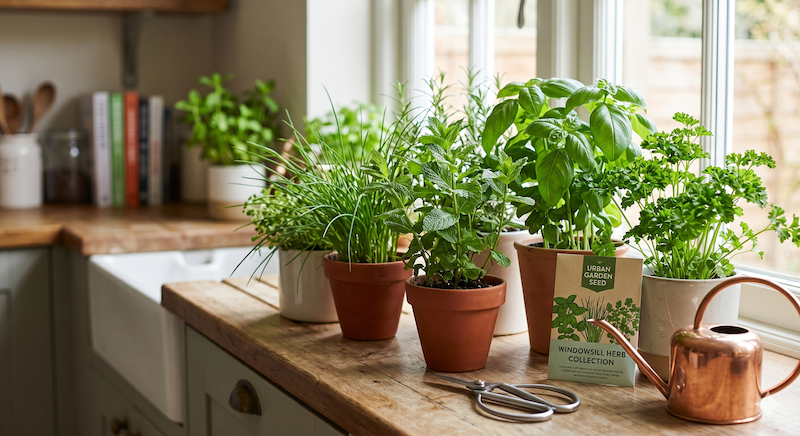
Not all herbs like living inside. If you want guaranteed success, start with these four resilient varieties that thrive on windowsills:
- Mint: Mint is one of the most forgiving herbs for beginners because it grows aggressively and recovers quickly from small mistakes. Because it spreads rapidly, it performs well in containers where other herbs might struggle.Aquager Technologies
- Chives: Chives are compact and structurally sturdy. They are especially beginner-friendly because they grow vertically and require very little space, regrowing quickly after you trim them.Aquager Technologies
- Basil: Basil requires consistent light, but it responds clearly to care and grows quickly. When harvesting, it is best to pick Basil from the top as this will encourage new shoots.Aquager Technologies+ 1
- Parsley: Parsley grows more slowly but handles cooler indoor conditions well. Once established, it remains stable with moderate light and consistent moisture.Aquager Technologies
2. The Secret to Indoor Success: Light and Air
The primary difference between growing herbs outside and inside is the level of both light and sun and the amount of air movement that the plant experiences. To replicate the outdoors inside, follow these two rules:
Jekka’s Herb Farm
Master the Lighting
Indoor herbs need adequate light to produce the essential oils that give them their flavor. Place your seed pots near a bright window. However, choose a window that does not get the midday sun as this will scorch young plants, especially Basil; West or East facing windows are ideal. If your home doesn’t get much natural light, a cheap LED grow light will work wonders.
Jekka’s Herb Farm
Create Fake Wind
Air movement not only prevents diseases such as mildew but it also helps to make the plant strong. If the air in your kitchen is stagnant, simply set up a small oscillating fan near your seedlings for an hour a day. This “fake wind” forces the stems to bulk up and grow strong.
Jekka’s Herb Farm
3. How to Plant Your Indoor Seeds
- Choose the Right Soil: Never use outdoor garden dirt. Fill your pots with a lightweight, well-draining indoor potting mix.
- Sow the Seeds: Sprinkle 3–5 seeds on the surface of the soil. Lightly press them in. (For herbs like chives, barely cover them with dirt; they need light to germinate!)
- Water with a Spray Bottle: Pouring water from a cup will wash tiny seeds away. Mist the top of the soil with a spray bottle daily to keep it moist until sprouts appear.
- Don’t Get Greedy: When it is time to harvest, please do not be too greedy; only cut what is needed and leave a good third to grow back. Over-cropping can stress the plant and, in some cases, kill them.Jekka’s Herb Farm
Ready to Start Your Kitchen Garden?
Jekka’s Herb Farm
Growing herbs indoors is incredibly simple when you start with high-quality, high-germination seeds. Skip the wilted grocery store plants and grow a hardy, resilient garden right on your windowsill.
At Urban Garden Seed, we carry premium seed varieties specifically selected for container and indoor growing.
👉 Shop our Indoor Herb Seed Collection today and start growing your own fresh flavors!
