
Adenium, Backyard Gardening, Cactus & Succulent, Family & Kids' Gardening, Flower Seeds, Garden Planning & Design, Herb Seeds, Homesteading & Self-Reliance, Sensory & Wellness Gardening, Sustainable & Regenerative Living, The Horticulturist’s Lab, Urban & Small-Space Gardening, Vegetables
How to Grow a Culinary Herb Garden from Seed: The Complete Guide
Aug
If you love to cook, you already know the frustration: you buy a four-dollar plastic clamshell of fresh basil or cilantro at the grocery store, use a fraction of it for dinner, and watch the rest turn to wilted mush in the fridge two days later.
The ultimate solution to this expensive cycle is incredibly simple: grow your own culinary herbs from seed.
Whether you have a sprawling backyard garden, a series of raised beds, or just a sunny kitchen windowsill, herbs are some of the most accommodating and resilient plants you can cultivate. Starting your herbs from premium seeds grants you access to artisan, highly aromatic varieties that elevate your home cooking from standard to extraordinary.
Here is exactly how to start a thriving, continuous herb garden so you can harvest fresh flavor year-round.
1. The Top 5 Culinary Herbs to Start from Seed
Not all herbs are created equal when it comes to seed starting. For maximum success, begin your aromatic garden with these five fast-growing, high-yield staples:
1. Basil (Sweet & Genovese)
The absolute king of the culinary herb garden. Basil germinates rapidly in warm soil and thrives in full summer sun. Regular harvesting actually encourages the plant to grow bushier, giving you an endless supply for fresh pesto, caprese salads, and artisan pizzas.
2. Cilantro
Essential for salsas, curries, and tacos. Cilantro is a cool-weather crop that prefers the gentle sun of spring and fall. Because it grows quickly and can bolt (go to seed) in intense heat, it is best grown by “succession planting”—sowing a new pinch of seeds every two to three weeks for a continuous harvest.
3. Parsley (Flat-Leaf / Italian)
A powerhouse of fresh, bright flavor. Parsley seeds have a naturally tough outer shell, so they can take up to three weeks to germinate. Once established, however, parsley is incredibly hardy and will often survive light winter frosts, providing fresh garnishes long after other herbs have faded.
4. Chives
If you want an herb that virtually takes care of itself, plant chives. This delicate, onion-flavored perennial germinates easily from seed. Once planted, it will return year after year, offering early spring growth and beautiful, edible purple blossoms.
5. Thyme
A rugged, Mediterranean classic essential for roasting meats and root vegetables. Thyme seeds are incredibly tiny, so they only need to be pressed lightly into the soil. Once mature, this drought-tolerant herb thrives on a little neglect and requires very little watering.
2. Herb Sowing Quick-Reference Guide
Use this chart to ensure you are planting your herb seeds at the correct depth and spacing:
| Herb | Germination Time | Sowing Depth | Light Requirement | Growth Habit |
|---|---|---|---|---|
| Basil | 5–10 Days | 1/4 inch | Full Sun | Annual (Warm Weather) |
| Cilantro | 7–14 Days | 1/2 inch | Partial/Full Sun | Annual (Cool Weather) |
| Parsley | 14–21 Days | 1/4 inch | Full Sun | Biennial |
| Chives | 10–14 Days | 1/4 inch | Full Sun | Perennial |
| Thyme | 14–21 Days | Surface sow (Lightly press) | Full Sun | Perennial |
3. How to Plant Your Herb Seeds for Maximum Success
To avoid leggy, weak sprouts, follow these three foundational rules for seed starting:
The Soil Matters
Never use dense outdoor garden soil for starting seeds in pots. Instead, use a light, well-aerated, and sterile seed-starting mix. This ensures fragile new root systems can push through the soil without encountering dense clay or soil-borne diseases.
The “Surface Sowing” Rule
Herb seeds are notoriously small—especially oregano, thyme, and mint. A common mistake is burying them too deep, draining their energy before they ever see the sun. For tiny seeds, simply scatter them on the surface of your damp soil and gently press them in. Do not cover them with heavy dirt.
Keep the Moisture Consistent
Until herb seeds break the surface, the top layer of soil must remain consistently damp (but not waterlogged). Use a spray bottle to mist the surface daily. A harsh watering can will wash the tiny seeds away or clump them together.
4. Harvesting Rules: Prune for Vigor
The most counterintuitive part of growing herbs is the harvest. The more you cut them, the better they grow.
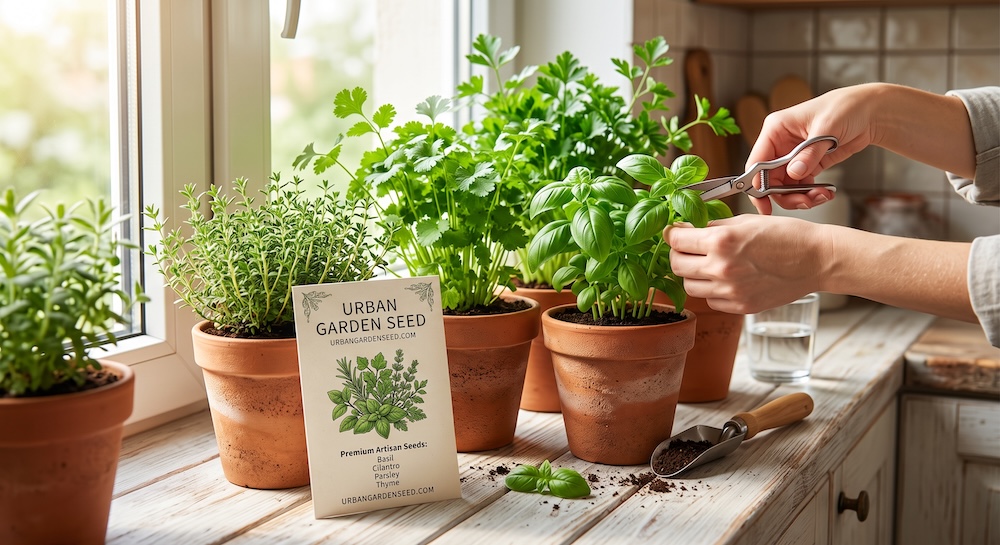
Once a plant like basil or mint reaches 6 to 8 inches tall, you should begin “pinching” or harvesting the top leaves right above a leaf node (where two leaves meet the stem). This signals the plant to stop growing straight up and instead branch out to the sides, creating a lush, bushy, and heavy-yielding plant.
Never harvest more than one-third of the plant at a time, allowing it enough foliage to continue photosynthesizing and recovering.
Cultivate Extraordinary Flavor
A world-class meal requires world-class ingredients. By stepping away from the produce aisle and planting your own culinary garden, you guarantee that every dish you prepare is infused with the absolute freshest, most vibrant flavors possible.
Start your flavor journey with artisan genetics engineered for vigor and intense aromatics.
