
Backyard Gardening, Cactus & Succulent, Family & Kids' Gardening, Flower Seeds, Garden Planning & Design, Herb Seeds, Homesteading & Self-Reliance, Sensory & Wellness Gardening, Sustainable & Regenerative Living, The Horticulturist’s Lab, Urban & Small-Space Gardening, Vegetables
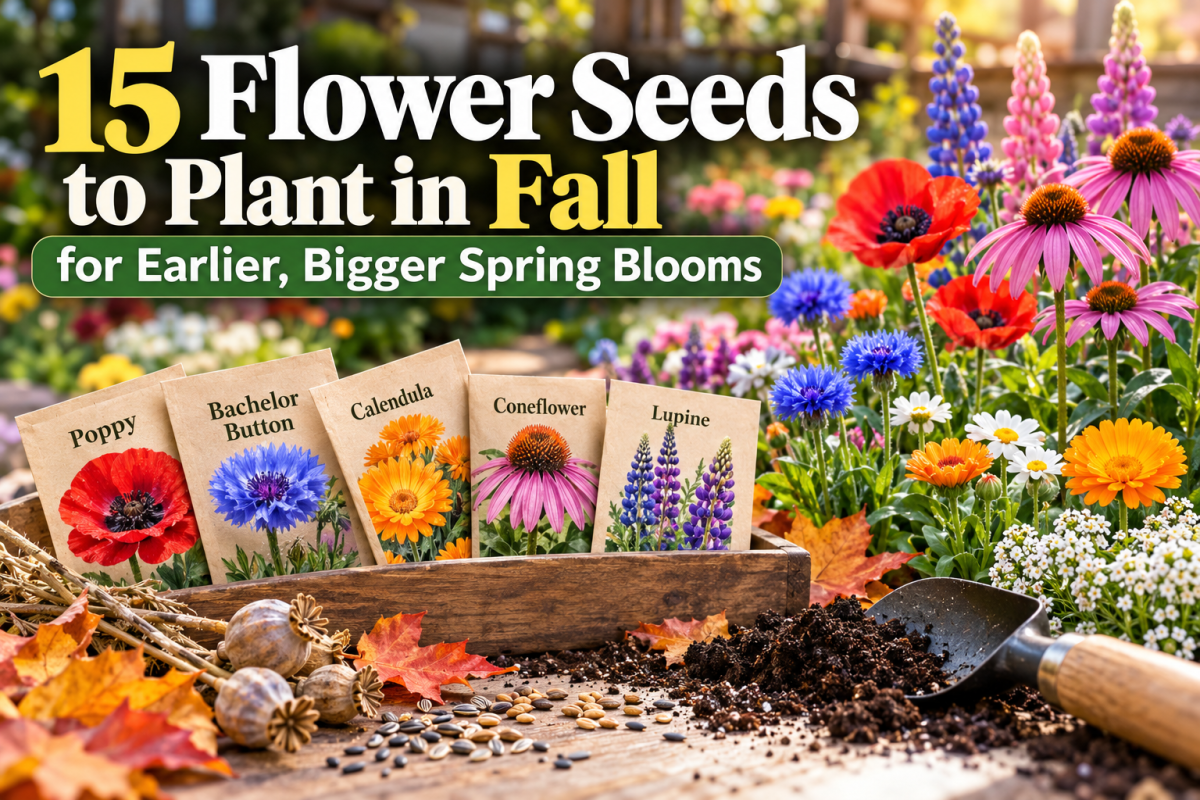
15 Flower Seeds to Plant in Fall for Earlier, Bigger Spring Blooms
Sep
Spring flowers do not always begin in spring.
Some of the most beautiful flower gardens begin months earlier—when leaves are falling, nights are getting colder, and most gardeners are putting their tools away.
Fall sowing allows selected flower seeds to experience the same seasonal conditions they would encounter in nature.
Seeds fall to the ground.
Winter arrives.
Temperatures drop.
Moisture enters the soil.
Then, when conditions become favorable again, germination begins.
For some species, winter cold is not merely something the seed survives.
It can actually help break seed dormancy and prepare the seed for germination.
University Extension guidance describes this process as cold stratification. Many perennial and native seeds naturally experience cold, moist winter conditions before germinating in spring. Illinois Extension
That means September, October, and late fall can be some of the most strategic seed-sowing periods of the entire gardening year.
And there is another advantage:
You can get part of next year’s flower garden planted before the spring rush begins.
Here are 15 flowers worth considering for fall sowing.
Quick Answer: What Flower Seeds Can You Plant in Fall?
Depending on your climate and the individual species, excellent candidates include:
- Poppies
- Bachelor Buttons
- Larkspur
- Calendula
- Sweet Peas
- Love-in-a-Mist
- Purple Coneflower
- Black-Eyed Susan
- Columbine
- Milkweed
- Coreopsis
- Lupine
- Scabiosa
- Sweet Alyssum
- Foxglove
But there is one extremely important rule:
Fall sowing is not the same in every climate.
A gardener in Minnesota should not follow the exact same fall-sowing schedule as a gardener in Georgia.
And a gardener in Alberta should not necessarily follow the same method as someone in coastal British Columbia.
Your winter determines the method.
Why Plant Flower Seeds in Fall?
Spring planting works.
But fall planting offers several advantages for suitable species.
Natural cold stratification
Some perennial and native seeds contain dormancy mechanisms that prevent them from germinating immediately.
Exposure to cold and moisture can help break that dormancy.
Instead of trying to reproduce winter conditions in your refrigerator, outdoor fall sowing can allow nature to perform the process.
Earlier spring growth
Suitable seeds are already in place when spring conditions become favorable.
You do not need to wait for:
- Soil preparation
- Seed ordering
- Indoor starting
- Transplanting
The seed can respond naturally when temperature and moisture become suitable.
Less spring workload
Spring is busy.
Gardeners are starting tomatoes.
Transplanting peppers.
Planting vegetables.
Cleaning beds.
Building containers.
Fall sowing moves part of that workload into another season.
Economical flower planting
Seed makes it possible to establish large flower areas much less expensively than purchasing the same number of mature plants.
This is especially valuable for:
- Cottage gardens
- Pollinator gardens
- Wildflower areas
- Cut-flower beds
- Homesteads
- Large landscapes
Two Types of Fall-Sown Flowers
Before choosing seeds, understand that fall-sown plants generally fall into two broad groups.
Hardy annuals
These complete their life cycle within one growing season but tolerate cool conditions better than tender annuals.
Examples include:
- Bachelor buttons
- Larkspur
- Poppies
- Calendula
- Nigella
In suitable climates, they may germinate during fall, remain small through winter, and resume growth in spring.
In colder climates, seed may remain dormant instead.
Perennials and native flowers
Many perennials naturally drop seed during late summer or fall.
Some require—or benefit from—a cold period before germination.
Examples can include:
- Coneflowers
- Columbine
- Milkweed
- Coreopsis
Illinois Extension specifically lists purple coneflower, black-eyed Susan, milkweed, false indigo and several woody species among plants where cold stratification may be relevant. Illinois Extension
1. Poppies
Poppies are classic fall-sowing flowers.
Their tiny seeds are naturally adapted to cool conditions, and many types perform best when direct sown rather than transplanted.
Poppies also dislike having their roots disturbed once established.
How to sow
Prepare a relatively clean soil surface.
Scatter or lightly sow the seeds according to the particular species.
Avoid burying tiny poppy seeds deeply.
Good seed-to-soil contact is more important than thick covering.
Why plant in fall?
Cold weather can help prepare many poppy seeds for spring germination.
They may then emerge relatively early.
Best use
Poppies work beautifully in:
- Cottage gardens
- Naturalistic gardens
- Flower borders
- Meadow-style plantings
Always verify the exact poppy species and any local regulations before planting.
2. Bachelor Buttons
Bachelor buttons—also known as cornflowers—are among the easiest old-fashioned flowers to incorporate into a fall-sown garden.
Their most famous color is blue, but varieties may also produce:
- Pink
- White
- Purple
- Mixed shades
They combine beautifully with poppies and other informal flowers.
Why grow them?
Bachelor buttons are useful for:
- Cottage gardens
- Pollinator gardens
- Cut flowers
- Mixed borders
They can also self-sow under favorable conditions.
3. Larkspur
Larkspur produces tall flower spikes that add vertical structure to a garden.
Colors may include:
- Blue
- Purple
- Pink
- White
It prefers cool growing conditions and is commonly included among flowers suitable for autumn sowing. Current September 2026 gardening guidance also highlights larkspur as a flower to sow now for next year’s display. Homes and Gardens
Where to use larkspur
Plant it toward the middle or rear of flower beds.
It works particularly well with:
- Poppies
- Bachelor buttons
- Cosmos
- Cottage-garden flowers
Because larkspur can be toxic if eaten, consider household children, pets, and livestock when choosing its location.
4. Calendula
Calendula brings yellow, gold, orange, and apricot tones to cool-season gardens.
It is relatively easy to grow and works well in flower beds as well as edible landscapes.
Why fall sow calendula?
In mild-winter climates, calendula can establish during fall and flower through cooler periods.
In colder regions, timing becomes more important because young seedlings may not survive severe winter conditions.
Good locations
Use calendula around:
- Vegetable beds
- Raised beds
- Herb gardens
- Cottage gardens
- Containers
It is especially attractive when mixed with blue and purple flowers.
5. Sweet Peas
Sweet peas are among the quintessential cottage-garden flowers.
Their climbing vines produce fragrant flowers in many colors.
Current September gardening guidance lists sweet peas among the strongest candidates for fall sowing, particularly where winters are suitable. Homes and Gardens
Important climate distinction
Fall planting works particularly well in climates with relatively mild winters.
Gardeners in severe northern climates may instead sow in late winter or early spring.
Sweet peas are cool-season plants, but that does not mean young plants can survive every winter condition.
Give them support
Install:
- Trellis
- Netting
- Fence
- Obelisk
before vines become large.
6. Love-in-a-Mist
Love-in-a-Mist, or Nigella, is another excellent informal garden flower.
Its delicate foliage surrounds blue, white, pink, or purple flowers.
Later, ornamental seed pods develop.
That gives the plant two seasons of visual interest:
Flowers first.
Decorative seed heads later.
Nigella works particularly well in:
- Cottage gardens
- Cut-flower gardens
- Informal borders
It prefers direct sowing rather than extensive transplanting.
7. Purple Coneflower
Purple coneflower, Echinacea purpurea, is one of the most recognizable perennial pollinator flowers.
It produces daisy-like blooms with raised central cones.
Colors traditionally include purple-pink, although cultivated varieties exist in many shades.
Why plant coneflower seed in fall?
Coneflower seed can benefit from cold exposure, and University Extension resources specifically identify coneflower among perennial plants where stratification can be important. Illinois Extension
Long-term value
Once established, coneflowers can return year after year.
They also fit naturally into:
- Pollinator gardens
- Prairie gardens
- Cottage gardens
- Naturalistic landscapes
Leave selected mature seed heads during winter for visual interest and wildlife.
8. Black-Eyed Susan
Black-eyed Susans produce bright yellow flowers with dark centers.
They combine especially well with purple coneflowers.
That yellow-purple contrast can become the backbone of a pollinator border.
University of Illinois Extension includes black-eyed Susan among plants commonly associated with seed stratification requirements. Illinois Extension
Where to grow
Use them in:
- Sunny perennial beds
- Pollinator gardens
- Meadow plantings
- Cottage gardens
Check the exact Rudbeckia species and variety because germination and life cycle can differ.
9. Columbine
Columbine produces distinctive flowers with unusual spurred petals.
Depending on species and variety, flowers may appear in combinations of:
- Red
- Yellow
- Blue
- Purple
- Pink
- White
Many columbines are perennials and benefit from winter exposure during seed germination.
Cold-moist treatment is a common method for perennial seeds requiring dormancy breaking, and outdoor fall sowing can provide that naturally. Ask Extension
Excellent for partially shaded gardens
Unlike many sun-loving meadow flowers, columbine can work beautifully in locations with some shade.
10. Milkweed
Milkweed deserves special attention.
Many North American milkweed species require or benefit from a period of cold, moist stratification.
That makes fall and winter natural times to establish seed.
Illinois Extension specifically includes many milkweed species among plants with cold-treatment requirements. Illinois Extension
Important: choose the correct species
Do not simply buy a seed labeled “milkweed” without understanding which species it is.
Select milkweed appropriate for your region.
North America contains numerous species adapted to different:
- Climates
- Soils
- Moisture conditions
- Ecosystems
A species native to Florida may be inappropriate for a Minnesota native garden.
Regional selection matters.
11. Coreopsis
Coreopsis produces cheerful daisy-like flowers, often in yellow or yellow-and-red combinations.
It fits beautifully into sunny landscapes.
Use it for:
- Pollinator beds
- Cottage gardens
- Native-inspired planting
- Meadow borders
Certain perennial coreopsis types may benefit from natural winter conditions.
Check the exact species because the genus contains both annual and perennial forms.
12. Lupine
Lupines produce dramatic vertical flower spikes.
Colors can include:
- Blue
- Purple
- Pink
- White
- Yellow
- Mixed shades
They make excellent architectural flowers.
Seed preparation
Lupine seeds have relatively hard seed coats, and germination techniques can differ by species.
Some gardeners use fall sowing to expose seeds naturally to changing winter conditions.
Others use scarification or soaking.
Follow the instructions for the exact seed you purchased rather than assuming every lupine requires the same treatment.
13. Scabiosa
Scabiosa—often called pincushion flower—produces delicate rounded blooms on long stems.
It is particularly valuable for cut-flower gardens.
Colors include:
- Lavender
- Purple
- Pink
- White
- Burgundy
Current September 2026 gardening coverage includes scabiosa among flowers suitable for autumn seed starting. Homes and Gardens
Use taller types in cutting gardens and more compact types in mixed borders.
14. Sweet Alyssum
Sweet alyssum forms low cushions of small flowers.
Common colors include:
- White
- Lavender
- Purple
- Pink
It works beautifully at:
- Path edges
- Raised-bed borders
- Container edges
- Cottage-garden fronts
Alyssum prefers cooler conditions compared with extreme summer heat.
In mild climates, fall sowing can be highly productive.
In colder climates, use spring or protected sowing where appropriate.
15. Foxglove
Few flowers create classic cottage-garden drama like foxgloves.
Tall flower spikes rise above shorter plants and add architectural height.
They can thrive in areas with partial shade.
Life cycle
Many foxgloves are biennial or short-lived perennial plants.
Seedlings may establish first and bloom later.
Safety warning
Foxglove is toxic if ingested.
Do not plant it where children, pets, livestock, or other animals are likely to eat the plant.
Beautiful does not automatically mean appropriate for every household.
Fall Sowing by USDA Zone
One of the biggest mistakes in fall seed gardening is using a planting method designed for another climate.
Zones 3–5
Severe winter cold changes the strategy.
Instead of encouraging tender seedlings to emerge in early fall, gardeners may prefer dormant sowing after the weather becomes consistently cold.
The goal is for seed to remain dormant until spring.
Winter-sowing containers can also be extremely useful.
Zones 6–7
This is a transition region.
Some hardy annuals may establish during fall.
Perennial seeds can often be direct sown for winter stratification.
Watch local weather closely.
Zones 8–9
Fall can be one of the best flower-sowing seasons.
Gardeners may successfully establish many cool-season annual flowers before winter.
Zones 10+
Winter behaves much more like the cool growing season.
Flowers that struggle during extreme summer heat may perform beautifully from fall through spring.
What About Canadian Gardeners?
Canada also requires regional planning.
Alberta, Saskatchewan and Manitoba
Do not sow too early if warm fall weather could trigger germination before a severe winter.
Later dormant sowing or winter sowing can be safer for many species.
Ontario and Quebec
Fall sowing works well for many cold-adapted perennial and native species.
Timing depends on latitude and expected freezing.
Atlantic Canada
Use local coastal conditions and snow patterns.
Coastal British Columbia
Milder winters create opportunities for more active fall sowing of hardy annuals.
The Canadian growing season is too diverse for one universal fall-sowing date.
Fall Sowing vs. Winter Sowing
These terms are related but not identical.
Fall sowing
Seeds are placed into their final garden location—or into containers—during autumn.
Winter sowing
Seeds are commonly planted in ventilated outdoor containers during winter.
Those containers function like miniature greenhouses.
Winter sowing is especially useful when:
- Your winter is severe
- Seeds are tiny
- You want to keep varieties labeled
- Wildlife may eat exposed seed
- You want more control than broadcasting outdoors
Both methods allow natural cold exposure.
What Is Cold Stratification?
Cold stratification is the exposure of seeds to cold, usually moist conditions for a specific period.
It helps break dormancy in certain species.
In nature, winter does the work.
When gardeners start these seeds indoors, the same conditions may need to be reproduced in a refrigerator.
University Extension guidance typically recommends moist—not waterlogged—material and temperatures around refrigerator range for species requiring artificial cold treatment. The duration varies considerably by species. Ask Extension
The most important rule:
Do not assume every flower seed needs stratification.
Read the specific packet.
How to Sow Flower Seeds in Fall
Step 1: Choose the seeds
Separate your collection into:
- Hardy annuals
- Perennials
- Native flowers
- Seeds requiring stratification
- Tender flowers that should wait until spring
Do not fall sow everything.
Step 2: Prepare the soil
Remove aggressive weeds.
Rake away heavy debris.
Create a relatively clean seedbed.
Tiny flower seeds cannot compete effectively with established turfgrass or dense weeds.
Step 3: Follow the correct planting depth
Seed size matters.
Tiny seeds may need surface sowing or only minimal covering.
Larger seeds may need deeper planting.
Follow the species-specific instructions.
Step 4: Label the area
By April, you may not remember what was planted in October.
Use weather-resistant labels.
Record:
- Species
- Variety
- Date sown
Step 5: Water appropriately
After sowing, provide moisture where needed.
Do not flood the area.
If you are performing true dormant sowing late in cold weather, natural winter precipitation may provide much of the moisture.
Step 6: Protect when necessary
Birds, rodents, runoff, and wind can move seed.
Use appropriate protection where necessary.
Do not bury seed excessively simply because you are worried about wildlife.
When Should You NOT Fall Sow?
Fall sowing is not appropriate for every flower.
Wait until spring or start indoors if the species is:
- Frost tender
- Tropical
- Warm-season adapted
- Likely to germinate during a warm spell and then freeze
- Poorly suited to your region
Examples of popular flowers that are generally treated as warm-season annuals include:
- Zinnias
- Many cosmos varieties
- Celosia
- Marigolds in cold climates
- Sunflowers in most cold-winter areas
These are usually better planted when spring conditions become suitable.
Avoid Sowing Too Early
This is especially important in northern climates.
September can still contain warm periods.
If a seed germinates immediately and produces a tender young plant, severe winter weather may kill it.
For seeds intended to remain dormant through winter, wait until conditions are reliably cool.
The objective is not always fall germination.
Sometimes the objective is simply:
Put the seed in place and let winter prepare it.
Don’t Confuse Cold Stratification With Freezing Every Seed
Cold stratification is not simply putting every seed in a freezer.
Different species have different requirements.
Some require:
- Cold and moisture
- Cold only
- Warm followed by cold
- Scarification
- Light exposure
- No special treatment whatsoever
N.C. Cooperative Extension specifically recommends reading seed packets carefully because terminology such as stratification and scarification describes very different germination treatments. New Hanover County Center
Follow the plant.
Not a one-size-fits-all internet trick.
Create a Fall-Sown Cottage Garden
A beautiful fall-sown combination could include:
- Poppies
- Bachelor buttons
- Larkspur
- Nigella
- Calendula
Then add perennials such as:
- Coneflowers
- Black-eyed Susans
- Coreopsis
This creates several flower heights and forms.
Tall
Larkspur.
Medium
Coneflowers and bachelor buttons.
Low
Calendula and alyssum.
The result feels abundant rather than flat.
Create a Pollinator Seed Garden
For a pollinator-focused garden, consider regionally appropriate combinations of:
- Milkweed
- Coneflower
- Black-eyed Susan
- Coreopsis
- Other native flowers
The exact species should match your region.
A native seed garden is most valuable when the plants are genuinely suited to local wildlife and climate.
Create a Cut-Flower Garden
Fall-sown flowers can also supply next year’s bouquets.
Consider:
- Larkspur
- Bachelor buttons
- Sweet peas
- Scabiosa
- Poppies
These provide:
- Tall spikes
- Round flowers
- Airy filler
- Fragrance
- Diverse colors
Plan them now and you can have an earlier cutting season next year.
Buy Fall-Sowing Seeds Before Winter
One of the advantages of buying seeds in September and October is selection.
By late winter, popular flower varieties may begin selling out.
Current September 2026 gardening coverage is already recommending gardeners order hardy annuals and stratification candidates now rather than waiting for the spring seed rush. Homes and Gardens
Use fall to:
- Select varieties
- Organize seed packets
- Research germination requirements
- Prepare beds
- Label sowing areas
Then you are ready when the correct planting conditions arrive.
Why Choose Urban Garden Seed?
Urban Garden Seed offers flower, vegetable, herb, fruit, tree, plant, and specialty seeds for gardeners looking for both familiar favorites and unusual varieties.
For a fall flower-seed project, explore varieties suited to:
- Cottage gardens
- Pollinator gardens
- Cut flowers
- Wildflower plantings
- Perennial beds
- Naturalistic landscapes
Urban Garden Seed focuses on Non-GMO and untreated seed selections and offers a 30-Day Satisfaction Guarantee.
Before planting, always review the individual variety’s:
- Hardiness
- Germination requirements
- Planting depth
- Light requirements
- Regional suitability
Good seed selection begins with understanding the plant.
Spring Starts in Fall
A gardener looking at an empty October flower bed may see nothing happening.
But below the surface, winter is becoming part of the growing process.
Seeds absorb moisture.
Dormancy mechanisms change.
Cold periods accumulate.
The days slowly begin lengthening again.
Then spring arrives.
Suddenly, the area that looked empty all winter becomes filled with seedlings.
That is the reward of fall sowing.
You are not ending this year’s garden.
You are beginning next year’s.
Ready to Plant for Spring?
Explore flower seeds at UrbanGardenSeed.com and begin planning your fall-sown garden.
Choose flowers suited to your region.
Read the germination requirements.
Prepare the soil.
Plant at the right time.
Then let winter do part of the work.
Sow in fall. Let winter prepare the seeds. Welcome spring with flowers.
Frequently Asked Questions
What flower seeds can be planted in fall?
Depending on climate, suitable options can include poppies, bachelor buttons, larkspur, calendula, sweet peas, nigella, coneflowers, black-eyed Susans, columbine, milkweed, coreopsis and other hardy annual or perennial flowers.
Is September too early to plant flower seeds?
It depends on your climate and species. In mild regions, September can be an excellent sowing month. In cold climates, some seeds should be planted later so they remain dormant instead of germinating before winter.
Can I sow flower seeds after the first frost?
Yes. Certain hardy annuals and perennial seeds can be dormant-sown after cold weather arrives.
What is dormant sowing?
Dormant sowing means placing seed outdoors after conditions become too cold for germination so the seed remains dormant until spring.
Which flowers need cold stratification?
Examples can include many milkweeds, coneflowers, columbines, black-eyed Susans and other perennial/native species. Requirements differ by exact species.
Can poppy seeds be planted in fall?
Yes. Many poppies are excellent candidates for cool-season or fall direct sowing.
Can coneflower seeds be planted in fall?
Yes. Fall sowing can provide the winter conditions that help prepare many coneflower seeds for germination.
Can milkweed seeds be planted in fall?
Many temperate milkweed species can be fall-sown so natural winter cold provides stratification. Choose a milkweed species appropriate for your region.
Can I plant wildflower seeds in fall?
Yes, for suitable species and climates. Fall sowing is commonly used for perennial and native wildflower establishment.
Is fall or spring better for wildflower seeds?
It depends on species and climate. Seeds requiring winter cold may benefit from fall sowing, while warm-season flowers may perform better with spring planting.
Do I need to water seeds planted in fall?
Some moisture is generally necessary, but requirements depend on timing, climate and whether the seeds are actively germinating or being dormant-sown.
Should I mulch over fall-sown flower seeds?
Avoid burying tiny seeds beneath thick mulch. A light protective treatment may be appropriate for some species, but seed-to-soil contact is essential.
Can I plant zinnia seeds in fall?
In cold-winter regions, generally wait until warm spring conditions because zinnias are frost-sensitive. Frost-free climates require different timing.
Can I fall sow flowers in Canada?
Yes, but colder Canadian regions often benefit from dormant sowing after consistently cold weather arrives rather than encouraging fall germination.
Where can I buy flower seeds for fall sowing?
Visit UrbanGardenSeed.com to explore flower and specialty seed varieties for fall sowing, winter sowing and next year’s garden.
