
Adenium, Backyard Gardening, Cactus & Succulent, Family & Kids' Gardening, Flower Seeds, Garden Planning & Design, Herb Seeds, Homesteading & Self-Reliance, Sensory & Wellness Gardening, Sustainable & Regenerative Living, The Horticulturist’s Lab, Urban & Small-Space Gardening, Vegetables
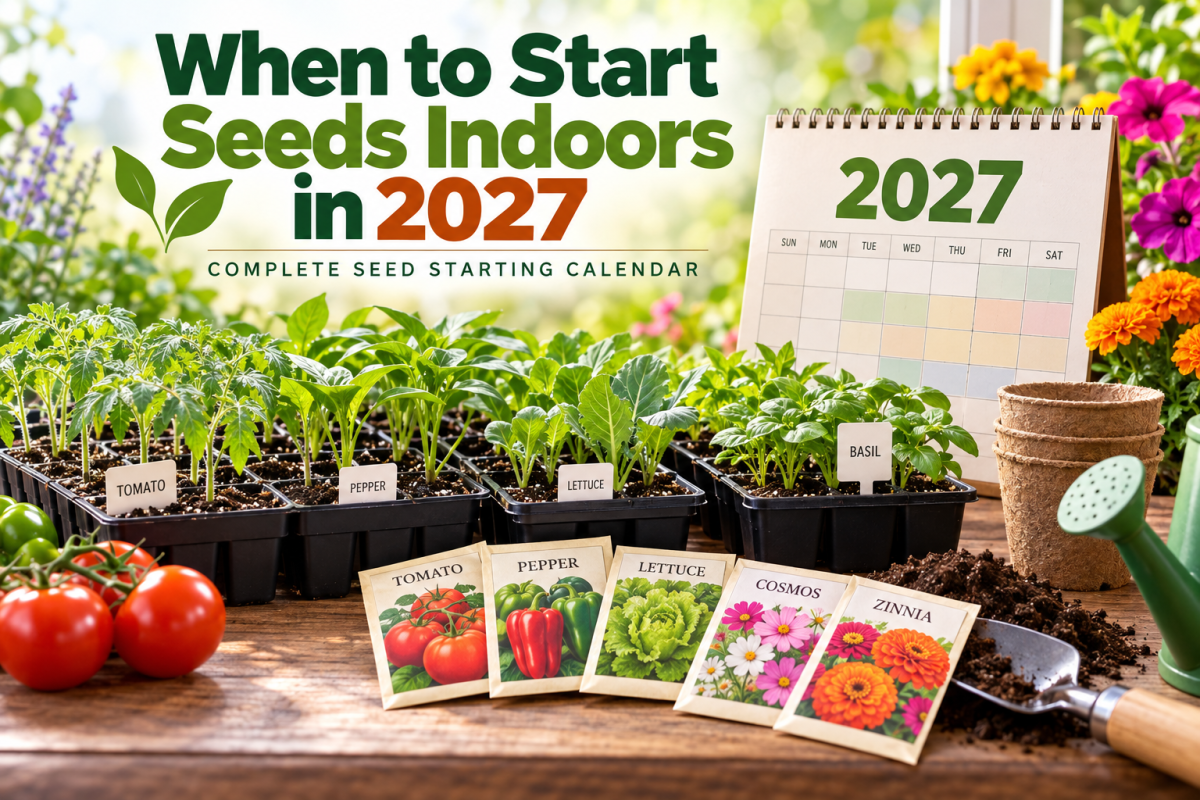
When to Start Seeds Indoors in 2027: Complete Seed Starting Calendar
Oct
Winter may still be months away from ending, but successful spring gardens often begin long before the soil outside is ready to plant.
Starting seeds indoors gives gardeners a head start on the growing season and makes it possible to grow a much wider selection of vegetables, herbs, and flowers from seed.
But timing matters.
Start too late and your plants may not be large enough when outdoor planting season arrives.
Start too early and you may end up with overcrowded, root-bound, leggy seedlings that are difficult to maintain indoors.
So when should you start seeds indoors in 2027?
The best answer depends on two things:
Your average last spring frost date and the type of plant you are growing.
University extension guidance recommends counting backward from the expected outdoor planting date for each crop. Tomatoes, for example, generally need considerably more indoor growing time than cucumbers or squash.
This guide will help you build your own 2027 seed-starting calendar.
First: Find Your Average Last Spring Frost Date
Before opening a single seed packet, determine your area’s approximate last spring frost date.
This is the date around which freezing temperatures historically become much less likely in your area.
It is not a guarantee.
Weather varies from year to year, and a late frost can still occur.
Your local Cooperative Extension office, regional weather station, or reliable frost-date calculator can help you determine the average date for your location.
University of Georgia Extension recommends using historical local frost data and then counting backward according to the number of weeks listed on the seed packet.
For example, if your average last frost is:
April 15
and your tomato packet recommends:
Start indoors 6–8 weeks before last frost
your approximate indoor sowing window would be:
February 18 through March 4.
That basic calculation is the foundation of indoor seed starting.
USDA Hardiness Zone Is Not the Same as Your Frost Date
Gardeners frequently search for seed-starting schedules by USDA zone.
Your hardiness zone is useful, but it mainly describes average annual minimum winter temperatures.
It does not tell you exactly when your final frost will occur.
Two locations in the same hardiness zone can have different spring frost dates.
For accurate seed-starting timing, use:
- Your local average last frost date
- The instructions for the specific seed variety
- Current spring weather
- Soil temperature
- The crop’s tolerance for cold
Use USDA zones as supporting information rather than your only planting calendar.
2027 Vegetable Seed Starting Calendar
The table below provides practical starting points. Always check the instructions for your particular variety.
| Vegetable | Approximate Indoor Start |
|---|---|
| Onions | 10–12 weeks before last frost |
| Leeks | 10–12 weeks before |
| Parsley | 10–12 weeks before |
| Celery | 10–12 weeks before |
| Eggplant | 7–9 weeks before |
| Peppers | 7–10 weeks before |
| Tomatoes | 6–8 weeks before |
| Broccoli | 4–8 weeks before |
| Cabbage | 6–10 weeks before |
| Cauliflower | 6–10 weeks before |
| Kale | 6–10 weeks before |
| Lettuce | 3–6 weeks before |
| Swiss Chard | 5–8 weeks before |
| Cucumbers | 2–4 weeks before |
| Melons | 2–4 weeks before |
| Squash | 2–4 weeks before |
| Pumpkins | 2–4 weeks before |
These ranges reflect the fact that different crops grow at dramatically different speeds. Extension recommendations commonly place tomatoes around six to eight weeks before outdoor planting, while fast-growing cucurbits such as cucumbers and squash need much less indoor time.
When to Start Tomato Seeds Indoors
Tomatoes are one of the most popular plants gardeners start indoors.
A useful target is approximately:
6–8 Weeks Before Your Last Frost
Tomato seedlings grow relatively quickly.
Starting them several months too early does not normally produce better plants.
Instead, they may become tall, crowded, and difficult to manage before outdoor temperatures are warm enough.
Utah State University Extension uses roughly six to eight weeks as a common indoor growing period for tomatoes.
After germination, give tomato seedlings strong light.
Once frost danger has passed and outdoor conditions are appropriate, gradually harden them off before transplanting.
When to Start Pepper Seeds Indoors
Peppers generally need a longer head start than tomatoes.
A practical range is:
7–10 Weeks Before Last Frost
Pepper seeds also prefer warm conditions during germination.
Because many pepper varieties are slower to germinate and develop, gardeners often start them among their first warm-season vegetables.
Do not transplant peppers outdoors simply because your frost date has passed.
Peppers prefer warm soil and warm nights.
Cold soil can slow growth considerably.
When to Start Eggplant Seeds
Eggplants are another warm-season crop that benefits from an early indoor start.
Plan on approximately:
7–9 Weeks Before Last Frost
Like peppers, eggplant seedlings prefer warmth.
Give them strong light after germination so they develop compact, sturdy growth instead of stretching toward a window.
When to Start Onion and Leek Seeds
Onions and leeks are among the earliest vegetable seeds many gardeners start indoors.
Begin approximately:
10–12 Weeks Before Last Frost
Their seedlings grow slowly, which is why they need a longer indoor growing period than tomatoes or cucumbers.
In colder regions, this can mean starting onion and leek seeds while winter is still very much underway.
When to Start Broccoli, Cabbage, Kale, and Cauliflower
These cool-season crops tolerate lower temperatures better than tomatoes and peppers.
Depending on the crop and variety, begin roughly:
4–10 Weeks Before Last Frost
Purdue Extension, for example, lists broccoli, cabbage, and cauliflower among vegetables that can require a relatively long indoor start before spring planting.
Because brassicas tolerate cool outdoor conditions, they can often be transplanted earlier than warm-season crops after proper hardening.
When to Start Cucumbers, Squash, Melons, and Pumpkins
This is where many gardeners make a mistake.
Cucurbits grow fast.
They generally do not need months indoors.
Start them approximately:
2–4 Weeks Before Outdoor Planting
Purdue Extension lists cucumber, cantaloupe, squash, and watermelon at about four weeks before the last frost period in its home seed-starting guide.
These plants can quickly outgrow small seedling cells.
They also dislike excessive root disturbance, so do not start them unnecessarily early.
Vegetables That Are Usually Better Direct-Sown
Not every vegetable benefits from indoor seed starting.
Many root crops are generally better planted directly into the garden.
Examples include:
- Carrots
- Radishes
- Turnips
- Parsnips
Peas and beans are also commonly direct-sown.
University of Massachusetts Extension specifically notes that root crops are generally sown directly into the garden rather than started as transplants.
Always check your seed packet because recommendations vary by species.
2027 Flower Seed Starting Calendar
Flower seeds vary even more widely than vegetables.
Some annuals grow incredibly quickly.
Others need several months indoors before planting outside.
Purdue Extension provides indoor-start recommendations ranging from around six weeks for cosmos, zinnias, and marigolds to ten weeks or more for slower flowers such as petunias, lobelia, pansies, and begonias.
| Flower | Approximate Indoor Start |
|---|---|
| Begonia | 12–14 weeks before frost |
| Pansy | 10–14 weeks before |
| Lobelia | 10–12 weeks before |
| Snapdragon | 8–12 weeks before |
| Petunia | 8–10 weeks before |
| Impatiens | 8–11 weeks before |
| Dianthus | 6–8 weeks before |
| Salvia | 6–8 weeks before |
| Aster | 6–8 weeks before |
| Cosmos | 4–6 weeks before |
| Marigold | 4–6 weeks before |
| Zinnia | 4–6 weeks before |
When to Start Petunia Seeds
Petunias are beautiful but comparatively slow-growing from seed.
Start them approximately:
8–10 Weeks Before Last Frost
Petunia seeds are very small and generally need light during germination, so avoid burying them deeply.
Purdue Extension lists petunias at approximately ten weeks before last frost, while other seed-starting guidance commonly uses roughly eight weeks.
When to Start Snapdragon Seeds
Snapdragons also benefit from an early start.
Depending on variety and conditions, plan on:
8–12 Weeks Before Last Frost
Snapdragon seeds are tiny and seedlings initially develop slowly.
Starting earlier gives them time to establish before transplant season.
They are also more tolerant of cool weather than many tender annual flowers.
When to Start Geranium Seeds
Seed-grown geraniums are another flower worth starting early.
They can take several months to develop into substantial flowering plants.
For gardeners planning spring and summer containers, geraniums are an excellent candidate for an early winter seed-starting project.
Provide warm germination conditions and strong light once seedlings emerge.
When to Start Cosmos Seeds
Cosmos grow much faster than petunias or geraniums.
Start them approximately:
4–6 Weeks Before Last Frost
They can also be direct-sown after frost danger has passed.
Starting cosmos indoors can produce earlier flowers, but starting too early may result in oversized plants before outdoor planting conditions are ready.
When to Start Zinnia Seeds
Zinnias are another fast-growing annual.
Start approximately:
4–6 Weeks Before Last Frost
or direct-sow after frost danger has passed.
Georgia Extension guidance notes that zinnias can be started indoors four to six weeks before the final frost for earlier spring flowering.
Because zinnias grow quickly, there is little advantage to beginning them several months early.
When to Start Marigold Seeds
Marigolds are fast and forgiving.
Start them approximately:
4–6 Weeks Before Last Frost
They germinate quickly under suitable conditions and develop rapidly.
This makes marigolds a good flower for beginning seed starters.
Don’t Forget Cold-Stratified Perennials
Some perennial flowers should not simply be placed in warm seed-starting trays.
They may require a period of cold, moist conditions before germination.
Examples can include:
- Milkweed
- Purple coneflower
- Columbine
- Black-eyed Susan
- Bee balm
- Penstemon
- Liatris
If you are growing these plants, include their cold-stratification period when calculating your 2027 seed-starting schedule.
For some species, the preparation begins in late fall or winter rather than spring.
Seed Starting Example: Last Frost April 15
Suppose your average last spring frost date is April 15.
Your approximate schedule might look like this:
January
Start very slow-growing flowers and selected long-season crops.
Possible examples:
- Begonias
- Pansies
- Certain perennial flowers
- Seeds requiring long stratification
Late January to Early February
Start:
- Onions
- Leeks
- Celery
- Parsley
- Slow-growing flowers
February
Start:
- Peppers
- Eggplant
- Snapdragons
- Petunias
- Impatiens
Late February to Early March
Start:
- Tomatoes
- Broccoli
- Cabbage
- Cauliflower
- Kale
- Asters
- Salvia
March
Start:
- Lettuce
- Marigolds
- Cosmos
- Zinnias
Late March
Start:
- Cucumbers
- Squash
- Melons
- Pumpkins
The dates shift earlier or later depending on your own local frost date.
What Do You Need to Start Seeds Indoors?
You don’t need an elaborate greenhouse.
A basic setup includes:
- Quality seeds
- Seed-starting mix
- Cell trays or small containers
- Drainage trays
- Plant labels
- Water
- Adequate light
- Appropriate warmth
A heat mat can be particularly useful for warm-season crops such as peppers and eggplants, although not every species requires bottom heat.
Use Seed-Starting Mix Instead of Garden Soil
One of the easiest ways to improve indoor seed-starting success is to use a suitable seed-starting medium.
Garden soil is generally not recommended for indoor germination because it may contain weed seeds or pathogens and can become dense or compacted in containers.
University of Maine Extension recommends commercial seed-starting mix or a properly prepared alternative rather than ordinary garden soil.
A good seed-starting mix should remain light enough for delicate emerging roots while retaining appropriate moisture.
Light Is Critical After Germination
A warm windowsill may germinate seeds successfully but still produce poor seedlings.
The problem is often inadequate light.
When seedlings receive too little light, they stretch toward the light source and become thin and weak.
Iowa State University Extension warns that starting seedlings too early can contribute to lanky plants, particularly when gardeners lack sufficient indoor lighting.
If natural daylight is inadequate, grow lights can provide more consistent results.
Keep lights positioned appropriately above seedlings and adjust them as plants grow.
Don’t Overwater Your Seedlings
Seed-starting mix should generally remain evenly moist during germination.
But saturated soil can create serious problems.
Containers need drainage.
Once seedlings emerge, avoid keeping the growing medium constantly waterlogged.
Water according to plant needs rather than automatically watering every day.
Label Everything
Seedlings can look surprisingly similar when they first emerge.
Label trays when you plant them.
Include:
- Variety name
- Plant type
- Sowing date
If you grow several tomato, pepper, petunia, or flower varieties, good labeling becomes essential.
When Should You Pot Up Seedlings?
As seedlings grow, some will need more space.
University of Maine Extension recommends transplanting seedlings into larger individual cells or containers after they have developed one or two sets of true leaves when necessary.
Avoid allowing seedlings to become severely root-bound.
However, unnecessary repotting can also create extra work and transplant stress.
Choose your initial container size based on how long the plant will remain indoors.
Don’t Skip Hardening Off
Indoor seedlings are accustomed to controlled conditions.
They have not experienced:
- Strong sunlight
- Wind
- Rapid temperature changes
- Outdoor moisture fluctuations
Moving them directly from a protected indoor environment into full sun can damage them.
Before transplanting permanently, gradually expose seedlings to outdoor conditions over several days.
Begin with a protected location and progressively increase their exposure.
The Most Common Seed-Starting Mistake: Starting Too Early
When seed catalogs arrive in winter, gardeners naturally want to start planting.
But earlier is not always better.
Colorado State University Extension notes that starting seeds too early can produce spindly plants due to crowding and inadequate light.
A six-week-old tomato seedling that is compact and healthy is usually preferable to a much older seedling that has spent months stretching under inadequate indoor conditions.
Follow the schedule.
Read the Seed Packet
General calendars are useful, but the seed packet should remain one of your primary references.
Different cultivars can behave differently.
Look for information such as:
- Days to germination
- Planting depth
- Indoor starting date
- Transplant timing
- Direct-sowing instructions
- Light requirements
- Days to maturity
- Spacing
If the packet says “start indoors 8 weeks before last frost,” use your frost date and count backward eight weeks.
That is more accurate than blindly following a national calendar.
Seed Starting FAQ
What month should I start seeds indoors?
There is no single month for everyone.
Depending on your climate and the crop, indoor seed starting can begin in winter and continue through spring.
Slow-growing crops may begin 10–12 weeks before the last frost, while fast-growing crops may need only two to four weeks.
Is January too early to start seeds?
For many vegetables, yes.
But January can be appropriate for slow-growing flowers, onions, leeks, celery, certain peppers in early-frost regions, and perennial seeds that require stratification.
Is February too early for tomatoes?
In many northern climates, yes.
Tomatoes generally need only around six to eight weeks indoors.
Calculate backward from your local last frost date.
Should I start all seeds indoors?
No.
Some plants are easier and healthier when direct-sown outdoors.
Root crops, peas, beans, and many fast-growing flowers are common examples.
Can I use regular potting soil?
Seed-starting mix is generally preferable because it is lighter and better suited to germination and delicate young roots.
Do seedlings need fertilizer immediately?
Seeds contain stored energy to support early germination.
Young seedlings generally do not need heavy fertilizer immediately. Follow appropriate seedling-care recommendations once true leaves develop.
Start Planning Your 2027 Garden Now
A successful spring garden begins with good timing.
Instead of choosing an arbitrary date to start all your seeds, build your schedule around:
Your local last frost date + the number of weeks each crop needs indoors.
Start slow-growing plants first.
Wait on fast-growing cucumbers, squash, cosmos, marigolds, and zinnias.
Give seedlings enough light.
Use clean seed-starting mix.
And most importantly, read the specific instructions for each variety you grow.
Planning now gives you time to select the vegetables, herbs, flowers, trees, and specialty plants you want in your 2027 garden before the busiest seed-starting season begins.
Explore Urban Garden Seed’s collection of vegetable, herb, flower, tree, and specialty seeds and start planning your 2027 garden today.