
Adenium, Backyard Gardening, Cactus & Succulent, Family & Kids' Gardening, Flower Seeds, Garden Planning & Design, Herb Seeds, Homesteading & Self-Reliance, Sensory & Wellness Gardening, Sustainable & Regenerative Living, The Horticulturist’s Lab, Urban & Small-Space Gardening, Vegetables
How to Test Seed Viability: Are Your Old Garden Seeds Still Good?
Oct
As late October pushes us out of the garden and into the shed for autumn cleanup, most gardeners inevitably stumble across a shoebox full of half-used, crumpled seed packets from seasons past. The immediate question is always the same: Are these seeds still good, or should I throw them away?
There is nothing more frustrating than spending hours prepping garden beds in the spring, carefully planting seeds, and waiting weeks only to realize nothing is going to sprout. Before you risk a spring garden failure—or unnecessarily throw away perfectly good heirloom genetics—you can easily test the viability of your old seeds right on your kitchen counter.
1. The Lifespan of Common Garden Seeds
Seeds are living embryos in a state of dormancy. Over time, that life force naturally depletes. How long a seed lasts depends on the plant family and how well they were stored (ideally in a cool, dark, and dry environment).
As a general rule, onion and allium seeds have the shortest lifespan, while plants in the nightshade and brassica families can remain viable for half a decade or more.
Seed Life Expectancy Quick-Reference Guide
| Seed Variety | Average Lifespan (Stored Properly) |
|---|---|
| Onions, Leeks, Parsnips | 1 to 2 Years |
| Corn, Spinach, Peppers | 2 to 3 Years |
| Beans, Peas, Carrots | 3 to 4 Years |
| Tomatoes, Eggplant, Radish | 4 to 5 Years |
| Cabbage, Broccoli, Kale | 4 to 5+ Years |
Note: Even after these timeframes, seeds do not suddenly “die” overnight. Instead, their germination rate slowly drops from 95% down to 50%, and eventually to zero.
2. The Water Float Test: Does it Actually Work?
If you search the internet for seed testing, you will quickly find the “Water Float Test.” The premise is simple: drop seeds into a glass of water. If they sink, they are viable; if they float, they are dead.
The truth: This test is highly unreliable for most garden seeds. While it works decently well for large, heavy seeds like pumpkins, squash, and peas (where a floating seed indicates the internal embryo has shriveled up, leaving an air pocket), it fails completely for small, flat, or hairy seeds like tomatoes, carrots, and lettuce. Those seeds will naturally float due to surface tension, even if they have a 100% germination rate.
To get an accurate read on your seed stash, you need to use the paper towel method.
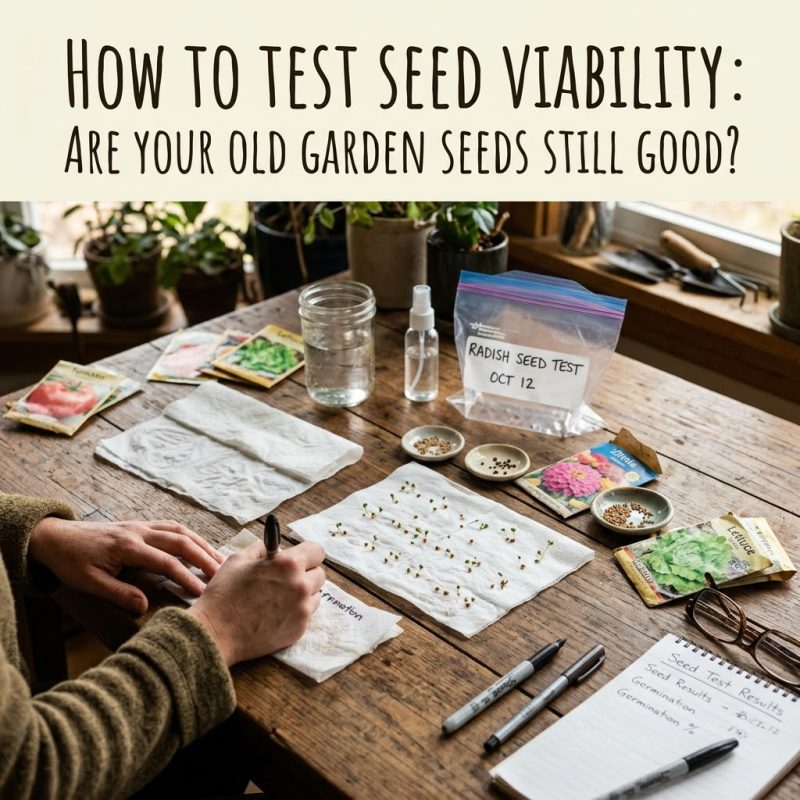
3. The 10-Day Paper Towel Germination Test
This simple test will tell you exactly what percentage of your old seeds will actually sprout next spring, allowing you to plan your seed orders accurately this winter.
Step 1: Select Your Sample
Take exactly 10 seeds from the questionable packet. Using exactly 10 makes the final math incredibly easy.
Step 2: Prepare the Towel
Wet a standard paper towel and wring it out completely so it is only slightly damp. Lay the towel flat and place your 10 seeds evenly across one half of it. Fold the other half of the damp towel over the seeds so they are securely covered.
Step 3: Bag It Up
Slide the folded, damp paper towel into a clear plastic zip-top bag. Do not seal the bag entirely; leave it unzipped by about an inch so the seeds can get oxygen and won’t mold. Use a permanent marker to write the seed variety and the date on the outside of the bag.
Step 4: Add Warmth
Seeds need warmth to break dormancy. Place the plastic bag on top of your refrigerator, on a warm sunny windowsill, or near a heating vent. The ideal temperature is between 70°F and 75°F (21°C to 24°C).
Step 5: Check and Calculate
Check the seeds every few days to ensure the paper towel is still damp (mist lightly if needed). After 7 to 10 days, open the towel and count how many seeds have pushed out a small white root.
- 7 to 10 seeds sprouted (70%–100%): The seeds are in excellent health. Plant them normally next spring!
- 4 to 6 seeds sprouted (40%–60%): The seeds are losing vigor. You can still use them, but you will need to sow them twice as thickly next spring to guarantee a good stand.
- 0 to 3 seeds sprouted (0%–30%): The seed batch is effectively dead. It is time to compost them and buy fresh seeds.
Restock Your Seed Box for Spring
Late autumn is the absolute best time to take inventory of your seed stash. By testing your questionable packets now, you avoid the heartbreak of an empty garden in May—and you can beat the massive January rush to secure the best new heirloom varieties.
👉 Time to replace those tired, old seeds? Shop our fresh, high-germination, non-GMO seed catalog at Urban Garden Seed today!
