
Adenium, Backyard Gardening, Cactus & Succulent, Family & Kids' Gardening, Flower Seeds, Garden Planning & Design, Herb Seeds, Homesteading & Self-Reliance, Sensory & Wellness Gardening, Style, Sustainable & Regenerative Living, The Horticulturist’s Lab, Urban & Small-Space Gardening, Vegetables
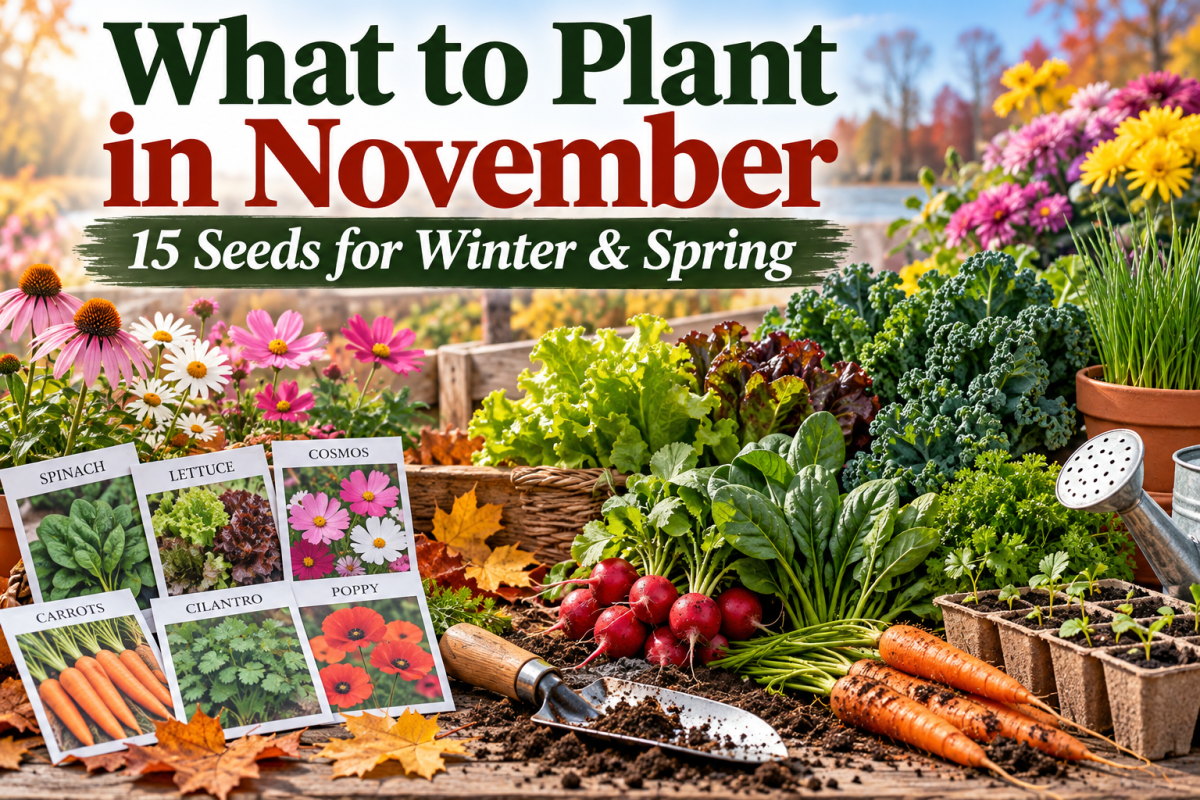
What to Plant in November: 15 Seeds for Winter & Spring
Oct
November may feel like the end of gardening season, but for many gardeners, it is actually the beginning of the next one.
Depending on where you live, November can be an excellent month for growing cool-season vegetables, sowing seeds that will remain dormant through winter, starting an indoor herb garden, or preparing flowers for an earlier start next spring.
The key is understanding your climate.
A gardener in Minnesota will have very different November planting opportunities than a gardener in Georgia, Texas, California, or the Pacific Northwest. Instead of following the calendar alone, pay attention to your USDA hardiness zone, first frost date, soil temperature, and local weather conditions.
This November planting guide explains what you can still grow and how to adjust your strategy for colder and warmer climates.
Can You Really Plant Seeds in November?
Yes—but not every seed should be planted outdoors in every region.
In colder parts of the United States and Canada, the soil may already be freezing by November. Outdoor vegetable planting opportunities become limited, although dormant sowing of certain flowers and cold-tolerant species may still be possible.
In milder climates, November can remain an active vegetable-growing month.
Cool-season plants generally perform best under lower temperatures and shorter days than traditional summer vegetables. Some greens can tolerate frost, while certain perennial flower seeds actually benefit from spending winter outdoors.
The University of Minnesota notes that crops such as kale, collards, spinach, mustard greens, lettuce, radishes, and several other cool-season vegetables tolerate colder conditions far better than warm-season crops.
The important lesson is simple:
November planting should be based on your climate—not just the date on the calendar.
1. Spinach
Spinach is one of the classic cool-season vegetables.
It grows best when temperatures are cool and can tolerate light frost after becoming established.
Penn State Extension recommends growing spinach during the cooler portions of spring and fall and notes that seed germination performs best in cool soil.
Where November planting works
In mild-winter regions, spinach may still be direct-sown outdoors in November, particularly when plants can be protected with row cover, a cold frame, or an unheated greenhouse.
Gardeners in colder climates should generally grow spinach indoors or wait for their appropriate spring planting window.
Growing tip
Plant spinach in rich, well-drained soil and keep the seedbed consistently moist during germination.
2. Lettuce
Fresh lettuce does not have to disappear just because summer is over.
Lettuce prefers cooler conditions and can be an excellent late-season crop in mild climates.
In areas with occasional frost, a simple row cover or cold frame can significantly extend the growing season.
Leaf lettuce is particularly useful because gardeners can harvest individual outer leaves rather than waiting for an entire head to mature.
Choose fast-growing varieties when daylight is becoming shorter.
3. Radishes
Radishes are among the fastest vegetables gardeners can grow from seed.
Some varieties can mature in only a few weeks under suitable conditions, making them particularly useful for late-season gardens.
University of Minnesota Extension lists radishes among vegetables capable of tolerating cool fall conditions and notes that roots may remain harvestable until the soil freezes.
In warmer growing zones, November can therefore remain a productive radish-planting month.
Plant successive small batches rather than sowing your entire seed packet at once.
4. Arugula
Arugula thrives in cool conditions and grows quickly.
Its peppery leaves are excellent in salads, sandwiches, and cooked dishes.
Hot weather can cause arugula to flower rapidly, so autumn and early winter often produce milder leaves than summer plantings.
Gardeners in warm and moderate climates can sow arugula directly outdoors, while gardeners experiencing regular hard freezes can grow it in containers indoors.
5. Mustard Greens
Mustard greens are another excellent cool-season vegetable.
They are relatively quick to mature and can tolerate light frost.
University of Minnesota Extension identifies mustard greens as a cold-tolerant fall crop, making them useful for extending the productive gardening season.
Young leaves can be harvested as baby greens, while mature plants provide larger leaves for cooking.
6. Kale
Few vegetables are as closely associated with cold-weather gardening as kale.
Established plants can withstand considerably colder conditions than many tender vegetables.
University of Minnesota Extension categorizes kale among its hardier fall vegetables.
However, that does not mean gardeners in very cold climates should start kale outdoors from seed in November.
Seedlings need time to establish.
In warm climates, November sowing may still work well. In colder climates, grow kale indoors or plan next year’s crop.
7. Collard Greens
Collards are another valuable vegetable for southern and mild-winter gardens.
They tolerate cool conditions and can continue producing as temperatures fall.
Recent University of Georgia Extension guidance identifies collards among the vegetables well suited to winter production in Georgia’s relatively mild climate.
Harvest the lower leaves while leaving the growing center intact, allowing plants to continue producing.
8. Carrots
Carrots prefer cool growing conditions, but timing is important.
They require more time to mature than radishes and some leafy greens.
In mild regions where the soil remains workable throughout winter, November sowing may still be possible depending on variety and local climate.
In colder areas, however, November is generally too late for a new outdoor carrot crop.
Carrot seeds need consistent moisture during germination, so do not allow the soil surface to dry completely.
9. Fava Beans
Fava beans are unusually tolerant of cool conditions compared with many other beans.
Oregon State University Extension includes fava beans among crops that may still be direct-sown during late fall in suitable climates, although success becomes increasingly dependent on local conditions as winter approaches.
They are particularly useful in areas with mild winters.
Traditional warm-season bush and pole beans, by contrast, should not be treated the same way.
10. Cilantro
Cilantro often performs much better in cool weather than during summer heat.
High temperatures cause it to bolt quickly, while cooler conditions can extend leaf production.
In mild-winter climates, cilantro can remain a useful late-fall herb.
Gardeners experiencing freezing conditions can also grow cilantro indoors beside a bright window or under grow lights.
Sow small batches periodically to maintain a continuous supply.
11. Parsley
Parsley grows more slowly than cilantro but is surprisingly tolerant of cool conditions once established.
In warm climates, it can remain productive through much of winter.
In colder regions, November is an excellent time to move your gardening indoors.
Parsley grows well in containers when supplied with sufficient light.
Because parsley can germinate slowly, keep the growing medium consistently moist and be patient.
12. Chives
Chives are an easy perennial herb that can be grown outdoors or indoors.
Established plants tolerate cold winters, while containers can provide fresh leaves indoors.
If you grow chives inside during winter, place them in a sunny window or under supplemental lighting.
You can harvest leaves repeatedly without removing the entire plant.
13. Native Wildflowers
November can be an excellent month for sowing certain perennial and native wildflowers in colder climates.
This may sound counterintuitive, but many species naturally drop their seeds in late summer and fall.
Those seeds remain outdoors throughout winter before germinating when favorable conditions return.
Winter exposure can also provide the cold stratification required by some perennial species.
This makes late-fall sowing especially interesting for flowers such as certain coneflowers, milkweeds, black-eyed Susans, and other cold-adapted perennials.
Always verify the germination requirements of the individual species before planting.
14. Poppies
Many poppies prefer cool conditions during germination.
In suitable climates, late-fall sowing allows seeds to experience natural winter conditions and begin growing when temperatures become favorable.
Poppy seeds are extremely small.
Rather than burying them deeply, sow according to the specific variety’s instructions and ensure good contact between the seed and soil.
Fall planting can also reduce the need to disturb delicate seedlings later because many poppies dislike transplanting.
15. Perennial Flowers That Need Cold Stratification
November is an important month for gardeners who want to grow perennial flowers from seed.
Some perennial seeds contain natural dormancy mechanisms that prevent them from germinating immediately.
Exposure to cold, moist conditions can help overcome that dormancy.
Instead of artificially stratifying seeds in a refrigerator, gardeners in suitable climates can sometimes allow winter weather to do the work naturally.
This is one reason late fall and winter sowing can be especially valuable for perennial flower gardeners.
What Should Cold-Climate Gardeners Plant in November?
If you garden in a northern state or Canada, November may already bring frozen ground, snow, and temperatures too low for actively growing new vegetables outdoors.
That does not mean gardening has to stop.
November is an excellent time to concentrate on:
- Dormant sowing suitable perennial and native flower seeds
- Growing herbs indoors
- Growing leafy greens under lights
- Preparing winter-sowing containers
- Organizing seeds for spring
- Mulching established perennial plants
- Preparing next year’s vegetable garden
- Checking stored seeds for viability
Gardeners should avoid forcing seeds into frozen soil simply because a planting calendar says November.
Local conditions always take priority.
What Should Warm-Climate Gardeners Plant in November?
Gardeners in the southern United States and other mild-winter regions have considerably more options.
Georgia Extension, for example, identifies spinach, kale, collards, lettuce, mustard greens, radishes and other cool-season vegetables as suitable components of fall and winter gardens, although the ideal planting dates vary by crop.
Depending on your specific climate, November gardens may include leafy greens, herbs, radishes, carrots and other cool-season crops.
Warm-climate gardeners should still watch for unexpected frost events.
Temporary row covers can provide valuable protection when unusually cold nights are forecast.
Use Season Extenders
A few degrees of protection can make a major difference during late fall.
Cold frames, low tunnels, cloches, greenhouses and floating row covers help buffer plants from cold temperatures.
Oregon State University Extension recommends season-extension techniques for several cool-season crops as autumn conditions become less favorable.
They can also protect plants from wind and reduce temperature fluctuations.
Remember that covered plants can become surprisingly warm on sunny days.
Vent cold frames and greenhouses when necessary.
November Is Also a Good Time to Improve Your Soil
If your outdoor growing season is finished, resist the temptation to simply abandon your vegetable beds until spring.
Remove diseased plant material and problematic weeds.
Healthy leaves and other suitable organic matter can be composted.
Fall mulch can protect exposed soil and reduce erosion while helping moderate temperature fluctuations.
University of Minnesota’s garden calendar identifies October through November as an important period for mulching and vegetable-garden cleanup.
A soil test can also help you determine whether amendments will actually be necessary before next year’s growing season.
Don’t Forget Cover Crops
An empty vegetable bed does not necessarily need to remain bare all winter.
Where planting conditions are still suitable, cover crops can protect soil, suppress weeds and contribute organic matter.
Possible cover crops include winter rye, wheat and certain legumes, depending on region and planting date.
Planting too late can reduce establishment, so gardeners should check recommendations from their local Cooperative Extension service.
Indoor Seed Starting in November
November is also an ideal month to bring gardening indoors.
A sunny windowsill may be adequate for some herbs, although supplemental grow lights generally provide more consistent results as winter daylight declines.
Good indoor choices include:
Cilantro, parsley, chives, lettuce, arugula, microgreens and selected compact leafy greens.
Avoid placing seedlings directly beside cold window glass.
Seedlings generally perform best when temperatures, moisture and lighting remain consistent.
The Biggest November Planting Mistake
The biggest mistake is assuming that a national planting calendar applies equally to every gardener.
It doesn’t.
The United States spans dramatically different climates.
One gardener may be harvesting spinach while another is shoveling snow.
Before planting anything outdoors in November, consider:
Your USDA zone, local frost dates, current soil temperature, expected weather and the requirements of the specific seed variety.
Your local Cooperative Extension office is an excellent source of region-specific planting information.
November Gardening FAQ
Is November too late to plant seeds?
Not necessarily. Gardeners in mild climates can still plant several cool-season crops, while colder-climate gardeners may use dormant sowing for appropriate flowers or grow seeds indoors.
Can I plant flower seeds in November?
Yes. Certain hardy annuals, native wildflowers and perennial flowers can benefit from late-fall planting. Check the species’ specific germination requirements first.
Can I plant vegetables in November?
Yes in some climates. Leafy greens, radishes and other cool-season vegetables may still grow in mild regions or under season-extension structures.
What seeds can I start indoors in November?
Herbs, microgreens, lettuce and other compact leafy vegetables are among the easiest options for indoor winter growing.
Should I water seeds planted in November?
Newly planted seeds may require moisture, but watering needs are usually lower in cool weather. Follow the requirements for the specific crop and avoid keeping cold soil excessively wet.
Should I fertilize my garden before winter?
Do not fertilize automatically. A soil test is the best way to determine whether nutrients or pH adjustments are actually needed.
Keep Growing Through November
November doesn’t have to mark the end of gardening.
For some gardeners, it means harvesting hardy vegetables and sowing another round of greens.
For others, it means planting perennial flower seeds before winter, growing herbs indoors, preparing winter-sowing containers, or getting next year’s garden ready.
The secret is choosing seeds that match your climate and the season.
Whether you’re growing vegetables for a winter harvest, flowers for next spring, or herbs on a kitchen windowsill, November still offers plenty of opportunities to start something from seed.
Explore Urban Garden Seed’s selection of vegetable, herb, flower, tree and specialty seeds and start planning what you’ll grow next.
