
Adenium, Backyard Gardening, Cactus & Succulent, Family & Kids' Gardening, Flower Seeds, Garden Planning & Design, Herb Seeds, Homesteading & Self-Reliance, Sensory & Wellness Gardening, Sustainable & Regenerative Living, The Horticulturist’s Lab, Urban & Small-Space Gardening, Vegetables
Companion Planting From Seed: The Ultimate Guide to Plant Partnerships
Nov
When you look at a traditional garden plot, everything is often lined up in rigid, isolated rows—tomatoes in one section, peppers in another, and marigolds tucked away in a decorative corner. But if you walk out into a thriving, natural ecosystem, you will notice that plants never grow in monocultures. They intertwine, support each other, and create living networks.
This natural synergy is known as companion planting.
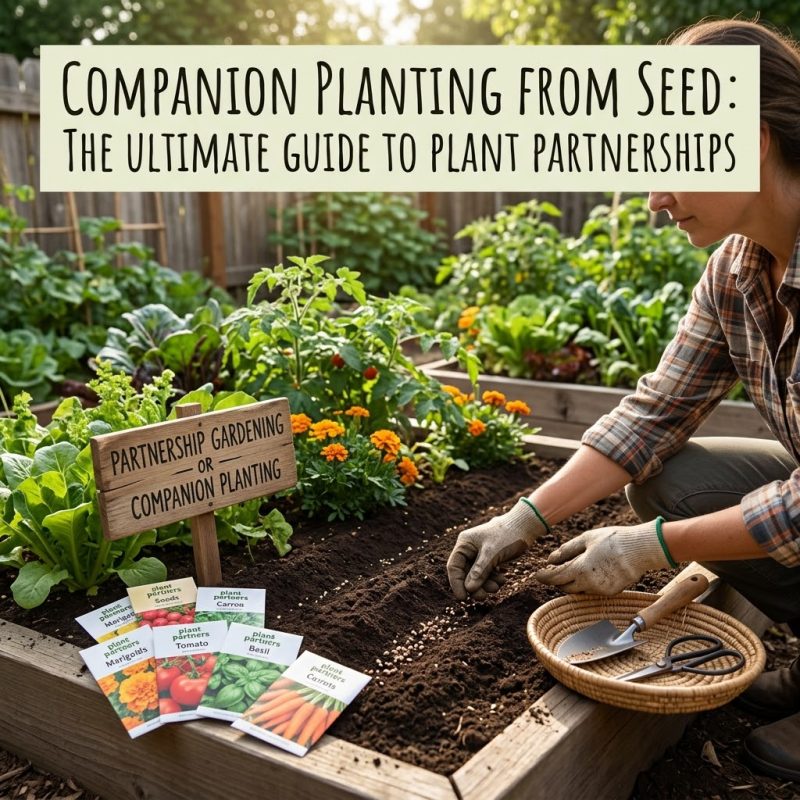
By strategically pairing specific vegetable and flower seeds together right from the start, you can naturally deter pests, improve soil fertility, maximize space, and boost your overall harvest without ever reaching for synthetic chemical pesticides. Planning your companion partnerships now—while you map out your seed orders for next season—is the ultimate way to set your garden up for success.
1. The Science Behind Plant Partnerships
Companion planting is not just old folklore; it is rooted in biological science. Different plants offer unique advantages to their neighbors through three main mechanisms:
- Pest Repellency: Many flowers and herbs release strong aromatic oils that confuse or repel destructive garden pests, masking the scent of your prized vegetable crops.
- Nutrient Trading: Certain plants (like legumes and beans) pull nitrogen out of the air and fix it into the soil, feeding heavy nitrogen-feeders like tomatoes and corn.
- Physical Support and Shade: Taller plants can provide cooling shade for delicate, heat-sensitive greens, while strong stems can act as natural trellises for climbing vines.
2. Classic Companion Seed Pairings
To get the most out of your seed packets, sow compatible varieties close to one another so their root systems and canopies develop in tandem.
| Main Crop | Best Companion Seed | Why It Works |
|---|---|---|
| Heirloom Tomatoes | French Marigolds | Marigold roots secrete a natural compound that repels harmful root-knot nematodes, while their scent deters hornworms. |
| Carrots | Chives or Rosemary | The strong aroma of alliums confuses the carrot rust fly, keeping your taproots pristine and unblemished. |
| Bush Beans | Summer Squash | Beans fix vital nitrogen into the soil, directly feeding the heavy-feeding squash growing right beside them. |
| Leaf Lettuce | Sweet Alyssum | Low-growing alyssum attracts beneficial predatory hoverflies whose larvae consume destructive aphids. |
| Cucumbers | Dill | Dill attracts predatory wasps and ladybugs that wipe out cucumber beetles and spider mites. |
3. Step-by-Step Guide to Companion Planting from Seed
Step 1: Design Your Layout Before You Sow
Do not wait until planting day to figure out where your seeds go. Sketch out your garden beds on paper, grouping companion seeds together in blocks or interplanted rows rather than long, isolated monoculture lines.
Step 2: Match Germination Timelines and Heights
When sowing seeds directly into the earth, consider how the plants will mature together. Avoid pairing a very slow-germinating seed with an aggressive, fast-sprouting seed that might shade out its tiny neighbor before it has a chance to establish roots.
Step 3: Interplant Flowers Early
Don’t relegate your flowers to the borders of the garden. Scatter pollinator and pest-deterrent flower seeds (like marigolds, nasturtiums, and alyssum) directly between your vegetable rows. This creates an integrated defense grid across the entire bed.
Step 4: Practice “Three Sisters” Poly-culture
For a classic, time-tested companion planting method, try the Indigenous “Three Sisters” method: sow corn, climbing beans, and winter squash seeds together in small mounds. The corn provides a living trellis for the beans, the beans enrich the soil with nitrogen, and the prickly squash leaves sprawl across the ground to act as a living mulch that suppresses weeds and retains moisture.
Grow a Smarter, More Resilient Garden
Gardening shouldn’t feel like a constant battle against pests and poor soil. By harnessing nature’s cooperative design and starting your companion crops from high-vigor seeds, you create a balanced, self-sustaining ecosystem right in your backyard.