
Adenium, Backyard Gardening, Cactus & Succulent, Family & Kids' Gardening, Flower Seeds, Garden Planning & Design, Herb Seeds, Homesteading & Self-Reliance, Sensory & Wellness Gardening, Sustainable & Regenerative Living, The Horticulturist’s Lab, Urban & Small-Space Gardening, Vegetables
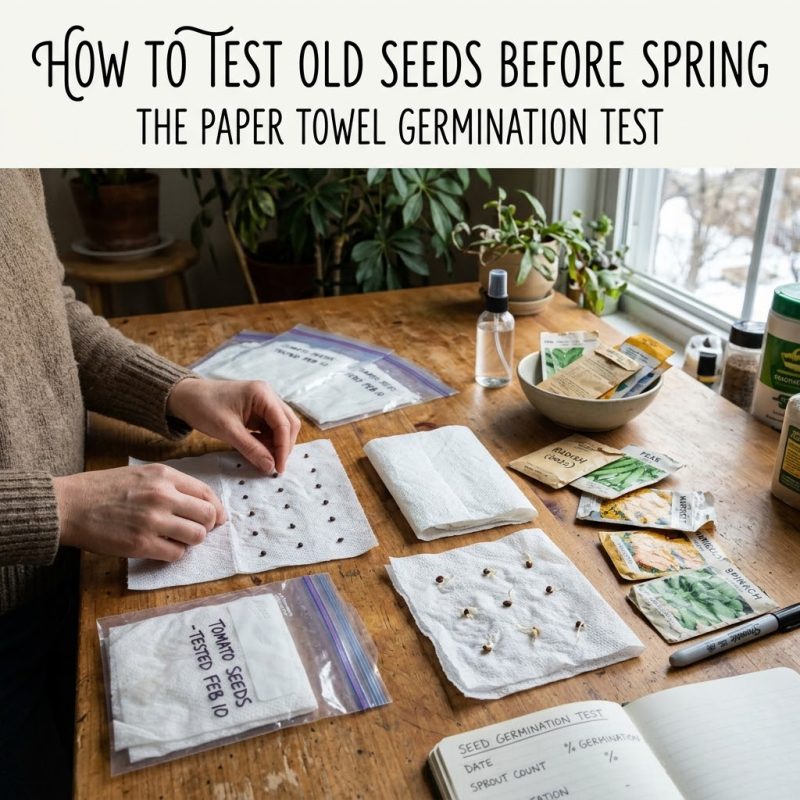
How to Test Old Seeds Before Spring: The Paper Towel Germination Test
Nov
As winter settles in and outdoor gardening slows down, many gardeners naturally turn their attention to organizing their storage bins, sheds, and seed boxes. Inevitably, you come across a treasure trove of half-used seed packets from previous seasons.
The immediate question every gardener asks is: Are these old seeds still good, or should I throw them out and buy new ones?
Rather than guessing and risking empty patches in your spring garden, you can easily test your seeds right now. The paper towel germination test is a foolproof, scientific method used by professional growers to check seed viability before planting season arrives.
1. Do Seeds Actually Expire?
Seeds are living embryos packed inside a protective coat, waiting for the right combination of moisture, warmth, and oxygen to wake up. While seeds don’t technically “expire” on a strict calendar date, their internal vigor and germination rates decline over time, especially if they were stored in warm, humid conditions.
However, many seeds last much longer than people think. While delicate seeds like onions and parsnips lose their vigor after just one year, robust seeds like beans, tomatoes, and cucumbers can remain viable for 4 to 5 years (or even longer) when stored properly in a cool, dark place.
2. Seed Lifespan Quick-Reference Guide
How long can you realistically keep your seeds before needing replacements? Use this guide to check your seed packets:
| Seed Variety | Average Viability Lifespan | Common Sign of Decline |
|---|---|---|
| Tomatoes & Peppers | 4–5 Years | Slower germination speed |
| Beans & Peas | 3–4 Years | Brittle coats, low sprout rate |
| Cucumbers & Squash | 5–6 Years | High resilience over time |
| Lettuce & Greens | 1–3 Years | Rapid drop in sprout percentage |
| Onions & Leeks | 1 Year | Very short shelf life; buy fresh |
3. Step-by-Step Guide to the Paper Towel Germination Test
You can perform this quick test in the middle of winter using items you already have in your kitchen.
Step 1: Gather Ten Representative Seeds
Pull 10 seeds from the mystery packet you want to test. (Using 10 seeds makes calculating percentages effortless in the final step).
Step 2: Prepare the Moisture Medium
Take a standard paper towel, fold it in half, and dampen it with clean, room-temperature water. Squeeze the paper towel firmly—it should be damp and heavy with moisture, but not dripping wet. If water pools when you press it, it is too wet and will cause the seeds to rot.
Step 3: Arrange the Seeds
Lay your 10 test seeds in a straight row across the lower half of the damp paper towel, leaving space between each seed. Fold the top half of the paper towel down to cover them.
Step 4: Seal and Label
Slide the folded paper towel into a clear plastic zip-top bag. Use a permanent marker to write the plant variety and the current date directly on the outside of the bag. Press out any excess air and seal it.
Step 5: Provide Warmth and Wait
Place the sealed bag in a warm, dark location (top of the refrigerator or near a gentle indoor heat source is ideal; most seeds germinate best at 65°F to 75°F). Check the bag every few days to ensure the paper towel remains damp. Consult your seed packet for the normal germination timeframe (usually 5 to 14 days).
4. How to Calculate Your Germination Rate
Once the expected germination window has passed, open the bag, count how many seeds have successfully sprouted, and calculate your percentage:
- 8 to 10 sprouts (80% – 100%): Excellent viability! Plant these seeds normally this spring without changing your strategy.
- 5 to 7 sprouts (50% – 70%): Moderate viability. The seeds are getting older, but they are still usable. Simply sow them a bit more densely than usual to make up for the lower success rate.
- Fewer than 4 sprouts (Under 40%): Low viability. It is time to retire this packet and invest in fresh, high-vigor genetics for your upcoming garden beds.
Smart Planning for Next Season
Taking an hour this winter to test your leftover seeds saves you time, money, and disappointment when spring arrives. And if your old stash falls short, you can restock your collection with top-tier, non-GMO genetics.