
Cactus & Succulent, Family & Kids' Gardening, Flower Seeds, Herb Seeds, Sensory & Wellness Gardening, Sustainable & Regenerative Living, The Horticulturist’s Lab, Urban & Small-Space Gardening, Vegetables
Micro Homesteading for Beginners: How to Grow Food in Small Spaces
May
Learn micro homesteading for beginners and discover how to grow herbs, vegetables, and edible plants in small spaces with containers, balconies, patios, and windowsills.
Micro Homesteading for Beginners: How to Grow Food in Small Spaces
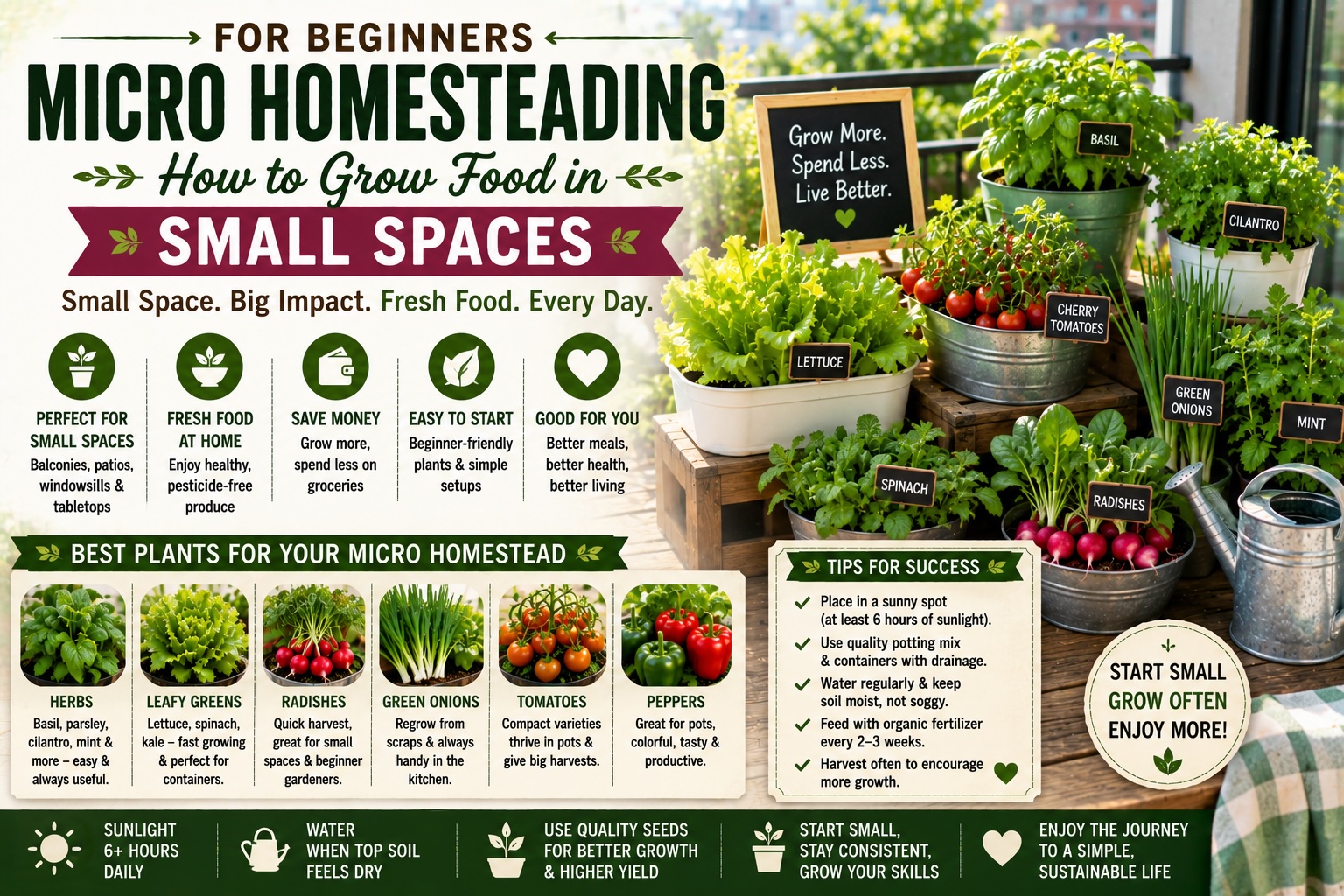
Micro homesteading is a practical way to grow useful plants at home without needing a large backyard. For beginners, it offers a simpler path into edible gardening by focusing on compact setups, container growing, and everyday usefulness. If you are looking for a realistic way to start growing food at home, micro homesteading for beginners is a strong place to begin. Recent gardening coverage describes micro homesteading as a small-space approach to growing food and living more intentionally, especially for urban homes and rentals.
At Urban Garden Seed, we believe gardening should fit real homes and real lifestyles. A micro homestead can begin with just a few containers, quality seeds, and a bright place to grow.
Why micro homesteading is becoming so popular
Micro homesteading is appealing because it makes food-growing feel possible in everyday spaces. You do not need a farm, a wide yard, or a full garden bed to start. Current gardening trend coverage shows strong interest in compact edible gardens, tabletop vegetables, windowsill growing, and small-space urban gardening.
Many people are drawn to micro homesteading because they want to:
* grow food in a patio, balcony, or windowsill setup
* make better use of small spaces
* start with a manageable edible garden
* enjoy fresh herbs and vegetables closer to home
What is micro homesteading?
Micro homesteading is a small-scale approach to growing useful food and plants at home. Instead of relying on a large traditional garden, it focuses on compact, productive setups such as:
* herb pots on a kitchen windowsill
* vegetables in containers on a patio
* balcony planters with edible crops
* tabletop gardens with greens and herbs
Recent gardening coverage describes it as a way to grow food “anywhere,” especially in urban environments where space is limited.
Best plants for a beginner micro homestead
The best plants for micro homesteading are usually the ones that are practical, compact, and well suited to containers or small beds.
Herbs
Herbs are one of the best entry points for micro homesteading. Current gardening coverage repeatedly highlights herbs as especially well suited for compact spaces, windowsills, and container gardens. Basil, parsley, cilantro, chives, oregano, thyme, and mint are all strong options for beginners.
Leafy greens
Leafy greens such as lettuce and spinach are excellent for small edible gardens because they fit well into compact spaces and are often recommended for urban and small-space gardening.
Radishes and green onions
Radishes and green onions are practical choices for container-friendly edible gardens. They are compact, useful, and fit naturally into a mini-garden setup.
Tomatoes and peppers
Compact tomatoes and peppers remain popular in small-space gardening and container trends. Recent trend coverage specifically mentions vegetables for balconies and patios, including peppers and other edible plants suited to limited space.
How to start micro homesteading at home
1. Start with the space you already have
Micro homesteading works best when it fits your actual home. A balcony, windowsill, patio table, porch shelf, or small sunny corner is enough to begin. Current gardening trend sources consistently point to balconies, patios, and tabletop spaces as growing areas of interest.
2. Choose plants you will actually use
The most rewarding small-space edible garden is one built around useful plants. Herbs, greens, and practical vegetables often feel more satisfying than decorative-only choices because they become part of daily meals and routines. This also matches Google’s guidance to create content and pages that directly satisfy a real user need.
3. Use containers and compact layouts
Container gardening is central to micro homesteading. Recent 2026 trend coverage highlights micro-gardens, compact patio vegetables, and container-focused planting as important themes.
4. Keep your setup simple
A smaller setup is often easier to enjoy and maintain. Beginners usually do better with a few well-chosen crops than with a crowded planting plan. Small-space gardening guides in 2026 continue to emphasize focused, efficient layouts over oversized plans.
5. Start with quality seeds
A micro homestead may be small, but it still benefits from good seed selection. Starting with carefully chosen seeds helps create a better experience from the beginning and makes a compact garden feel more worthwhile.
Why premium-quality seeds matter
A productive small-space garden starts with the seeds you choose. At Urban Garden Seed, we are proud to offer carefully selected premium-quality seeds for gardeners who value practical growing, useful plants, and confidence from the beginning.
Final thoughts
Learning micro homesteading for beginners is a practical way to start growing food at home, even in a very small space. You do not need a full backyard to build something useful. With a few containers, a bright growing spot, and the right seed choices, even a small balcony or windowsill can become a productive edible garden. That makes this topic a strong fit for both your customers and current gardening search trends.
