
Family & Kids' Gardening, Flower Seeds, Herb Seeds, Sensory & Wellness Gardening, Sustainable & Regenerative Living, The Horticulturist’s Lab, Urban & Small-Space Gardening, Vegetables
How to Start a Tabletop Vegetable Garden at Home
May
Learn how to start a tabletop vegetable garden at home. Discover compact edible plants, container-friendly vegetables, and beginner tips for small-space gardening.
How to Start a Tabletop Vegetable Garden at Home
A vegetable garden does not need a backyard to be useful. If you have a sunny table, balcony corner, patio shelf, or bright window area, you can create a compact edible garden that feels both practical and rewarding. If you are looking for a simple, modern way to grow food, learning how to start a tabletop vegetable garden at home is a great place to begin. This topic also fits current search behavior around mini gardens, tabletop gardens, and small-scale food growing.
At Urban Garden Seed, we believe gardening should fit real homes and real lifestyles. A tabletop vegetable garden is ideal for beginners because it is smaller, easier to organize, and well suited to the compact gardening trend that is gaining attention in 2026.
Why tabletop vegetable gardens are so popular
Small-space food growing is becoming more relevant as gardeners look for practical ways to grow at home without needing a large yard. Google’s gardening trends page highlights increased interest in mini gardens, while current gardening trend coverage also points to compact, container-friendly edible plants and patio-centered growing as key themes.
Many beginners like tabletop gardens because they want to:
* grow something useful in a small space
* keep vegetables close to the kitchen or patio
* start with a more manageable setup
* make everyday living spaces feel greener and more productive
These are strong user-intent signals, and Google recommends building pages around the real questions and needs people have rather than around generic keyword stuffing.
What is a tabletop vegetable garden?
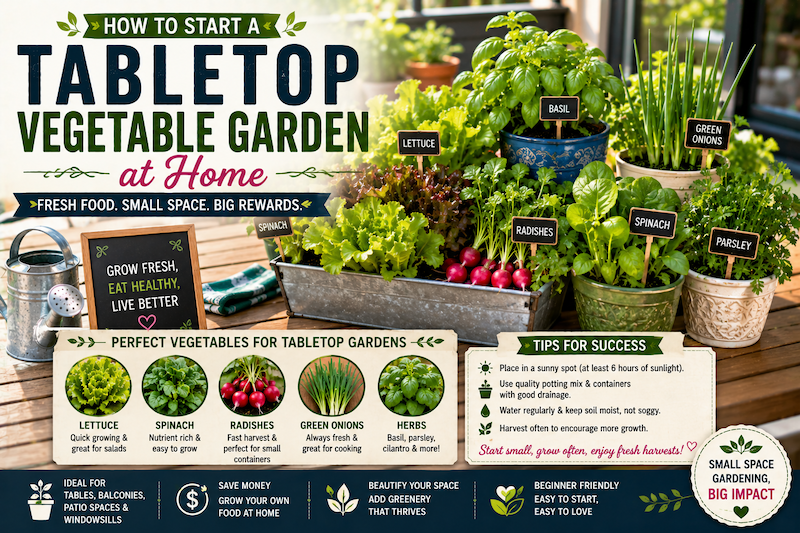
A tabletop vegetable garden is a compact edible garden grown in shallow containers, pots, boxes, or grouped planters placed on a table, bench, shelf, or other raised surface. It is designed for smaller spaces and easy access. This kind of setup fits well with current interest in mini gardens, tabletop gardens, and container-friendly edible plants.
Tabletop gardens are ideal for:
* patios
* balconies
* porches
* sunny window areas
* small outdoor entertaining spaces
Those use cases also align with current container-gardening trends around treating patios and outdoor areas as extensions of the home.
Best vegetables for a tabletop vegetable garden
The best vegetables for a tabletop setup are usually compact, useful, and well suited to containers. Current trend coverage specifically points to container-friendly edible plants and small-scale food-growing setups as a rising area of interest.
Lettuce
Lettuce is one of the best choices for a tabletop garden because it is compact, practical, and useful in everyday meals. It also fits well into the broader small-scale edible gardening trend.
Spinach
Spinach is a strong option for gardeners who want leafy greens in a smaller setup. It works well in compact food gardens and adds practical value to a home-growing space.
Radishes
Radishes are a smart choice for tabletop gardens because they are small, efficient, and easy to include in a compact planting plan. They fit the idea of a mini garden very well.
Green onions
Green onions are useful, kitchen-friendly, and easy to include in small-space edible gardening. They are a practical choice for gardeners who want something they can use often.
Compact herbs
Herbs like basil, parsley, cilantro, and chives pair naturally with a tabletop vegetable garden because they fit in small containers and are used regularly in cooking. They also match the tabletop and windowsill growing trend.
How to start a tabletop vegetable garden at home
1. Choose a bright location
Most compact edible gardens do best in a bright spot. Current trend coverage around windowsill and tabletop growing emphasizes using small but well-placed sunny areas.
2. Use containers that fit your space
A tabletop garden works best when it looks intentional and manageable. Use containers, trays, or grouped pots that fit your table, shelf, or patio surface comfortably. This matches current container-gardening trends that focus on purposeful, functional setups.
3. Grow crops you will actually use
The most effective edible garden is one built around what you enjoy eating. Google’s people-first guidance supports content and decisions based on actual usefulness rather than filler. The same principle works well in gardening: practical plant choices make a small garden more rewarding.
4. Start small
A tabletop garden does not need many varieties to feel worthwhile. Starting with a few useful crops usually creates a better beginner experience than trying to grow too much at once. This also lines up with the broader “mini garden” and small-scale trend.
5. Start with quality seeds
A compact garden still benefits from careful seed selection. Premium-quality seeds give gardeners more confidence and help make even a very small growing space feel more rewarding. Google’s guidance on content quality is also a reminder that quality beats volume, which is a useful mindset for both SEO and gardening.
Why premium-quality seeds matter
A tabletop vegetable garden may be small, but it should still begin with seeds you trust. At Urban Garden Seed, we are proud to offer carefully selected premium-quality seeds for gardeners who value reliability, usefulness, and growing with confidence. Starting with better seed choices helps make every small garden more satisfying.
Final thoughts
Learning how to start a tabletop vegetable garden at home is a smart way to bring fresh food and greenery into everyday life. You do not need a large garden to grow something useful. With a bright spot, a few containers, and quality seeds, even a small table or patio corner can become a productive edible garden. That makes this topic a strong fit for both your customers and current small-space gardening search trends.
