
Cactus & Succulent, Family & Kids' Gardening, Flower Seeds, Herb Seeds, Sensory & Wellness Gardening, Sustainable & Regenerative Living, The Horticulturist’s Lab, Urban & Small-Space Gardening, Vegetables
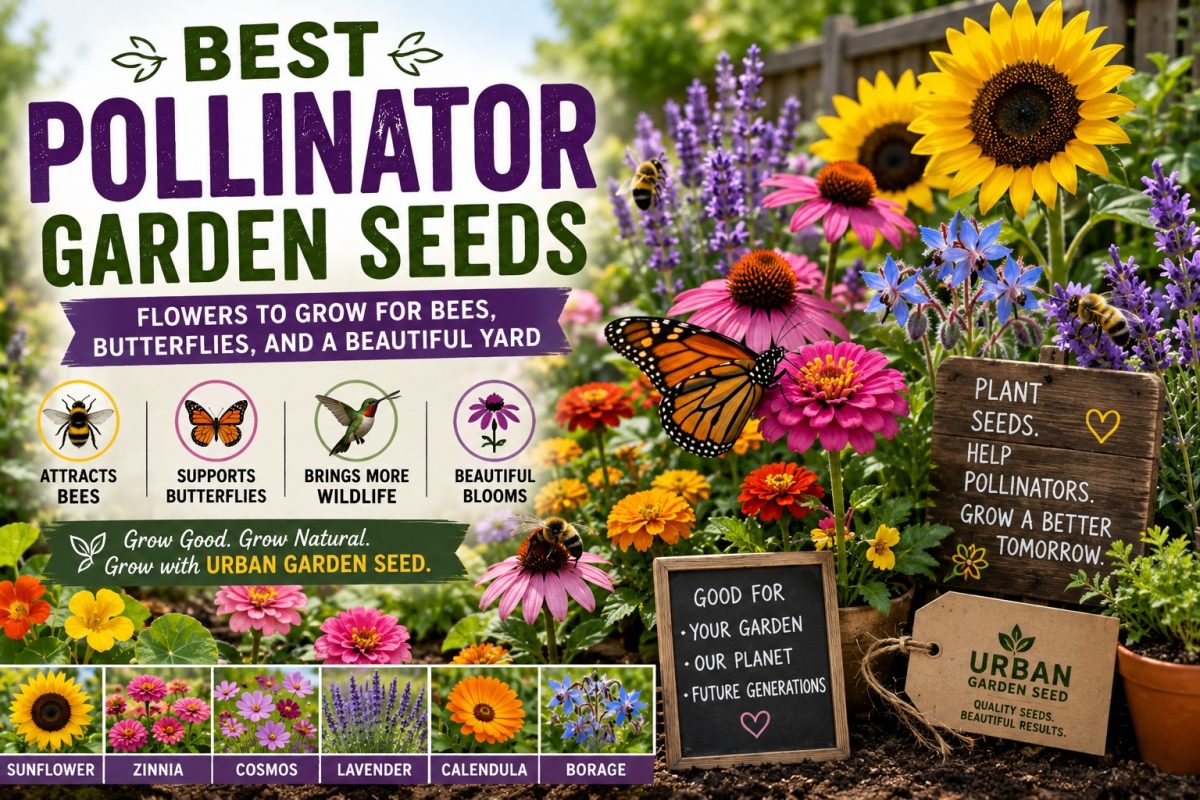
Best Pollinator Garden Seeds: Flowers to Grow for Bees, Butterflies, and a Beautiful Yard
May
A beautiful garden should do more than look good. It can also support bees, butterflies, hummingbirds, and beneficial insects that help keep your yard healthy and full of life.
That is why pollinator gardens are becoming more popular with home gardeners. Instead of planting only decorative flowers, gardeners are choosing seed-grown flowers that provide nectar, pollen, color, fragrance, and habitat.
The best part is that you can start a pollinator garden from seed. With the right flower seeds, even a small yard, raised bed, balcony, or patio container can become a colorful space that supports pollinators.
At Urban Garden Seed, we believe a garden can be beautiful, productive, and beneficial to nature. Here are some of the best pollinator garden seeds to grow for bees, butterflies, and a vibrant outdoor space.
Why Grow a Pollinator Garden from Seed?
Growing pollinator flowers from seed is affordable, rewarding, and flexible. A single packet of seeds can produce many plants, helping you create a full, colorful garden without buying mature plants.
Pollinator gardens are especially useful because they can:
Attract bees and butterflies
Support beneficial insects
Add color to your yard
Improve biodiversity
Create a more natural garden style
Help nearby vegetables and fruiting plants
Make your garden more active and beautiful
Current garden trends are also moving toward nature-first planting, wildflowers, and low-maintenance ecological gardens. Reports in 2026 highlight growing interest in native plants, “chaos gardening,” and relaxed wildflower-style landscapes.
For seed shoppers, this makes pollinator garden seeds a strong choice for both beauty and purpose.
What Makes a Flower Good for Pollinators?
A good pollinator flower usually provides nectar, pollen, or both. It should be accessible to bees, butterflies, or other beneficial insects. Many of the best flowers for pollinators are simple, open-faced blooms rather than heavily doubled flowers that are difficult for insects to access.
When choosing pollinator garden seeds, look for flowers that offer:
Bright colors
Easy access to pollen and nectar
Long bloom periods
Different flower shapes
Different plant heights
Continuous blooms across the season
Suitability for your climate and growing zone
For the best results, plant a mix of flowers. A diverse pollinator garden is more useful than a garden with only one flower type.
Best Pollinator Garden Seeds to Grow
1. Zinnia Seeds
Zinnias are one of the best flower seeds for pollinator gardens. They are colorful, easy to grow, and bloom for a long season in warm weather.
Bees and butterflies are attracted to zinnias, especially varieties with open centers. Zinnias also make excellent cut flowers, so they are useful for both pollinator gardens and home bouquets.
Best for: bees, butterflies, cut flower gardens, sunny borders
Growing difficulty: easy
Sunlight: full sun
Shopping keyword: zinnia seeds for pollinators
Product link idea: Link to your zinnia seed collection or flower seed collection.
2. Sunflower Seeds
Sunflowers are bold, cheerful, and highly attractive in a garden. Their large flower heads provide visual impact and can support pollinators while blooming.
Sunflowers are also excellent for beginner gardeners because their seeds are large, easy to plant, and fast to grow.
Best for: bees, birds, children’s gardens, fence lines
Growing difficulty: very easy
Sunlight: full sun
Shopping keyword: sunflower seeds for planting
3. Cosmos Seeds
Cosmos are airy, delicate-looking flowers that are surprisingly easy to grow. They perform well in sunny gardens and can bloom for a long period.
Cosmos are ideal for gardeners who want a natural, wildflower-style look. They fit well with current trends toward relaxed, less formal garden designs.
Best for: butterflies, cottage gardens, wildflower-style beds
Growing difficulty: easy
Sunlight: full sun
Shopping keyword: cosmos flower seeds
4. Marigold Seeds
Marigolds are bright, dependable flowers that are popular in vegetable gardens, borders, and containers. Their orange, yellow, and red blooms add strong color to a pollinator-friendly space.
Marigolds are easy to grow from seed and work well beside herbs and vegetables.
Best for: vegetable garden borders, containers, sunny beds
Growing difficulty: easy
Sunlight: full sun
Shopping keyword: marigold seeds for planting
5. Calendula Seeds
Calendula produces cheerful yellow and orange flowers that fit beautifully into herb gardens, edible landscapes, and pollinator beds.
Calendula is a good choice for gardeners who want flowers that look natural, warm, and cottage-inspired.
Best for: bees, herb gardens, edible landscapes, cool-season color
Growing difficulty: easy
Sunlight: full sun to partial sun
Shopping keyword: calendula seeds
6. Nasturtium Seeds
Nasturtiums are attractive, fast-growing flowers with round leaves and bright blooms. They grow well in containers, hanging baskets, garden edges, and edible landscapes.
Their trailing habit makes them especially useful for small spaces and patio gardens.
Best for: containers, edible gardens, balcony gardens, garden edges
Growing difficulty: easy
Sunlight: full sun to partial sun
Shopping keyword: nasturtium seeds for planting
7. Borage Seeds
Borage is a standout pollinator plant with star-shaped blue flowers. It attracts bees and adds a unique look to herb gardens, vegetable beds, and pollinator landscapes.
Borage can grow large, so give it enough space.
Best for: bees, herb gardens, vegetable gardens
Growing difficulty: easy to moderate
Sunlight: full sun
Shopping keyword: borage seeds
8. Lavender Seeds
Lavender is famous for its fragrance, purple flowers, and pollinator appeal. It takes more patience to grow from seed than zinnias or marigolds, but it can become a beautiful long-term garden plant.
Lavender prefers sunny locations and well-drained soil.
Best for: bees, fragrant gardens, borders, herb gardens
Growing difficulty: moderate
Sunlight: full sun
Shopping keyword: lavender seeds for planting
9. Echinacea Seeds
Echinacea, also called coneflower, is a popular pollinator flower known for its daisy-like blooms and strong garden presence.
It is excellent for perennial beds, naturalistic gardens, and butterfly-friendly landscapes.
Best for: butterflies, bees, perennial gardens
Growing difficulty: moderate
Sunlight: full sun
Shopping keyword: echinacea seeds
10. Black-Eyed Susan Seeds
Black-eyed Susan is a cheerful, daisy-like flower that fits well in pollinator gardens and wildflower-style plantings.
It is a strong choice for gardeners who want a natural meadow look.
Best for: bees, butterflies, wildflower gardens
Growing difficulty: easy to moderate
Sunlight: full sun
Shopping keyword: black eyed susan seeds
11. Milkweed Seeds
Milkweed is especially important for monarch butterflies because monarch caterpillars depend on milkweed as a host plant. It is one of the most meaningful seeds to include in a butterfly-focused garden.
Choose milkweed varieties suited to your region and follow germination instructions carefully, since some types may need special treatment.
Best for: monarch butterflies, butterfly gardens, native-style gardens
Growing difficulty: moderate
Sunlight: full sun
Shopping keyword: milkweed seeds for monarch butterflies
12. Wildflower Seed Mixes
Wildflower seed mixes are ideal for gardeners who want a natural, colorful, low-maintenance look. They can include a range of annual and perennial flowers that bloom at different times.
Wildflower-style planting is especially relevant because relaxed, seed-scattered garden styles are trending, but gardeners should still plant intentionally by choosing suitable seeds and preparing the soil.
Best for: meadow gardens, large areas, natural garden designs
Growing difficulty: easy to moderate
Sunlight: full sun
Shopping keyword: wildflower seeds for pollinators
How to Plant a Pollinator Garden from Seed
Step 1: Choose a Sunny Location
Most pollinator flowers grow best in full sun. Choose an area that receives at least 6 hours of sunlight per day.
Good planting locations include:
Backyard flower beds
Raised beds
Front yard borders
Fence lines
Patio containers
Balcony planters
Walkway edges
Vegetable garden borders
Even a small space can support pollinators if you choose the right seeds.
Step 2: Prepare the Soil
Before sowing seeds, remove weeds and loosen the top layer of soil. Most flower seeds grow best in soil that drains well and is not heavily compacted.
For containers, use a quality potting mix. For garden beds, add compost if the soil is poor, but avoid over-fertilizing. Too much fertilizer can produce leafy growth with fewer flowers.
Step 3: Plant a Mix of Flower Seeds
A strong pollinator garden should include different bloom colors, heights, and shapes.
Try combining:
Tall flowers: sunflowers, cosmos, echinacea
Medium flowers: zinnias, calendula, black-eyed Susan
Low or trailing flowers: nasturtiums, marigolds
Herbs and fragrant plants: lavender, borage, dill
This creates a layered garden that looks beautiful and provides more resources for pollinators.
Step 4: Plan for Continuous Blooms
Pollinators need food across the growing season, not just for one short bloom period.
Choose a combination of flowers that bloom at different times. Annual flowers like zinnias, marigolds, cosmos, and nasturtiums can provide long-lasting color, while perennial flowers like lavender, echinacea, and black-eyed Susan can return year after year in suitable climates.
Step 5: Water Gently Until Seeds Establish
Seeds need consistent moisture to germinate. Keep the soil evenly moist but not waterlogged.
Once plants are established, many pollinator flowers become more resilient and need less frequent watering, especially when grown in healthy soil.
Step 6: Avoid Harsh Chemical Sprays
Pollinator gardens should be safe for bees, butterflies, and beneficial insects. Avoid unnecessary pesticide use, especially while flowers are blooming.
If pest problems appear, use careful identification and choose the least disruptive method possible.
Pollinator Garden Ideas by Space
Small Patio Pollinator Garden
Use containers filled with:
Nasturtiums
Calendula
Marigolds
Basil
Lavender
Compact zinnias
This setup works well for patios, balconies, and small urban spaces.
Raised Bed Pollinator Garden
Plant a raised bed with:
Zinnias
Cosmos
Marigolds
Borage
Dill
Sunflowers at the back
This design creates color, height, and pollinator activity in one organized bed.
Butterfly Garden from Seed
Choose:
Milkweed
Zinnias
Cosmos
Echinacea
Black-eyed Susan
Nasturtiums
This type of garden is especially attractive for butterfly-focused content and product collections.
Vegetable Garden Pollinator Border
Plant flowers around vegetables using:
Marigolds
Calendula
Zinnias
Borage
Dill
Nasturtiums
This adds beauty while supporting beneficial insect activity near food crops.
Best Seed Collections to Feature on UrbanGardenSeed.com
For internal linking and Google Shopping relevance, create or link to collections such as:
Pollinator Garden Seeds
Flower Seeds for Bees
Butterfly Garden Seeds
Wildflower Seeds
Bee-Friendly Flower Seeds
Easy Flower Seeds
Container Flower Seeds
Native-Style Flower Seeds
Cut Flower Garden Seeds
Edible Flower Seeds
Final Thoughts
A pollinator garden is one of the most rewarding gardens you can grow from seed. It adds color, movement, and life to your outdoor space while supporting bees, butterflies, and beneficial insects.
Start with easy flower seeds like zinnias, sunflowers, cosmos, marigolds, calendula, and nasturtiums. Add borage, lavender, echinacea, black-eyed Susan, milkweed, and wildflower mixes for more diversity.
Whether you have a large backyard or a few patio containers, you can grow a beautiful pollinator-friendly garden from seed.
Call to Action
Ready to grow a garden that supports bees, butterflies, and beautiful blooms?
Explore Urban Garden Seed’s pollinator-friendly flower seeds, wildflower seeds, herb seeds, and garden seed collections at UrbanGardenSeed.com.
FAQ Section
What are the best pollinator garden seeds?
The best pollinator garden seeds include zinnias, sunflowers, cosmos, marigolds, calendula, nasturtiums, borage, lavender, echinacea, black-eyed Susan, milkweed, and wildflower seed mixes.
What flower seeds attract bees?
Bee-friendly flower seeds include zinnias, sunflowers, calendula, borage, lavender, cosmos, echinacea, and marigolds. Planting a mix of flower shapes and bloom times can help attract more pollinators.
What flower seeds attract butterflies?
Butterfly-friendly flower seeds include zinnias, cosmos, echinacea, black-eyed Susan, milkweed, marigolds, and wildflower mixes. Milkweed is especially important for monarch butterflies.
Can I grow a pollinator garden in containers?
Yes. Many pollinator flowers grow well in containers, including compact zinnias, marigolds, nasturtiums, calendula, lavender, and some herbs. Choose containers with good drainage and place them in a sunny location.
Are wildflower seeds good for pollinators?
Yes, wildflower seed mixes can be good for pollinators when they include suitable flower varieties for your region. For best results, prepare the soil, choose high-quality seeds, and follow planting instructions.
When should I plant pollinator garden seeds?
Planting time depends on your climate and the seed variety. Many warm-season flowers are planted after frost danger has passed, while some wildflowers and perennials may be planted in fall or early spring. Always follow the planting instructions on the seed packet.
How do I make my garden more butterfly-friendly?
Grow nectar flowers, include host plants such as milkweed for monarchs, avoid harsh chemical sprays, provide sunny planting areas, and plant flowers that bloom at different times of the season.
