
Cactus & Succulent, Family & Kids' Gardening, Flower Seeds, Herb Seeds, Sensory & Wellness Gardening, Sustainable & Regenerative Living, The Horticulturist’s Lab, Urban & Small-Space Gardening, Vegetables
The Ultimate Guide to Seed Saving: How to Preserve Rare Heirloom Varieties at Home
May
There is a quiet revolution happening in backyards around the world. Gardeners are no longer just growing food for a single season—they are preserving history. Google searches for “how to save heirloom seeds” and “local seed swapping” have spiked significantly as growers look for self-sufficiency and ways to protect rare, incredibly flavorful plant strains.
Saving your own seeds isn’t just a rewarding hobby; it allows you to adapt plants to your specific microclimate year after year, resulting in stronger, more resilient future harvests.
Here is your beginner-friendly blueprint to mastering the art of heirloom seed saving and joining the global seed community.
Heirloom vs. Hybrid: Which Seeds Can You Save?
Before you start harvesting, you need to understand the golden rule of seed saving: you can only save seeds from open-pollinated or heirloom varieties.
- Heirloom & Open-Pollinated Seeds: These are fertilized by natural mechanisms—like bees, butterflies, wind, or human hands. When you save seeds from an heirloom plant (like a classic Brandywine tomato), the resulting offspring will grow up to be exactly like the parent plant. This is called growing “true to type.”
- Hybrid (F1) Seeds: These are deliberate, controlled crosses between two different parent varieties to achieve specific traits like uniform size or disease resistance. If you save seeds from a hybrid plant, the next generation will revert to random genetic traits of the grandparents, often resulting in disappointing fruit or poor growth.
To build a permanent, multi-generational garden, always start your journey with high-quality heirloom seeds.
How to Save Heirloom Seeds in 4 Steps
Preserving seeds requires patience and correct processing to prevent mold or rot. While different plants require slightly different methods, this core sequence will guide you through your first harvest successfully:
1.Select and Over-Ripen Your Best Plants:Let the fruit fully mature.
Identify your absolute healthiest, most productive, and most delicious plants to pass on their genetics. For seed saving, you must let the crop mature far past the stage where you would normally eat it. Let pea pods turn brown and dry on the vine, or let tomatoes and peppers become completely soft and slightly overripe.
2.Harvest and Extract the Seeds:Wet vs. Dry methods.
Separate the seeds using one of two methods depending on the crop type:
- The Dry Method (Beans, Peas, Flowers): Simply break open the crispy, dried pods or flower heads and shake the loose seeds out.
- The Wet Method (Tomatoes, Cucumbers): Scoop the seeds out into a jar of water. Let it ferment for 2–3 days to break down the slippery gelatinous coat, then rinse through a fine mesh strainer.
3.Dry Thoroughly in a Well-Ventilated Area:Moisture is the enemy.
Spread your clean seeds out in a single layer on a flat surface—parchment paper, ceramic plates, or window screens work perfectly (avoid paper towels, as the seeds will stick to them). Let them dry completely for 1 to 2 weeks out of direct sunlight. A seed is fully dry when it is hard enough that you cannot dent it with a fingernail.
4.Package, Label, and Store Properly:Keep it dark and cool.
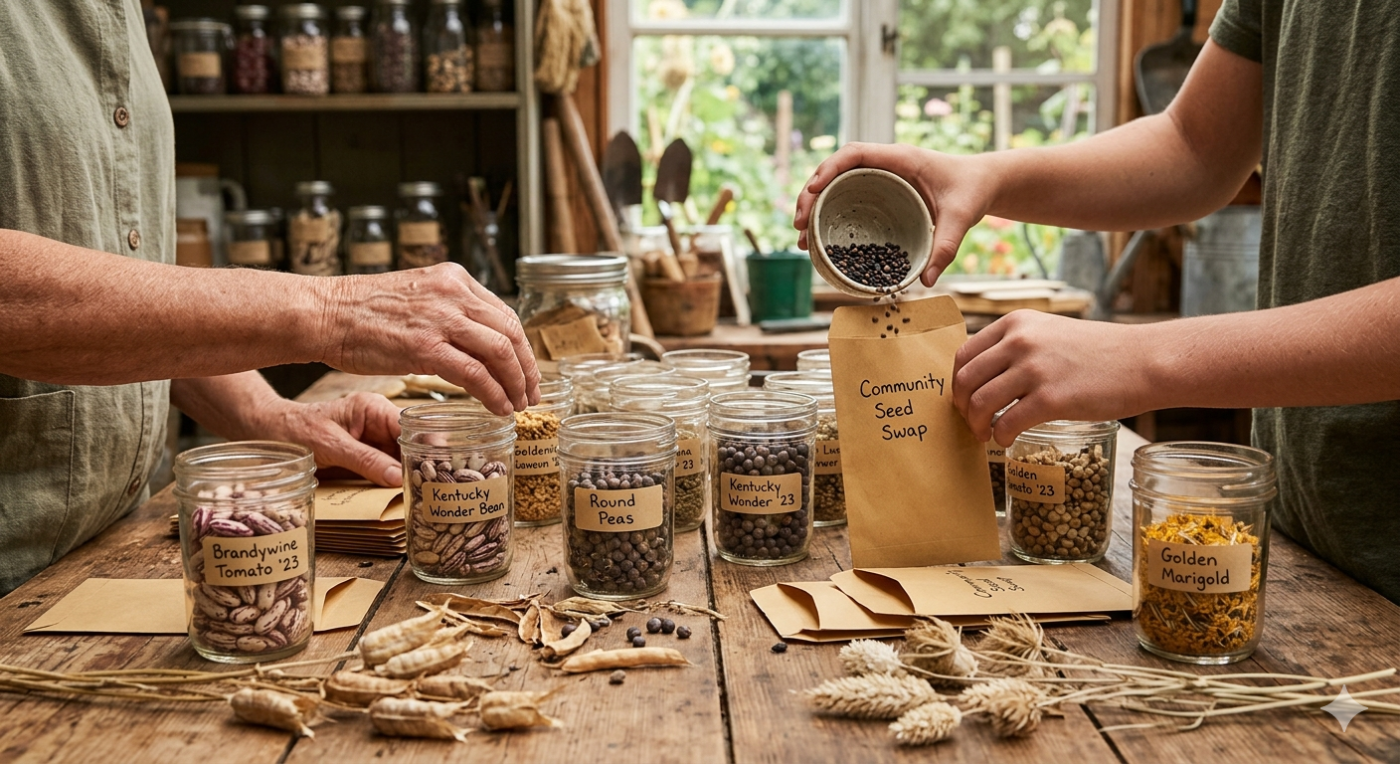
Place your completely dry seeds into airtight glass jars or paper envelopes. Always label them immediately with the exact plant variety and the month/year harvested. Store the containers in a cool, dark, and dry location like a closet or cupboard.
3 Pro-Tips for the Global Seed Swap Movement
1. Prevent cross-pollination: If you are growing two different varieties of squash right next to each other, bees will cross-pollinate them, giving you a strange hybrid mix next year. Space different varieties of the same family apart, or use mesh blossom bags to keep the genetics pure.
2. Test your germination rate: Before gifting your saved seeds to friends or trading them at a seed swap, place 10 seeds inside a damp paper towel in a plastic bag. If 8 sprout within a couple of weeks, you have a fantastic 80% germination rate.
3. Join a community seed bank: Bring your surplus seeds to local urban gardening groups, seed libraries, or community swaps. Trading your heirloom seeds for unique, regional varieties from other growers is the fastest way to expand your collection for free!
By transitioning from a seed consumer to a seed saver, you play an active role in preserving agricultural history while locking in an endless cycle of fresh, hyper-local food for your home.
