
Cactus & Succulent, Family & Kids' Gardening, Flower Seeds, Herb Seeds, Sensory & Wellness Gardening, Sustainable & Regenerative Living, The Horticulturist’s Lab, Urban & Small-Space Gardening, Vegetables
The Continuous Kitchen Harvest: Best Herbs and Fast-Yielding Veggies to Grow Together
Jun
Indoor culinary herb garden, fast-growing kitchen crops, kitchen windowsill gardening, companion planting in pots, grow your own food indoors.
Imagine stretching out your hand while cooking and plucking fresh, aromatic basil, crisp micro-greens, or vibrant chives directly from your kitchen windowsill. No grocery store trips, no plastic packaging, and no wilted greens forgotten in the crisper drawer.
Creating an indoor culinary herb garden is one of the most rewarding ways to dive into urban homesteading. But if you want a constant, never-ending supply of fresh ingredients, the secret lies in pairing your slow-growing perennial herbs with lightning-fast companion crops.
With high-germination culinary seeds and a few smart planting combinations, you can turn a single sunny ledge into a highly productive kitchen grocery aisle.
The Secret to an Endless Kitchen Harvest
Many indoor gardeners make the mistake of planting only slow-growing herbs like rosemary or thyme. While delicious, once you harvest a few sprigs, you have to wait weeks for the plant to recover.
The pro-gardener strategy is succession companion planting. By sharing container space between long-term herbs and rapid-fire leafy greens, you can harvest fresh food every single week while your primary herbs mature.
Quick Facts: Why Kitchen Gardening Wins
- Peak Flavor & Nutrition: Herbs and greens lose their aromatic oils and vital nutrients within hours of being harvested. Snapping them fresh guarantees maximum culinary impact.
- Natural Pest Deterrence: Highly aromatic herbs like mint, basil, and chives act as natural deterrents, keeping common indoor pests like fungus gnats away from your sensitive salad greens.
- Zero Waste Living: You only harvest exactly what your recipe calls for—whether that’s three individual leaves of basil or a single pinch of thyme.
4 Steps to Plant a Multi-Tier Window Box
To ensure your roots don’t compete for resources and your fast crops don’t crowd out your slow growers, follow this exact layout and assembly order.
1
Anchor with Long-Term Culinary Herbs
Step 1
Place your slow-growing, sun-loving perennial herbs—such as rosemary, thyme, or oregano—toward the back or center of your planter box. These will serve as the permanent, structural anchors of your indoor kitchen setup.
2
Intersperse Fast-Growing Leafy Companions
Step 2
In the spaces directly between your anchor herbs, sow fast-yielding, shallow-rooted seeds like arugula, loose-leaf lettuce, or spicy radishes. These will sprout rapidly, utilizing the unused topsoil before the herbs expand.
3
Border with Spill-Over Aromatics
Step 3
Plant trailing or fast-spreading varieties like trailing thyme or mint along the front edges of the container. This allows them to drape beautifully over the sides, maximizing your vertical growing space without suffocating the soil.
4
Harvest the Fast Crops to Make Room
Step 4
Within 21 to 30 days, harvest your fast-growing greens entirely by the “cut-and-come-again” method. Removing these quick crops perfectly times out with your primary herbs needing more root space and sunlight to thrive.
Best Culinary Duos for Your Pots
When pairing seeds, match varieties that share identical water and sunlight requirements. Try these foolproof kitchen combinations:
- The Italian Medley (Basil + Arugula): Sweet basil loves warm sunlight, and spicy arugula grows incredibly fast around its base, giving you a peppery salad base while your basil matures for pesto.
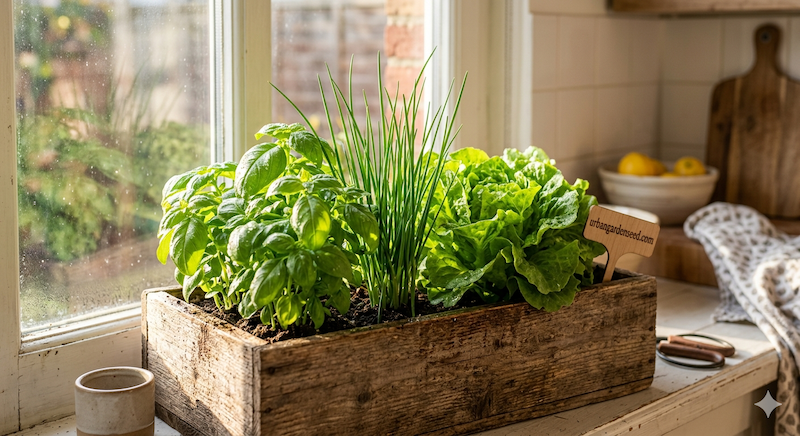
- The Onion & Greens Box (Chives + Loose-Leaf Lettuce): Crisp chives grow straight up like little green spikes, leaving plenty of surface room for loose-leaf butterhead lettuce to leaf out comfortably underneath.
- The Tea & Garnish Corner (Mint + Chamomile): If you enjoy fresh herbal drinks, planting compact mint alongside delicate, apple-scented chamomile gives you a dedicated relaxation station right on your counter.
Pro Window Gardening Tip: Leafy greens and herbs are highly sensitive to stagnant water, which quickly causes root rot. Always use a premium, well-draining potting soil mix and verify your windowsill gets at least 4 to 6 hours of bright, indirect morning sunlight!
