
Adenium, Cactus & Succulent, Family & Kids' Gardening, Flower Seeds, Herb Seeds, Sensory & Wellness Gardening, Sustainable & Regenerative Living, The Horticulturist’s Lab, Urban & Small-Space Gardening, Vegetables
How to Double Your Urban Harvest with Container Companion Planting
Jun
If you are gardening on a balcony, patio, or small urban lot, maximizing your space is likely your top priority. One of the biggest gardening trends for 2026 is “maximalist gardening” and dense, diverse plantings—a shift away from sparse, unstructured pots toward lush, overflowing containers.
The secret to achieving this without overwhelming your plants is companion planting.
Companion planting is a technique where different plants are grown near each other for mutual benefit. By pairing the right seeds together in the same container, you can naturally enhance growth, deter pests, and improve pollination.
Here is how you can use companion planting to turn your small space into a highly productive ecosystem, along with the best seed combinations to get you started.
1. The Best Companion Combinations for Containers
Not all plants make good roommates. When container gardening, plants have access to less water, food, and root space, resulting in intense competition. To ensure success, try these proven pairings:
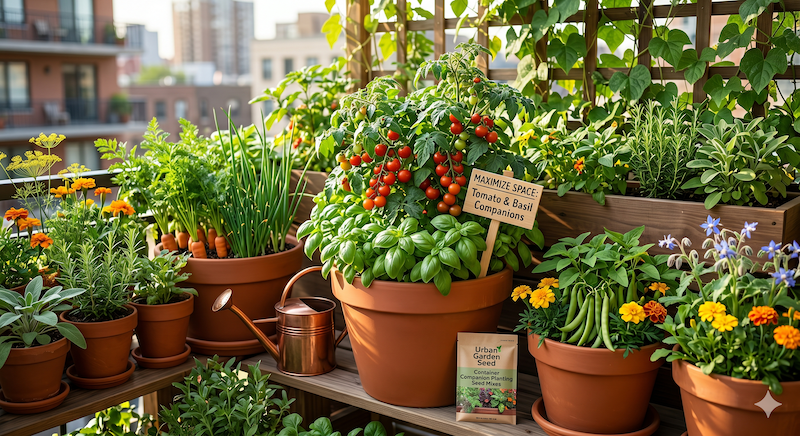
- Tomatoes & Basil: This is a classic winning combination. When grown next to each other, basil can actually help to deter pests from your tomatoes while also suppressing weeds. As a bonus, both are excellent choices for warm, sunny container gardens.
- Carrots & Onions: These two crops make a perfect pair because they have complementary growth habits; onions grow upward while carrots burrow down into the soil. Onions can repel pests like carrot flies, and in return, carrots help aerate the soil to benefit the onions.
- Bush Beans & Marigolds: If you are using a medium-to-large pot (around 14 inches), bush beans and marigolds make a simple, beautiful, and highly productive vegetable and flower garden. Marigolds are frequently planted among vegetables because they help repel aphids and attract beneficial pollinators.
2. What to Avoid (The Bad Roommates)
Just as some plants thrive together, others will stunt each other’s growth if forced to share a pot.
- Tomatoes and Cucumbers: Avoid putting these in the same container, as the cucumbers grow faster and will outcompete the tomatoes.
- Summer Squash/Zucchini and Bell Peppers: The squash will quickly grow monstrous leaves that block the sunlight from reaching the peppers.
3. The Golden Rules of Container Combinations
If you want to experiment with your own pairings, keep these container-specific guidelines in mind:
Match Their Needs
You cannot throw any two species together in a planting box; you must research their habits and combine plants that share similar sunlight requirements, watering needs, and root systems.
Use Strong Smells to Confuse Pests
Many garden pests locate their favorite plants by sight and smell. You can protect your main crops by adding strong-smelling plants to your containers, such as garlic, chives, rosemary, and sage, which helps confuse pests.
Support Your Pollinators
Adding flowers to your vegetable containers supports pollinating insects. Great choices for urban container gardens include borage, dill, pot marigolds, and blooming herbs like chives.
Ready to Maximize Your Small Space?
Companion planting is an incredibly easy technique that helps you get the absolute most out of your urban garden. The best way to start is with fresh, high-germination seeds tailored for small spaces.
At Urban Garden Seed, we offer premium, non-GMO seed varieties that are perfect for mixing and matching in your patio pots and balcony planters.
👉 Shop our Companion Planting Seed Bundles and start building your lush urban garden today!
