
Adenium, Cactus & Succulent, Family & Kids' Gardening, Flower Seeds, Herb Seeds, Sensory & Wellness Gardening, Sustainable & Regenerative Living, The Horticulturist’s Lab, Urban & Small-Space Gardening, Vegetables
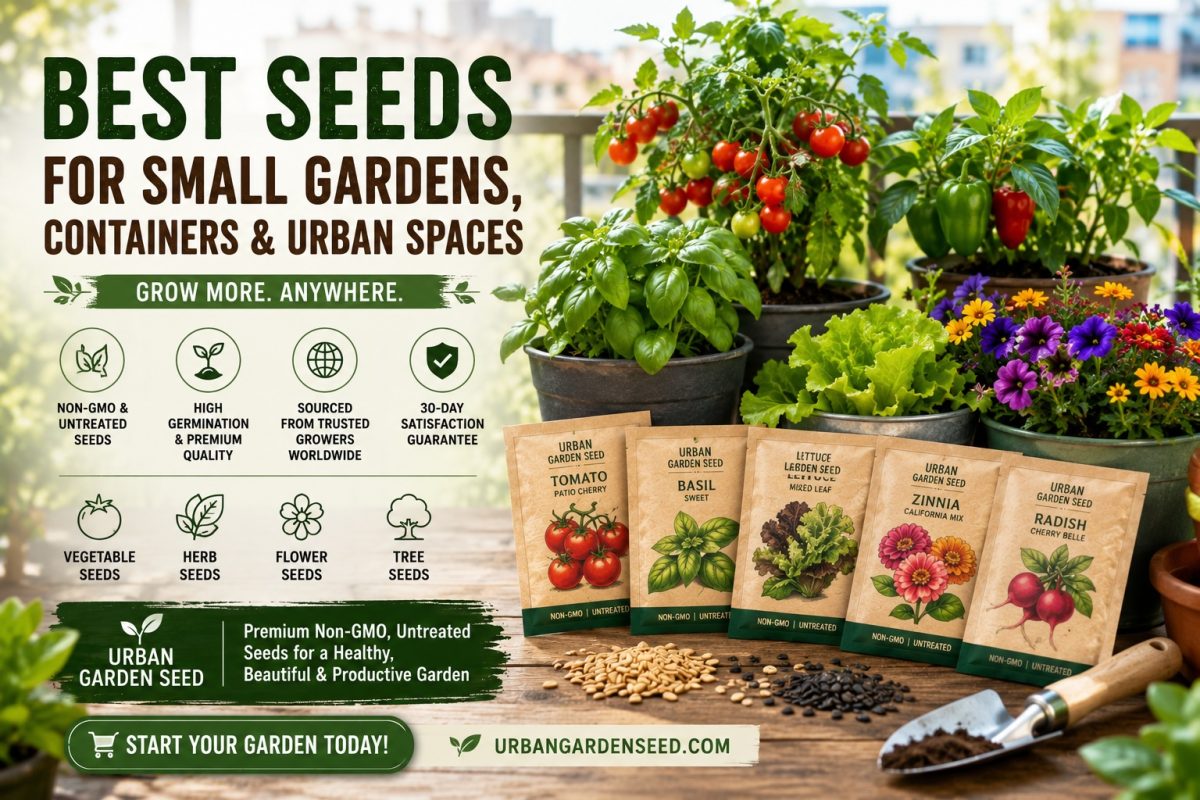
Best Seeds for Small Gardens, Containers, and Urban Spaces
Jun
Discover the best vegetable, herb, and flower seeds for containers and small gardens. Shop Non-GMO, untreated seeds from Urban Garden Seed.
You do not need a large backyard to grow fresh vegetables, fragrant herbs, or beautiful flowers.
A sunny balcony, patio, porch, windowsill, rooftop, or compact garden bed can become a productive growing space when you choose the right seeds. The key is selecting plants that match your container size, available sunlight, growing season, and gardening experience.
At Urban Garden Seed, we offer high-quality Non-GMO, untreated vegetable, herb, flower, and tree seeds for gardeners working with spaces of every size.
Whether you are starting your first container garden or expanding an established urban garden, this guide will help you choose seeds that make the most of your available space.
Start growing with premium seeds from UrbanGardenSeed.com.
Why Small-Space Gardening Is Worth Starting
Small-space gardening makes it possible to grow plants where a traditional backyard garden is not available.
You may be able to garden successfully on a:
- Balcony
- Apartment patio
- Front porch
- Rooftop
- Windowsill
- Deck
- Small backyard
- Raised bed
- Community garden plot
Container gardening also gives you greater control over soil, drainage, spacing, and plant placement.
Containers can be moved to capture more sunlight, protect plants during severe weather, or improve the overall appearance of your outdoor space. They also make it easier to separate plants with different soil and watering requirements.
A small, carefully planned garden can produce herbs, vegetables, flowers, and edible greens throughout the growing season.
What Makes a Seed Variety Suitable for a Small Garden?
Not every plant is naturally suited to containers or compact growing spaces.
Before buying seeds, consider the plant’s mature size rather than the size of the seedling.
Look for varieties described as:
- Compact
- Dwarf
- Bush
- Patio
- Container-friendly
- Determinate
- Miniature
- Space-saving
These descriptions can indicate that a plant has a more manageable growth habit.
You should also consider:
Root depth
Root vegetables and large fruiting plants need deeper containers than shallow-rooted greens and many herbs.
Mature width
Some plants spread far beyond the edge of their container. Squash, melon, and indeterminate tomato vines may require more space or vertical support.
Sunlight
Most fruiting vegetables need substantial sunlight. Some leafy greens and herbs may tolerate partial shade better.
Days to maturity
Fast-growing varieties can be useful when your growing season is short or you want multiple harvests from the same space.
Support requirements
Climbing vegetables can save horizontal space when grown on a trellis, railing, cage, or stake.
Best Vegetable Seeds for Small Gardens
1. Lettuce
Lettuce is one of the most practical vegetables for containers and small garden beds.
It has a relatively shallow root system, can be harvested at different stages, and does not require as much room as many fruiting crops.
You can grow:
- Loose-leaf lettuce
- Romaine lettuce
- Butterhead lettuce
- Baby lettuce mixes
- Red and green leaf varieties
Loose-leaf varieties are especially convenient because you can harvest the outer leaves while allowing the center to continue growing.
Container recommendation
Use a wide container with adequate drainage. Lettuce generally benefits more from surface area than extreme depth.
Growing tip
Plant small batches at intervals instead of sowing the entire packet at once. This approach can provide a more continuous harvest.
Shop Lettuce Seeds
2. Radishes
Radishes are excellent for gardeners who want a fast and rewarding crop.
Many varieties mature quickly and require less space than larger root vegetables. They can be grown in containers, raised beds, and gaps between slower-growing plants.
Container recommendation
Choose a container deep enough for the mature radish variety. Round radishes usually require less depth than long-rooted varieties.
Growing tip
Consistent moisture helps roots develop evenly. Overcrowding can result in small or poorly formed radishes, so thin seedlings according to the variety’s recommended spacing.
Shop Radish Seeds
3. Bush Beans
Bush beans produce on compact plants and usually do not need the tall support required by pole beans.
They can be grown in medium to large containers, raised beds, and small garden plots.
Container recommendation
Use a stable container with good drainage and sufficient space for several plants.
Growing tip
Harvest beans regularly. Frequent picking encourages many varieties to continue producing.
Shop Bean Seeds
4. Peppers
Pepper plants can perform well in containers because each plant can produce multiple fruits without occupying a large garden bed.
Gardeners can choose from:
- Sweet peppers
- Bell peppers
- Chili peppers
- Ornamental peppers
- Specialty pepper varieties
Container recommendation
Grow one mature pepper plant in an appropriately sized container rather than crowding several plants into a small pot.
Growing tip
Peppers generally prefer warmth and good sunlight. Seedlings may benefit from being started indoors before outdoor conditions become consistently warm.
Shop Pepper Seeds
5. Compact Tomatoes
Tomatoes are among the most popular vegetables for home gardens, but the variety matters greatly in a limited space.
Look for varieties described as:
- Patio tomatoes
- Dwarf tomatoes
- Bush tomatoes
- Determinate tomatoes
- Compact cherry tomatoes
Determinate varieties generally grow to a more defined size than vigorous indeterminate vines.
Container recommendation
Use a large, sturdy container with drainage holes. Even compact tomatoes need adequate root room.
Growing tip
Install a cage or support early to avoid damaging established roots later.
Shop Tomato Seeds
6. Green Onions
Green onions are productive choices for narrow containers and small garden areas.
They can be harvested young and do not require as much spacing as full-sized bulb onions.
Container recommendation
Use a rectangular planter, window box, or medium-depth pot.
Growing tip
Sow small groups at intervals for repeat harvests.
Shop Onion Seeds
7. Carrots
Carrots can grow well in containers when the container depth matches the mature root length.
Short or round carrot varieties are especially useful for compact gardens.
Container recommendation
Use loose, stone-free growing medium in a container deep enough for the chosen variety.
Growing tip
Carrot seeds are small and can be easy to oversow. Thin the seedlings carefully so the roots have enough room to develop.
Shop Carrot Seeds
8. Cucumbers
Cucumbers can work in small spaces when they are trained vertically.
Look for compact, bush, patio, or container varieties when possible.
Container recommendation
Use a large container with a sturdy trellis or support.
Growing tip
Vertical growing helps keep vines organized, improves access for harvesting, and reduces the amount of ground space required.
Shop Cucumber Seeds
9. Kale
Kale grows well in containers and can be harvested one leaf at a time.
It is useful for gardeners who want a crop that remains productive through repeated harvesting.
Container recommendation
Provide enough room for the mature leaves and root system. Avoid crowding several full-sized plants into one small pot.
Growing tip
Harvest the lower outer leaves first and leave the growing center intact.
Shop Kale Seeds
10. Herbs Used as Vegetables
Basil, cilantro, parsley, dill, and chives can provide frequent harvests while occupying relatively little space.
They are particularly valuable in small gardens because even a modest harvest can be used immediately in cooking.
Shop Herb Seeds
Best Herb Seeds for Pots and Balconies
Basil
Basil is ideal for warm, sunny container gardens. Regular harvesting encourages bushier growth and delays flowering.
It can be used for:
- Pesto
- Pasta dishes
- Salads
- Soups
- Sauces
- Fresh garnishes
Pinch the stems above a pair of leaves rather than removing only individual leaves.
Parsley
Parsley grows well in pots and provides repeated harvests once established.
Both curly and flat-leaf varieties can be grown in containers.
Use a container deep enough to accommodate its root development, and avoid allowing the growing medium to dry excessively.
Cilantro
Cilantro is useful for cool-season container gardens, although it can flower quickly in hot conditions.
Sow small batches periodically to extend the harvest period rather than depending on one large planting.
Chives
Chives have a narrow, upright growth habit and are well suited to pots, window boxes, and small garden borders.
Harvest leaves from the outside and allow the center to continue growing.
Thyme
Thyme is a compact herb that generally prefers good drainage.
Its low growth habit makes it suitable for small pots, mixed herb planters, and sunny container arrangements.
Oregano
Oregano can spread as it matures, but it responds well to trimming and container culture.
Growing it in its own pot can help prevent it from overtaking slower-growing herbs.
Dill
Dill has attractive foliage and useful culinary leaves and seeds.
Choose an appropriately deep container because dill develops a substantial taproot. Compact dill varieties may be preferable where space is limited.
Mint
Mint is vigorous and can spread aggressively in garden beds.
Growing mint in a separate container is often the best way to keep it controlled while maintaining convenient access for teas, beverages, desserts, and cooking.
Best Flower Seeds for Containers
A productive small garden does not need to contain only edible plants. Flowers add color, attract pollinators, and make balconies and patios more inviting.
Marigolds
Marigolds are popular container flowers because they offer bright colors and a manageable growth habit.
Choose compact varieties for smaller pots and borders.
Zinnias
Zinnias produce colorful flowers and are available in a range of plant heights.
Look for dwarf or compact varieties for containers. Taller varieties may require larger pots or support.
Nasturtiums
Nasturtiums can trail over container edges or climb when given support.
Their rounded leaves and vivid flowers make them useful in hanging baskets, railing planters, and mixed container displays.
Calendula
Calendula offers cheerful flowers and can perform well in pots during suitable weather.
Frequent removal of faded flowers may encourage continued blooming.
Alyssum
Sweet alyssum has a low, spreading growth habit that works well around container edges.
It can be paired with taller flowers, vegetables, and herbs in larger planters.
Petunias
Petunias are commonly grown in window boxes, hanging baskets, and containers.
They provide extensive color when given suitable sunlight, moisture, and regular care.
Dwarf Sunflowers
Standard sunflowers can become too large for small containers, but dwarf sunflower varieties are much more suitable for patios and balconies.
Check the expected mature height before planting.
How to Choose the Right Container
The seed variety and container must work together.
Make sure the container has drainage
Containers should have drainage holes so excess water can escape. Waterlogged growing medium can damage roots and create unhealthy growing conditions.
Match container size to the mature plant
A small seedling may look comfortable in a tiny pot, but the mature plant may quickly outgrow it.
Larger plants generally need more:
- Root space
- Water
- Nutrients
- Structural support
Consider the container material
Different materials behave differently.
Terracotta containers can dry relatively quickly. Plastic containers may retain moisture longer. Fabric grow bags provide good drainage and air movement but may require frequent watering.
Use clean containers
Clean reused containers before planting, especially if previous plants experienced disease problems.
Avoid crowding
More plants do not always produce more food. Overcrowding can increase competition for water, nutrients, and light.
How Much Sunlight Does a Container Garden Need?
Sunlight is one of the most important considerations when selecting seeds.
Full sun
Fruiting crops such as tomatoes, peppers, beans, and cucumbers generally perform best with strong sunlight.
Partial sun or partial shade
Leafy greens and some herbs may tolerate reduced sunlight better than fruiting vegetables.
Observe the space before planting
Watch your intended growing area at several points during the day.
Buildings, walls, fences, trees, railings, and neighboring structures can create changing shade patterns.
Choose plants according to the actual light the location receives—not simply whether the space appears bright.
How to Start Seeds for a Container Garden
Step 1: Read the variety instructions
Check the recommended planting depth, temperature, spacing, and whether the variety should be started indoors or sown directly.
Step 2: Use suitable seed-starting medium
A clean, light seed-starting mix helps maintain moisture while allowing air to reach developing roots.
Step 3: Avoid planting too deeply
Planting depth depends on seed size and species. Follow the instructions for the particular variety.
Step 4: Maintain consistent moisture
Keep the growing medium moist during germination without leaving it saturated.
Step 5: Provide light after seedlings emerge
Once seedlings appear, they need sufficient light to develop compact, sturdy growth.
Step 6: Thin crowded seedlings
Removing excess seedlings gives the remaining plants more room to grow.
Step 7: Harden off indoor-grown plants
Gradually expose seedlings to outdoor conditions before transplanting them permanently.
Common Small-Space Gardening Mistakes
Choosing plants that become too large
Always check mature dimensions. A vigorous vine or sprawling plant can overwhelm a balcony or compact bed.
Using containers without drainage holes
Decorative pots may not provide adequate drainage. Add suitable holes or use an inner nursery pot.
Planting too many seeds in one container
Crowding reduces access to light, moisture, nutrients, and airflow.
Using garden soil in containers
Dense outdoor soil may compact in pots and drain poorly. Use growing medium designed for containers.
Underestimating watering needs
Containers can dry faster than in-ground garden beds, especially during hot or windy weather.
Ignoring vertical space
Trellises, stakes, cages, shelves, and hanging planters can greatly increase the productive capacity of a small area.
Fertilizing excessively
Too much fertilizer can damage plants or encourage leaves at the expense of flowers and fruit. Follow the product instructions and the needs of the crop.
How to Create a Productive Small-Space Garden
Grow vertically
Train cucumbers, beans, tomatoes, and suitable flowering vines upward rather than allowing them to spread across the ground.
Use succession planting
After one fast crop is harvested, plant another crop in the same container or space when the season permits.
Combine compatible plants
Large containers can sometimes hold more than one plant type when they share similar light, water, and soil requirements.
For example, a large tomato container may have room for a shallow-rooted herb around the edge, provided neither plant becomes crowded.
Choose crops you regularly use
Space is valuable. Prioritize vegetables and herbs your household enjoys eating.
Harvest frequently
Regular harvesting can keep herbs and many vegetables productive.
Keep notes
Record:
- Planting dates
- Germination time
- Container size
- Sun exposure
- Harvest results
- Successful varieties
These notes make it easier to improve your garden each season.
Why Buy Seeds from Urban Garden Seed?
Non-GMO seeds
Urban Garden Seed offers Non-GMO seed choices for customers who prefer traditionally bred varieties.
Untreated seeds
Our untreated seeds are selected for gardeners who want greater transparency and control over their growing process.
Vegetable, flower, herb, and tree seeds
Customers can explore multiple seed categories through one trusted website.
Varieties sourced worldwide
Urban Garden Seed sources seeds from growing regions around the world, including Australia, Canada, South Africa, Thailand, the Philippines, China, the Netherlands, the United Kingdom, and Taiwan.
Trusted by more than 800,000 gardeners
Our seeds have been purchased by a large community of gardeners seeking dependable varieties for home growing.
30-Day Satisfaction Guarantee
Our guarantee helps customers purchase seeds with greater confidence.
Supporting gardeners since 2012
Urban Garden Seed has years of experience providing seed varieties to home gardeners and plant enthusiasts.
Frequently Asked Questions
What are the best seeds for a small garden?
Good choices include lettuce, radishes, herbs, bush beans, green onions, peppers, compact tomatoes, kale, dwarf flowers, and vegetables that can be trained vertically.
What seeds grow well in containers?
Many vegetables, herbs, and flowers can grow in containers. The best variety depends on the mature plant size, container depth, sunlight, and local climate.
Can I grow vegetables on an apartment balcony?
Yes, provided the balcony receives enough light and can safely accommodate the weight of containers, growing medium, plants, and water. Check building or property rules before installing a large garden.
Which vegetables need the least space?
Leaf lettuce, radishes, green onions, herbs, compact peppers, and certain dwarf or bush varieties use relatively little space.
Can I grow tomatoes in pots?
Yes. Choose a suitably large container, use a compact or container-friendly variety, provide strong sunlight, and install adequate support.
What flowers are best for small containers?
Compact marigolds, dwarf zinnias, alyssum, calendula, petunias, nasturtiums, and dwarf sunflowers are useful options.
How many seeds should I plant in one pot?
This depends on the plant and container size. Some small seeds can be sown more densely and thinned later, while larger plants should be spaced according to their mature dimensions.
Do container plants need more water?
Containers often dry faster than in-ground gardens. Watering frequency will depend on container size, material, weather, plant size, and growing medium.
Are untreated seeds suitable for container gardening?
Yes. Untreated seeds can be grown in pots, planters, raised beds, or traditional garden soil when the needs of the variety are met.
Start Your Small-Space Garden Today
A limited amount of space does not have to limit what you can grow.
With carefully selected seeds, suitable containers, sufficient light, and consistent care, a balcony, patio, windowsill, or compact backyard can provide fresh herbs, vegetables, and colorful flowers.
Explore high-quality Non-GMO, untreated seeds for gardens of every size at UrbanGardenSeed.com.
Grow More in Less Space
Shop vegetable, flower, herb, and tree seeds from Urban Garden Seed today.
