
Adenium, Cactus & Succulent, Family & Kids' Gardening, Flower Seeds, Herb Seeds, Sensory & Wellness Gardening, Sustainable & Regenerative Living, The Horticulturist’s Lab, Urban & Small-Space Gardening, Vegetables
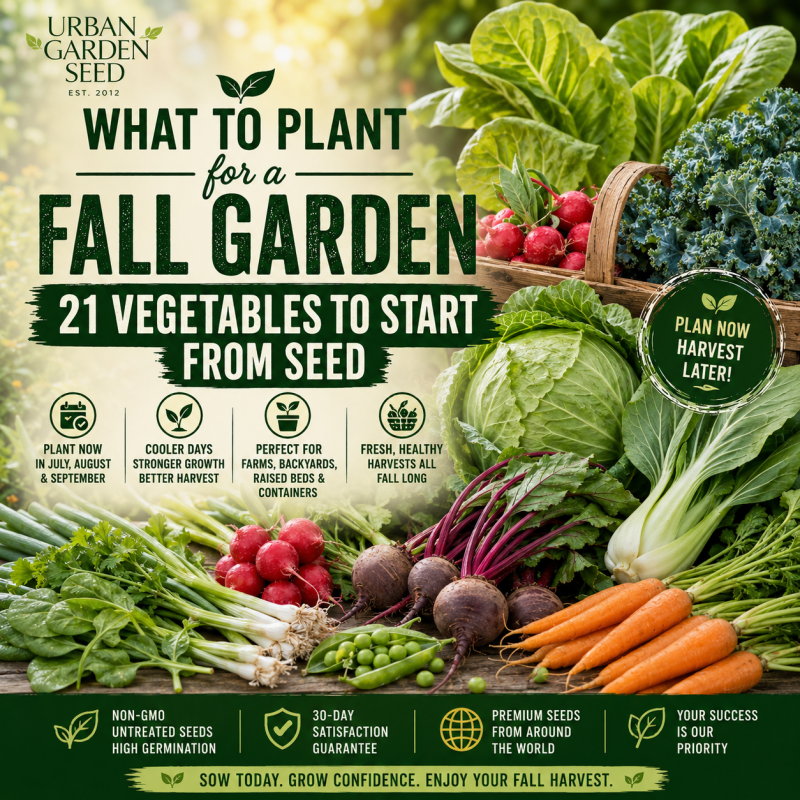
What to Plant for a Fall Garden: 21 Vegetables to Start From Seed in July, August, and September
Jul
Think your vegetable garden is finished when summer begins to fade?
Think again.
For many gardeners across the United States, July, August, and even September can open the door to a second growing season filled with crisp lettuce, sweet carrots, fast-growing radishes, leafy kale, tender greens, beets, turnips, and more.
A well-planned fall vegetable garden can transform empty summer beds into another productive harvest.
And you do not need a large farm.
You can grow a fall garden in:
- A backyard
- A raised bed
- A community garden
- Patio containers
- Grow bags
- A rooftop garden
- An apartment balcony
- Small urban spaces
The key is not simply knowing what to plant.
You need to know when to plant, how quickly the crop matures, and how much growing time remains before cold weather arrives in your area.
This complete guide covers 21 vegetables worth considering for a fall garden and explains how to build a smarter planting schedule from seed.
Quick Answer: What Are the Best Vegetables to Plant for a Fall Garden?
Popular vegetables for fall planting include:
- Radishes
- Leaf lettuce
- Romaine lettuce
- Spinach
- Kale
- Arugula
- Carrots
- Beets
- Turnips
- Mustard greens
- Swiss chard
- Collard greens
- Bok choy
- Chinese cabbage
- Kohlrabi
- Broccoli
- Cabbage
- Cauliflower
- Peas
- Green onions
- Cilantro
But this list comes with an important warning:
The correct planting date depends on your location, local weather, crop variety, and expected first fall frost or freeze.
A gardener in Minnesota should not automatically use the same planting date as a gardener in Texas, Florida, Arizona, California, or Georgia.
Use this article as a planning guide, then check the growing information for the specific seed variety you intend to plant.
First: Find Your Fall Planting Window
Before ordering seeds or clearing a garden bed, estimate how much growing time remains.
Step 1: Find Your Average First Fall Frost Date
Your approximate first frost date is one of the most useful pieces of information for fall vegetable planning.
Remember that an average frost date is not a guarantee.
Weather varies from year to year.
Step 2: Check the Seed Variety’s Days to Maturity
Look at the expected days to maturity for the specific variety.
Do not assume every carrot, lettuce, cabbage, or radish matures at the same speed.
Different cultivars can have very different timelines.
Step 3: Add a Time Buffer
As days shorten later in the season, plant growth may slow compared with peak summer conditions.
A practical fall garden plan should include extra time instead of assuming every seed will mature on the fastest possible schedule.
Step 4: Consider Heat as Well as Cold
This is where many fall gardeners make mistakes.
You are not only racing against future frost.
In July and August, you may also be trying to germinate cool-season vegetables in hot soil.
That creates two challenges:
- Plant early enough to mature
- Avoid planting so early that extreme heat ruins germination or stresses young plants
Successful fall gardening is a timing problem.
And good timing can make all the difference.
1. Radishes
Why grow them?
Radishes are one of the strongest candidates for a fall garden because many varieties grow quickly.
They are particularly useful for gardeners who:
- Started late
- Have small spaces
- Want quick results
- Need a crop between slower-growing vegetables
- Garden in containers
Best for:
- Raised beds
- Backyard gardens
- Containers
- Small urban gardens
- Succession planting
Smart planting idea:
Instead of sowing every radish seed on one day, plant smaller batches at intervals when local conditions allow.
This can help spread the harvest rather than producing one enormous batch at once.
Shop strategy:
Look for radish seeds with a maturity period appropriate for the number of growing days remaining in your area.
2. Leaf Lettuce
Leaf lettuce can be an excellent fall crop because many types are harvested relatively young.
Unlike a crop that must develop a large mature fruit, leaf lettuce may offer flexible harvest options.
Best for:
- Containers
- Raised beds
- Balcony gardens
- Salad gardens
- Small spaces
Important challenge:
Hot soil and intense summer conditions can make late-summer establishment difficult.
Depending on your location, strategic shade, careful moisture management, and later sowing may improve your chances.
Why customers love it:
Lettuce can turn even a small growing space into a practical kitchen garden.
A patio container filled with fresh greens can be just as meaningful as a much larger vegetable plot.
3. Romaine Lettuce
Romaine deserves separate consideration because many gardeners specifically want upright, structured lettuce rather than loose leaf types.
Best for:
- Raised beds
- Deep containers
- Backyard gardens
- Kitchen gardens
For a fall crop, select a variety whose days to maturity fit your available season.
Do not rely on the word “lettuce” alone.
Compare individual varieties.
4. Spinach
Spinach is a classic cool-season vegetable and a strong candidate for fall planting in many regions.
Best for:
- Garden beds
- Raised beds
- Containers
- Small-space gardens
The challenge:
Spinach can struggle in excessive heat.
For many gardeners, waiting for a more favorable late-summer or early-fall window can be better than forcing it into brutal midsummer conditions.
Container tip:
A broad container can provide useful growing space for leafy vegetables without requiring a deep backyard plot.
5. Kale
Kale is one of the most recognizable cool-season vegetables.
Depending on the variety and local growing conditions, it can fit well into a fall garden.
Best for:
- Backyard gardens
- Raised beds
- Large containers
- Edible landscapes
Kale also gives gardeners flexibility because leaves can often be harvested progressively rather than waiting for one large fruit.
Smart shopping tip:
Compare:
- Mature plant size
- Leaf type
- Days to maturity
- Recommended climate
- Space requirements
Choose the variety for your actual garden—not merely the prettiest photo.
6. Arugula
Arugula is a useful option for gardeners who enjoy peppery salad greens.
It can fit especially well into:
- Small beds
- Containers
- Kitchen gardens
- Succession planting systems
Because leafy crops may be harvested at different stages, arugula can be appealing to gardeners seeking flexibility.
Small-space idea:
Grow arugula near your kitchen in an accessible container so harvesting becomes part of meal preparation rather than a special garden chore.
7. Carrots
Carrots are a favorite for fall-garden planning, but timing is important.
Best for:
- Deep raised beds
- Loose garden soil
- Suitable containers
The biggest mistake:
Choosing a shallow or compacted growing environment.
Carrots need a root zone appropriate for the variety.
Before planting:
Check:
- Soil texture
- Container depth
- Variety length
- Days to maturity
- Remaining growing season
Urban garden tip:
Shorter carrot varieties may be more practical for some containers than very long types.
Match the seed to the space.
8. Beets
Beets can be a valuable fall-garden crop because gardeners may appreciate both their roots and edible tops.
Best for:
- Raised beds
- Backyard gardens
- Containers with appropriate depth
Beets are especially useful in a diversified garden because they provide a different harvest from leafy greens alone.
Planning tip:
Do not crowd seedlings excessively.
Good spacing supports better root development.
9. Turnips
Turnips can be a practical candidate for fall planting.
Depending on the type, gardeners may grow them for:
- Roots
- Greens
- Both roots and greens
Best for:
- Garden beds
- Raised beds
- Suitable containers
For late planting, variety selection matters.
A faster-growing type may fit a shorter season better than a slower variety.
10. Mustard Greens
Mustard greens can bring strong flavor and diversity to a fall vegetable garden.
Best for:
- Raised beds
- Backyard plots
- Containers
- Mixed edible gardens
They are particularly attractive to gardeners who want more than conventional lettuce.
A productive home garden does not need to imitate a supermarket produce aisle.
Grow what you actually enjoy eating.
11. Swiss Chard
Swiss chard combines edible value with ornamental appeal.
Its colorful stems can make it especially attractive in:
- Front-yard edible gardens
- Patio planters
- Mixed vegetable beds
- Decorative containers
Why it is valuable:
Gardeners with limited space often benefit from plants that are both useful and visually attractive.
Swiss chard can fit that role beautifully.
12. Collard Greens
Collard greens are particularly important for many Southern gardens and traditional American kitchens.
Best for:
- Backyard gardens
- Raised beds
- Larger containers
Timing varies significantly across the United States.
Gardeners in long-season warm regions may have very different opportunities from gardeners in colder northern climates.
Always plan locally.
13. Bok Choy
Bok choy can be a rewarding addition to a fall garden.
Best for:
- Raised beds
- Garden rows
- Containers
- Asian kitchen gardens
It is an excellent example of why gardeners should explore beyond the most common vegetables.
A diverse seed collection can create a more interesting kitchen and a more exciting garden.
Heat warning:
Planting too early during extreme heat may create challenges.
Match sowing time to local conditions.
14. Chinese Cabbage
Chinese cabbage can be a useful fall crop when timing and climate are appropriate.
Best for:
- Garden beds
- Raised beds
- Larger containers
Because heading vegetables may require more time and space than baby greens, calculate your available season carefully before sowing.
15. Kohlrabi
Kohlrabi looks unusual, which is part of its appeal.
It can attract gardeners who want to grow something beyond standard tomatoes and cucumbers.
Best for:
- Raised beds
- Garden plots
- Edible landscapes
For online seed shoppers, unusual vegetables can also turn gardening into an experience of discovery.
That is one of the joys of starting from seed:
You are not limited to the small selection of mature plants offered at a local garden center.
16. Broccoli
Broccoli is a major fall-garden favorite, but it requires more planning than a fast radish.
Important:
Depending on location and timing, gardeners may:
- Start seeds separately
- Grow transplants
- Direct sow under appropriate conditions
The best method is not universal.
Before buying:
Check:
- Days to maturity
- Recommended planting method
- Heat tolerance
- Remaining season
- Local frost timing
Broccoli rewards planning more than improvisation.
17. Cabbage
Cabbage is another crop where variety selection and timing are critical.
Best for:
- Garden beds
- Raised beds
- Larger growing spaces
Some gardeners may start cabbage earlier for later transplanting.
Others may use different strategies based on their climate.
Buying advice:
Do not purchase a cabbage variety solely because “cabbage is a fall crop.”
Make sure that specific variety fits:
- Your season length
- Space
- climate
- Expected harvest window
18. Cauliflower
Cauliflower can be rewarding but may be less forgiving than very fast-growing greens.
It deserves careful planning.
Best for:
- Gardeners prepared to monitor conditions
- Raised beds
- Backyard vegetable plots
Ask before planting:
- Is there enough time to maturity?
- Are temperatures appropriate?
- Should I direct sow or transplant?
- Does this variety fit my region?
For beginners, it may be wise to grow cauliflower alongside easier crops rather than making it the entire fall garden.
19. Peas
In suitable climates and planting windows, peas may be considered for a fall crop.
Best for:
- Trellises
- Vertical gardens
- Raised beds
- Backyard plots
Small-space advantage:
Peas can use vertical space.
That is valuable for gardeners working with:
- Narrow side yards
- Small raised beds
- Patio growing systems
However, heat can be a limiting factor.
Local timing is essential.
20. Green Onions
Green onions can be an attractive option for compact edible gardens.
Best for:
- Containers
- Window-adjacent outdoor planters
- Raised beds
- Kitchen gardens
Their upright growth habit can make them practical in mixed planting spaces.
They are especially useful for gardeners who want frequently used kitchen ingredients close to home.
21. Cilantro
Cilantro is technically an herb rather than a vegetable, but it belongs in this guide because so many gardeners want it in a cool-season kitchen garden.
Best for:
- Containers
- Raised beds
- Herb gardens
- Patio gardens
Cilantro can be frustrating during hot weather because it may move rapidly toward flowering.
A better seasonal window can improve the growing experience.
For gardeners who cook:
- Mexican cuisine
- Southeast Asian dishes
- Indian dishes
- Salsas
- Fresh salads
a container of cilantro can be highly practical.
What Should You Plant First?
Your best choice depends on how much growing time remains.
For a Shorter Window
Consider researching faster-growing options such as:
- Radishes
- Arugula
- Leaf lettuce
- Mustard greens
For a Moderate Window
Consider:
- Beets
- Turnips
- Carrots
- Kale
- Swiss chard
- Bok choy
For More Planning Time
Consider:
- Broccoli
- Cabbage
- Cauliflower
- Longer-season root crops
These are general planning groups—not universal promises.
Always check the specific variety.
What to Plant in July for a Fall Harvest
July can be an important transition month.
Depending on your U.S. region, possible candidates may include:
- Carrots
- Beets
- Turnips
- Kale
- Kohlrabi
- Some brassicas
- Swiss chard
- Later warm-season succession crops where the season is long enough
But July conditions vary dramatically.
A July garden in:
- Seattle
- Minneapolis
- New York
- San Antonio
- Phoenix
- Miami
does not follow one universal calendar.
This is why local climate information matters more than a generic social-media planting chart.
What to Plant in August for a Fall Harvest
August can be a major fall-planting month in many regions.
Possible candidates include:
- Radishes
- Lettuce
- Spinach
- Arugula
- Kale
- Mustard greens
- Turnips
- Bok choy
- Green onions
- Cilantro
In warmer locations, some crops may need to wait until temperatures become more favorable.
In colder locations, long-season vegetables may already be running out of time.
What to Plant in September for a Fall Harvest
September planting becomes highly regional.
Gardeners with longer seasons may still consider crops such as:
- Radishes
- Fast-growing leafy greens
- Arugula
- Mustards
- Lettuce
- Cilantro
Gardeners in colder climates may need:
- Very fast varieties
- Season-extension methods
- Protected growing spaces
- Different expectations
Never assume September means the same thing throughout the United States.
Fall Garden Planning by Growing Space
For Farms and Larger Gardens
Focus on:
- Crop scheduling
- Successive sowings
- Irrigation
- Labor requirements
- Harvest windows
- Seed quantities
- Market demand
- Rotation
A fall crop should be part of a production plan, not an afterthought.
For Backyard Gardens
Use spaces left by finished summer crops.
When a crop is truly finished, consider whether the space can support a second planting.
Possible transitions might include:
- Finished spring greens → fall roots
- Finished early crops → leafy greens
- Open bed sections → succession sowings
The goal is to keep productive space working when appropriate.
For Raised Beds
Raised beds are ideal for organized fall planting.
Create sections for:
- Quick roots
- Leafy greens
- Longer-season crops
Label sowing dates.
This simple habit prevents one of the most common gardening problems:
Forgetting what you planted and when you planted it.
For Apartment Balconies
Choose crops based on actual sunlight and container dimensions.
Strong possibilities may include:
- Lettuce
- Arugula
- Radishes
- Green onions
- Mustard greens
- Cilantro
A balcony does not need to produce enough food for an entire family to be successful.
Even small harvests can make gardening worthwhile.
For Patio Containers
Group plants according to:
- Light
- Water needs
- Mature size
Do not place every crop into the same container merely because they are all “fall vegetables.”
Different root systems need different spaces.
How to Start a Fall Garden in 7 Steps
Step 1: Find your local frost information
Estimate your available season.
Step 2: Measure sunlight
Do not guess.
Observe the growing space.
Step 3: Choose what your household actually eats
A productive crop nobody enjoys is not a smart use of limited space.
Step 4: Compare days to maturity
Select varieties that realistically fit your remaining season.
Step 5: Prepare the soil
Remove finished plant debris appropriately and address weeds before sowing.
Step 6: Plant carefully
Follow variety-specific depth and spacing recommendations.
Step 7: Maintain consistent moisture
Newly sown seeds have very different needs from deeply rooted mature summer plants.
Monitor them carefully.
7 Common Fall Gardening Mistakes
Mistake 1: Planting by month alone
“Plant in August” is incomplete advice.
August in Maine is different from August in Texas.
Mistake 2: Ignoring days to maturity
The crop name is not enough.
Check the individual variety.
Mistake 3: Forgetting summer heat
Fall crops are often started while summer conditions are still intense.
Mistake 4: Letting the seed zone dry completely
New seeds can be vulnerable to rapid surface drying.
Mistake 5: Buying more seeds than the garden can hold
Plan space before shopping.
Mistake 6: Growing only one crop
Diversification gives the garden more flexibility.
Mistake 7: Waiting until fall to start thinking about fall
A fall harvest often begins with planning while it still feels like summer.
Best Fall Vegetables for Beginners
New gardeners may want to begin by researching:
- Radishes
- Leaf lettuce
- Arugula
- Mustard greens
- Turnips
Why?
Because starting with manageable crops helps build experience.
You can then expand into:
- Carrots
- Beets
- Kale
- Broccoli
- Cabbage
- Cauliflower
There is no prize for making your first garden unnecessarily difficult.
Start smart.
Grow confidence.
Expand gradually.
Best Fall Vegetables for Containers
For a container fall garden, consider varieties suited to your pot dimensions.
Possible choices include:
- Leaf lettuce
- Radishes
- Arugula
- Green onions
- Mustard greens
- Spinach
- Cilantro
- Compact kale varieties
Always match:
- Container depth
- Container width
- Mature plant size
- Root requirements
A seed may be small.
The mature plant may not be.
How to Choose Fall Garden Seeds Online
When shopping for vegetable seeds, evaluate more than the product photo.
Look for:
1. Variety Identity
Know what you are buying.
2. Days to Maturity
This is especially important late in the season.
3. Growing Requirements
Consider:
- Light
- Spacing
- Temperature
- Soil
- Water
4. Seed Quality
Poor seed quality can waste valuable planting time.
In a fall garden, lost time can be especially costly because the season is moving toward shorter days and colder conditions.
5. Seller Support
Choose a seed supplier that stands behind its products and helps gardeners succeed.
Why Start Your Fall Garden With Urban Garden Seed?
At Urban Garden Seed, we believe gardening should be accessible whether you are growing on a large property or a small urban balcony.
Our focus is simple:
Your success is our priority.
We offer a broad collection of vegetable, flower, herb, tree, specialty, and rare seeds for gardeners who want more choices and more opportunities to grow.
Urban Garden Seed focuses on:
- 100% Non-GMO seeds
- Untreated seeds
- High-germination standards
- Varieties sourced from around the world
- A 30-Day Satisfaction Guarantee
- Options for farms, homes, raised beds, patios, and apartments
Whether you are planning your first fall salad container or filling a large vegetable garden, starting with thoughtfully selected seeds gives your next growing season a stronger foundation.
Build Your Fall Garden Today
Summer does not have to be the end of your planting season.
For many U.S. gardeners, it can be the beginning of something new.
Picture what your garden could produce:
- Crisp radishes
- Tender lettuce
- Colorful beets
- Sweet carrots
- Leafy kale
- Peppery arugula
- Fresh cilantro
- Productive greens
The best fall garden begins before autumn arrives.
It begins with planning.
It begins with timing.
And it begins with the right seeds.
Ready to Start Growing?
Shop vegetable seeds at UrbanGardenSeed.com and build a fall garden designed for your farm, backyard, raised bed, patio, or apartment.
Grow with confidence. Grow more from every season.
Frequently Asked Questions About Fall Vegetable Gardens
What vegetables are best to plant for a fall garden?
Popular options include radishes, lettuce, spinach, kale, arugula, carrots, beets, turnips, mustard greens, Swiss chard, bok choy, and other cool-season crops. The best choice depends on your local climate and available growing time.
When should I start a fall vegetable garden?
Many fall gardens begin with sowing or seed starting in July or August, but exact timing varies widely across the United States. Some warm regions can plant later, while colder regions must begin earlier.
What vegetables can I plant in August?
Depending on location, August possibilities may include radishes, lettuce, spinach, arugula, kale, mustard greens, turnips, bok choy, and cilantro.
What vegetables can I plant in September?
In suitable climates, September possibilities may include fast-growing radishes, leafy greens, arugula, lettuce, mustard greens, and cilantro. Regional timing is essential.
Can I grow a fall garden in containers?
Yes. Containers can work well for appropriately selected crops such as lettuce, radishes, arugula, green onions, herbs, and some compact greens.
Can I grow a fall garden on an apartment balcony?
Yes, provided the space has suitable light and safe growing conditions. Select containers and crop varieties appropriate for the available space.
How do I know whether a vegetable has enough time to mature?
Find your approximate first fall frost date, check the specific variety’s days to maturity, and allow additional time for slower late-season growth.
Should I plant all my fall seeds at once?
Not necessarily. Succession sowing—planting smaller batches over time—can help spread harvests for suitable crops when your local growing window allows.
Are non-GMO seeds good for home vegetable gardens?
Many home gardeners intentionally choose non-GMO seeds based on their gardening preferences. Urban Garden Seed offers 100% Non-GMO, untreated seeds for growers seeking those characteristics.
Where can I buy seeds for a fall vegetable garden?
Visit UrbanGardenSeed.com to explore vegetable seeds and other garden varieties for home gardens, raised beds, containers, farms, and urban growing spaces.
My strongest recommendations before publishing
1. Do notadd every blog category
Your current articles are often assigned to many categories simultaneously. I would assign this one primarily to:
Vegetables
The Horticulturist’s Lab
Optionally add:
Urban & Small-Space Gardening
Too many categories can weaken information architecture and create unnecessary archive duplication.
2. Add real product links inside the article
This is critical for turning SEO traffic into revenue. Your site already publicly lists vegetable seed categories and specific vegetable types such as lettuce, carrot, cucumber, and cabbage.
For example:
- Under Radishes → link to relevant radish products
- Under Lettuce → link to lettuce seed collection
- Under Carrots → link to carrot seeds
- Under Kale → link to kale products
- Under Cabbage → link to cabbage seeds
Do not use 21 aggressive “BUY NOW” buttons. Use natural contextual links.
3. Create a downloadable lead magnet
Best conversion asset:
“Free Fall Garden Planting Checklist by U.S. Growing Region”
Gate it with email signup. This converts informational visitors who are not ready to purchase today into future customers.
4. Add internal links from your existing July posts
This is especially important because your site already has several July-themed articles.
Add a sentence to those posts such as:
Planning beyond summer? Read our complete guide to vegetables you can start from seed for a productive fall garden.
Then link to this new article.
5. Do not present the USDA Hardiness Zone as a frost calendar
This is a technical SEO/content accuracy issue. USDA explicitly describes its Plant Hardiness Zone Map as a system based on average annual extreme minimum winter temperature, primarily used to judge perennial plant hardiness. It is not, by itself, a complete annual vegetable planting calendar.
That is why I deliberately structured the article around local frost timing + variety-specific days to maturity, which is consistent with current University Extension guidance.
My professional assessment: this article is a materially stronger organic-search opportunity for Urban Garden Seed than publishing a sixth broad July planting article. The next step I recommend is creating a square featured image and wide blog hero image specifically for this article, using your Urban Garden Seed branding and emphasizing “21 Vegetables for a Fall Harvest.”
