
Cactus & Succulent, Family & Kids' Gardening, Flower Seeds, Herb Seeds, Sensory & Wellness Gardening, Sustainable & Regenerative Living, The Horticulturist’s Lab, Urban & Small-Space Gardening, Vegetables
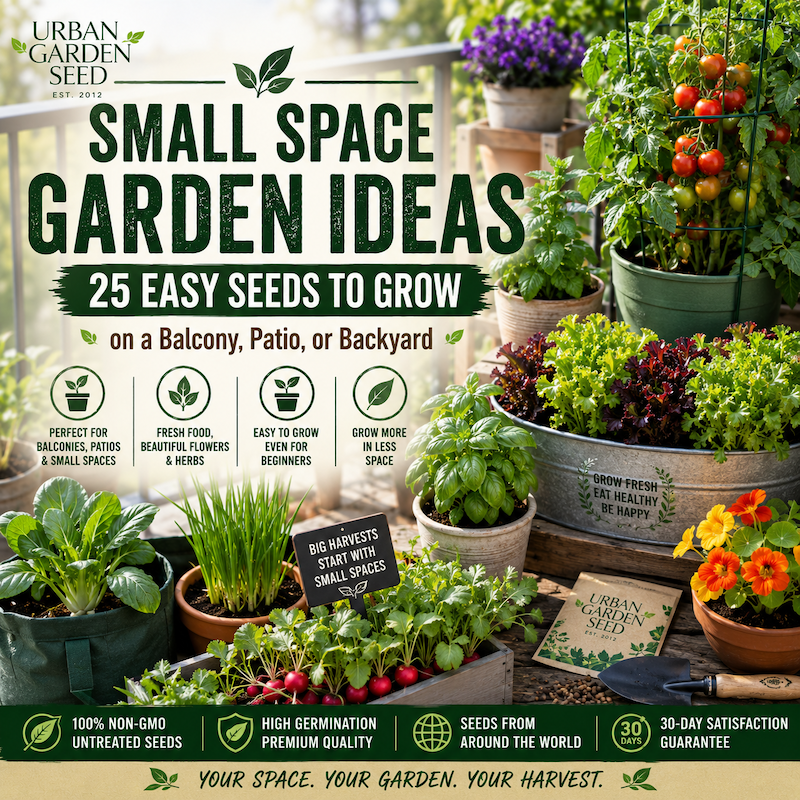
Small Space Garden Ideas: 25 Easy Seeds to Grow on a Balcony, Patio, or Backyard
Jul
You do not need a big backyard to grow a beautiful, productive garden.
You do not even need a traditional garden bed.
With the right seeds, a few containers, and a smart growing plan, you can grow fresh herbs, leafy greens, vegetables, flowers, and even compact fruiting plants in surprisingly small spaces.
A small garden can grow in:
- Apartment balconies
- Patios
- Rooftops
- Window boxes
- Raised beds
- Grow bags
- Small backyards
- Side yards
- Porch steps
- Sunny kitchen-adjacent spaces
- Community garden plots
This is why small-space gardening is becoming so popular. More people want fresh food, natural beauty, and a calming connection to plants—even when they do not have a large yard.
The best part?
Many of the easiest small-space gardens begin from seed.
Seeds give you more variety, more control, and more possibilities than buying whatever starter plants happen to be available locally.
This guide will show you 25 easy seeds to grow in small spaces, plus practical tips for choosing the right containers, sunlight, soil, and planting strategy.
Quick Answer: What Are the Best Seeds for Small Spaces?
Some of the best seeds for balconies, patios, raised beds, and compact gardens include:
- Basil
- Cilantro
- Parsley
- Chives
- Dill
- Mint
- Lettuce
- Spinach
- Arugula
- Kale
- Swiss chard
- Radishes
- Carrots
- Beets
- Green onions
- Bok choy
- Mustard greens
- Peppers
- Cherry tomatoes
- Cucumbers
- Peas
- Bush beans
- Marigolds
- Zinnias
- Nasturtiums
The best choice depends on your space, sunlight, container size, climate, and what you actually want to harvest.
A small garden should be practical, beautiful, and enjoyable.
Why Small-Space Gardening Works
Small-space gardening works because plants do not care whether they are growing on a farm, a balcony, or a patio.
They care about the basics:
- Enough light
- Enough root space
- Good drainage
- Proper watering
- Suitable temperature
- Quality seeds
- Consistent care
A five-gallon grow bag, a deep planter, or a well-placed raised bed can become a productive garden when it is matched with the right crop.
In some ways, small-space gardening can be easier than large-scale gardening because you can monitor every plant closely.
You notice problems faster.
You water with more precision.
You harvest more often.
And you waste less space.
Before You Buy Seeds: Check These 5 Things
1. How much sun do you have?
Most vegetables and herbs prefer strong light, but not every edible plant needs the same amount.
Full-sun crops such as tomatoes, peppers, cucumbers, and many flowers usually need the brightest location you can provide.
Leafy greens and some herbs may tolerate less light than fruiting vegetables.
If your balcony or patio receives only a few hours of direct sun, focus on leafy crops, herbs, and root crops rather than trying to force large fruiting vegetables into weak light.
2. How much space do you really have?
Measure your growing area.
Do not guess.
A balcony may look spacious until you add chairs, storage, railings, walkways, and containers.
Good small-space gardening is not about cramming the maximum number of plants into one area.
It is about choosing the right plants for the space you actually have.
3. What container size can you use?
Small containers dry out quickly and limit root development.
Some crops can grow in shallow containers, while others need deeper soil.
As a general rule:
- Herbs and leafy greens can often grow in moderate containers.
- Radishes and green onions can grow in smaller spaces.
- Carrots need depth based on the variety.
- Tomatoes, peppers, cucumbers, and beans need larger containers.
- Vining crops may need trellises or vertical support.
Match the plant to the container, not the other way around.
4. Can water drain properly?
Drainage is essential.
A container without drainage holes can trap water and damage roots.
Use containers that allow excess water to escape.
If you are gardening on a balcony, also consider where the water will go. You do not want runoff dripping onto neighbors, walkways, or outdoor furniture.
5. What will you actually use?
The best garden is not always the most impressive garden.
It is the garden you enjoy.
If you cook often, herbs may be the smartest place to start.
If you make salads, grow lettuce, arugula, radishes, and green onions.
If you love color, mix edible crops with flowers.
Grow what fits your life.
25 Easy Seeds to Grow in Small Spaces
1. Basil
Basil is one of the best herbs for container gardening.
It grows well in pots, looks attractive, and can be used in pasta, pesto, salads, sandwiches, soups, and sauces.
Best for:
- Patio pots
- Balcony containers
- Kitchen herb gardens
- Raised beds
- Companion planting
Growing tip:
Harvest basil regularly to encourage bushier growth.
Do not wait until the plant becomes tall and woody before using it.
Why customers buy it:
Basil is practical. It turns a small container into a fresh kitchen ingredient.
2. Cilantro
Cilantro is a favorite herb for salsa, tacos, curries, soups, salads, and Asian-inspired dishes.
It is a strong choice for small-space gardeners who want fast, flavorful harvests.
Best for:
- Containers
- Herb planters
- Balcony gardens
- Small raised beds
Growing tip:
Cilantro can be sensitive to hot weather. In warm conditions, it may flower quickly.
For best results, grow it during a suitable cool-season window in your region.
3. Parsley
Parsley is a compact herb that fits well into containers and mixed plantings.
It is useful in everyday cooking and can also serve as a decorative edible plant.
Best for:
- Pots
- Window boxes
- Patio gardens
- Herb containers
Growing tip:
Keep parsley evenly watered and harvest outer stems first.
4. Chives
Chives are excellent for small gardens because they grow upright and do not need much horizontal space.
They add mild onion flavor to eggs, potatoes, soups, salads, and sauces.
Best for:
- Containers
- Window boxes
- Herb gardens
- Small raised beds
Growing tip:
Use scissors to harvest small amounts as needed.
5. Dill
Dill is aromatic, flavorful, and useful for pickling, seafood, potatoes, salads, and sauces.
It can also add a soft, feathery texture to an edible garden.
Best for:
- Herb gardens
- Raised beds
- Medium to large pots
Growing tip:
Give dill enough room and avoid overcrowding.
6. Mint
Mint is popular, fragrant, and useful in drinks, desserts, teas, sauces, and fresh dishes.
Best for:
- Containers
- Patio gardens
- Balcony planters
Important:
Mint can spread aggressively when planted directly into garden beds.
For small spaces, containers are usually the smarter choice.
7. Lettuce
Lettuce is one of the most useful crops for a mini garden.
It grows quickly, can be harvested in stages, and works beautifully in containers.
Best for:
- Window boxes
- Shallow planters
- Raised beds
- Balcony gardens
Growing tip:
Choose leaf lettuce varieties for flexible harvesting.
A container of lettuce near the kitchen can become a practical salad garden.
8. Spinach
Spinach is a cool-season leafy green that can fit well into containers and raised beds.
It is useful for salads, smoothies, sautés, soups, and omelets.
Best for:
- Containers
- Raised beds
- Cool-season gardens
- Small backyard plots
Growing tip:
Avoid forcing spinach into extreme heat. It performs best when temperatures are suitable.
9. Arugula
Arugula is a fast-growing green with a peppery flavor.
It is excellent for gardeners who want quick results from seed.
Best for:
- Salad containers
- Raised beds
- Balcony gardens
- Succession planting
Growing tip:
Harvest young leaves for a tender texture and milder flavor.
10. Kale
Kale is productive, nutritious, and suitable for many small gardens when given adequate space.
It can be grown in raised beds, larger containers, and edible landscapes.
Best for:
- Large pots
- Raised beds
- Backyard gardens
- Patio planters
Growing tip:
Harvest outer leaves and allow the center to keep producing.
11. Swiss Chard
Swiss chard is both edible and beautiful.
Its colorful stems can make a small garden look ornamental while still providing useful greens.
Best for:
- Patio containers
- Raised beds
- Edible front-yard gardens
- Decorative planters
Growing tip:
Swiss chard is a good choice when you want food and visual appeal in the same plant.
12. Radishes
Radishes are one of the fastest and easiest crops for beginners.
They are perfect for small spaces because they mature quickly and do not require a huge container.
Best for:
- Containers
- Raised beds
- School gardens
- Beginner gardens
- Succession planting
Growing tip:
Sow small batches every couple of weeks during suitable weather instead of planting the whole packet at once.
13. Carrots
Carrots can grow well in containers if you choose the right type and provide enough depth.
Best for:
- Deep containers
- Raised beds
- Loose garden soil
Growing tip:
Use a container deep enough for the carrot variety you choose.
Shorter carrot varieties may be easier for container gardeners.
14. Beets
Beets are valuable because both the roots and greens can be used.
They offer color, nutrition, and flexibility.
Best for:
- Raised beds
- Deeper containers
- Backyard gardens
Growing tip:
Thin seedlings properly so roots have room to develop.
15. Green Onions
Green onions are one of the most practical crops for a kitchen garden.
They grow upright, fit into narrow spaces, and can be harvested as needed.
Best for:
- Window boxes
- Containers
- Raised beds
- Herb gardens
Growing tip:
Plant them where you can harvest easily while cooking.
16. Bok Choy
Bok choy is a compact vegetable that can work well in raised beds and larger containers.
It is excellent for stir-fries, soups, and fresh cooking.
Best for:
- Containers
- Raised beds
- Small backyard gardens
- Asian kitchen gardens
Growing tip:
Protect young plants from heat stress when conditions are too hot.
17. Mustard Greens
Mustard greens bring bold flavor to a compact garden.
They are a good choice for gardeners who want something beyond ordinary lettuce.
Best for:
- Raised beds
- Containers
- Small edible gardens
Growing tip:
Harvest leaves young for a milder flavor.
18. Peppers
Peppers are excellent for patio and balcony gardening when grown in suitable containers.
They are attractive plants and can produce colorful harvests in a small footprint.
Best for:
- Large pots
- Grow bags
- Sunny patios
- Balcony gardens
Growing tip:
Peppers need strong light and warm conditions. Choose a sunny location.
19. Cherry Tomatoes
Cherry tomatoes are among the most popular container crops.
They offer high reward because even one productive plant can provide many small fruits.
Best for:
- Large containers
- Grow bags
- Sunny balconies
- Patio gardens
Growing tip:
Use a sturdy support system.
Tomato plants can become heavy as they grow.
20. Cucumbers
Cucumbers can be grown in small spaces if you choose suitable varieties and use vertical support.
Best for:
- Trellises
- Large containers
- Raised beds
- Patio gardens
Growing tip:
Train cucumbers upward to save space.
Vertical gardening can make a small area much more productive.
21. Peas
Peas are ideal for vertical gardening.
They can climb, which makes them useful for narrow spaces.
Best for:
- Trellises
- Raised beds
- Containers with support
- Cool-season gardens
Growing tip:
Give peas a structure to climb early, before the vines become tangled.
22. Bush Beans
Bush beans are easier for many beginners than pole beans because they do not require tall supports.
Best for:
- Raised beds
- Medium to large containers
- Small backyard gardens
Growing tip:
Sow in suitable warm conditions and avoid overcrowding.
23. Marigolds
Marigolds are a classic garden flower that can add color to vegetable gardens, patio containers, and raised beds.
Best for:
- Borders
- Mixed containers
- Vegetable gardens
- Pollinator-friendly spaces
Growing tip:
Use flowers to make your edible garden more inviting and visually attractive.
A garden you enjoy looking at is a garden you are more likely to maintain.
24. Zinnias
Zinnias are bright, cheerful flowers that grow from seed and bring strong visual impact.
Best for:
- Sunny containers
- Raised beds
- Flower borders
- Pollinator gardens
Growing tip:
Zinnias need good sun and airflow.
Do not overcrowd them.
25. Nasturtiums
Nasturtiums are useful for small gardens because they are beautiful, edible, and easy to enjoy.
Their flowers and leaves can add color to salads and decorative dishes.
Best for:
- Containers
- Hanging baskets
- Patio gardens
- Edible flower gardens
Growing tip:
Give them room to trail or spread depending on the variety.
Best Seeds for Apartment Balconies
If you garden on an apartment balcony, start with crops that are compact, useful, and manageable.
Good choices include:
- Basil
- Cilantro
- Parsley
- Chives
- Lettuce
- Arugula
- Radishes
- Green onions
- Compact peppers
- Cherry tomatoes in large containers
- Nasturtiums
Before planting, check your balcony rules, weight limits, drainage, wind exposure, and sun direction.
Balcony gardening is not only about plants.
It is also about safety and practicality.
Best Seeds for Patio Containers
Patios are excellent for container gardens because they often provide easier access to water and more room than a balcony.
Strong options include:
- Tomatoes
- Peppers
- Herbs
- Lettuce
- Kale
- Swiss chard
- Cucumbers with trellis support
- Marigolds
- Zinnias
Use containers that match each crop.
Do not plant a large tomato variety in a tiny decorative pot and expect strong results.
Best Seeds for Raised Beds
Raised beds give small-space gardeners more control over soil, drainage, and organization.
Strong raised-bed choices include:
- Lettuce
- Spinach
- Kale
- Swiss chard
- Carrots
- Beets
- Radishes
- Bush beans
- Cucumbers
- Peas
- Flowers for pollinators
Raised beds are ideal for square-foot-style planning, succession sowing, and organized family gardens.
Best Seeds for Partial Shade
Not every garden has full sun.
If your space receives limited direct sunlight, focus first on crops that are more forgiving of partial shade.
Possible options include:
- Lettuce
- Spinach
- Arugula
- Kale
- Parsley
- Cilantro
- Mint
- Radishes
- Beets
- Green onions
Fruiting crops such as tomatoes, peppers, and cucumbers usually need stronger light to produce well.
If your space is shady, choose realistic crops rather than fighting your conditions.
Best Seeds for Beginners
If this is your first garden, start with simple crops that give visible progress.
Good beginner choices include:
- Radishes
- Lettuce
- Basil
- Arugula
- Green onions
- Marigolds
- Nasturtiums
- Bush beans
Beginner success matters.
A first harvest builds confidence and encourages people to keep growing.
How to Build a Small Garden in 7 Simple Steps
Step 1: Choose your growing space
Look for the best available light.
Observe the area for a few days if possible.
Step 2: Pick the right containers
Choose containers with drainage holes and enough depth for the crop.
Step 3: Use quality growing mix
Do not use heavy garden soil in small pots.
Containers need a suitable growing medium that drains properly.
Step 4: Choose seeds based on space
Start with crops that fit your container size and light conditions.
Step 5: Plant correctly
Follow the seed packet or product instructions for sowing depth and spacing.
Step 6: Water consistently
Small containers dry out faster than garden beds.
Check moisture regularly.
Step 7: Harvest often
Frequent harvesting keeps many crops productive and makes the garden feel rewarding.
Small-Space Garden Layout Ideas
The Kitchen Herb Planter
Best for cooks.
Plant:
- Basil
- Parsley
- Chives
- Cilantro
- Dill
Place it near your kitchen or outdoor cooking area.
The Salad Bowl Garden
Best for fresh salads.
Plant:
- Lettuce
- Arugula
- Radishes
- Green onions
- Spinach
This is one of the easiest and most practical small-space gardens.
The Balcony Vegetable Garden
Best for apartment growers.
Plant:
- Cherry tomato in a large pot
- Basil nearby
- Lettuce in a window box
- Radishes in a shallow container
- Marigolds for color
This gives you food, fragrance, and beauty in one compact setup.
The Raised Bed Beginner Garden
Best for homeowners and community gardeners.
Plant:
- Bush beans
- Carrots
- Beets
- Swiss chard
- Zinnias
- Marigolds
This creates a balanced garden with food and flowers.
The Vertical Garden
Best for narrow spaces.
Plant:
- Peas
- Cucumbers
- Pole-type crops where suitable
- Trailing nasturtiums
Vertical gardening helps you use height instead of floor space.
Common Small-Space Gardening Mistakes
Mistake 1: Choosing plants that are too large
Large plants need large root systems.
Do not ignore mature plant size.
Mistake 2: Using containers without drainage
Poor drainage can ruin a container garden quickly.
Mistake 3: Overcrowding seeds
Tiny seedlings become larger plants.
Give them space.
Mistake 4: Forgetting to water
Containers dry faster than in-ground gardens.
Check them often, especially in warm weather.
Mistake 5: Growing crops you do not eat
The best garden is the one that serves your real life.
Mistake 6: Ignoring sunlight
A tomato plant on a dark balcony will not perform like a tomato plant in strong sun.
Choose crops based on actual light.
Mistake 7: Giving up after one mistake
Every gardener learns by adjusting.
A failed container is not a failed gardener.
Why Start Your Small-Space Garden From Seed?
Starting from seed gives you more options.
You can choose varieties that match:
- Your space
- Your climate
- Your container size
- Your cooking style
- Your growing goals
Seeds are also easier to store, ship, and plan around than mature plants.
For gardeners with limited space, that flexibility matters.
A small garden does not mean small possibilities.
It means every plant should earn its place.
Why Buy Seeds From Urban Garden Seed?
At Urban Garden Seed, we believe gardening should be possible whether you have a large backyard, a raised bed, a patio, or a small apartment balcony.
Our focus is your success.
Urban Garden Seed offers:
- 100% Non-GMO seeds
- Untreated seeds
- High-germination standards
- Flower, vegetable, herb, tree, and specialty seeds
- Varieties sourced from around the world
- A 30-Day Satisfaction Guarantee
- Seeds for farms, homes, containers, balconies, and small urban gardens
Whether you want to grow fresh basil beside your kitchen, lettuce on your balcony, tomatoes on your patio, or flowers in a raised bed, the right seed can turn a small space into a productive garden.
Start Your Mini Garden Today
You do not need acres.
You do not need perfect conditions.
You do not need years of experience.
You need:
- A good container
- The right seeds
- Enough light
- Consistent care
- A willingness to grow
Start with a few easy crops.
Harvest something fresh.
Then expand.
A small garden can bring flavor, beauty, relaxation, and confidence into your everyday life.
Ready to Grow?
Shop high-quality, Non-GMO, untreated seeds at UrbanGardenSeed.com and start your balcony, patio, raised-bed, or backyard garden today.
Grow fresh. Grow small. Grow with confidence.
Frequently Asked Questions
What are the easiest seeds to grow in small spaces?
Radishes, lettuce, basil, arugula, green onions, marigolds, nasturtiums, and bush beans are good beginner-friendly options for many small gardens.
What vegetables grow best in containers?
Lettuce, spinach, radishes, carrots, green onions, peppers, cherry tomatoes, bush beans, and some cucumbers can grow well in containers when the container size and light conditions are appropriate.
Can I grow vegetables on an apartment balcony?
Yes. Many herbs, leafy greens, radishes, green onions, peppers, cherry tomatoes, and flowers can grow on balconies when there is enough light, proper drainage, and safe container placement.
What can I grow with only partial sun?
Leafy greens and herbs are often better choices for partial sun than fruiting crops. Lettuce, spinach, arugula, parsley, mint, kale, radishes, and green onions may be worth considering depending on the amount of light available.
What herbs are best for a small garden?
Basil, parsley, cilantro, chives, dill, and mint are popular herbs for small gardens. Mint is usually best grown in a container because it can spread aggressively.
How deep should containers be for vegetables?
Container depth depends on the crop. Lettuce and herbs can grow in moderate containers, while carrots, tomatoes, peppers, cucumbers, and beans need more root space.
Are seeds better than starter plants for small gardens?
Seeds often provide more variety and better planning flexibility. Starter plants may be convenient, but seeds allow gardeners to choose more specific crops, colors, flavors, and growth habits.
What flowers should I grow with vegetables in containers?
Marigolds, zinnias, and nasturtiums are good options for adding color and pollinator appeal to edible gardens.
Can I grow a garden without a backyard?
Yes. You can grow herbs, greens, flowers, and some vegetables in containers on balconies, patios, rooftops, porches, and small sunny spaces.
Where can I buy seeds for a small-space garden?
Visit UrbanGardenSeed.com to shop Non-GMO, untreated vegetable, herb, flower, tree, and specialty seeds for containers, patios, balconies, raised beds, and backyard gardens.
