
Adenium, Backyard Gardening, Cactus & Succulent, Family & Kids' Gardening, Flower Seeds, Garden Planning & Design, Herb Seeds, Homesteading & Self-Reliance, Sensory & Wellness Gardening, Sustainable & Regenerative Living, The Horticulturist’s Lab, Urban & Small-Space Gardening, Vegetables
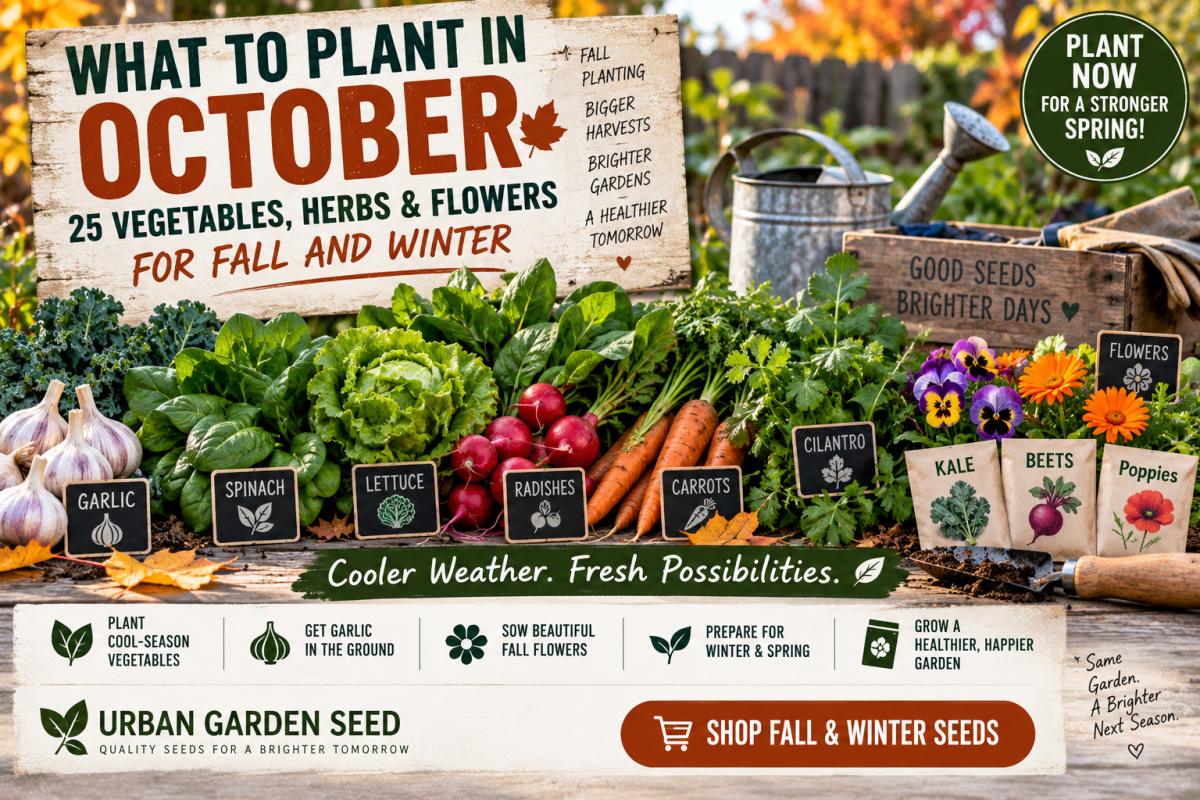
What to Plant in October 2026: 25 Vegetables, Herbs & Flowers for Fall and Winter
Sep
October may look like the end of gardening season.
In reality, it can be one of the most important planting months of the year.
In colder parts of the United States and Canada, October is the time to plant garlic, protect winter vegetables, sow selected dormant seeds, prepare beds, and finish the final harvest.
Farther south, October can feel almost like a second spring.
The worst summer heat has passed.
Cool-season vegetables can germinate more easily.
Lettuce returns.
Spinach grows again.
Radishes mature quickly.
Carrots and beets go into the soil.
Cilantro stops fighting summer heat.
And gardeners begin planting crops for fall and winter harvests.
The key is understanding that October means something completely different depending on where you garden.
A gardener in Saskatchewan cannot follow the same October schedule as a gardener in Texas.
A gardener in Maine should not use the same planting calendar as someone in Southern California.
Instead, use:
- Your first fall frost date
- Your local weather forecast
- Soil temperature
- Days to maturity
- Cold tolerance
- Your USDA zone or Canadian climate region
Then choose the crops that actually fit your remaining season.
This guide will help you do exactly that.
Quick Answer: What Can You Plant in October?
Depending on your climate, October can be a good month to plant:
- Garlic
- Spinach
- Leaf lettuce
- Arugula
- Radishes
- Kale
- Collard greens
- Mustard greens
- Bok choy
- Turnips
- Beets
- Carrots
- Peas
- Green onions
- Swiss chard
- Cilantro
- Parsley
- Dill
- Broccoli
- Cabbage
- Calendula
- Sweet alyssum
- Poppies
- Bachelor buttons
- Hardy perennial and native flower seeds
Not all 25 should be planted everywhere.
In northern regions, October may already be too late for most vegetables.
In southern regions, it may be one of the best sowing months of the entire year.
October Planting by Climate
Cold Northern U.S. and Canadian Prairies
Examples include:
- Alberta
- Saskatchewan
- Manitoba
- Montana
- North Dakota
- Minnesota
- Northern Wisconsin
- Northern Michigan
- Interior New England
By October, frost has often already arrived or is imminent.
Focus on:
- Garlic
- Final root-crop harvests
- Cold-hardy vegetables already established
- Cover crops where enough time remains
- Dormant sowing later in fall
- Winter preparation
Do not try to start a long-season vegetable crop simply because a seed packet says it matures in 60 days.
October daylight and temperature conditions are very different from June.
Southern Canada and Northern/Midwestern U.S.
Examples include:
- Southern Ontario
- Southern Quebec
- New England
- Pennsylvania
- Ohio
- Illinois
- Indiana
- Iowa
- Nebraska
October becomes a transition month.
You may still be harvesting:
- Kale
- Carrots
- Beets
- Swiss chard
- Turnips
- Lettuce
Garlic planting becomes especially important.
Quick greens may still work early in the month under protection, but outdoor sowing opportunities decrease rapidly as daylight and temperatures fall.
Mid-Atlantic and Transition Regions
Examples include:
- Virginia
- Maryland
- Kentucky
- Tennessee
- Missouri
- North Carolina
October can still support substantial cool-season gardening.
Depending on local frost timing, consider:
- Spinach
- Lettuce
- Radishes
- Arugula
- Kale
- Mustard greens
- Turnips
- Cilantro
- Garlic
Row covers and low tunnels can extend production substantially.
Southern U.S.
Examples include:
- Georgia
- Alabama
- Mississippi
- Louisiana
- Northern Florida
- Much of Texas
- South Carolina
October may be one of the best vegetable-planting months of the year.
Consider:
- Lettuce
- Spinach
- Kale
- Collards
- Broccoli
- Cabbage
- Carrots
- Beets
- Radishes
- Turnips
- Bok choy
- Peas
- Cilantro
- Parsley
- Green onions
Summer heat finally begins to retreat, allowing crops that struggled in July and August to thrive.
Southwest and Warm Desert Regions
October can mark the beginning of the main cool-season vegetable garden.
Consider:
- Lettuce
- Spinach
- Arugula
- Carrots
- Radishes
- Beets
- Kale
- Peas
- Cilantro
- Swiss chard
Extremely warm areas may still need temporary shade during early October germination.
Pacific Northwest and Coastal British Columbia
Mild coastal climates offer unique opportunities.
Depending on location, October can be useful for:
- Garlic
- Overwintering spinach
- Hardy greens
- Mâche
- Selected Asian greens
- Cover crops
- Spring-flowering plants
- Hardy perennial seeds
Coastal British Columbia can have a dramatically longer fall-growing season than the Canadian Prairies.
Do not use one “Canada planting calendar” for the entire country.
1. Garlic
If October had an official vegetable, it would be garlic.
Across much of the United States and Canada, this is prime garlic-planting season.
Garlic is normally planted as individual cloves.
Each clove grows into a complete bulb the following year.
Choose large, healthy cloves intended for planting.
Plant the pointed end upward.
The flatter root end faces downward.
Why plant garlic in fall?
Fall planting gives the cloves time to establish roots before winter.
Winter cold then contributes to proper bulb development.
Growth resumes strongly in spring.
By summer, the crop is ready to harvest.
Garlic spacing
A common home-garden spacing is approximately:
4–6 inches between cloves
Spacing can vary by variety and growing system.
Garlic depth
Planting depth varies with climate.
Cold regions may plant more deeply and use a substantial mulch layer.
Follow local recommendations.
Shopping opportunity:
Shop garlic and allium planting selections.
2. Spinach
Spinach thrives when summer heat disappears.
October can be an excellent planting period in moderate and warm climates.
In colder locations, spinach may need protection or be planted specifically for overwintering rather than immediate harvest.
Spinach works well in:
- Raised beds
- Traditional garden beds
- Containers
- Cold frames
- Low tunnels
Harvest baby leaves early or allow plants to mature.
3. Leaf Lettuce
Lettuce returns to the garden once temperatures become favorable again.
Loose-leaf types are especially useful because they can be harvested young.
Instead of planting the entire packet at once, sow small batches.
This creates a longer harvest.
In southern regions, October lettuce can provide fresh greens through much of fall and winter.
4. Arugula
Arugula is an excellent October crop because it grows rapidly.
Its peppery leaves can be harvested young.
Use arugula in:
- Salads
- Pizza
- Pasta
- Sandwiches
- Mixed greens
Because it develops quickly, it is particularly useful when the remaining growing window is short.
5. Radishes
Radishes are among the fastest vegetables you can grow from seed.
That makes them perfect for October gardens in moderate and warm climates.
Some varieties mature quickly enough to produce before serious winter conditions arrive.
Plant small batches every week or two while conditions remain suitable.
Radishes work well in:
- Raised beds
- Containers
- Garden rows
- Spaces between slower crops
6. Kale
Kale tolerates cold better than most warm-season vegetables.
Established plants can continue producing after temperatures that kill tomatoes or peppers.
Harvest outer leaves while leaving the center growing.
In mild climates, kale may produce for much of the winter.
In colder areas, frost protection can extend the harvest.
7. Collard Greens
Collards are excellent cool-season vegetables.
They are particularly useful in the southern United States, where fall and winter temperatures can be ideal.
Plants require more space than baby lettuce or radishes.
Do not overcrowd them.
Harvest outer leaves progressively.
8. Mustard Greens
Mustard greens combine fast growth with strong flavor.
Young leaves can be harvested for salads.
Larger leaves work well as cooking greens.
They are particularly useful for southern fall gardens because they tolerate cool temperatures and can mature relatively quickly.
9. Bok Choy
Bok choy often performs much better in cool weather than under intense summer heat.
Grow it for:
- Baby leaves
- Baby heads
- Full-size heads
Compact varieties make excellent raised-bed crops.
Keep moisture consistent to encourage rapid, tender growth.
10. Turnips
Turnips produce two edible crops.
You can eat:
The leaves
and
The roots.
That makes them efficient fall vegetables.
Young greens can be harvested even when the season becomes too short for full root development.
11. Beets
Beets also give gardeners both edible roots and leaves.
Plant them in loose, fertile soil.
Thin crowded seedlings to allow roots to develop properly.
In warmer zones, October-sown beets can produce through fall and winter.
In colder regions, October is more often a harvest month for crops planted earlier.
12. Carrots
Carrots require patience during germination.
The seed is small and shallowly planted.
That means the upper soil layer must remain consistently moist.
October carrots work best in climates with a long mild fall or winter.
In cold climates, October is generally too late to begin an ordinary carrot crop outdoors.
13. Peas
Peas love cool weather.
In the South and other mild climates, October can provide an excellent planting window.
Install support at planting time.
Possible supports include:
- Trellises
- Netting
- Fences
- Garden stakes
In northern regions, October is generally too late for a new outdoor pea crop.
14. Green Onions
Green onions require relatively little horizontal space.
Grow them in:
- Containers
- Raised beds
- Herb gardens
- Vegetable rows
Even when there is not enough time to grow mature bulb onions, scallions can provide a useful fresh harvest.
15. Swiss Chard
Swiss chard combines food production with attractive foliage.
Depending on the variety, stems may be:
- Red
- Orange
- Yellow
- White
- Pink
It tolerates cooler conditions and can continue producing long after many summer vegetables decline.
Harvest outer leaves rather than removing the entire plant.
16. Cilantro
If cilantro bolted immediately during summer, October may be your opportunity to try again.
Cilantro prefers cooler conditions.
Use it in:
- Salsa
- Tacos
- Curries
- Soups
- Asian dishes
- Salads
Succession sow small amounts rather than planting the entire packet on one day.
17. Parsley
Parsley grows well during cool weather.
It is more cold tolerant than many tender herbs.
Because seed germination can be relatively slow, October sowing is most useful in areas with mild winters.
Northern gardeners may instead protect established parsley plants.
18. Dill
Dill prefers moderate temperatures and can be planted during fall in suitable climates.
Direct sowing is generally easiest.
Use fresh leaves for cooking or allow plants to mature for dill seed.
If allowed to flower, dill can also attract beneficial insects.
19. Broccoli
Broccoli is a cool-season vegetable, but timing matters.
By October, gardeners in many regions will obtain better results from established transplants than from starting seed directly outdoors.
Southern gardeners may still have a strong planting window.
Give mature broccoli plants adequate space.
Do not crowd them between tiny salad crops.
20. Cabbage
Like broccoli, cabbage performs well in cool conditions.
In warm and transition climates, October can be a productive transplanting period.
Northern gardeners should already have established fall cabbage by this point.
Choose maturity dates appropriate for your climate.
21. Calendula
The October garden does not need to contain only vegetables.
Calendula provides bright yellow and orange flowers during cooler weather.
It can work in:
- Cottage gardens
- Herb gardens
- Raised beds
- Pollinator plantings
- Containers
In warm climates, fall planting may produce flowers over an extended cool season.
22. Sweet Alyssum
Sweet alyssum is a low-growing flowering plant that works well along garden edges.
Use it beside:
- Vegetable beds
- Pathways
- Containers
- Raised beds
Its compact growth makes it useful where taller flowers would interfere with crops.
23. Poppies
Certain poppies perform very well when sown during cool weather.
Many prefer direct sowing because they dislike transplanting.
Their tiny seeds generally should not be buried deeply.
Always check the exact species before planting because different poppies have different requirements.
24. Bachelor Buttons
Bachelor buttons—also called cornflowers—are classic cool-season cottage-garden flowers.
In suitable climates, fall sowing can establish plants for future flowering.
Common colors include:
- Blue
- Pink
- Purple
- White
Cold-climate gardeners may use later dormant sowing instead.
25. Hardy Perennial and Native Flower Seeds
October can also be the beginning of dormant-sowing season.
Certain perennial and native seeds benefit from exposure to winter conditions.
Depending on species, this may include plants such as:
- Coneflowers
- Black-eyed Susans
- Milkweed
- Columbines
- Selected native wildflowers
However, do not assume every perennial needs winter sowing.
Check the exact species.
Also make sure native plants are native to your own region—not merely somewhere in North America.
What to Plant in October by USDA Zone
Zones 3–4
Outdoor food-garden planting options are now extremely limited.
Prioritize:
- Garlic
- Final harvests
- Mulching
- Bed preparation
- Cold frames
- Later dormant sowing
Do not waste warm-season vegetable seed outdoors.
Zones 5–6
October is primarily a transition month.
Focus on:
- Garlic
- Hardy established greens
- Root-crop harvesting
- Row covers
- Mulching
- Selected late-season flower or perennial planting
Early October may still offer opportunities depending on frost timing.
Zone 7
The gardening window remains broader.
Consider:
- Garlic
- Spinach
- Lettuce
- Radishes
- Arugula
- Kale
- Cilantro
Use row covers as frost becomes more frequent.
Zone 8
October can be an excellent planting month.
Consider:
- Garlic
- Lettuce
- Spinach
- Radishes
- Beets
- Kale
- Bok choy
- Cilantro
- Peas
- Green onions
Zones 9–10
October can feel like spring.
Plant cool-season vegetables aggressively as extreme summer temperatures retreat.
Possible crops include:
- Broccoli
- Cabbage
- Lettuce
- Spinach
- Kale
- Carrots
- Beets
- Peas
- Radishes
- Turnips
- Cilantro
- Parsley
This may be one of your most productive planting periods of the year.
Current 2026 zone-based planting guides similarly characterize October in warm U.S. zones as the reopening of the cool-season garden.
What to Plant in October in Canada
Canada requires a different strategy from much of the United States.
Alberta, Saskatchewan and Manitoba
October is primarily about:
- Garlic
- Harvesting storage crops
- Mulching
- Soil protection
- Garden cleanup
- Preparing for winter
University of Saskatchewan notes that late October or early November can also be suitable for deliberate fall/dormant sowing on the Prairies, with earlier timing farther north.
Ontario and Quebec
October usually marks the end of active summer gardening.
Focus on:
- Garlic
- Kale
- Carrots
- Parsnips
- Late greens already established
- Fall cleanup
- Mulching
- Soil preparation
Southern areas may retain growing conditions longer than northern regions.
Atlantic Canada
Use your local coastal climate.
October tasks may include:
- Garlic planting
- Root-crop harvest
- Cold-hardy vegetables
- Winter preparation
- Mulching
Coastal microclimates can substantially alter frost timing.
Coastal British Columbia
This is Canada’s major exception.
Mild coastal conditions can allow:
- Overwintering spinach
- Hardy Asian greens
- Garlic
- Selected lettuce
- Mâche
- Cover crops
- Hardy flowers
to continue much later than in central Canada.
Current Canadian 2026 planting guidance similarly treats October–November as primarily harvest and winter-preparation season across most of Canada while retaining additional sowing opportunities on the B.C. coast.
How to Decide Whether You Still Have Time to Plant
Do not look only at the seed packet’s days to maturity.
Fall growth slows.
A crop labeled “40 days” may take longer during October than during spring because:
- Days are shorter
- Sun intensity decreases
- Temperatures fall
- Soil cools
Build extra time into your calculations.
If your remaining season is short, prioritize:
- Radishes
- Arugula
- Baby lettuce
- Spinach
- Mustard greens
Or grow crops under protection.
Use Row Covers to Extend October Harvests
Floating row covers can help protect crops from light frost and create a slightly warmer microclimate.
They are especially useful for:
- Lettuce
- Spinach
- Radishes
- Kale
- Bok choy
Secure the edges so wind does not remove the cover.
Remove or ventilate protection when conditions become unusually warm.
Build a Low Tunnel
Gardeners serious about fall production can install hoops over raised or in-ground beds.
Cover the hoops with suitable row-cover material.
This creates a low tunnel.
A low tunnel can extend the growing season, but it does not change plant biology.
Do not expect it to make tomatoes productive through a Canadian winter.
Use it to help cold-tolerant crops continue longer.
Plant Into Every Empty Summer Bed
Do not wait until the entire summer garden is finished.
When one crop ends, replant that space.
For example:
Finished beans → spinach.
Finished cucumbers → radishes.
Harvested potatoes → garlic.
Finished lettuce → cover crop.
Old zucchini area → fall greens.
This keeps productive soil working through more of the year.
October Is Also Soil-Building Season
If it is too late to grow another vegetable crop, do something useful with the soil.
You can:
- Mulch
- Add compost where needed
- Plant suitable cover crops
- Leave healthy roots in place
- Protect beds from erosion
Do not treat bare soil as the default.
Winter preparation is part of gardening.
What NOT to Plant in October
For most of the United States and virtually all of Canada, October is not the time to begin ordinary outdoor crops of:
- Tomatoes
- Peppers
- Eggplants
- Cucumbers
- Watermelons
- Melons
- Corn
- Zucchini
- Summer squash
These need warm soil and sufficient frost-free growing time.
Exceptions exist in subtropical and frost-free climates.
But do not fight your climate simply because you still have seeds.
Save warm-season seed for the next appropriate planting window.
October Garden Shopping List
Before planting, make sure you have:
- Cool-season vegetable seeds
- Garlic planting stock
- Labels
- Row cover
- Garden hoops
- Mulch
- Compost if needed
- Seed-starting containers for protected crops
- Durable garden markers
Planning before the first serious cold spell makes fall gardening much easier.
Build an October Seed Collection
A useful October collection might contain:
Fast crops
- Radishes
- Arugula
- Leaf lettuce
Cold-tolerant greens
- Spinach
- Kale
- Mustard
- Bok choy
Root vegetables
- Beets
- Turnips
- Carrots
Herbs
- Cilantro
- Parsley
- Dill
Flowers
- Calendula
- Alyssum
- Poppies
- Bachelor buttons
Then tailor the collection to your climate.
A gardener in Houston needs a very different October seed order from a gardener in Winnipeg.
Why Choose Urban Garden Seed?
Urban Garden Seed offers vegetable, flower, herb, fruit, tree, ground-cover, and specialty seeds for gardeners across the United States and Canada.
October is a perfect example of why having access to a broad seed selection matters.
One gardener may be buying spinach.
Another needs kale.
A southern gardener may be starting carrots, beets, peas and broccoli.
A northern gardener may already be planning winter sowing and next spring.
Our goal is to help growers choose seeds suited to:
- Their climate
- Available space
- Growing season
- Harvest goals
- Gardening style
Urban Garden Seed offers Non-GMO and untreated seed selections and backs purchases with a 30-Day Satisfaction Guarantee.
Always review each variety’s growing requirements before planting.
October Is Not the End of the Garden
A summer garden is easy to understand.
Plant when it warms.
Harvest when everything grows.
Fall requires more strategy.
One gardener is harvesting.
Another is sowing.
One bed is being mulched.
Another is producing spinach.
Garlic goes into the soil while tomatoes come out.
Some flowers are finishing.
Other seeds are beginning a winter dormancy that will end months later.
That is what makes October gardening so interesting.
It is not one season.
It is several seasons happening at the same time.
Ready to Plant Your October Garden?
Explore vegetable, herb, flower and specialty seeds at UrbanGardenSeed.com and build a planting plan suited to your climate.
Check your frost date.
Choose quick crops where the season is short.
Plant cool-season vegetables where winter is mild.
Plant garlic.
Protect your soil.
And keep growing.
October may change the garden—but it does not have to end it.
Frequently Asked Questions
What vegetables can I plant in October?
Depending on climate, October crops may include spinach, lettuce, arugula, radishes, kale, collards, mustard greens, bok choy, turnips, beets, carrots, peas and green onions.
Is October too late to plant vegetables?
In northern climates, it may be too late for most new vegetables. In southern regions, October can be one of the best planting months of the year.
What is the easiest vegetable to plant in October?
Radishes, arugula, leaf lettuce and spinach are among the simplest options where enough growing time remains.
Can I plant spinach in October?
Yes. Spinach is highly cold tolerant and can be planted for fall, winter or overwintering production depending on climate.
Can I plant lettuce in October?
Yes in moderate and warm climates. Northern gardeners may need cold frames, low tunnels or established plants.
Can I plant carrots in October?
Yes in climates with long mild falls or winters. October is generally too late to begin ordinary outdoor carrots in cold northern regions.
Can I plant garlic in October?
Yes. October is one of the main garlic-planting months across much of the United States and Canada.
Can I plant kale in October?
Yes in many regions. Kale tolerates cooler temperatures well, although northern gardeners usually need plants established before severe winter cold arrives.
What herbs can I plant in October?
Cilantro, parsley and dill can be suitable in mild climates.
What flowers can I plant in October?
Depending on climate and species, options may include calendula, sweet alyssum, poppies, bachelor buttons and selected hardy perennial seeds.
What should I plant in October in Zone 8?
Garlic, spinach, lettuce, radishes, kale, beets, cilantro, peas and other cool-season crops can be strong choices.
What should I plant in October in Zones 9 and 10?
These zones can plant a broad cool-season garden including lettuce, spinach, carrots, beets, kale, broccoli, cabbage, peas and herbs.
What should I plant in October in Canada?
Across much of Canada, garlic is the major October planting crop. Coastal British Columbia has additional opportunities for overwintering greens and other hardy crops.
Can I plant seeds after the first frost?
Yes, depending on the plant. Some cold-hardy vegetables can still be planted under suitable conditions, while certain perennial and native seeds are intentionally dormant-sown after cold weather arrives.
Where can I buy seeds for an October garden?
Visit UrbanGardenSeed.com to explore vegetable, herb, flower and specialty seeds for fall, winter, dormant sowing and future growing seasons.
