
Cactus & Succulent, Family & Kids' Gardening, Flower Seeds, Herb Seeds, Sensory & Wellness Gardening, Sustainable & Regenerative Living, The Horticulturist’s Lab, Urban & Small-Space Gardening, Vegetables
Edible Indoor Landscaping: How to Grow a Stunning Kitchen Herb Garden
May
Want beautiful houseplants you can actually eat? Discover the ultimate guide to edible indoor landscaping and learn how to grow a high-yield kitchen herb garden from seeds.
For years, interior design trends have favored lush green houseplants to liven up indoor spaces. But why settle for a plant that just sits there looking pretty when you can grow one that elevates your cooking at the same time?
Welcome to the world of edible indoor landscaping.
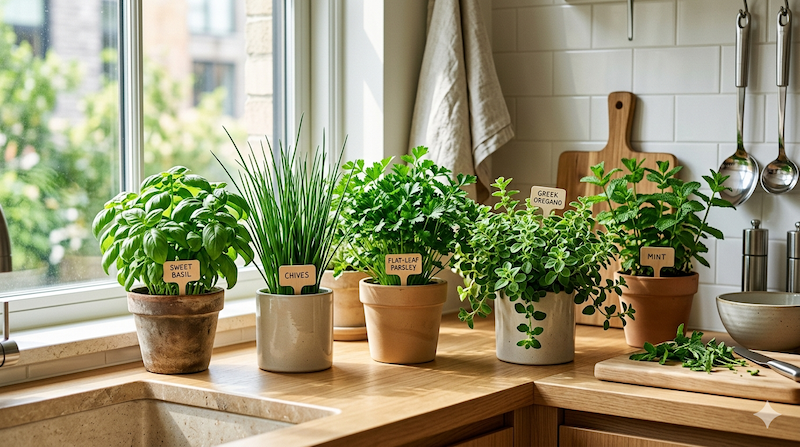
By strategically selecting and planting premium, high-germination culinary herbs, you can transform empty window sills, kitchen counters, and floating shelves into a beautiful, aromatic, and edible oasis.
1. Top Herb Seeds Optimized for Indoor Cultivation
Not all herbs are built for indoor life. Some require massive root space or intense, unrestricted wind movement to thrive. For a successful indoor kitchen garden, you want compact, shade-tolerant, or highly adaptable varieties.
High-Yield Herbs for Indoor Potted Systems
| Herb Seed | Ideal Lighting | Structural Aesthetic | Culinary Superpower |
| Sweet Basil | 6+ Hours Bright Light | Bushy, vibrant green canopy | Crucial for fresh pestos, caprese salads, and pasta dishes. |
| Chives | Partial Shade Tolerant | Sleek, vertical grass-like texture | Adds a delicate, sharp onion-like punch to eggs and baked potatoes. |
| Greek Oregano | Bright, Direct Sun | Beautiful cascading, trailing vines | The backbone of homemade pizza sauces and Mediterranean roasts. |
| Parsley (Flat-Leaf) | Bright, Indirect Light | Elegant, feathery roasts and rosettes | A clean, bright garnish that enhances almost any savory meal. |
2. Setting Up Your Indoor Landscape for Success
Growing indoors gives you total control over the environment, but it also means you have to provide what nature normally handles.
- Never Skip Drainage: Indoor air doesn’t circulate as fast as outdoor wind, making water evaporate slower. Always use pots with drainage holes to protect your herbs from root-killing stagnant water.
- The South-Facing Window Secret: Place your indoor edible landscape in a south- or west-facing window. These locations receive the most consistent, intense sunlight throughout the day.
- Harvest Frequently: Don’t be afraid to snip your herbs! Regular harvesting actually stimulates the plant to release growth hormones, forcing it to grow bushier and more compact rather than tall and leggy.
3. The 4-Step Indoor Planting Blueprint
1.Choose Premium Non-GMO Seeds:The Foundation.
Indoor setups have limited root space, meaning you need strong genetics from the start. Always use high-germination, non-GMO seeds for a resilient indoor start.
2.Use a Lightweight Indoor Potting Mix:Preparation.
Avoid heavy outdoor dirt. Use a nutrient-rich, lightweight potting mix blended with perlite to ensure delicate herb roots can breathe easily.
3.Sow and Cover Lightly:Germination.
Sow your herb seeds at the depth recommended on the packet (usually just 1/4 inch deep), mist the soil gently, and cover with a clear wrap for 3 to 5 days to trap humidity.
4.Rotate Pots Weekly:Long-Term Care.
Indoor plants naturally lean toward the nearest window light source. Rotate your herb pots 180 degrees every single week to keep their growth perfectly straight, balanced, and structurally sound.
Bring Your Kitchen to Life
Edible indoor landscaping perfectly blends function with high-end style. By planting your own kitchen herb garden from premium seeds, you guarantee a continuous supply of chemical-free, hyper-fresh flavor right at your fingertips while purifying your indoor air.
Ready to style your kitchen with edible greenery? Explore our curated collection of indoor-friendly, high-germination herb seeds at urbangardenseed.com and start cultivating your countertop sanctuary today!
