
Family & Kids' Gardening, Flower Seeds, Herb Seeds, Sensory & Wellness Gardening, Sustainable & Regenerative Living, The Horticulturist’s Lab, Urban & Small-Space Gardening, Vegetables
Maximizing Your Plot: The Ultimate High-Yield Companion Planting Guide
May
Want to double your backyard food production naturally? Learn the secrets of high-yield companion planting to boost harvests and repel pests without chemicals.
When space is at a premium, every square inch of soil needs to work double-time. If you are planting your garden in isolated rows of a single crop, you are leaving massive amounts of food—and flavor—on the table.
Enter high-yield companion planting.
This ancient agricultural method mimics nature by grouping mutually beneficial plants together. The results? Natural pest control, significantly improved soil health, and a massive boost to your overall harvest footprint without relying on harsh chemical fertilizers.
1. The Science of Companion Planting
Plants are excellent neighbors if you pair them correctly. Companion planting operates on three core principles:
- Structural Support: Tall, sturdy plants act as natural trellises for climbing crops.
- Pest Disruption: Pungent herbs and bright flowers confuse harmful insects or attract predatory “good bugs” that eat garden pests.
- Nutrient Sharing: Certain crops naturally fix nitrogen into the soil, feeding their neighbors from beneath the surface.
Power Couples: High-Yield Seed Pairings
| Main Crop | Best Companion Seed | The Benefit |
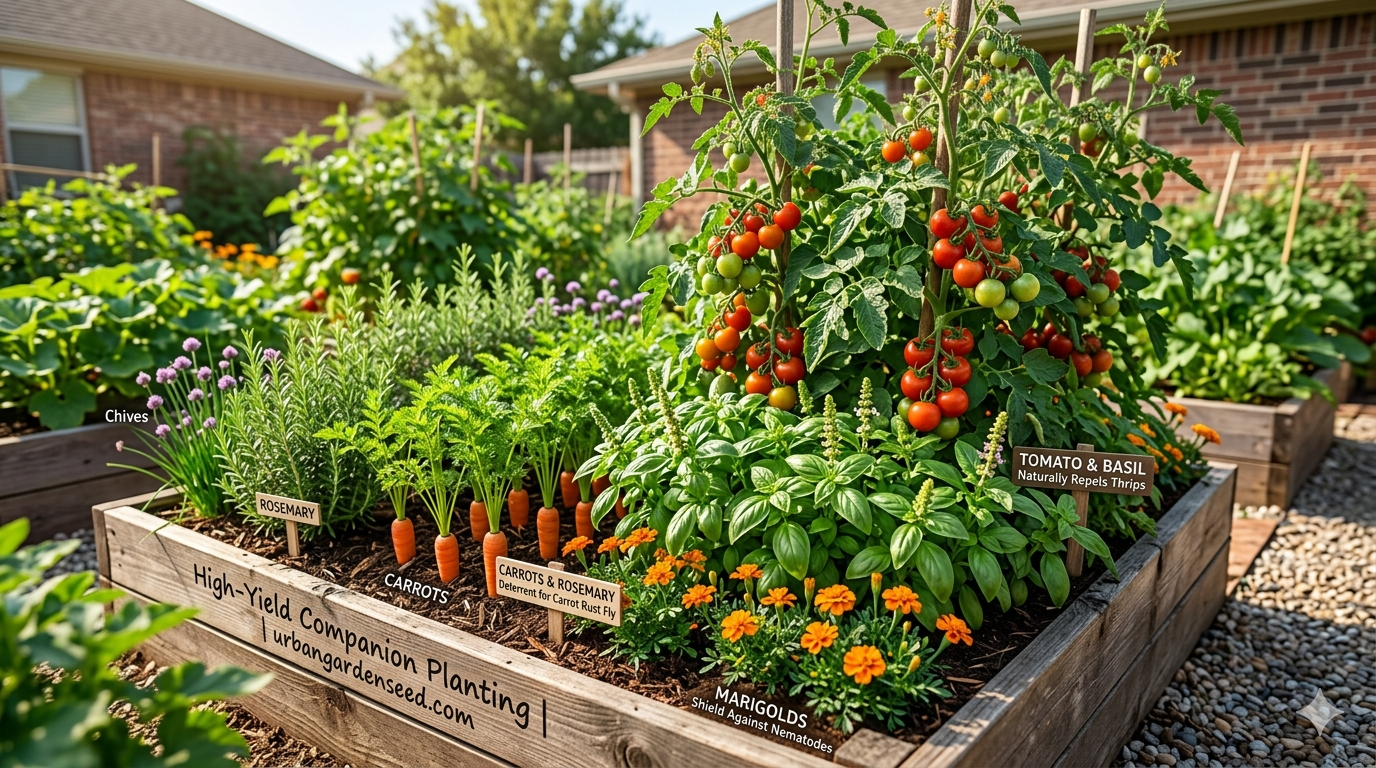
| Tomatoes | Sweet Basil | Basil drives away thrips and hornworms while noticeably improving tomato flavor. |
| Carrots | Rosemary or Chives | Pungent companion scents completely confuse and repel the destructive carrot rust fly. |
| Peppers | Marigolds | Marigolds act as a shield, releasing chemicals that deter root-knot nematodes. |
| Leafy Greens | Radishes | Fast-growing radishes act as a “trap crop,” drawing flea beetles away from tender lettuce leaves. |
2. Avoid the Toxic Neighbors
Just as the right neighbors can make a garden thrive, the wrong pairings can completely stunt growth or ruin flavors. When planning your layout, keep these notorious rivals far apart:
- Keep Onions Away from Beans: Alliums (onions, garlic, chives) excrete a chemical compound that kills off the beneficial bacteria on bean roots, completely halting their growth.
- Keep Tomatoes Away from Potatoes: Because they belong to the same nightshade family, planting them close together creates a super-highway for destructive blights and pests.
3. How to Design a Companion Bed
1.Start with High-Germination Seeds:The Foundation.
A companion garden relies on tight spacing. Use premium, high-germination non-GMO seeds to ensure there are no empty gaps where weeds can take over.
2.Plant the Heavy Feeders First:Layer 1: The Anchors.
Sow your primary, larger crops (like tomatoes or peppers) along the center line or northern edge of the bed so they don’t block out all the sunlight.
3.Interplant Herbs and Flowers:Layer 2: The Shields.
Tuck your insect-repelling herbs and aromatic flowers right between your heavy feeders to establish an immediate pest-defense perimeter.
4.Fill the Base with Shallow Roots:Layer 3: The Carpet.
Utilize the remaining ground space for quick-harvest leafy greens or radishes. They will grow rapidly beneath the taller crops, acting as a living mulch that keeps the soil cool.
Sowed Together, Harvested Together
Transforming your garden into a high-yield companion system is one of the smartest steps you can take toward sustainable self-sufficiency. By intentionally pairing your vegetable and flower crops, you let nature do the heavy lifting of pest control and soil enrichment for you.
Ready to maximize your backyard plot or raised bed? Explore our extensive catalog of companion-ready, non-GMO seeds at urbangardenseed.com and start growing a smarter, healthier garden today!
