Adenium, Cactus & Succulent, Family & Kids' Gardening, Flower Seeds, Herb Seeds, Sensory & Wellness Gardening, Sustainable & Regenerative Living, The Horticulturist’s Lab, Urban & Small-Space Gardening, Vegetables
When to Start Seeds Indoors: Complete U.S. Vegetable Seed Starting Calendar
Jul
Starting seeds indoors can give your garden an earlier harvest, a wider selection of varieties, and stronger control over growing conditions.
But timing matters.
Start too late, and your plants may not have enough time to mature.
Start too early, and you may end up with tall, root-bound seedlings that are difficult to keep healthy until outdoor conditions are suitable.
The best indoor seed-starting schedule is not based on one universal calendar date.
It begins with three things:
- Your average last spring frost date
- The number of weeks each crop needs indoors
- The recommended outdoor transplanting time
This complete guide will help you calculate when to start tomatoes, peppers, eggplants, brassicas, herbs, flowers, and other garden seeds indoors.
Quick Answer: When Should You Start Seeds Indoors?
Most indoor seed-starting dates are calculated by counting backward from your local average last spring frost date.
For example:
- Peppers are commonly started 8–10 weeks before transplanting.
- Eggplants are commonly started 8–10 weeks before transplanting.
- Tomatoes are commonly started 6–8 weeks before transplanting.
- Broccoli and cabbage are commonly started 4–6 weeks before transplanting.
- Cucumbers and squash need only a short indoor start, if they are started indoors at all.
These are general planning ranges.
Always check the instructions for the specific variety because maturity rates and recommendations can differ.
Find Your Average Last Spring Frost Date
Your average last spring frost date is the approximate date after which freezing temperatures become less likely in your area.
It is not a guarantee.
Frost can occur before or after an average date, so gardeners should also follow local forecasts before transplanting frost-sensitive plants.
Sources for local frost information may include:
- Your state Cooperative Extension service
- Local university gardening resources
- Regional climate records
- Experienced local growers
- Garden centers familiar with your area
Use information for your city or ZIP code whenever possible.
A statewide date may be too broad because elevation, coastlines, cities, valleys, and surrounding terrain can create very different conditions.
Do Not Use Your USDA Zone as Your Only Planting Calendar
USDA Plant Hardiness Zones are valuable for understanding whether perennial plants are likely to survive winter in a location.
They are not a complete vegetable seed-starting calendar.
Two cities in the same hardiness zone may have different:
- Last spring frost dates
- First fall frost dates
- Rainfall patterns
- Summer heat
- Elevations
- Growing-season lengths
- Local microclimates
Use your hardiness zone for perennial cold tolerance.
Use local frost dates and current weather conditions for annual vegetable planting.
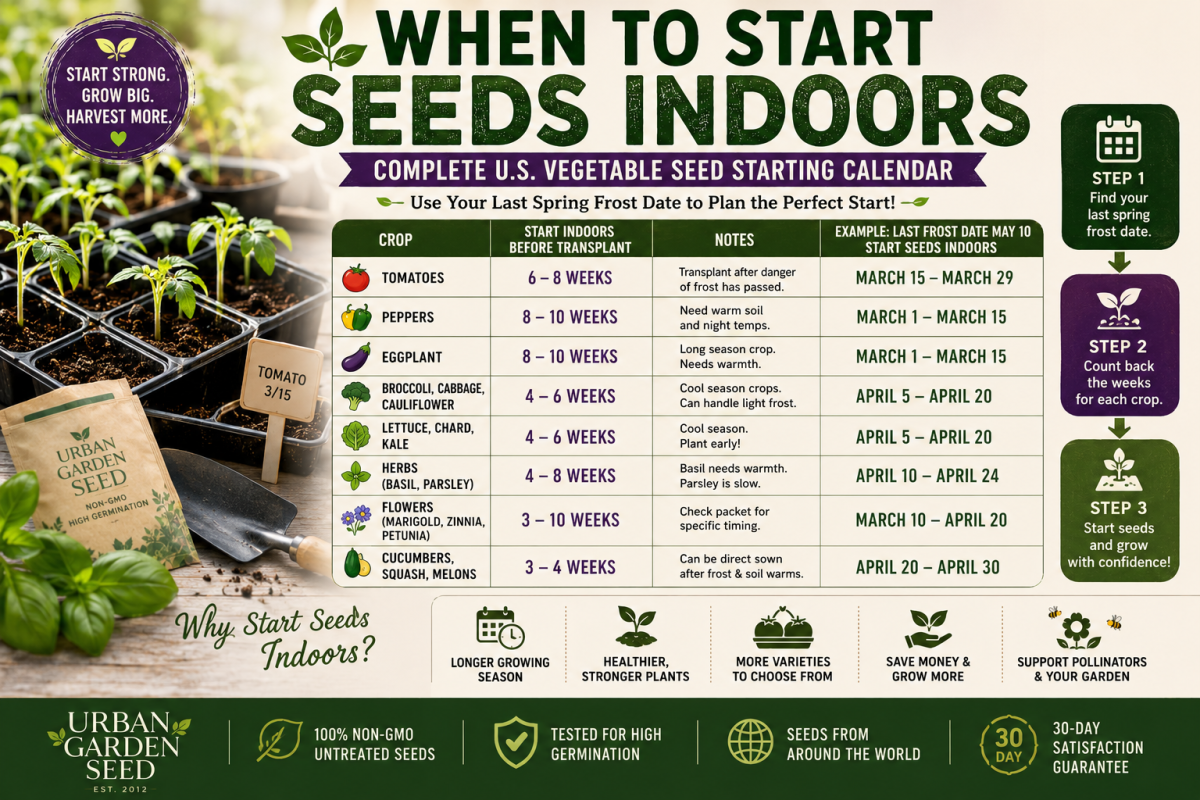
Indoor Seed-Starting Calendar
The following chart provides general starting ranges.
Count backward from the date when you expect to transplant each crop—not automatically from the frost date for every plant.
| Crop | Start Indoors | Typical Outdoor Timing |
|---|---|---|
| Celery | 10–12 weeks before transplanting | After severe cold has passed |
| Onions from seed | 10–12 weeks before transplanting | Early spring |
| Leeks | 10–12 weeks before transplanting | Early spring |
| Parsley | 8–10 weeks before transplanting | Around or before last frost, depending on conditions |
| Peppers | 8–10 weeks before transplanting | After frost and when nights are warm |
| Eggplant | 8–10 weeks before transplanting | After frost and when soil is warm |
| Tomatoes | 6–8 weeks before transplanting | After frost |
| Broccoli | 4–6 weeks before transplanting | Before or around last frost, depending on variety |
| Cabbage | 4–6 weeks before transplanting | Before or around last frost |
| Cauliflower | 4–6 weeks before transplanting | Cool spring conditions |
| Brussels sprouts | 4–6 weeks before transplanting | According to spring or fall crop schedule |
| Lettuce | 4–6 weeks before transplanting | Cool spring conditions |
| Swiss chard | 4–6 weeks before transplanting | Around the spring planting window |
| Basil | 4–6 weeks before transplanting | After frost and when temperatures are warm |
| Okra | 4–6 weeks before transplanting | Well after frost in warm soil |
| Cucumbers | 3–4 weeks before transplanting | After frost; can also be direct sown |
| Squash | 3–4 weeks before transplanting | After frost; can also be direct sown |
| Pumpkins | 3–4 weeks before transplanting | After frost; often direct sown |
| Melons | 3–4 weeks before transplanting | After frost in warm soil |
| Watermelons | 3–4 weeks before transplanting | After frost in warm soil |
Do not start every crop indoors merely because it is possible.
Some vegetables perform better when planted directly in their final growing location.
How to Calculate Your Seed-Starting Date
Use this simple formula:
Expected transplanting date − recommended indoor growing period = seed-starting date
Example: Tomatoes
Suppose your average last spring frost date is May 10.
You plan to transplant tomatoes after the frost risk has passed.
Tomatoes generally need approximately 6–8 weeks indoors.
Count backward:
- Six weeks before May 10 is approximately March 29.
- Eight weeks before May 10 is approximately March 15.
Your tomato seed-starting window would therefore be approximately March 15–29.
Local weather may require you to transplant later than May 10, so continue watching the forecast.
Example: Peppers
Using the same May 10 frost date, peppers started 8–10 weeks before transplanting would generally be sown around early to mid-March.
Because peppers grow slowly and prefer warmth, they are usually started earlier than tomatoes.
Example: Broccoli
Broccoli started 4–6 weeks before a planned spring transplanting date may be sown from late March into April in this example.
However, broccoli can often be transplanted outside earlier than tomatoes because it tolerates cooler conditions.
This is why you must calculate from the crop’s intended transplanting date—not use one date for everything.
When to Start Tomato Seeds Indoors
Tomatoes are among the most popular crops to start indoors.
Start them approximately 6–8 weeks before your expected outdoor transplanting date.
Starting tomatoes much earlier does not necessarily produce an earlier or better harvest.
Overgrown tomato seedlings can become:
- Tall and weak
- Root-bound
- Difficult to water
- More vulnerable to transplant stress
- Harder to manage under indoor lights
Tomatoes need:
- Warm germination conditions
- Consistent moisture
- Strong overhead light
- Good airflow
- Adequate spacing as they grow
Transplant tomatoes outdoors after frost danger has passed and local temperatures are suitable.
Product-link opportunity: Explore tomato seeds for home gardens, containers, raised beds, and farms.
When to Start Pepper Seeds Indoors
Peppers usually need a longer indoor growing period than tomatoes.
Start pepper seeds approximately 8–10 weeks before the expected transplanting date.
Some slow-growing or specialty pepper varieties may need additional time.
Pepper seeds generally benefit from:
- Warm growing medium
- Consistent moisture
- Patience
- Strong light after emergence
Do not transplant peppers simply because your average frost date has passed.
Peppers also need warm nighttime temperatures and warm soil.
Cold conditions can slow growth significantly.
Product-link opportunity: Shop sweet pepper, hot pepper, and specialty pepper seeds.
When to Start Eggplant Seeds Indoors
Eggplants are heat-loving plants with a relatively long growing season.
Start eggplant seeds approximately 8–10 weeks before transplanting.
They require:
- Warm germination conditions
- Bright light
- Even moisture
- Warm outdoor soil
- Protection from frost
Wait until outdoor nighttime conditions are reliably warm before transplanting.
Product-link opportunity: Explore eggplant seeds for warm-season gardens.
When to Start Broccoli, Cabbage, and Cauliflower
Broccoli, cabbage, cauliflower, and related crops are generally started approximately 4–6 weeks before transplanting.
These vegetables prefer cooler growing conditions than tomatoes, peppers, and eggplants.
Depending on the crop and climate, they may be transplanted before the final frost-sensitive warm-season vegetables.
Avoid keeping brassica seedlings in warm indoor conditions for too long.
Good light, moderate temperatures, and timely transplanting help produce compact seedlings.
These crops may also be started indoors during summer for a fall harvest.
Calculate fall sowing dates using:
- The variety’s days to maturity
- Your average first fall frost
- Additional time for slower late-season growth
When to Start Lettuce and Leafy Greens
Lettuce can be started indoors approximately 4–6 weeks before transplanting.
However, it can also be direct sown when outdoor conditions are suitable.
Indoor starting is useful when gardeners want:
- An earlier harvest
- Better control over germination
- Evenly spaced transplants
- A head start during unfavorable outdoor weather
Other leafy greens may have different preferences.
Spinach and arugula are often direct sown because they germinate well in cool soil and may not require an indoor head start.
When to Start Herbs Indoors
Basil
Start basil approximately 4–6 weeks before transplanting.
Basil is sensitive to frost and should not be placed outdoors permanently until temperatures are reliably warm.
Parsley
Parsley can germinate slowly.
Start it approximately 8–10 weeks before transplanting and keep the growing medium consistently moist.
Cilantro
Cilantro is usually better direct sown.
It develops a taproot and may bolt quickly when temperatures rise.
Dill
Dill is commonly direct sown because it may not respond well to root disturbance.
Chives
Chives can be started indoors several weeks before transplanting or direct sown when conditions are appropriate.
Mint
Mint can be grown from seed, although germination and seedling growth may be slow. It is often best maintained in a container because many mint plants spread vigorously.
Product-link opportunity: Shop herb seeds for kitchen gardens, patios, balconies, and raised beds.
Seeds That Are Usually Better Direct Sown
Some crops generally perform best when planted directly into the garden.
These may include:
- Carrots
- Radishes
- Turnips
- Beets
- Peas
- Bush beans
- Pole beans
- Sweet corn
- Spinach
- Arugula
- Cilantro
- Dill
Direct sowing avoids transplant damage and allows root crops to develop without disturbance.
Cucumbers, squash, pumpkins, and melons can be started indoors briefly, but many gardeners direct sow them after the soil has warmed.
Check your growing-season length before deciding.
Gardeners with short summers may benefit from a brief indoor start, while gardeners with long warm seasons can often sow directly.
When to Start Flower Seeds Indoors
Starting flowers indoors can provide earlier blooms and a wider selection than buying nursery transplants.
General starting ranges may include:
| Flower | General Indoor Starting Range |
|---|---|
| Petunias | 10–12 weeks before transplanting |
| Snapdragons | 8–10 weeks |
| Impatiens | 8–10 weeks |
| Salvia | 8–10 weeks |
| Marigolds | 4–6 weeks |
| Zinnias | 3–5 weeks |
| Cosmos | 3–5 weeks |
| Sunflowers | Usually direct sown or given a very short indoor start |
| Nasturtiums | Usually direct sown or started briefly indoors |
Tiny flower seeds may have special light or sowing requirements.
Always check variety-specific instructions.
Product-link opportunity: Explore flower seeds for pollinator gardens, borders, containers, and cutting gardens.
Why Starting Seeds Too Early Can Hurt Your Garden
Many gardeners assume an earlier start always creates a better plant.
That is not necessarily true.
Seedlings started too early may become:
- Root-bound
- Tall and leggy
- Nutrient deficient
- Difficult to water
- Vulnerable to pests
- Stressed before transplanting
- Too large for the available indoor space
Starting on time usually produces a younger, more vigorous transplant that adapts more quickly outdoors.
A compact six-week-old tomato seedling may outperform a weak four-month-old plant that has spent too long in a small container.
What You Need to Start Seeds Indoors
A basic seed-starting setup includes:
- High-quality seeds
- Clean containers or cell trays
- Drainage holes
- Seed-starting mix
- Labels
- Gentle watering equipment
- Strong overhead lighting
- A timer for lighting
- Warmth when required
- Good airflow
You do not need the most expensive equipment.
You do need consistency.
Use Seed-Starting Mix, Not Heavy Garden Soil
Outdoor garden soil is usually unsuitable for small indoor seed trays.
It may be:
- Too dense
- Poorly draining
- Contaminated with weed seeds
- Difficult for tiny roots to penetrate
- Likely to form a hard surface crust
Use a clean, lightweight seed-starting medium designed to hold moisture while allowing air around developing roots.
After seedlings grow and need larger containers, they can be moved into an appropriate potting mix.
Provide Strong Overhead Light
Insufficient light is one of the most common causes of weak seedlings.
Seedlings stretching toward a distant window often become:
- Thin
- Pale
- Bent
- Top-heavy
- Unable to support themselves
A bright window may not provide enough consistent light, especially during winter.
Use suitable overhead grow lights when natural light is insufficient.
Position and adjust the lights according to the manufacturer’s recommendations.
As seedlings grow, maintain an appropriate distance so plants receive useful light without heat or leaf damage.
A timer can provide a consistent daily schedule while still giving seedlings a period of darkness.
Manage Moisture Carefully
The seed-starting medium should remain evenly moist during germination, but not waterlogged.
Too little water can stop germination.
Too much water can reduce oxygen around seeds and roots and contribute to disease.
Water gently so seeds are not displaced.
Possible methods include:
- A fine watering nozzle
- A spray bottle for very small surface-sown seeds
- Bottom watering
- A humidity cover used only until germination
Remove humidity covers after seedlings emerge to improve airflow.
Use Warmth for Heat-Loving Seeds
Warm-season crops such as peppers, eggplants, and tomatoes often germinate more successfully when the growing medium is warm.
A seedling heat mat can provide consistent bottom warmth.
Remove or reduce bottom heat after germination when appropriate so seedlings do not become excessively stretched.
Cool-season vegetables generally do not need the same high temperatures as peppers or eggplants.
Label Every Seed Tray
Label each container when you sow it.
Include:
- Crop name
- Variety
- Sowing date
- Number of seeds
- Optional expected germination window
Do not rely on memory.
Tomato, pepper, cabbage, and flower seedlings can look remarkably similar when young.
Accurate labels also help you evaluate which varieties germinated and performed best.
When to Pot Up Seedlings
Seedlings may need to move into larger containers when:
- Roots fill the original cell
- Growth slows
- The growing medium dries extremely quickly
- Plants begin crowding one another
- Several true leaves have formed
Handle seedlings by their leaves rather than squeezing delicate stems.
Move them into clean containers with suitable growing mix.
Do not use an excessively large pot immediately. A container much larger than the root system can remain wet for too long.
How to Harden Off Seedlings
Indoor-grown seedlings need time to adjust to outdoor conditions.
Hardening off gradually exposes them to:
- Direct sunlight
- Wind
- Cooler nights
- Changing temperatures
- Faster moisture loss
Begin approximately 7–14 days before permanent transplanting.
A basic hardening schedule
Days 1–2
Place seedlings outdoors in a shaded, wind-protected location for a few hours.
Days 3–5
Increase outdoor time and introduce limited gentle morning sunlight.
Days 6–8
Continue increasing sunlight and exposure while monitoring moisture.
Final days
Allow seedlings to remain outside longer when temperatures are safe.
Bring frost-sensitive seedlings indoors whenever freezing or dangerously cold temperatures are forecast.
Do not move tender seedlings directly from indoor lights into intense all-day sun.
Leaves can scorch quickly.
Best Time of Day to Transplant Seedlings
Transplant on:
- A cloudy day
- A calm day
- Late afternoon
- Early evening
This gives plants time to begin adjusting before experiencing intense midday sun.
Water the seedlings before transplanting and check the root zone afterward.
Protect newly transplanted seedlings from unusual heat, cold, wind, or pests where necessary.
Indoor Seed-Starting Mistakes to Avoid
Starting every crop on the same day
Different plants need different indoor growing periods.
Starting too early
Oversized seedlings are not automatically better seedlings.
Using only a hardiness zone
Use local frost timing and current weather.
Growing on a dim windowsill
Weak light creates stretched plants.
Overwatering
Saturated growing mix can damage seeds and roots.
Using garden soil in trays
Heavy soil often drains poorly indoors.
Forgetting labels
Unidentified seedlings are difficult to plan and transplant.
Skipping hardening off
Sudden outdoor exposure can severely stress indoor-grown plants.
Transplanting warm-season crops too soon
A frost-free forecast does not always mean the soil and nighttime temperatures are warm enough.
Ignoring the seed variety
Different varieties of the same vegetable may have different growing timelines.
Build Your Seed Order From Your Calendar
Before purchasing seeds, create a simple planting worksheet.
For each variety, write:
- Crop
- Variety name
- Days to maturity
- Start indoors or direct sow
- Weeks before transplanting
- Planned sowing date
- Planned transplanting date
- Number of plants needed
- Container or garden location
This prevents overbuying and helps you order seeds that fit your climate, space, and schedule.
It also helps gardeners avoid discovering too late that a long-season crop should have been started weeks earlier.
Why Buy Seeds From Urban Garden Seed?
Urban Garden Seed offers vegetable, herb, flower, tree, and specialty seeds for farms, homes, raised beds, patios, and apartment gardens.
Our focus is your success.
Urban Garden Seed offers:
- 100% Non-GMO seeds
- Untreated seeds
- Seeds tested for high germination
- Varieties sourced from around the world
- Options for beginners and experienced growers
- A 30-Day Satisfaction Guarantee
Starting at the correct time is important.
Starting with carefully selected seeds is equally important.
Start Planning Before Planting Season
A successful garden begins before the soil is ready.
It begins when you:
- Find your local frost date
- Choose suitable varieties
- Read each seed packet
- Calculate your planting schedule
- Prepare your seed-starting space
- Order seeds before your starting window arrives
Do not wait until the last frost has passed to think about tomatoes, peppers, eggplants, herbs, and long-season flowers.
By then, the strongest indoor-starting window may already be over.
Ready to Build Your Garden?
Visit UrbanGardenSeed.com to explore vegetable, herb, flower, tree, and specialty seeds for your next growing season.
Choose your seeds. Mark your calendar. Start growing with confidence.
Frequently Asked Questions
When should I start seeds indoors?
Count backward from your planned outdoor transplanting date. Tomatoes usually need about 6–8 weeks indoors, while peppers and eggplants commonly need 8–10 weeks.
How do I find my last frost date?
Check your state Cooperative Extension service, local climate resources, or trusted regional gardening sources using your city or ZIP code.
Should I use my USDA zone to start seeds?
Your USDA zone helps evaluate perennial winter hardiness. Use local frost dates and crop-specific recommendations for annual vegetable seed-starting schedules.
What seeds should be started indoors first?
Slow-growing crops such as celery, onions from seed, leeks, peppers, eggplants, and parsley are commonly among the earliest indoor starts.
When should I start tomato seeds?
Start tomato seeds approximately 6–8 weeks before your planned transplanting date.
When should I start pepper seeds?
Start pepper seeds approximately 8–10 weeks before transplanting outdoors.
Can seedlings be started too early?
Yes. Starting too early can produce root-bound, stretched, crowded, or stressed seedlings.
What vegetables should not be started indoors?
Carrots, radishes, turnips, peas, beans, and many other root or fast-growing crops are usually better direct sown.
Do I need a grow light?
A grow light is often the most reliable way to provide strong, consistent overhead light. Many windows do not provide enough winter light for compact seedling growth.
How long should seedlings be hardened off?
Gradually acclimate seedlings to outdoor conditions over approximately 7–14 days.
Where can I buy seeds to start indoors?
Visit UrbanGardenSeed.com to shop Non-GMO, untreated vegetable, herb, flower, tree, and specialty seeds.
