
Adenium, Cactus & Succulent, Family & Kids' Gardening, Flower Seeds, Herb Seeds, Sensory & Wellness Gardening, Style, Sustainable & Regenerative Living, The Horticulturist’s Lab, Urban & Small-Space Gardening, Vegetables
How to Grow Desert Rose from Seed: Complete Adenium Germination Guide
Jul
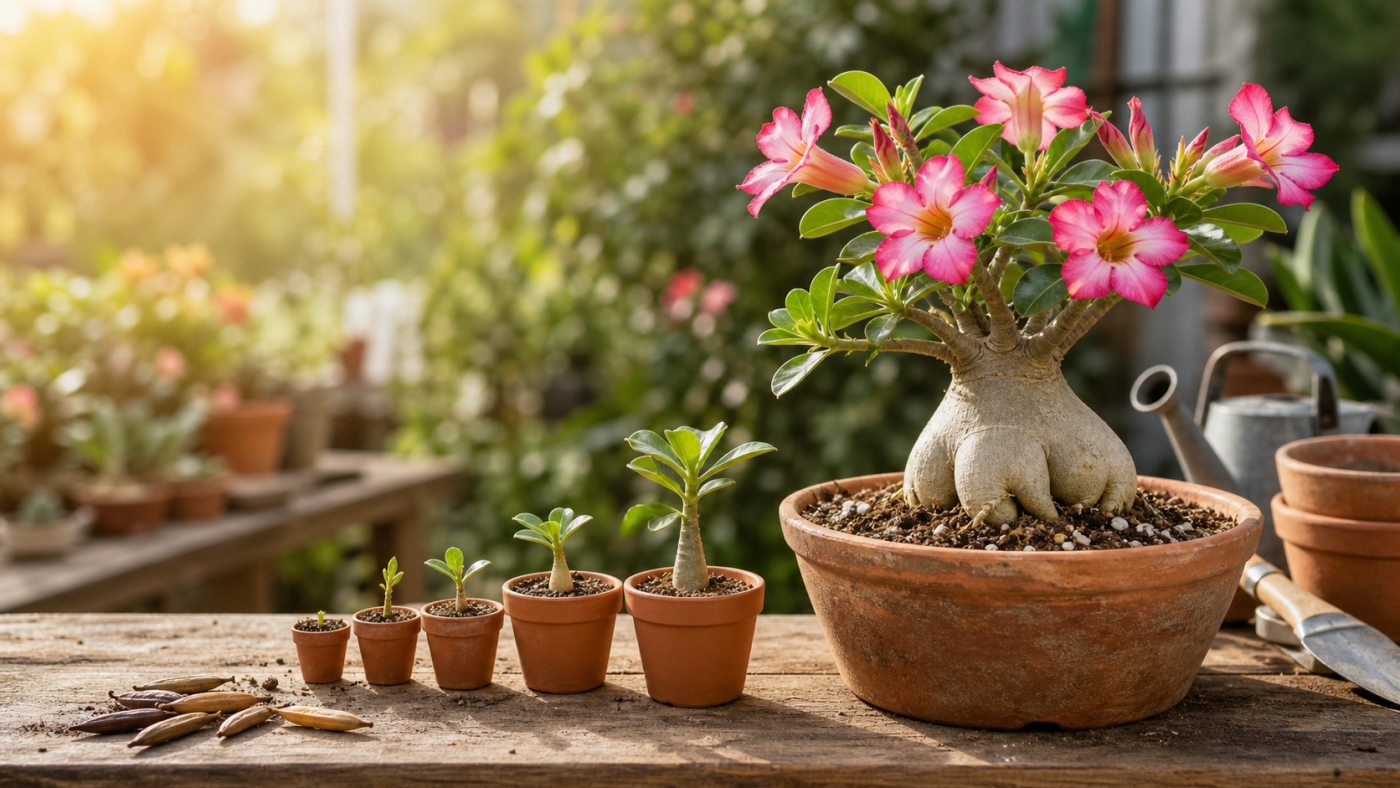
With its colorful trumpet-shaped flowers and beautifully swollen trunk, the desert rose is one of the most distinctive plants you can grow at home. The good news is that you do not need to purchase a mature specimen. With warmth, patience, and the correct growing medium, you can grow desert rose from seed.
Desert rose, botanically known as Adenium obesum, is a heat-loving succulent that develops a thickened base called a caudex. This caudex stores water and gives every mature plant a sculptural appearance.
In this guide, you will learn how to germinate desert rose seeds, care for the seedlings, prevent common problems, and help your Adenium develop into a healthy flowering plant.
Ready to begin? Shop Desert Rose seeds from Urban Garden Seed and check the product page for current availability.
Safety note: Desert rose produces toxic latex-like sap. Wear gloves when pruning or handling damaged plants, avoid contact with the eyes, and keep the plant and seeds away from children and pets. Desert rose is not edible. North Carolina Extension provides additional plant-safety information.
Quick Guide to Growing Desert Rose from Seed
For successful desert rose seed germination:
- Use fresh, good-quality seeds.
- Plant them in a clean, fast-draining seed-starting mixture.
- Keep the growing medium warm—approximately 77°F or 25°C.
- Provide bright, indirect light.
- Keep the mixture lightly moist, never soaked.
- Protect young seedlings from cold temperatures and harsh direct sunlight.
- Be patient, as germination times can vary.
Under suitable conditions, seedlings may emerge within several weeks. Some viable seeds can take longer, so do not discard the container too quickly.
Why Grow Desert Rose from Seed?
Growing Adenium from seed is a rewarding way to watch its distinctive caudex develop from the beginning. Seed-grown plants can also produce unique combinations of flower colors, patterns, and plant shapes.
However, every seedling is genetically different. A plant grown from seed may not produce flowers identical to the parent plant or product photograph. Named Adenium cultivars are commonly propagated by grafting when an exact flower color or pattern is required.
This natural variation is part of the fun for gardeners who enjoy raising unusual plants.
What You Need
Gather the following supplies before planting:
- Viable desert rose seeds
- Small pots, cell trays, or seed-starting containers
- Drainage holes in every container
- Cactus and succulent mix or another sterile, fast-draining medium
- Clean water
- A clear humidity cover or plastic bag
- Plant labels
- A warm indoor location
- A grow light if natural light is limited
A heat mat can be useful in a cold home, but it is not essential if the growing area remains consistently warm.
When Should You Plant Desert Rose Seeds?
Desert rose seeds can be started indoors at almost any time of year when you can provide sufficient warmth and light. Spring and early summer are often the easiest seasons because the days are longer and indoor temperatures are naturally warmer.
Gardeners in colder parts of the United States should grow desert rose as a container plant. It can spend the warm months outdoors and be moved inside before cold weather arrives.
Desert rose is highly sensitive to frost. HGTV recommends year-round outdoor growing primarily in warm USDA Zones 10–11. Gardeners in other zones should protect the plant indoors during winter. See HGTV’s desert rose growing overview.
How to Grow Desert Rose from Seed Step by Step
1. Prepare the Containers
Choose small containers with unobstructed drainage holes. Wash previously used pots before planting to reduce the possibility of fungal problems.
Fill each container with a fresh cactus and succulent mixture. If your mix retains too much water, improve its drainage with a suitable mineral amendment such as perlite or pumice.
Moisten the mixture before planting. It should feel evenly damp but should not release water when squeezed.
2. Inspect the Seeds
Healthy desert rose seeds are generally firm rather than soft, hollow, or visibly damaged. Seed quality and storage conditions can affect germination, so plant the seeds reasonably soon after receiving them.
Some gardeners soak Adenium seeds before planting. This is optional rather than essential. If your seed packet includes specific soaking instructions, follow those directions carefully.
3. Sow the Seeds
Place each seed flat on the growing medium and cover it lightly. A planting depth of approximately 1 centimeter, or slightly less than half an inch, is commonly recommended for desert rose.
Avoid planting too deeply. Deeply buried seeds may struggle to reach the surface and can remain wet for too long.
Label the container with the variety and planting date.
4. Provide Warmth
Warmth is one of the most important requirements for Adenium seed germination. Aim for a growing-medium temperature of approximately 77°F or 25°C.
Avoid placing the container directly against a cold window. If you use a seedling heat mat, monitor the temperature so the mixture does not become excessively hot or dry.
5. Maintain Gentle Humidity
Cover the container loosely with a clear lid or plastic bag to slow moisture loss. Allow some ventilation, and open the cover regularly to introduce fresh air.
The medium should remain lightly moist while the seeds germinate. Do not allow the pots to sit in standing water. Constantly saturated soil encourages fungal growth and seed rot.
6. Supply Bright, Indirect Light
Place the containers in bright, indirect light or beneath a grow light. Avoid intense midday sun while the containers are covered, as temperatures inside the cover can rise rapidly.
Once seedlings emerge, give them plenty of light to encourage compact, sturdy growth. Increase their exposure to direct sunlight gradually.
7. Remove the Humidity Cover
Begin removing the cover when the seedlings emerge and start developing leaves. Gradual removal helps the seedlings adjust to normal household humidity.
According to Gardeners’ World, desert rose seeds can take approximately two to eight weeks to germinate under suitable conditions. Their guide recommends a temperature near 25°C and a moist—but not wet—growing medium. Read the desert rose propagation guidance.
8. Transplant the Seedlings
Transplant each seedling after it has developed several true leaves and a stable root system. Handle the plant by its leaves or root ball instead of pulling on the delicate stem.
Move it into a small pot with excellent drainage. An oversized container can hold unnecessary moisture around the roots, so increase the pot size gradually as the plant grows.
Caring for Desert Rose Seedlings
Light
Young seedlings need bright light, but sudden exposure to intense direct sun can burn their leaves. Gradually introduce them to morning sunlight over several days.
Mature desert rose plants generally flower best with generous sunlight. Indoor plants should be kept near the brightest suitable window or supported with a grow light.
Water
Water seedlings when the upper layer of the growing medium begins to dry. Allow excess water to drain completely.
As the plant matures, its caudex will store water and make it more drought-tolerant. Nevertheless, very young seedlings should not be treated like established desert plants. Avoid allowing tiny seedlings to remain completely dry for extended periods.
Reduce watering during cool weather or when the plant is not actively growing.
Temperature
Adenium prefers warm conditions and must be protected from frost. Cold, wet soil is especially dangerous because the roots absorb water more slowly at low temperatures.
Move outdoor containers inside before cold nights become a risk.
Fertilizer
Wait until seedlings are established and actively growing before applying fertilizer. Use a diluted, balanced fertilizer formulated for container plants or succulents.
Applying too much fertilizer can damage young roots. More fertilizer does not produce faster or healthier growth.
Potting Mix and Drainage
Desert rose needs a porous mixture that drains quickly. The container must also have drainage holes. Decorative pots without drainage should only be used as outer covers, not as the plant’s primary container.
Common Desert Rose Germination Problems
Seeds Rot Before Germinating
The most common causes are excessive watering, poor drainage, low temperatures, or contaminated growing medium.
Use clean containers, provide warmth, and keep the mixture damp rather than saturated.
Seeds Do Not Germinate
Possible causes include:
- Old or poorly stored seeds
- Temperatures that are too low
- Seeds planted too deeply
- Growing medium allowed to dry completely
- Excess moisture causing invisible decay
Confirm the temperature and moisture level before disturbing the container. Some seeds germinate more slowly than others.
Seedlings Become Tall and Thin
Leggy seedlings usually need more light. Move them closer to a bright window or adjust the grow light while watching for heat stress or leaf burn.
Seedling Leaves Turn Yellow
Yellowing can result from overwatering, cold conditions, poor drainage, transplant stress, or insufficient light. Inspect the growing conditions before adding fertilizer.
The Stem Becomes Soft
A soft or darkened stem can indicate rot. Reduce watering, improve airflow, and separate affected seedlings from healthy plants.
Can Desert Rose Grow Indoors?
Yes. Desert rose can grow indoors when provided with strong light, warm temperatures, a fast-draining mixture, and careful watering.
Place the plant near a bright south- or west-facing window where appropriate. If your home does not receive enough sunlight, consider using a full-spectrum grow light.
Indoor plants may grow more slowly or produce fewer flowers when light levels are low.
How Long Does Desert Rose Take to Flower?
Flowering time depends on genetics, warmth, light, nutrition, growing conditions, and the length of the active growing season. Seed-grown plants require patience and may take several growing seasons to reach flowering size.
Healthy growth is more important than forcing early blooms. Provide consistent light and warmth while allowing the root system and caudex to develop naturally.
Frequently Asked Questions
Should desert rose seeds be soaked before planting?
Soaking is optional. Some growers use a brief soak to hydrate the seeds, while others plant them directly. Follow the instructions supplied with your seeds and never leave them submerged long enough to encourage decay.
How deep should desert rose seeds be planted?
Cover the seeds lightly—approximately 1 centimeter or slightly less than half an inch. Avoid burying them deeply.
What temperature do desert rose seeds need?
A temperature near 77°F or 25°C is a useful target during germination. Consistent warmth is more helpful than large temperature fluctuations.
How long do desert rose seeds take to germinate?
Germination can take approximately two to eight weeks, depending on seed viability, temperature, moisture, and other growing conditions.
Can I plant desert rose seeds outdoors?
Planting directly outdoors is risky unless the weather and soil remain consistently warm. Starting seeds indoors gives you better control over moisture and temperature.
Does desert rose need full sun?
Mature plants benefit from abundant sunlight, especially when flowering. Young seedlings should be introduced to direct sunlight gradually to prevent burning.
Will the flowers match the product photograph?
Not necessarily. Seed-grown Adenium plants may vary in flower color, markings, form, and growth habit. Exact named varieties are often propagated by grafting.
Is desert rose poisonous?
Yes. Its sap is toxic and may irritate the skin or eyes. Do not consume any part of the plant. Keep seeds and plants away from children and pets, and wear gloves when pruning.
Start Growing Desert Rose from Seed
Growing desert rose from seed gives you the opportunity to raise a beautiful and potentially unique Adenium from its earliest stage. The essential ingredients are simple: viable seeds, consistent warmth, bright light, excellent drainage, and cautious watering.
Remember that desert rose is a succulent—not a swamp plant. Keeping the roots warm and lightly moist without saturating the soil is the foundation of successful germination.
Order Desert Rose Seeds from Urban Garden Seed and begin your next seed-growing project.
Availability and package sizes may change. Always review the current product description and planting instructions before ordering.
Suggested Internal Links
Add links from this article to:
- Your Desert Rose seed product page
- Your existing “How to Care for Your Adenium” article
- Your succulent seed collection
- Your flower seed collection
- Your seed-starting supplies or growing guides
Suggested Call-to-Action Button
Shop Desert Rose Seeds
Button link: https://urbangardenseed.com/product/adenium-obesum-seeds-desert-rose-seeds-5pcs-pack/
