
Adenium, Backyard Gardening, Cactus & Succulent, Family & Kids' Gardening, Flower Seeds, Garden Planning & Design, Herb Seeds, Homesteading & Self-Reliance, Sensory & Wellness Gardening, Style, Sustainable & Regenerative Living, The Horticulturist’s Lab, Urban & Small-Space Gardening, Vegetables
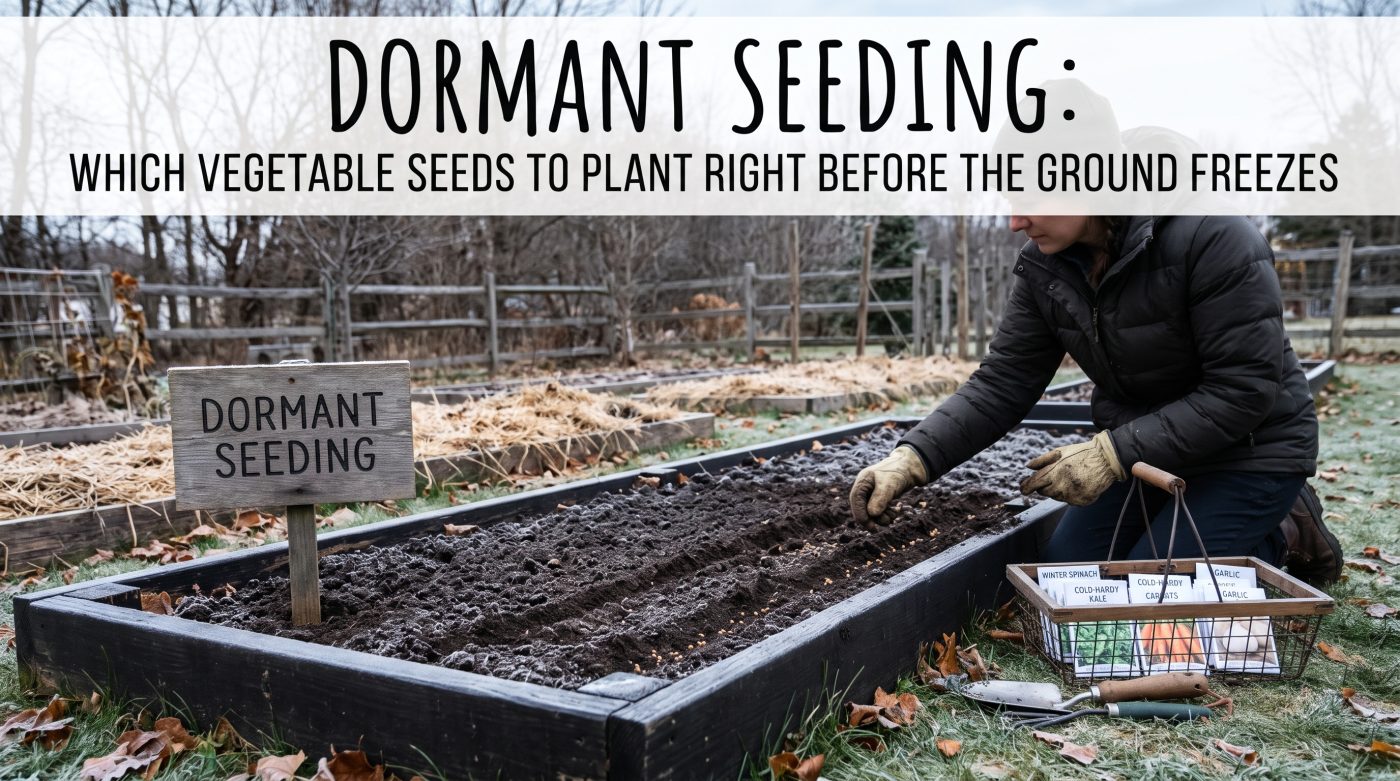
Dormant Seeding: Which Vegetable Seeds to Plant Right Before the Ground Freezes
Nov
By late November, most gardeners have hung up their trowels for the year. With temperatures plummeting and hard frosts arriving across the country, it feels far too late to sow anything outdoors. Yet, there is one final window of opportunity before winter locks the soil solid: dormant seeding.
Unlike fall gardening—where you plant seeds early enough for them to sprout and grow before winter—dormant seeding is the practice of sowing seeds into cold soil so late in the season that they do not germinate at all until spring.
Instead, the seeds sit safely dormant under the winter snow, naturally stratifying in the cold earth. The exact moment late-winter sunlight warms the soil to the right threshold, your seeds wake up and sprout—often weeks before the spring mud dries out enough for you to walk on your garden beds.
1. The Golden Rule of Dormant Seeding Timing
Timing is everything with dormant seeding. If you plant too early during a warm spell in October or early November, the seeds will sprout prematurely and the tender young seedlings will be killed by the first deep freeze.
You want to sow your seeds when soil temperatures stay consistently below 40°F (4°C)—ideally right before the ground freezes solid or just ahead of the season’s first lasting snowfall. At this temperature, seeds absorb moisture and prepare internally, but their biological trigger to sprout remains paused until spring.
2. The Best Vegetable Seeds for Late-Fall Dormant Seeding
Only ultra-hardy, cool-weather crops can survive sitting wet in frozen soil all winter. Tender warm-season crops (like tomatoes, peppers, beans, and squash) will simply rot. Stick to these proven cold-weather performers:
- Spinach (Bloomsdale or Giant Winter): Spinach is built for frozen soil. Dormant-seeded spinach is famously the earliest green you can harvest in spring, often sprouting while snow patches are still melting around the garden.
- Kale (Lacinato or Red Russian): Kale seeds tolerate deep freezes effortlessly and emerge in early spring with thick, sturdy stems that shrug off late-season frosts.
- Parsnips: Parsnip seeds are notoriously slow to germinate in spring and lose viability rapidly in storage. Sowing fresh parsnip seeds in late November solves both problems, giving them months of moisture to soften their tough coats.
- Scallions (Bunching Onions): Cold-hardy onion varieties like Evergreen White Bunching overwinter reliably as seeds and pop up like green spears at the very first sign of spring.
- Radishes (Cherry Belle or French Breakfast): Because radishes germinate at remarkably low soil temperatures (around 40°F), dormant-sown seeds give you a crisp harvest weeks ahead of schedule.
3. Dormant Seeding Quick-Reference Guide
| Seed Variety | Sowing Depth | Minimum Germination Temp | Spring Emergence | Best Mulch Cover |
| Bloomsdale Spinach | 1/2 inch | 35°F – 40°F | Very Early Spring | Light straw (1–2 inches) |
| Lacinato Kale | 1/4 inch | 40°F – 45°F | Early Spring | Shredded leaves |
| Hollow Crown Parsnips | 1/2 inch | 35°F – 40°F | Early to Mid-Spring | Light compost or straw |
| Evergreen Bunching Onions | 1/4 inch | 35°F – 40°F | Very Early Spring | Light straw |
| Cherry Belle Radish | 1/2 inch | 40°F | Very Early Spring | None needed |
4. Step-by-Step Guide to Dormant Seeding
Step 1: Prep Your Rows While Soil Is Still Workable
Before the ground freezes into solid concrete, clear away dead plant debris and use a hoe or your fingers to carve shallow planting furrows in your raised beds or garden rows.
Step 2: Sow Slightly Thicker Than Usual
Winter weather can be unpredictable, and heavy freeze-thaw cycles can occasionally wash away or damage a small percentage of seeds. Increase your normal seeding rate by about 20% to 25% to guarantee a thick, uniform stand in the spring.
Step 3: Cover and Tamp Firmly
Cover the seeds with loose, dry soil or screened compost to the proper depth, then press down firmly with the flat of your hand or the back of a rake. Strong seed-to-soil contact prevents winter winds and melting snow from displacing your rows.
Step 4: Mark Your Rows Clearly
Snow blankets everything, and by March it is easy to forget where you planted what. Place sturdy wooden or metal plant stakes at both ends of each row so you don’t accidentally dig up your emerging seedlings during early spring cleanup.
Step 5: Apply a Breathable Mulch
Once the surface of the soil freezes solid, scatter a light, airy layer (1 to 2 inches) of clean straw or shredded leaves over the bed. This shields the seeds from hungry birds and prevents rapid temperature swings from tricking the seeds into sprouting during a brief January thaw.
Get a Head Start on Next Year’s Harvest
Instead of watching the calendar in March while waiting for soggy garden soil to dry out, let winter do the work for you. A few minutes spent sowing cold-hardy seeds before the freeze locks in your earliest, freshest harvest of the year.