
Adenium, Backyard Gardening, Cactus & Succulent, Family & Kids' Gardening, Flower Seeds, Garden Planning & Design, Herb Seeds, Homesteading & Self-Reliance, Sensory & Wellness Gardening, Sustainable & Regenerative Living, The Horticulturist’s Lab, Urban & Small-Space Gardening, Vegetables
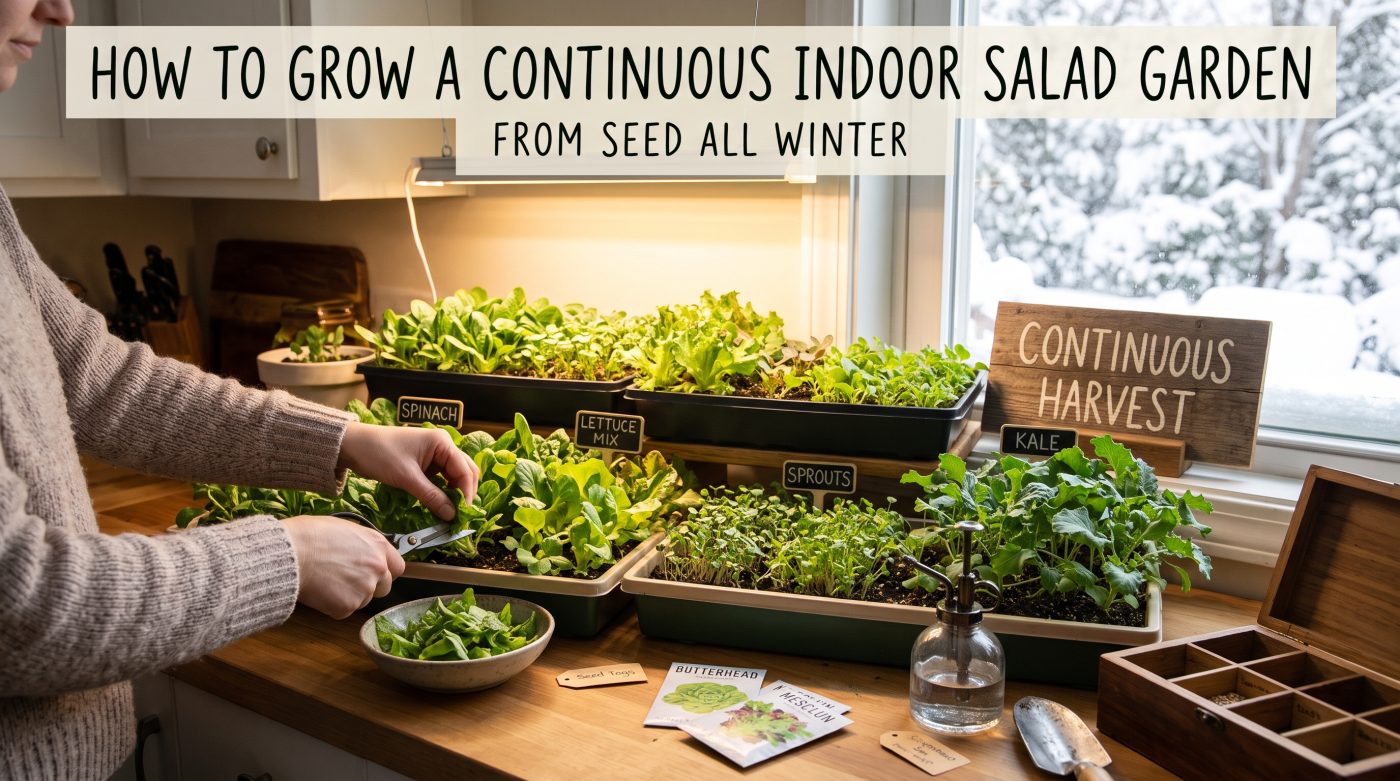
How to Grow a Continuous Indoor Salad Garden from Seed All Winter
Nov
As late November brings deep freezes across the country and outdoor gardens go dormant for the season, the price of fresh produce at the grocery store climbs—while the quality drops. Nobody enjoys paying top dollar for plastic clamshells of wilted, tasteless lettuce that spoils in three days.
Fortunately, you do not need a backyard, a greenhouse, or expensive hydroponic towers to eat fresh salads all winter long. By growing a “cut-and-come-again” indoor salad garden from seed, you can harvest crisp, vibrant, nutrient-dense lettuce and greens right from your kitchen counter or windowsill straight through to spring.
1. Why “Cut-and-Come-Again” is the Secret to Indoor Lettuce
Traditional head lettuce (like Iceberg or full-sized Romaine) takes up massive amounts of space and requires 60 to 80 days of intense sunlight to form a dense core—making it poorly suited for indoor winter growing.
Instead, indoor gardeners rely on loose-leaf varieties. Instead of waiting months for a single head to mature and pulling up the whole plant, you sow seeds densely in shallow containers and snip the outer leaves when they reach 4 to 6 inches tall. Because you leave the central growing crown intact, the plant immediately pushes out fresh new leaves, yielding 3 to 4 consecutive harvests from a single planting.
2. The Best Salad Seeds for Indoor Winter Growing
Lettuce and cool-weather greens are uniquely suited for indoor winter conditions because they thrive in cooler indoor temperatures (60°F to 70°F) and require far less light intensity than fruiting crops like tomatoes or peppers.
- Black Seeded Simpson: An undisputed heirloom classic. This bright green, ruffled loose-leaf lettuce germinates rapidly, tolerates low indoor light remarkably well, and produces sweet, tender leaves in under 40 days.
- Red Sails Lettuce: Adds gorgeous deep burgundy color and antioxidant richness to winter bowls. It is slow to turn bitter and regrows vigorously after cutting.
- Arugula (Rocket): Fast-growing and practically indestructible indoors. Arugula adds a bold, peppery punch to winter salads, pizzas, and grain bowls.
- Buttercrunch Lettuce: A compact, small-headed butterhead variety that forms loose, tender rosettes with a rich, buttery texture—perfect for small 6-inch pots.
- Komatsuna (Japanese Mustard Spinach): A rugged, cold-tolerant leafy green that grows rapidly under basic indoor lighting and delivers a mild, sweet spinach-cabbage flavor.
3. Indoor Salad Seed Quick-Reference Guide
| Seed Variety | Germination Time | First Baby-Leaf Harvest | Light Requirement | Flavor & Texture |
|---|---|---|---|---|
| Black Seeded Simpson | 4–7 Days | 25–30 Days | Moderate (Bright windowsill or LED) | Mild, crisp, tender ruffles |
| Red Sails Lettuce | 5–8 Days | 28–35 Days | Moderate to High | Sweet, crisp, mild |
| Arugula | 3–5 Days | 20–25 Days | Low to Moderate | Bold, nutty, peppery |
| Buttercrunch | 5–8 Days | 35–45 Days | Moderate | Rich, buttery, soft leaves |
| Komatsuna | 3–6 Days | 25–30 Days | Low to Moderate | Mild, sweet, juicy stems |
4. Step-by-Step Guide to Your Winter Windowsill Salad Bar
Step 1: Pick Shallow, Wide Containers
Lettuce has a very shallow root system. You do not need deep, heavy pots. Window boxes, wide shallow bowls, or 4- to 6-inch-deep planters with drainage holes work best. Fill them with a lightweight, sterile indoor potting mix (avoid outdoor garden soil, which drains poorly indoors and can harbor pests).
Step 2: Sow Densely and Shallowly
Moisten the potting mix evenly before planting. Scatter your salad seeds across the surface so they are spaced roughly 1/2 to 1 inch apart. Crucial tip: Lettuce seeds require light to germinate. Press them gently into the damp soil surface, or cover them with no more than 1/8 inch of fine soil.
Step 3: Maximize Winter Light
Place your containers in an unobstructed South- or West-facing window. If your seedlings stretch tall, thin, and pale (a sign they are reaching for light), hang a simple, full-spectrum LED shop light or clip-on grow light 6 inches above the leaves for 12 to 14 hours a day.
Step 4: Water Consistently at the Base
Keep the soil evenly moist—never waterlogged, but never bone dry. Allowing lettuce to dry out in heated winter air triggers bitterness. Water gently at the soil line rather than splashing the leaves to keep foliage crisp and clean.
Step 5: Harvest and Succession Sow
Once leaves reach 4 to 6 inches tall, use clean kitchen shears to snip them about 1 inch above the soil line. To ensure you never run out of fresh greens, plant a fresh container every 2 to 3 weeks. As one bowl finishes its third regrowth cycle, the next bowl is ready to harvest.
Harvest Fresh Greens All Winter Long
You don’t have to wait for spring thaw to enjoy crisp, homegrown salads. With a shallow planter, a bright window, and high-germination heirloom seeds, your kitchen can produce fresh greens right through the coldest months of the year.