
Backyard Gardening, Cactus & Succulent, Family & Kids' Gardening, Flower Seeds, Garden Planning & Design, Herb Seeds, Homesteading & Self-Reliance, Sensory & Wellness Gardening, Sustainable & Regenerative Living, The Horticulturist’s Lab, Urban & Small-Space Gardening, Vegetables
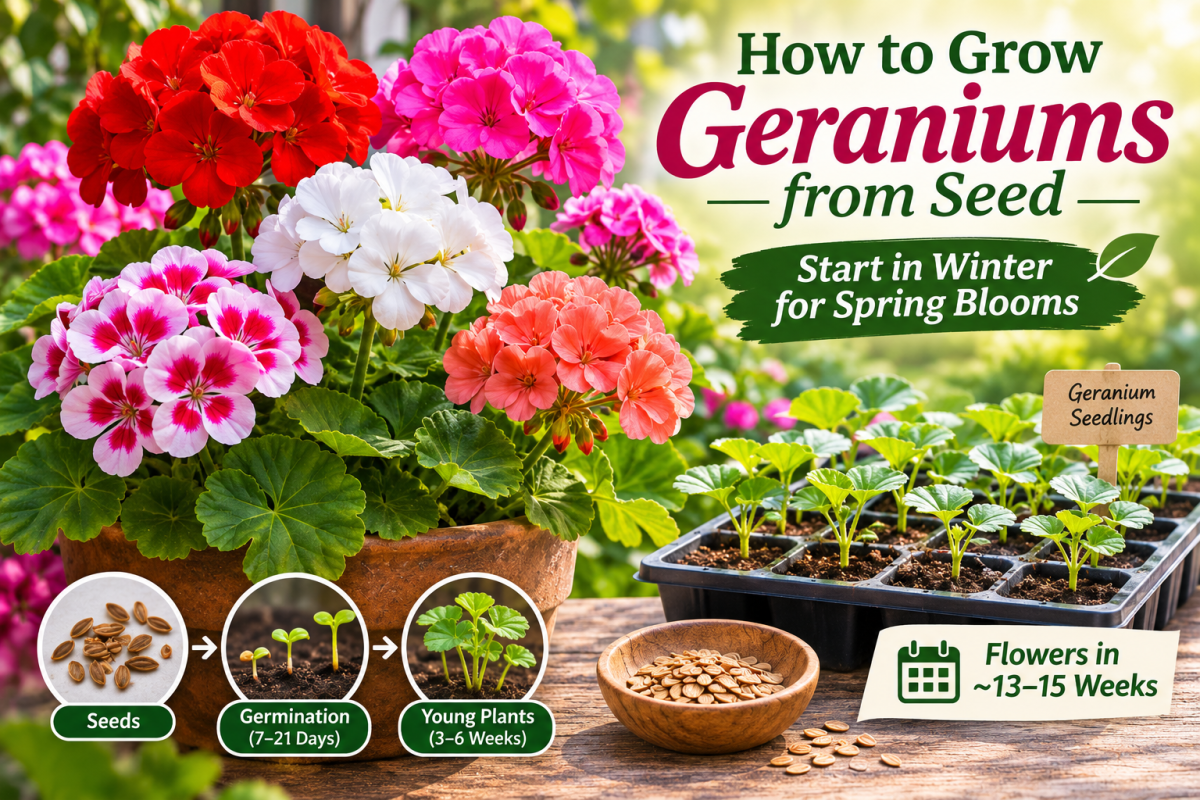
How to Grow Geraniums from Seed: Start in Winter for Spring Blooms
Nov
Want beautiful geranium flowers filling your patio containers, window boxes, and garden beds next spring? You don’t have to wait until garden centers begin selling established plants.
You can grow your own geraniums from seed—and winter is the perfect time to get started.
Geraniums are among the most popular flowering plants for home gardens because of their colorful blooms, attractive foliage, and ability to thrive in containers.
But unlike fast-growing annuals such as marigolds and zinnias, geraniums need a longer head start indoors.
If you’re planning your spring 2027 garden, understanding when to plant geranium seeds can make the difference between having strong, flowering plants ready for the season and struggling with seedlings that were started too late.
In this complete guide, you’ll learn when to start geranium seeds, the best germination temperature, how to care for seedlings, when to transplant, and how to encourage beautiful flowers throughout the growing season.
Quick Answer: When Should You Start Geranium Seeds?
For most garden geraniums (Pelargonium), start seeds indoors approximately 12–16 weeks before your intended outdoor planting date.
Here are the basic growing requirements:
| Growing Requirement | Recommendation |
|---|---|
| Botanical name | Pelargonium species and hybrids |
| Best sowing season | Winter to early spring |
| Indoor starting time | Approximately 12–16 weeks before outdoor planting |
| Germination temperature | 70–75°F (21–24°C) |
| Germination time | Usually 7–21 days |
| Seed depth | Approximately ⅛ inch |
| Growing medium | Lightweight seed-starting mix |
| Lighting after germination | Strong light, commonly 14–16 hours under grow lights |
| Flowering time | Approximately 13–15 weeks from sowing for many seed-grown varieties |
| Outdoor planting | After frost danger has passed and conditions are sufficiently warm |
These are general recommendations. Individual cultivars may have different requirements.
Geranium vs. Pelargonium: What’s the Difference?
Before planting, it’s helpful to understand an important distinction.
The colorful garden plants commonly sold as geraniums in nurseries are usually members of the genus Pelargonium.
True hardy geraniums belong to the genus Geranium.
Although both belong to the Geraniaceae family, they have different growing habits.
Pelargoniums are the familiar flowering plants commonly grown in patio containers, hanging baskets, garden borders, and window boxes.
Hardy geraniums, sometimes called cranesbills, are often grown as perennial garden plants and may have different seed germination requirements.
This guide focuses primarily on seed-grown garden geraniums, especially Pelargonium types grown for colorful flowering displays.
Why Winter Is the Best Time to Start Geranium Seeds
Many gardeners wait until March or April to begin all their flower seeds.
That works well for fast-growing flowers.
Geraniums are different.
They need sufficient time to germinate, develop roots, produce healthy foliage, and prepare for flowering.
Starting them earlier gives you more control over plant development before spring arrives.
For gardeners with indoor grow lights and adequate growing space, late winter seed starting offers several advantages.
More Time for Strong Root Development
Young geranium plants need a healthy root system to support future growth.
Starting indoors allows seedlings to establish themselves in a protected environment before they encounter outdoor wind, rain, and changing temperatures.
More Variety and Flower Colors
Growing geraniums from seed gives you access to varieties that may not be readily available at local garden centers.
You can explore different flower colors, foliage patterns, and compact growth habits.
Ideal for Container Gardens
Geraniums are excellent choices for patio pots, decorative planters, balconies, and window boxes.
Starting them from seed allows you to grow several plants for coordinated arrangements.
Plan Ahead for Spring 2027
November and December are good months to order seeds and prepare growing supplies.
Your actual sowing date will depend on when you expect to transplant the plants outdoors.
Geranium Seed Starting Calendar for Spring 2027
The easiest way to determine when to sow is to start with your local expected outdoor planting date.
Because geraniums are frost-sensitive, your intended transplant date should fall after the danger of frost has passed and outdoor conditions have warmed.
Then count backward approximately 12–16 weeks.
| Expected Outdoor Planting | Approximate Indoor Seed Starting |
|---|---|
| Mid-March 2027 | Late November–December 2026 |
| Mid-April 2027 | Late December 2026–January 2027 |
| Mid-May 2027 | Late January–February 2027 |
| Early June 2027 | February–March 2027 |
These dates are illustrative, not fixed recommendations for every region.
A gardener in Florida may have a very different growing season from someone in Michigan, Minnesota, or southern Canada.
Always use your local frost dates and weather conditions rather than relying solely on your USDA hardiness zone.
Choosing the Best Geranium Seeds
Before you begin, decide what type of geranium you would like to grow.
Dwarf Geraniums
Dwarf geraniums are excellent choices for compact gardens, patios, balconies, and container displays.
Their smaller growth habit makes them particularly useful when gardening space is limited.
Zonal Geraniums
Zonal geraniums are popular bedding plants recognized for their rounded flower clusters and decorative foliage.
They are widely used in garden beds and containers.
Mixed-Color Pelargoniums
Mixed-color selections can create a colorful display in patio planters and flower beds.
When choosing seeds, check whether the variety is an open-pollinated selection or a named hybrid. Flower color, uniformity, and growth habit can vary depending on the genetics of the seed.
For seed shopping, explore Urban Garden Seed’s collections:
Choose varieties suited to your climate, containers, and preferred flower colors.
How to Grow Geraniums from Seed: Step-by-Step
Growing geraniums from seed is not particularly complicated, but successful germination depends on providing the right combination of warmth, moisture, and light.
Step 1: Prepare Your Seed-Starting Supplies
You will need:
- Geranium seeds
- Seed-starting trays or small pots
- Clean seed-starting mix
- Spray bottle or gentle watering container
- Humidity dome or clear covering
- Plant labels
- LED grow lights or another strong light source
- Optional seedling heat mat
Use clean containers with drainage holes.
Avoid filling your trays with ordinary garden soil. Garden soil can be too dense for indoor seed starting and may contain weed seeds or plant pathogens.
A lightweight seed-starting mix is usually more suitable for young seedlings.
Step 2: Moisten the Growing Medium
Before sowing, lightly moisten the seed-starting mix.
It should feel damp but not saturated.
Fill your trays or pots and gently level the surface without compacting it excessively.
A loose, well-aerated medium helps emerging roots establish themselves.
Step 3: Sow Geranium Seeds at the Correct Depth
Plant geranium seeds approximately ⅛ inch deep, or according to the instructions for your specific variety.
Cover them lightly with seed-starting mix.
Avoid burying them deeply.
Deep planting can delay emergence or prevent weak seedlings from reaching the surface.
After sowing, mist gently to ensure good contact between the seeds and the growing medium.
Label your trays immediately.
If you’re growing several colors or varieties, proper labeling prevents confusion later.
Step 4: Provide Warm Germination Conditions
Temperature plays a major role in geranium seed germination.
Aim for approximately:
70–75°F (21–24°C).
A seedling heat mat can help maintain consistent temperatures in a cool home.
However, monitor the temperature of the growing medium to avoid overheating.
Keep the tray in a warm location away from cold drafts.
A clear humidity dome can help retain moisture during germination, but inspect the trays regularly to prevent excessive condensation and stagnant conditions.
Step 5: Watch for Germination
Under suitable conditions, many garden geranium seeds begin germinating within approximately 7–21 days.
Some varieties may emerge sooner, while others require additional time.
Germination depends on several factors, including seed quality, temperature, moisture, and the characteristics of the variety.
Keep the growing medium evenly moist without allowing water to accumulate around the seeds.
As soon as seedlings emerge, remove the humidity cover and provide adequate lighting.
Step 6: Give Seedlings Plenty of Light
One of the most common indoor seed-starting problems is insufficient light.
Geranium seedlings grown in dim conditions may become weak, pale, or excessively tall.
A bright window can help, but winter daylight is often too limited to provide consistently strong growth.
For more reliable results, use a suitable LED grow light.
Many indoor seed-starting setups provide approximately 14–16 hours of light daily, followed by a period of darkness.
Adjust your lights according to the manufacturer’s recommendations and the intensity of the fixture.
Keep seedlings close enough to receive sufficient light without overheating or damaging the foliage.
Healthy seedlings should develop compact growth and sturdy stems.
Step 7: Transplant Seedlings Into Individual Pots
As your geranium seedlings grow, they will eventually need more space.
Once they have developed several true leaves and an established root system, transplant them carefully into individual containers.
Small pots approximately 3–4 inches across are often suitable for young plants.
Use a well-draining potting mix.
Handle seedlings by their leaves when practical rather than squeezing their delicate stems.
Water after transplanting to settle the growing medium around the roots.
Step 8: Feed and Maintain Your Young Geranium Plants
Once seedlings are established and actively growing, begin feeding with a diluted, balanced liquid fertilizer according to product instructions.
Avoid excessive fertilization.
Too much fertilizer can encourage soft growth or damage young roots.
Allow the upper layer of the growing medium to begin drying slightly between waterings while avoiding severe drought stress.
Geraniums generally prefer good drainage rather than constantly saturated soil.
Continue providing strong light and adequate air circulation.
When Will Geraniums Grown from Seed Flower?
One of the most common questions gardeners ask is:
How long does it take to grow geraniums from seed to flower?
For many seed-grown garden geraniums, flowering begins approximately 13–15 weeks after sowing under favorable conditions.
However, actual timing can vary depending on the cultivar, temperature, lighting, and overall growing conditions.
For example, plants sown in January may begin flowering in spring when provided with suitable indoor growing conditions.
The important thing is to start early enough without allowing seedlings to become severely overcrowded or root-bound before transplanting.
When Can Geranium Seedlings Go Outside?
Geraniums are sensitive to freezing conditions.
Do not transplant young plants outdoors while frost remains likely.
Wait until your local frost risk has passed and the soil has warmed sufficiently.
For garden geraniums, a soil temperature around 60°F (16°C) or warmer is a useful guideline.
Before planting outdoors permanently, seedlings should undergo a process called hardening off.
How to Harden Off Geranium Seedlings
Indoor-grown plants are accustomed to protected temperatures and relatively gentle conditions.
Outdoor sunlight, wind, and temperature changes can cause stress if plants are moved outside suddenly.
Begin by placing seedlings outdoors in a sheltered location for a short period.
Gradually increase their exposure over approximately 7–10 days.
Bring plants indoors when temperatures become too cold.
Once they are acclimated and conditions are suitable, they can be transplanted into containers or garden beds.
Growing Geraniums in Pots and Containers
Geraniums are among the most versatile flowering plants for container gardens.
They can add color to patios, balconies, entranceways, and sunny outdoor living spaces.
For the best results, choose containers with adequate drainage holes.
Use a quality, well-draining potting mix.
Place plants where they receive generous sunlight, while accounting for local summer heat.
Water thoroughly when needed, then allow excess water to drain.
Remove spent flower clusters as appropriate to help maintain a neat appearance and encourage continued flowering.
Container-grown geraniums may need more frequent watering than plants growing in garden beds, especially during hot weather.
Growing Geraniums in Garden Beds
Geraniums can also make excellent additions to flower borders and landscape beds.
Plant them in well-drained soil.
Choose a location that receives sufficient sunlight.
Space plants according to the mature size of the selected variety.
Compact or dwarf types may need less space than standard varieties.
Avoid planting too closely together because poor air circulation can contribute to disease problems.
Geraniums can be combined with other colorful annuals to create attractive seasonal displays.
Common Geranium Seed Germination Problems
Why Aren’t My Geranium Seeds Germinating?
Several factors may be responsible.
Soil Temperature Is Too Low
Cold growing media can slow germination considerably.
Maintain suitable temperatures during the germination period.
Seeds Were Planted Too Deeply
Geranium seeds should generally be covered only lightly.
Follow the seed packet’s recommended sowing depth.
Growing Medium Is Too Wet
Excess moisture can create unfavorable conditions for germination and increase the risk of seed decay.
Keep the medium moist, not waterlogged.
Seeds Dried Out During Germination
Seeds need consistent moisture while germinating.
Check trays regularly.
Seeds Need More Time
Not all seeds emerge on exactly the same day.
Some varieties take longer than others.
Why Are My Geranium Seedlings Tall and Weak?
Tall, thin seedlings often indicate inadequate lighting.
Increase suitable light exposure and ensure seedlings are not overcrowded.
Avoid excessive warmth after germination if it is encouraging stretched growth.
Why Are My Geranium Seedling Leaves Turning Yellow?
Possible causes include overwatering, poor drainage, nutrient problems, or insufficient light.
Check the growing medium and root health before adding fertilizer.
Why Have My Geraniums Stopped Growing?
Young plants may slow down after transplanting or when environmental conditions are unsuitable.
Check temperature, light, watering, drainage, and root space.
A small plant that has developed a dense root system inside a tiny cell may benefit from a larger pot.
Do Geranium Seeds Need Cold Stratification?
For typical seed-grown garden geraniums (Pelargonium), cold stratification is not normally required.
These seeds generally germinate under warm conditions.
This is an important distinction because some true hardy geranium species have different dormancy requirements.
If your seed packet identifies a specific hardy Geranium species, follow its individual germination instructions rather than assuming it behaves like a common garden pelargonium.
Can You Grow Geraniums Indoors Year-Round?
Yes, geraniums can be maintained indoors when conditions are suitable.
However, successful indoor flowering requires ample light.
During winter, grow lights may help compensate for shorter days.
Avoid placing plants near freezing windows or heating vents that cause excessive temperature fluctuations.
Good drainage and careful watering remain essential.
In warmer climates, geraniums may also remain outdoors for much of the year, depending on the local weather.
Are Geraniums Annuals or Perennials?
Many garden geraniums are botanically tender perennials.
In climates with freezing winters, they are commonly grown as annuals because they cannot reliably survive prolonged outdoor freezing conditions.
In sufficiently warm climates, they may continue growing beyond a single season.
Gardeners in colder regions can sometimes overwinter established plants indoors for use the following year.
Can You Collect Seeds From Geranium Flowers?
Some geraniums produce viable seeds that can be collected when mature.
However, seed-grown offspring may not always resemble the parent plant.
This is especially true for certain hybrid varieties.
If you want a specific color or uniform growth habit, purchasing seeds from a clearly identified variety or series is generally more reliable than collecting seeds from an unknown hybrid.
Geranium Seed Growing FAQ
What month should I plant geranium seeds?
For spring planting in much of the United States and Canada, winter is commonly the best time to start garden geranium seeds indoors. The exact month depends on your local outdoor planting date.
Can I start geranium seeds in December?
Yes. December can be appropriate when your expected outdoor planting date is early enough to justify a long indoor growing period. Gardeners with later spring frosts may be better off waiting until January or February.
Can I plant geranium seeds directly outdoors?
Geraniums can be direct-sown where the climate provides sufficient warmth and a long enough growing season. However, starting indoors is generally preferred when gardeners want established, flowering plants ready for spring.
Do geranium seeds need light to germinate?
Common garden pelargonium seeds are generally lightly covered during germination. Strong light becomes especially important after seedlings emerge.
How long do geranium seeds take to sprout?
Many varieties germinate within approximately 7–21 days when moisture and temperature are suitable.
What is the best temperature for germinating geranium seeds?
Approximately 70–75°F (21–24°C) is a commonly recommended range for garden geranium seeds.
Can I grow geraniums in small pots?
Yes. Compact and dwarf geraniums are particularly useful for containers, provided they have enough root space, light, water, and drainage.
How long does it take for geraniums to bloom from seed?
Many seed-grown garden geraniums begin flowering in approximately 13–15 weeks, although conditions and variety can change the timeline.
Start Your Spring 2027 Geranium Garden Now
A successful spring flower garden often begins during winter.
By starting geranium seeds indoors at the right time, you can grow strong plants that are ready to bring color to your garden, patio, balcony, or containers when warmer weather arrives.
The key to success is straightforward:
Start early, provide consistent warmth during germination, give seedlings plenty of light, avoid overwatering, and transplant only when outdoor conditions are suitable.
Whether you are growing compact dwarf geraniums, colorful pelargoniums, or a collection of flowering container plants, starting from seed gives you greater control over your garden and the varieties you grow.
Ready to start?
Explore premium flower seeds at UrbanGardenSeed.com and begin planning your spring 2027 garden today.
Quality Seeds for a Brighter Tomorrow.
Horticultural References
- Iowa State University Extension – How to Grow Geraniums from Seed
- University of Minnesota Extension – Growing Geraniums
- Iowa State University Extension – Germination Requirements for Annuals and Vegetables